Table of Contents >> Show >> Hide
- Why Use an Old China Cabinet as a Kitchen Island?
- Before You Begin: Choose the Right Cabinet
- Tools and Materials You May Need
- Step 1: Separate the Hutch from the Base
- Step 2: Check for Safety Issues
- Step 3: Clean Like You Mean It
- Step 4: Sand and Repair the Surface
- Step 5: Reinforce the Cabinet for Island Use
- Step 6: Decide on Feet, Base, or Casters
- Step 7: Prime for a Durable Finish
- Step 8: Paint or Stain the Cabinet
- Step 9: Add a Countertop That Works Hard
- Step 10: Seal the Top for Kitchen Use
- Step 11: Upgrade Storage and Hardware
- Step 12: Finish the Back Like a Front
- Design Ideas for Your China Cabinet Kitchen Island
- Common Mistakes to Avoid
- Budget Breakdown: What This DIY May Cost
- Maintenance Tips for Your Finished Island
- Real-Life Experience: What This DIY Project Teaches You
- Conclusion
An old china cabinet is a little like that one fancy relative who still owns monogrammed napkins: elegant, sturdy, and maybe not invited to every modern kitchen party. But before you send that dated cabinet to the curb, consider this: the bottom half of a china cabinet can become a gorgeous, practical, personality-packed DIY kitchen island. With a little planning, some elbow grease, and possibly a dramatic conversation with a stuck drawer, you can transform forgotten dining-room furniture into the hardworking centerpiece of your kitchen.
This project is especially appealing if you love budget-friendly home upgrades, vintage furniture makeovers, farmhouse kitchen style, or the thrill of saying, “Oh, this island? I made it.” A repurposed china cabinet kitchen island can add storage, counter space, charm, and a custom look without the custom-cabinet price tag. The trick is to make it beautiful and functionalnot just a cabinet wearing a countertop like a hat.
Why Use an Old China Cabinet as a Kitchen Island?
China cabinets were built to store heavy dishes, serving pieces, glassware, and holiday platters that only appear when someone says, “Let’s use the good plates.” That makes many of them surprisingly strong candidates for a DIY kitchen island. The lower cabinet usually has doors, drawers, shelves, and solid framing. In other words, it already has the bones of a useful kitchen workstation.
Repurposing furniture also gives your kitchen character. A store-bought island can be lovely, but an upcycled china cabinet has a story. Maybe it came from a thrift store, a family dining room, Facebook Marketplace, or the mysterious garage corner where furniture goes to think about its life choices. Wherever it came from, the finished piece can feel warm, collected, and original.
Before You Begin: Choose the Right Cabinet
Not every china cabinet is ready for island duty. Start by looking for a piece with a solid base, sturdy legs or plinth, and enough depth to be useful. Many traditional china cabinets have a separate top hutch and bottom buffet-style cabinet. For this project, the lower section is usually the star.
Look for Good Bones
Open the drawers, wiggle the doors, and check the corners. A little cosmetic damage is fine. Scratches, old hardware holes, and tired varnish are easy to fix. Major structural issues are different. Avoid pieces with severe water damage, crumbling particleboard, mold, or a frame that rocks more than a karaoke singer on a Friday night.
Measure Your Kitchen Carefully
A beautiful island is not beautiful if everyone has to turn sideways to reach the refrigerator. Before buying or dragging home a cabinet, measure the available floor space. For comfortable movement, many kitchen planning recommendations call for generous walkways around an island, especially in active cooking zones. As a practical DIY rule, aim for about 36 inches of walkway space at minimum and 42 to 48 inches where people will cook, open appliances, or pass each other often.
Also consider the finished countertop size. If you add a butcher block top with an overhang, the island footprint will become larger than the cabinet base. Mark the full size on the floor with painter’s tape before committing. This simple step can prevent the classic DIY tragedy known as “it looked smaller in the truck.”
Tools and Materials You May Need
Your exact supply list depends on the cabinet’s condition and the style you want, but most china cabinet kitchen island projects use a similar lineup.
- Measuring tape and pencil
- Screwdriver or drill
- Orbital sander or sanding blocks
- Wood filler
- Degreasing cleaner
- Primer suitable for wood, laminate, or glossy surfaces
- Cabinet paint or furniture enamel
- Brushes, rollers, or paint sprayer
- Butcher block, wood slab, stone remnant, or laminate countertop
- Construction screws and brackets
- Locking casters or furniture feet, if desired
- New knobs, pulls, hooks, or towel bars
- Food-safe oil or finish for wood countertops
Step 1: Separate the Hutch from the Base
If your china cabinet has a top display hutch, remove it carefully. Most hutches are attached with screws or metal brackets at the back. Take your time and recruit help because the upper section can be awkward, heavy, and eager to prove gravity is real.
Once the top is removed, inspect the lower cabinet. You may find screw holes, unfinished patches, or a recessed area where the hutch used to sit. That is normal. These areas can be filled, sanded, covered with trim, or hidden beneath the new countertop.
Step 2: Check for Safety Issues
Older furniture can be wonderful, but it deserves a careful safety check. If the cabinet has old paint and may date from before 1978, be cautious about sanding because lead-based paint may be present. Use a lead test kit or consult a professional if you are unsure. Do not aggressively sand unknown old paint indoors. Lead dust is not the kind of “vintage charm” anyone wants in a kitchen.
Next, check stability. A kitchen island gets bumped, leaned on, opened, closed, and occasionally used as the command center for lunchboxes, mail, and one lonely banana. Make sure the base sits flat. Tighten loose screws, reinforce weak joints, and repair wobbly legs before moving forward.
Step 3: Clean Like You Mean It
Old furniture often carries years of wax, polish, cooking residue, dust, and mystery film. Paint will not bond well to grime, no matter how inspirational your mood board is. Wash the cabinet with a degreasing cleaner and wipe it dry. Pay attention to carved details, corners, door frames, and drawer fronts.
Remove the doors and drawers if possible. Label hinges and hardware in small bags so you are not solving a metal puzzle later. This also makes sanding and painting much easier.
Step 4: Sand and Repair the Surface
Light sanding helps primer grip the surface. You do not always need to sand down to bare wood. In many cases, the goal is simply to scuff the glossy finish. Use a medium-grit sandpaper first, then smooth with a finer grit. If the cabinet has veneer, sand gently. Veneer is thin, and once you sand through it, there is no “undo” button.
Fill dents, old hardware holes, cracks, and gaps with wood filler. Let it dry fully, then sand smooth. Run your hand over the surface. If you can feel a ridge, you may see it after painting. Your fingertips are basically tiny quality-control inspectors.
Step 5: Reinforce the Cabinet for Island Use
A china cabinet base was designed to sit politely against a wall, not necessarily to work as a freestanding kitchen island. Reinforcement is often the difference between “custom DIY island” and “why is the countertop leaning?”
Add interior blocking where needed, especially along the top edges where the countertop will attach. If the back of the cabinet is thin fiberboard, consider replacing it with plywood or adding beadboard, shiplap-style paneling, or finished wood panels. Since the back will be visible in the kitchen, this is a great place to upgrade both strength and style.
If the cabinet has flimsy shelves, replace them with stronger plywood. If drawers sag, repair the slides. If the bottom feels weak, add a sturdy platform underneath. Your future self will thank you when you load the island with mixing bowls, cookware, and enough snacks to survive a snow day.
Step 6: Decide on Feet, Base, or Casters
You can keep the original base, add bun feet, build a toe-kick platform, or install casters. Locking casters are useful if you want a mobile kitchen island, especially in a small kitchen. Choose heavy-duty casters rated for more weight than you think you need. Remember, the final island includes the cabinet, countertop, stored items, and the occasional person leaning on it while discussing what to make for dinner.
If you prefer a built-in look, skip wheels and use furniture feet or a boxed base. Make sure everything is level. A slightly uneven island can make cutting vegetables feel like preparing dinner on a ship.
Step 7: Prime for a Durable Finish
Primer is not the glamorous part of a furniture makeover, but it is the part that keeps your hard work from peeling off like a bad sunburn. Choose a bonding primer if the cabinet has a glossy finish, laminate areas, or a slick factory coating. For raw wood, a high-quality wood primer works well.
Apply thin, even coats and let each coat dry according to the product directions. Do not rush drying time. Paint may feel dry on the surface before it is ready for the next step, and impatience can lead to tacky spots, brush marks, or finish failure.
Step 8: Paint or Stain the Cabinet
Paint gives an old china cabinet a fresh identity. Classic white creates a farmhouse kitchen island feel. Deep navy, forest green, charcoal, or black can look rich and modern. Soft sage, warm greige, or creamy beige works beautifully in cottage and traditional kitchens.
Use cabinet-grade paint or durable furniture enamel. Kitchen islands take more abuse than a decorative hallway table. They need a finish that can handle hands, spills, crumbs, and the occasional flying measuring spoon.
If the wood is beautiful, staining may be the better choice. Strip the old finish, sand evenly, apply stain, and seal it properly. A stained base paired with a butcher block top can feel warm and timeless.
Step 9: Add a Countertop That Works Hard
The countertop turns your cabinet into a true kitchen island. Butcher block is a popular DIY choice because it is warm, widely available, and easier to cut than stone. A wood top also complements vintage furniture beautifully. Other options include laminate, quartz remnants, marble remnants, stainless steel, or a custom wood slab.
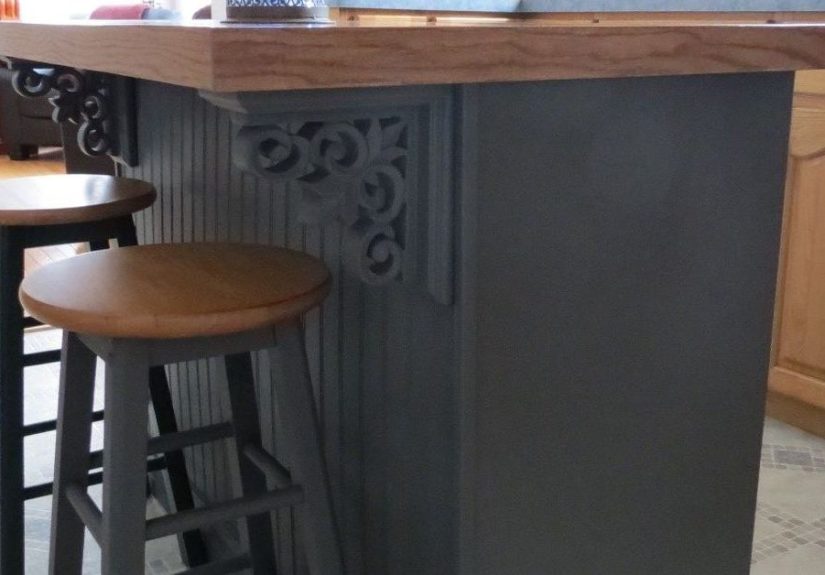
For everyday prep, choose a top that is durable, properly supported, and easy to clean. A small overhang of about 1 to 1.5 inches looks finished and helps protect the cabinet face from drips. If you want seating, plan a deeper overhang and add brackets, corbels, legs, or other support as needed. Do not rely on hope as a structural system. Hope is lovely; it is not a countertop bracket.
Attaching the Countertop
Attach the countertop from underneath using screws through the cabinet’s top rails or added blocking. Pre-drill holes to reduce splitting. If you use butcher block, allow for natural wood movement. Wood expands and contracts with humidity, so avoid trapping it too tightly in a way that may cause cracks.
Step 10: Seal the Top for Kitchen Use
If your island will be used for food prep, choose a finish appropriate for kitchen surfaces. Many DIYers use mineral oil, butcher block conditioner, tung oil products, or finishes specifically labeled for butcher block or food-contact surfaces. Follow the manufacturer’s instructions carefully.
Even with a sealed wood top, use cutting boards for raw meat and heavy chopping. Clean food-prep surfaces with hot, soapy water, rinse well, and dry thoroughly. A kitchen island should be charming, yes, but it should also be clean enough that your salad does not come with a side of regret.
Step 11: Upgrade Storage and Hardware
This is where the project becomes personal. Replace dated knobs and pulls with hardware that matches your kitchen style. Brass adds warmth. Matte black feels modern. Nickel or chrome works well in classic kitchens. Cup pulls can give the piece a vintage pantry look.
Inside the cabinet, add storage helpers. Try pull-out baskets, shelf risers, tray dividers, hooks, or bins. One side can hold mixing bowls and baking dishes, while another stores cutting boards, cookbooks, or small appliances. Add a towel bar, spice rack, paper towel holder, or hooks for measuring cups on the side.
Step 12: Finish the Back Like a Front
Because the cabinet is now an island, the back matters. A plain unfinished back can make the project look incomplete. Cover it with beadboard, plywood panels, decorative trim, fluted wood, or painted shiplap-style boards. This is also a smart place to add shallow open shelving if your kitchen layout allows.
For a furniture-style island, frame the back with trim and paint it the same color as the front. For a rustic look, use reclaimed wood or stained boards. For a cleaner modern style, use flat panels and minimal trim.
Design Ideas for Your China Cabinet Kitchen Island
Farmhouse Style
Paint the base creamy white, add a butcher block countertop, install black cup pulls, and finish the back with beadboard. Add a towel bar on one end and you have a cozy farmhouse kitchen island that looks like it belongs beside a pie cooling on the windowsill.
Modern Vintage Style
Choose a deep color such as navy, olive, or charcoal. Add sleek brass hardware and a stone-look countertop. Keep the lines clean and let the vintage shape provide the character.
Cottage Style
Use soft blue, sage green, or warm ivory paint. Keep some original details, such as carved doors or curvy legs. Add woven baskets inside open shelves for a relaxed, collected feel.
Industrial Style
Pair a dark stained cabinet with metal casters, black hardware, and a stainless steel or dark wood top. This works especially well if the china cabinet has simple lines rather than ornate trim.
Common Mistakes to Avoid
The first mistake is choosing a cabinet that is too tall, too shallow, or too fragile. Standard kitchen counters are often around 36 inches high, so compare your cabinet height with your comfortable working height before adding a thick countertop or casters.
The second mistake is skipping reinforcement. A cabinet that worked fine against a dining-room wall may need extra support as a freestanding island. Strengthen the back, top rails, shelves, and base before painting.
The third mistake is using the wrong finish. Wall paint is not ideal for a hardworking island. Use durable products made for cabinets or furniture. For wood countertops, use a suitable sealer and maintain it regularly.
The fourth mistake is forgetting traffic flow. A kitchen island should make cooking easier, not turn breakfast into an obstacle course. Tape the layout on the floor, open nearby drawers and appliance doors, and walk around the space before installing anything permanent.
Budget Breakdown: What This DIY May Cost
Your cost depends on what you already own and how fancy you get. A thrifted china cabinet base may cost very little, while a high-end countertop can become the splurge. Paint, primer, sandpaper, hardware, wood filler, and sealing products are usually moderate expenses. Butcher block is often more budget-friendly than stone, especially for a small island.
A realistic DIY budget might range from under $200 for a simple makeover using a cabinet you already own to $700 or more if you buy a quality secondhand piece, new butcher block, premium paint, heavy-duty casters, and stylish hardware. Even then, the final result can cost far less than a custom-built kitchen island.
Maintenance Tips for Your Finished Island
Wipe spills quickly, especially on wood tops. Reapply butcher block oil or conditioner as needed if the surface looks dry. Tighten hardware periodically. Check casters or feet for stability. Use trivets under hot pans and cutting boards for chopping.
Painted bases may need small touch-ups over time, particularly around handles and corners. Keep leftover paint in a labeled jar for quick fixes. A tiny chip is not a disaster; it is just proof your kitchen island has a job.
Real-Life Experience: What This DIY Project Teaches You
Turning an old china cabinet into a kitchen island teaches you that furniture makeovers are part carpentry, part design, and part emotional endurance sport. At first, the project looks simple: remove the top, paint the bottom, add a counter. Easy, right? Then you discover one drawer sticks, one hinge is bent, the old varnish laughs at your sandpaper, and the back panel looks like it was made from compressed cereal box. This is normal. Every good DIY project has a middle chapter where the furniture looks worse before it looks amazing.
One of the most useful lessons is to slow down during prep. Cleaning, sanding, filling, priming, and reinforcing are not glamorous, but they decide whether the finished island looks custom or rushed. When you take time to fix gaps, smooth rough patches, and strengthen weak points, the final paint job looks sharper and the island feels more solid. Good prep is like good coffee: invisible once the day gets going, but absolutely responsible for everything working.
Another experience many DIYers share is the surprise of how much function can come from old furniture. A china cabinet base may have deeper storage than expected. Drawers that once held table linens can store utensils, parchment paper, dish towels, or spice jars. Lower shelves can hold mixing bowls, Dutch ovens, serving trays, or small appliances. Suddenly, the piece is not just pretty; it is solving real kitchen problems.
Choosing the countertop is often the moment when the island starts to feel real. A butcher block top can warm up a painted base instantly. A stone remnant can make the project feel polished and high-end. Even a well-installed laminate top can look clean and practical. The key is proportion. A countertop that is too small looks skimpy, while one that is too large can overwhelm the cabinet or make the island unstable. When in doubt, mock it up with cardboard before ordering or cutting.
Painting also has a way of changing the personality of the piece. A dark, formal china cabinet can become bright and cottage-like with creamy white paint. A plain brown cabinet can become dramatic with deep green and brass pulls. A scratched thrift-store find can suddenly look like it came from a boutique kitchen showroom. That transformation is deeply satisfying, especially when you remember what the “before” looked like.
The biggest lesson is that a DIY kitchen island does not need to be perfect to be beautiful. In fact, the small quirks often make it better. A tiny old drawer mark, a slightly unusual shape, or original trim can give the island character that brand-new cabinetry cannot imitate. The goal is not to erase the cabinet’s past; it is to give it a better futurepreferably one with snacks stored inside.
By the end, you gain more than extra counter space. You gain confidence. You learn how to judge furniture quality, use primer correctly, think about kitchen flow, and combine style with structure. You also get the satisfaction of rescuing a forgotten piece and making it useful again. That is the heart of this project: taking something overlooked and turning it into the most complimented feature in the room.
Conclusion
A DIY kitchen island made from an old china cabinet is practical, beautiful, and wonderfully resourceful. It gives new life to vintage furniture while adding storage, prep space, and personality to your kitchen. The best results come from careful measuring, strong reinforcement, durable finishes, and a countertop suited to real kitchen use.
Whether your style is farmhouse, cottage, traditional, modern vintage, or rustic industrial, this project can be customized to fit your home. Start with a sturdy cabinet, respect the prep work, and do not skip safety checks. With patience and a little creativity, that dusty old china cabinet can become the island your kitchen has been waiting for.