Table of Contents >> Show >> Hide
- What Does It Mean to Be Afraid of Being Loved?
- Common Signs You Are Afraid of Falling in Love
- Why Love Can Feel Scary
- How to Stop Being Afraid of Being Loved
- 1. Name the fear instead of obeying it
- 2. Separate intuition from anxiety
- 3. Practice slow vulnerability
- 4. Build emotional safety before intensity
- 5. Communicate your pace clearly
- 6. Challenge the belief that love equals danger
- 7. Learn self-regulation skills
- 8. Stop romanticizing unavailable people
- 9. Set boundaries that protect both love and identity
- 10. Consider therapy if fear is controlling your relationships
- How to Let Someone Love You Without Panicking
- What to Do When You Want to Run Away
- 500-Word Experience Section: What Healing This Fear Can Feel Like
- Conclusion: Love Is a Risk, But So Is Staying Closed Forever
Falling in love sounds beautiful until your nervous system treats it like a haunted house with better lighting. One minute you are smiling at a text message, and the next minute your brain is holding an emergency meeting titled, “What If This Ends Badly?” If you are afraid of being loved or falling in love, you are not broken, dramatic, or “too complicated.” You may simply have learnedthrough past heartbreak, rejection, family patterns, trauma, or anxietythat closeness can be risky.
The good news? Fear of love can soften. You can learn how to accept affection without flinching, build trust without losing yourself, and open your heart without handing someone the keys to your entire emotional kingdom. This guide explains why love can feel scary, what fear of intimacy looks like, and how to move toward healthy romantic connection one brave, slightly awkward step at a time.
What Does It Mean to Be Afraid of Being Loved?
Being afraid of being loved is more than simple shyness or wanting to “take things slow.” It can feel like a deep inner alarm that goes off when someone gets emotionally close. You may want connection, but when it appears, your body reacts as if danger just walked in wearing a cute sweater.
This fear is sometimes linked to philophobia, commonly described as a fear of falling in love. It can also overlap with fear of intimacy, avoidant attachment, anxious attachment, low self-worth, or unresolved pain from previous relationships. The pattern is often confusing because you may crave love and resist it at the same time. That push-pull dynamic can leave both you and your partner wondering, “Are we bonding or playing emotional dodgeball?”
Common Signs You Are Afraid of Falling in Love
Fear of love does not always announce itself politely. Sometimes it shows up as “I’m just busy,” “They’re too nice,” or “I suddenly need to reorganize my entire life and possibly move to another state.” Here are common signs:
- You feel anxious when someone treats you consistently well.
- You lose interest once a relationship becomes emotionally serious.
- You overanalyze texts, tone, facial expressions, and punctuation.
- You expect abandonment even when there is no clear evidence.
- You sabotage good relationships by picking fights or withdrawing.
- You feel undeserving of love, care, or loyalty.
- You are drawn to unavailable people because real closeness feels too vulnerable.
- You confuse calm love with boredom and chaos with chemistry.
None of these signs make you a bad partner. They are signals. Your job is not to shame yourself for having them; your job is to understand what they are trying to protect.
Why Love Can Feel Scary
1. Past heartbreak taught your brain to expect pain
If you have been betrayed, abandoned, rejected, cheated on, humiliated, or emotionally neglected, your brain may file love under “dangerous activities,” somewhere between texting your ex and assembling furniture without instructions. A painful past can make future affection feel suspicious. You may think, “This feels good, so when does it go wrong?”
2. You fear losing your independence
Some people are not only afraid of being left; they are afraid of being swallowed. If you grew up in a family where boundaries were weak, privacy was ignored, or love came with control, closeness may feel like losing yourself. You might pull away not because you dislike the person, but because your inner self is waving a tiny flag that says, “Please do not let us disappear.”
3. You do not trust that love can be stable
When affection has been inconsistent, love can feel like a weather forecast written by a raccoon. Sunny this morning, emotional thunderstorm by dinner. If someone in your life gave warmth one day and rejection the next, you may have learned to stay alert. In adulthood, even a healthy partner’s minor mood shift can trigger panic.
4. You believe you have to be perfect to be loved
Perfectionism is fear in a nice outfit. If you believe you must always be attractive, calm, funny, successful, emotionally available, low-maintenance, and mysteriously good at meal prepping, love becomes exhausting. The real fear is: “If they see the messy parts, they will leave.” But authentic love requires visibility, not performance.
5. Vulnerability feels unsafe
Love asks you to be seen. That can feel terrifying if you have spent years surviving by staying hidden. Sharing needs, fears, dreams, and insecurities may feel like handing someone a map to your softest places. No wonder your defenses show up with a clipboard and a list of objections.
How to Stop Being Afraid of Being Loved
1. Name the fear instead of obeying it
The first step is simple but powerful: say what is happening. Try writing, “I am not in danger; I am feeling afraid because closeness is unfamiliar.” Naming the fear creates space between you and the reaction. Instead of immediately canceling the date, starting an argument, or emotionally vanishing into the Wi-Fi, pause and observe.
Ask yourself: “What am I afraid will happen if I let this person love me?” Common answers include abandonment, betrayal, embarrassment, dependence, disappointment, or loss of control. Once the fear has a name, it becomes a problem you can work with instead of a fog that runs your life.
2. Separate intuition from anxiety
Intuition is usually calm and clear. Anxiety is loud, urgent, and often addicted to worst-case scenarios. Intuition says, “Something feels off; let me pay attention.” Anxiety says, “They used a period instead of an emoji. The relationship is doomed. Start a new life immediately.”
When fear appears, look for evidence. Has this person actually behaved dishonestly, disrespectfully, or inconsistently? Or are you reacting to an old wound? Healthy caution protects you. Fear-based avoidance isolates you. Learning the difference is emotional adulthood in action.
3. Practice slow vulnerability
You do not need to reveal your entire life story by the third coffee date. Vulnerability works best in layers. Start with small truths and watch how the other person responds. For example:
- “I like you, and that makes me a little nervous.”
- “I sometimes need reassurance, but I am working on asking for it calmly.”
- “I value independence, so I move slowly in relationships.”
- “When plans change suddenly, I can get anxious.”
Healthy people do not punish honesty. They may not be perfect, but they will try to understand. Slow vulnerability helps your nervous system learn that being known does not always lead to being hurt.
4. Build emotional safety before intensity
Intensity is not the same as intimacy. Butterflies are lovely, but sometimes they are just anxiety wearing wings. Emotional safety grows through consistency, kindness, respectful boundaries, honest communication, and repair after conflict.
Instead of asking, “Do they make my heart race?” also ask, “Do I feel respected? Can I be honest? Do they listen? Do their actions match their words? Do I feel more like myself around them?” Love should not feel like a 24-hour audition. A safe relationship gives you room to breathe.
5. Communicate your pace clearly
If someone is getting close and you feel scared, silence can make the fear worse. You do not have to give a dramatic speech under moonlight. A simple sentence can help: “I care about where this is going, and I want to move slowly because I sometimes get overwhelmed by closeness.”
This does two important things. First, it helps your partner understand that your caution is not rejection. Second, it gives you a chance to practice asking for what you need instead of disappearing and hoping nobody notices. Spoiler: people notice.
6. Challenge the belief that love equals danger
Many people who fear love carry hidden beliefs such as:
- “Everyone leaves eventually.”
- “If I need someone, I am weak.”
- “If they really know me, they will reject me.”
- “Love always turns into control.”
- “I cannot survive another heartbreak.”
These beliefs may have once protected you, but they may now be outdated software. Replace them with more balanced thoughts: “Some people leave, but some stay.” “Needing connection is human.” “The right person does not require perfection.” “I can set boundaries and still be close.” “Heartbreak would hurt, but I have survived pain before.”
7. Learn self-regulation skills
When love triggers fear, your body may react before your logic arrives. You may feel tightness in your chest, racing thoughts, nausea, restlessness, or an urge to run. Self-regulation helps you calm your nervous system so you can respond instead of react.
Try this simple practice: inhale for four counts, exhale for six counts, and repeat for two minutes. Then name five things you can see, four things you can feel, three things you can hear, two things you can smell, and one thing you can taste. This grounding technique reminds your body that you are in the present, not trapped in the past.
8. Stop romanticizing unavailable people
If you fear being loved, unavailable people may feel strangely comfortable. They offer longing without true intimacy. You can chase, fantasize, and suffer nobly like the main character in a dramatic music video, but you do not have to fully receive love.
Available love can feel boring at first because it does not activate the same chaos. Give calm connection a fair chance. Peace may not arrive with fireworks, but it often brings something better: reliability, warmth, and the ability to eat dinner without decoding mixed signals.
9. Set boundaries that protect both love and identity
Being loved does not mean merging into one emotional smoothie. You are allowed to keep your friends, hobbies, opinions, routines, and private thoughts. Healthy boundaries make intimacy safer because they prove that closeness does not require self-abandonment.
Try saying: “I love spending time together, and I also need one evening a week to recharge.” Or: “I am happy to talk about difficult topics, but I need us to speak respectfully.” Boundaries are not walls against love. They are doors with handles.
10. Consider therapy if fear is controlling your relationships
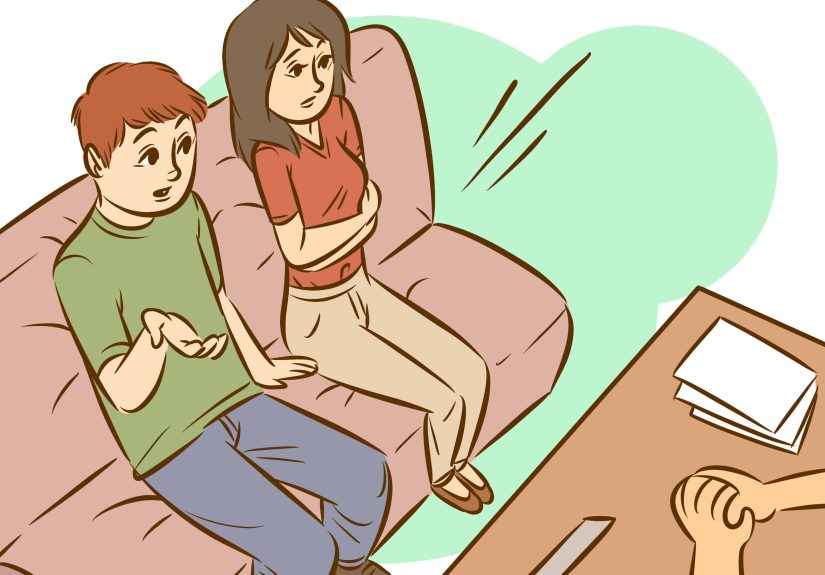
If your fear of falling in love is intense, persistent, or connected to trauma, therapy can help. A therapist may use cognitive behavioral therapy, attachment-focused therapy, trauma-informed care, exposure-based strategies, or mindfulness techniques to help you understand your patterns and practice safer ways of connecting.
You do not need to wait until your love life looks like a disaster documentary. Therapy is useful when the same pattern keeps repeating: you want love, you find it, you panic, you push it away, and then you miss it. Professional support can help you break the cycle with compassion instead of self-blame.
How to Let Someone Love You Without Panicking
Receiving love can be surprisingly difficult. Compliments may make you uncomfortable. Consistency may feel suspicious. A partner’s kindness may trigger the thought, “What do they want?” To practice receiving love, start small.
When someone compliments you, resist the urge to argue. Say, “Thank you.” When someone helps you, notice the discomfort but let the help land. When your partner shows affection, pause before deflecting with humor. Humor is wonderful, but sometimes it is a tiny escape hatch with jokes painted on it.
Letting yourself be loved means allowing good experiences to register. Your brain needs repeated evidence that care can be safe. Over time, affection becomes less like a threat and more like nourishment.
What to Do When You Want to Run Away
The urge to run often appears when intimacy deepens. Before acting on it, use the “24-hour rule.” Unless there is actual danger, give yourself one day before making a big relationship decision. During that time, journal, breathe, walk, talk to a trusted friend, or ask yourself what triggered the reaction.
Then choose one honest action. You might tell your partner, “I felt overwhelmed after our conversation, but I do not want to shut down.” That sentence is small, but it is powerful. It interrupts the old pattern and gives connection a chance.
500-Word Experience Section: What Healing This Fear Can Feel Like
Imagine someone named Maya. She is smart, funny, and perfectly capable of handling work deadlines, family drama, and complicated online return policies. But when someone loves her gently, she becomes suspicious. Her last relationship ended badly, and before that, she grew up in a home where affection was unpredictable. Sometimes love meant warmth; sometimes it meant criticism. So when her new partner, Daniel, treats her with patience, her first thought is not “How sweet.” It is “What is the catch?”
At first, Maya handles fear the way many people do: she becomes busy. Extremely busy. Suddenly every drawer in her apartment needs organizing. She delays replying to texts. She tells herself Daniel is probably too nice, which is a fascinating accusation when you think about it. Then, when he asks if everything is okay, she nearly says, “Yes, totally,” which is the international phrase for “absolutely not.”
But this time, Maya tries something different. She pauses. She writes down what she is afraid of: “If I let him in, he will leave. If I need him, I will lose power. If he sees my anxiety, he will think I am too much.” Seeing the thoughts on paper makes them less magical. They are not prophecies. They are old fears wearing current clothes.
Instead of disappearing, Maya tells Daniel, “I like you, and that is bringing up some fear for me. I may need to move slowly.” Daniel does not mock her or pressure her. He says, “Thank you for telling me. We can go slowly.” Her nervous system does not instantly transform into a peaceful yoga instructor, but something softens. She learns that honesty does not always create rejection.
Over the next few months, Maya practices receiving care in small doses. When Daniel brings soup while she is sick, she says thank you instead of insisting she is fine. When she feels the urge to start a fight after a very sweet date, she takes a walk and realizes the date felt intimate, and intimacy scared her. She comes back and says, “I got overwhelmed.” This is not glamorous. There is no movie soundtrack. But it is healing.
Sometimes she still gets triggered. Healing fear of love is not a straight line; it is more like a hiking trail designed by someone with a questionable sense of direction. But Maya becomes more aware. She learns that love does not require her to abandon herself. She can have boundaries and closeness. She can ask for reassurance without apologizing for having feelings. She can enjoy consistency without calling it boring.
The most important change is not that Maya stops feeling fear forever. It is that fear stops driving the car. It can sit in the back seat, muttering occasionally, but it no longer chooses the destination. That is what progress often looks like: not fearless love, but courageous love. Not perfect trust, but practiced trust. Not a heart with no scars, but a heart that learns it can open again.
Conclusion: Love Is a Risk, But So Is Staying Closed Forever
Being afraid of being loved or falling in love usually makes sense when you understand the story behind it. Your fear may be trying to protect you from abandonment, engulfment, betrayal, shame, or pain you once experienced. Thank it for trying to help, then gently remind it that you are allowed to grow.
You do not have to jump into love with both feet and no helmet. You can move slowly. You can communicate clearly. You can set boundaries. You can choose emotionally safe people. You can get therapy. You can practice receiving care one moment at a time.
Love will always involve vulnerability, but vulnerability is not the same as weakness. It is the doorway to being known. And while not every relationship will last forever, learning how to love and be loved can make your life wider, warmer, and more honest. Your heart does not need to become fearless. It only needs to learn that it can be brave.
Note: This article is for educational and self-improvement purposes only. If fear of love, trauma, anxiety, or relationship distress is significantly affecting your daily life, consider speaking with a licensed mental health professional.