Table of Contents >> Show >> Hide
- Why Homemade Window Cleaner Works (and When It Doesn’t)
- The Best Homemade Window Cleaner Recipes
- Recipe #1: The “Most People, Most Windows” Mix (Fast-drying & streak-resistant)
- Recipe #2: The Super Simple Vinegar Spray (Minimalist and effective)
- Recipe #3: The Alcohol-Forward “Dry Fast” Cleaner (Great for streak-prone glass)
- Recipe #4: The Cornstarch Cleaner (Old-school trick for extra sparkle)
- Recipe #5: The Outside Window Boost (For pollen, grime, and “what even is that?”)
- How to Make and Store Homemade Window Cleaner
- Tools That Make Your Cleaner Work Better
- Step-by-Step: How to Clean Windows Without Streaks
- Troubleshooting: Why Your Windows Keep Streaking
- Safety Notes (Because We Like Breathing)
- Conclusion
- Real-Life Experiences (What Actually Happens When You Try This at Home)
- SEO Tags
You know your windows need help when you’re not sure if it’s fog outside… or just last month’s fingerprints staging a
comeback tour. The good news: you don’t need a cabinet full of neon-blue mystery liquids to get glass sparkling. With
a few pantry staples and the right technique, you can make a homemade window cleaner that cuts grime, dries fast, and
doesn’t leave your panes looking like a modern art project titled “Streaks in D Minor.”
This guide breaks down the best DIY window cleaner recipes, why they work, when to use which one, and the pro moves
that make the difference between “pretty good” and “wow, I can see my neighbor’s questionable porch décor in 4K.”
Why Homemade Window Cleaner Works (and When It Doesn’t)
Most window grime is a combo of dust, oils (hello, handprints), pollen, cooking residue, and mineral spots from hard
water. A great cleaner needs to do three jobs:
- Loosen and dissolve grime (especially oils and sticky dirt)
- Lift it off the glass so you don’t just smear it around
- Evaporate cleanly so it doesn’t dry into streaks
Vinegar helps break down mineral residue and general dirt. Rubbing alcohol speeds up evaporation (less streaking) and
boosts degreasing. A tiny amount of dish soap can cut greasy buildup. And distilled water reduces mineral deposits
that can cause hazy residue.
When homemade cleaners aren’t the best choice
-
Electronics and coated screens (TVs, monitors, some tinted films): Many screens have coatings that
don’t play nicely with vinegar or alcohol. Use a dry microfiber cloth or manufacturer-approved method instead. -
Severe hard-water etching: If minerals have etched the glass, cleaning helpsbut you may need a
dedicated polishing product (or professional restoration).
The Best Homemade Window Cleaner Recipes
Choose one recipe and stick with it. “Kitchen-sink chemistry” is how people accidentally create fumes, ruin finishes,
or make a spray bottle that smells like regret.
Recipe #1: The “Most People, Most Windows” Mix (Fast-drying & streak-resistant)
Best for: everyday indoor windows, mirrors, glass doors, and quick touch-ups
- 2 cups distilled water
- 1/2 cup white vinegar (or apple cider vinegar if that’s what you’ve got)
- 1/4 cup 70% rubbing alcohol (isopropyl alcohol)
- 2 drops grease-cutting dish soap (optional, but helpful)
- 1–2 drops essential oil (optional, purely for scent)
Why it works: Vinegar tackles general grime and light mineral residue. Alcohol evaporates quickly,
which helps prevent streaks. A couple drops of dish soap help lift oily fingerprintsjust don’t overdo it or you’ll be
rinsing forever.
Recipe #2: The Super Simple Vinegar Spray (Minimalist and effective)
Best for: lightly dirty interior windows and mirrors
- 1 cup distilled water
- 1 cup white vinegar
Why it works: It’s straightforward, inexpensive, and surprisingly effective. If the vinegar smell
bothers you, ventilate the room and remind yourself it fades quicklyunlike the smell of mildew, which moves in and
pays rent.
Recipe #3: The Alcohol-Forward “Dry Fast” Cleaner (Great for streak-prone glass)
Best for: humid climates, bathroom mirrors, and anyone tired of re-wiping
- 1 cup rubbing alcohol
- 1 cup distilled water
- 1 tablespoon white vinegar
Why it works: This mix dries quickly. That’s a big deal because streaks often happen when cleaner
lingers and partially evaporates, leaving behind residue.
Recipe #4: The Cornstarch Cleaner (Old-school trick for extra sparkle)
Best for: very smudgy glass, mirrors, and glass that always seems “cloudy”
- 2 cups distilled water
- 1/4 cup rubbing alcohol
- 1/4 cup white vinegar
- 1 tablespoon cornstarch
Important: Shake well before every use. Cornstarch settles, and nobody wants a spray nozzle clogged
by a tiny cornstarch brick.
Recipe #5: The Outside Window Boost (For pollen, grime, and “what even is that?”)
Best for: exterior windows with heavy dirt
- 1 cup distilled water
- 1 cup white vinegar
- 1 teaspoon mild dish soap
Why it works: Outdoor windows collect more oily grime (pollution, tree sap mist, barbecue smoke).
The soap helps lift that layer so the vinegar and wiping can do their jobs.
How to Make and Store Homemade Window Cleaner
- Use a clean spray bottle. Residue from old products can cause streaking or weird reactions.
- Add ingredients in order: water first, then vinegar and alcohol, then soap (if using).
- Label the bottle clearly. “Window Cleaner” + ingredients + date.
- Store safely. Keep away from kids/pets and out of direct sunlight. Room temp is fine.
Pro tip: Distilled water is a cheat code
If your tap water is hard, it can leave mineral residue behind. Distilled water helps your DIY cleaner dry clearer,
especially on large panes where you can’t “buff away” everything before it dries.
Tools That Make Your Cleaner Work Better
Homemade cleaner mattersbut technique and tools matter more. If you’ve been cleaning windows with a fuzzy paper
towel, I’m not judging you. I’m just saying your windows have been through enough.
- Microfiber cloths: low lint, high absorbency, great for buffing
- Squeegee: the fastest way to get streak-free glass on larger surfaces
- Soft brush or vacuum: for tracks, frames, and sills (do this first)
- Bucket + sponge (outside windows): for the initial wash when grime is heavy
Step-by-Step: How to Clean Windows Without Streaks
1) Start with the “boring” parts: frames, tracks, and sills
Dust and grit in the tracks can wash onto your clean glass and ruin everything. Vacuum or wipe frames and sills
first. If screens are dusty, remove and clean them separately, then let them dry fully.
2) Pick the right time (your windows have an opinion)
Clean on a cloudy day or when windows aren’t in direct sun. Sunlight makes cleaner evaporate too fast, which can
increase streaking before you’ve wiped everything evenly.
3) Spray smart (don’t flood it)
Mist the glassdon’t soak it. Too much cleaner can drip into frames and leave residue at the edges.
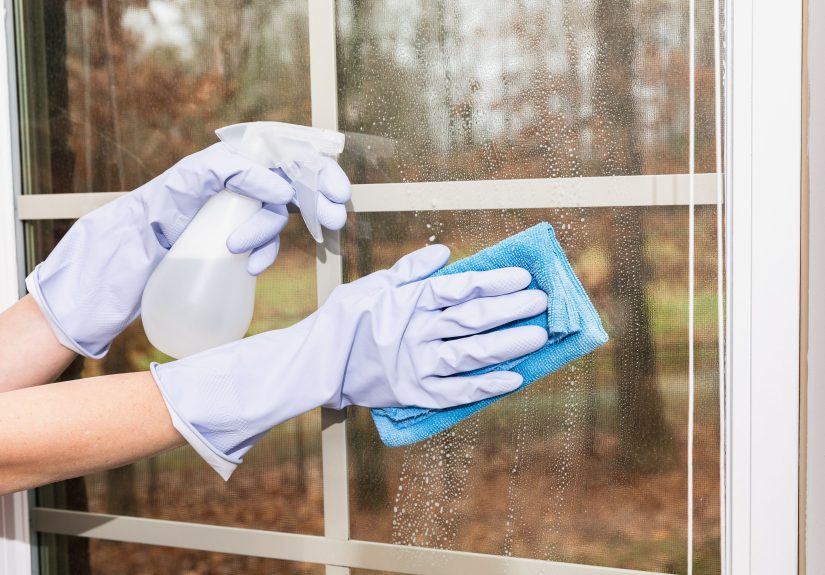
4) Wipe top to bottom with microfiber
Use a clean microfiber cloth, working from the top down. For big panes, fold the cloth into quarters; when one side
gets damp or dirty, flip to a clean section.
5) Upgrade to a squeegee for large windows
Squeegees remove liquid uniformly (which is basically the definition of “no streaks”). Hold the squeegee at a steady
angle and use a consistent motion. Wipe the blade with a lint-free cloth after each pass.
- Technique idea: Start at the top and work across in an “S” pattern, slightly overlapping strokes.
- Edge control: Finish by wiping the edges and corners with a dry cloth.
6) Do the “double-check” trick
Once dry, look at the glass from a slight angle. If you see streaks, buff with a dry microfiber cloth using light
pressure. Most streaks are just leftover moisture or residue that needs a final polish.
Troubleshooting: Why Your Windows Keep Streaking
Problem: Streaks that appear as it dries
- Likely cause: too much soap or hard water minerals
- Fix: switch to distilled water; reduce soap to 1–2 drops; buff with a dry microfiber
Problem: Smears and cloudy haze
- Likely cause: oily film (kitchen windows are famous for this)
- Fix: use the alcohol-forward recipe; do a first pass, then a second light mist and polish
Problem: Spots that won’t budge
- Likely cause: mineral deposits
-
Fix: hold a vinegar-dampened cloth on the spot for 1–2 minutes, then wipe and rinse with water,
then dry
Safety Notes (Because We Like Breathing)
- Never mix bleach with vinegar, ammonia, or rubbing alcohol. Dangerous gases can form.
- Don’t mix DIY cleaners together “just to use them up.” Make one batch, use it, then rinse the bottle.
- Ventilate when using vinegar/alcohol spraysespecially in small bathrooms.
- Label and store safely away from kids and pets.
- Patch test if you have tinted window film or special coatings.
Conclusion
The best homemade window cleaner is the one you’ll actually usebecause it’s simple, effective, and doesn’t leave you
stuck in a loop of spray-wipe-sigh-repeat. For most homes, a mix of distilled water, vinegar, and a bit of rubbing
alcohol hits the sweet spot: it cleans fast, dries quickly, and keeps streaks from moving in permanently.
Pair your DIY cleaner with microfiber cloths, a good squeegee, and the underrated superpower of cleaning frames and
tracks first, and your windows will look so clear you’ll wonder if the glass is still there. (It is. Please don’t
walk into it.)
Real-Life Experiences (What Actually Happens When You Try This at Home)
The first time I tried a homemade window cleaner, I was convinced it would be one of those “internet miracles” that
works only in perfectly lit kitchens where nobody actually cooks. My reality was a living room window with
fingerprints at toddler height, a couple of mysterious smudges at dog-nose level, and a fine dust coating that
appeared the moment I thought the word “clean.” I started with the simple vinegar-and-water spray, and it handled the
general haze surprisingly welllike, “wait, is that the actual view?” well. But the greasy fingerprints? Those needed
reinforcements. The moment I added rubbing alcohol (and kept the soap to literally a couple drops), the glass stopped
smearing and started cooperating.
Another time, I tackled the outside windows after a pollen-heavy week. If you’ve never watched yellow pollen film
laugh at your paper towels, you haven’t truly met spring. This was the moment I learned the value of a two-step
approach: wash first, polish second. I used a bucket of warm water with a tiny bit of dish soap to loosen the grime,
then followed with the DIY alcohol-vinegar spray for the final wipe. The difference was dramatic. The first pass got
the “gross” off. The second pass made it shine. When I skipped the wash step on one window as an experiment, it
looked clean from far away… and then I turned my head and saw streaks shaped like my bad decisions.
The cornstarch recipe was the most “grandparent-approved” thing I tried, and it really did give an extra-bright
finish on a bathroom mirror that always seemed foggy no matter what I used. The catch: you must shake the bottle
like you’re mixing a fancy cocktail, and you must buff thoroughly. If you spray and casually wipe, you can end up
with faint residuebasically, cornstarch’s way of saying, “I said commit.” When I did it right (spray,
wipe, then polish with a dry microfiber), the mirror looked ridiculously crisplike it had been replaced.
My biggest “aha” moment wasn’t even about ingredientsit was about timing and tools. Cleaning on a sunny day made the
solution dry too fast, and I couldn’t keep up. Switching to a cloudy afternoon instantly helped. Upgrading from paper
towels to microfiber cloths also changed everything: less lint, better absorption, and no weird fuzz stuck on the
corners. And when I finally used a squeegee correctlysteady angle, wipe the blade after each passI understood why
pros love them. It’s faster, cleaner, and oddly satisfying in a “watching paint dry but better” kind of way.
If you’re new to DIY window cleaner, here’s the most realistic advice I can offer: make a small batch first, try it
on one or two windows, and adjust. If your glass is greasy (kitchen windows, patio doors), lean on alcohol and go
easy on soap. If your water is hard, use distilled water. If your streaks keep returning, the culprit is usually
residueeither minerals, too much soap, or a cloth that’s already damp and dirty. Once I started swapping to a clean,
dry microfiber for final buffing, streaks became rare. Not impossible (nothing is impossible when dogs exist), but
rare.