Table of Contents >> Show >> Hide
- What Is Green Dye in Minecraft?
- How to Make Green Dye in Minecraft
- Where to Find Cactus in Minecraft
- Step-by-Step: Green Dye Recipe for Beginners
- Common Mistakes Players Make
- What Can You Use Green Dye For in Minecraft?
- How Green Dye Helps You Make Other Colors
- Should You Build a Cactus Farm?
- Best Building Ideas for Green Dye
- Quick Tips to Make Green Dye Faster
- Conclusion
- Player Experience: What Making Green Dye Feels Like in a Real Minecraft World
If you have ever stared at your plain Minecraft base and thought, “This place needs more swampy charm, more jungle energy, and possibly a bed that looks like it belongs to a proud broccoli enthusiast,” then green dye is your new best friend. The good news is that the green dye recipe in Minecraft is simple. The slightly annoying news is that Minecraft makes you work for it just enough to feel like you earned your decorating privileges.
Unlike many other dyes that come from flowers or easy crafting combinations, green dye in Minecraft comes from smelting cactus. That is the whole trick. No dramatic wizard ritual. No rare mob drop. No suspicious cave loot. Just a cactus, a furnace, and enough patience to survive a trip through the desert without getting distracted by literally everything else in the game.
In this guide, you will learn how to make green dye in Minecraft, where to find cactus fast, how to avoid common beginner mistakes, what green dye is used for, and why this humble little color is more useful than it looks. By the end, you will be ready to turn your base from “starter shack with emotional damage” into something far more stylish.
What Is Green Dye in Minecraft?
Green dye is one of the color items used to customize blocks, gear, decorations, and other craftable objects in Minecraft. It is part of the game’s broader dye system, which lets players recolor everything from wool and beds to banners, stained glass, terracotta, fireworks, candles, and even some armor setups.
What makes green dye special is that it does not come from tossing a flower into a crafting grid. Instead, you have to smelt cactus in a furnace. That makes it feel a little more industrial than the other dyes, like it clocked into work before showing up to your crafting table.
It is also a key ingredient in other color recipes. If you want to make certain shades like lime or cyan in some crafting paths, green dye becomes part of the chain. So even if you are not obsessed with the color green, this dye still matters for a bigger Minecraft dye guide strategy.
How to Make Green Dye in Minecraft
The Easy Crafting Recipe
Here is the short version, the quick version, and the version your future self will wish you memorized sooner:
- Get 1 cactus
- Place it in a furnace
- Add any fuel in the bottom slot
- Wait a few seconds
- Collect 1 green dye
That is it. One cactus becomes one green dye. No crafting table recipe is needed for the dye itself. If you searched for how to get green dye in Minecraft because you assumed it was some complicated blending formula, Minecraft has decided to be surprisingly reasonable for once.
What You Need
- Cactus – the main ingredient
- Furnace – required to smelt the cactus
- Fuel – coal, charcoal, wood, or another basic fuel source
If you do not have a furnace yet, craft one with eight cobblestone blocks arranged around the outside of a crafting table grid, leaving the center empty. Once the furnace is down, place cactus in the top slot and fuel in the bottom slot. A moment later, green dye pops out like a tiny reward for surviving desert landscaping.
Where to Find Cactus in Minecraft
If you want to know how to get cactus in Minecraft, head to dry biomes. The most reliable places are deserts and badlands. Cactus naturally appears in these hot, sandy areas, often standing around as if it knows you need it and plans to make you walk a little farther anyway.
To collect cactus, simply break it and pick it up. You do not need a special tool. Your hand works fine, which is great news for beginners and terrible news for anyone who wanted this process to sound more heroic.
One small warning: cactus hurts when you touch it. Minecraft decided realism mattered here. So do not run into it while harvesting unless your survival strategy involves taking damage for no reason. That technique has not tested well.
Best Places to Look for Cactus Fast
- Desert biomes – the easiest and most common source
- Badlands biomes – another reliable place to find cactus
- Village areas near deserts – useful if you want nearby shelter and supplies while gathering
If you are starting a fresh survival world, finding a desert early can be a big win. Cactus is not just useful for green dye. It is also handy for farming and decoration, which means one trip can pay off long-term.
Step-by-Step: Green Dye Recipe for Beginners
- Find a cactus. Explore a desert or badlands biome and break at least one cactus block.
- Craft or place a furnace. If you already have one in your base, even better.
- Add fuel. Coal and charcoal are great choices, but basic wood fuel works too.
- Put the cactus in the top slot. The furnace will begin smelting.
- Collect your green dye. One cactus gives you one green dye.
This is the easiest possible version of the Minecraft green dye recipe. Once you have done it once, you will probably never forget it. It is one of those recipes that feels too simple, right up until you forget the cactus and walk all the way home with a furnace and no ingredient. A classic Minecraft character-building moment.
Common Mistakes Players Make
Trying to Craft It at a Table
A lot of players assume green dye works like flower-based dyes. It does not. You cannot place cactus into a crafting grid and expect magic. For green dye, the furnace is mandatory.
Confusing Cactus with Cactus Flower
This one trips people up in newer conversations about Minecraft. Cactus flowers are associated with pink dye, not green dye. If your goal is green, you still need the actual cactus block. So yes, the spiky plant makes green, while the cute flower goes off in another color direction entirely. Minecraft loves keeping everyone humble.
Bringing Home Too Little Cactus
Because one cactus only gives one green dye, beginners often collect just a few blocks and then immediately regret their life choices after deciding to make green wool, green glass, green banners, and a matching bed. Gather more than you think you need.
Ignoring Automation
If you use green dye often, a cactus farm saves time. Since cactus is the core ingredient and green dye depends on it, automatic cactus farming can turn a slow little crafting chore into a steady supply line.
What Can You Use Green Dye For in Minecraft?
This is where green dye stops being a cute little crafting footnote and starts pulling real weight. Once you have it, you can use it to add color and personality all over your world.
Popular Green Dye Uses
- Green wool for builds, pixel art, and soft interiors
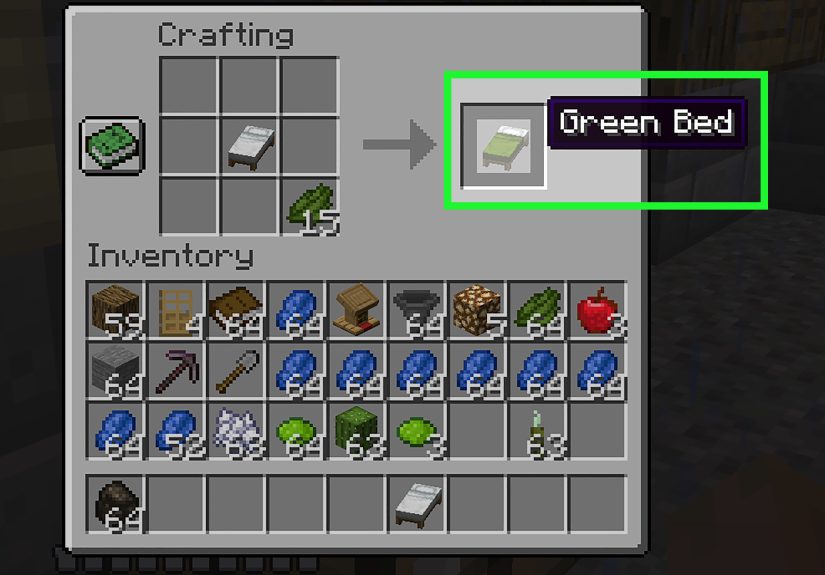
- Green beds if your bedroom needs forest-core energy
- Green stained glass for windows, greenhouses, and fantasy builds
- Green concrete powder and concrete for modern builds and bold color palettes
- Green banners for flags, emblems, and base decoration
- Terracotta and decorative blocks for texture-heavy design
- Fireworks for custom color effects
- Candles for mood lighting with actual style
- Leather armor for custom looks
- Sheep and collars for color-coding animals and pets
- Shulker boxes for organized storage with color labels
In other words, green dye is perfect for players who love building, organizing, decorating, and showing off just a tiny bit. Which, to be fair, describes most Minecraft players once they stop punching trees in panic mode.
How Green Dye Helps You Make Other Colors
Green dye is also part of several broader crafting paths. For example, it is commonly used to make lime dye when combined with white dye in a crafting table. It can also be part of creating cyan dye when combined with blue dye.
That means green dye is not just a final product. It is also a stepping stone. If you enjoy experimenting with color palettes for banners, glass, armor, or wool, keeping green dye around gives you more flexibility across the board.
Should You Build a Cactus Farm?
If you only need one or two green beds, probably not. If you are building a giant jungle temple, a green glass dome, a themed village, or an overly ambitious frog sanctuary with matching banners, then yes, a cactus farm is worth it.
Cactus farms are useful because green dye depends on cactus, and cactus is one of those materials that feels common until you suddenly need a lot of it. A simple automatic setup can steadily collect cactus while you mine, explore, or get dramatically lost underground.
Why a Cactus Farm Helps
- Saves repeated desert trips
- Creates a steady green dye supply
- Supports larger building projects
- Pairs well with furnaces for bulk smelting
- Makes color-based storage and design easier long-term
Even a small farm can keep you stocked. And once you experience the joy of having cactus show up automatically, it becomes very hard to go back to wandering the desert manually like a dye pilgrim.
Best Building Ideas for Green Dye
Not sure what to do with your freshly crafted dye? Here are a few easy ideas:
Nature-Themed Base
Use green stained glass, green banners, and green wool accents to create a base that feels tucked into the landscape instead of dropped onto it.
Wizard Tower or Potion Room
Green glass and green candles work beautifully in fantasy interiors. The color adds that “I absolutely know forbidden recipes” vibe without forcing you to explain what is in the cauldron.
Storage Color Coding
Green shulker boxes and banners can help label farming supplies, saplings, plants, and nature materials. Organization has never looked so leafy.
Jungle or Swamp Build Palette
Green pairs well with dark oak, moss, mud, stone brick, and copper. It is a strong color for moody, overgrown, or adventure-themed builds.
Quick Tips to Make Green Dye Faster
- Collect a whole stack of cactus during your first desert trip
- Smelt in batches instead of one at a time
- Store extra fuel near your furnace
- Set up a cactus farm if you decorate often
- Use green dye as part of larger color recipes for more variety
The smartest Minecraft players are not always the ones with the biggest castles. Sometimes they are just the ones who remembered to grab extra cactus before walking home.
Conclusion
So, how do you make green dye in Minecraft? Easy: smelt cactus in a furnace with fuel, and collect the green dye that comes out. That is the core recipe, and it stays wonderfully simple. The real challenge is not the recipe itself. It is resisting the urge to redesign half your base once you realize how many items look better in green.
Green dye is useful, beginner-friendly, and surprisingly important for builders who enjoy customization. It helps you make colorful beds, banners, glass, wool, candles, concrete, armor accents, and even other dye combinations. Once you learn the recipe, it becomes one of those small Minecraft skills that keeps paying off every time you want your world to look more polished.
If you are just starting out, gather more cactus than you think you need. If you are a long-term survival player, consider building a cactus farm. Either way, green dye is one of the easiest ways to add personality to your world without a complicated setup. Not bad for something that starts life as a spiky desert plant with a terrible attitude.
Player Experience: What Making Green Dye Feels Like in a Real Minecraft World
The funny thing about learning how to make green dye in Minecraft is that it usually starts with a very ordinary moment. You are not setting out to become a master decorator. You are just wandering around, collecting wood, punching leaves, maybe trying not to get blown up by a Creeper in front of the house you spent twenty minutes building. Then you see someone else’s build with green glass, matching banners, a cool bed, and a storage room that looks suspiciously organized. Suddenly, you are emotionally invested in color.
That is usually when the cactus mission begins.
For a lot of players, the first trip to the desert is memorable because it feels like a side quest that accidentally becomes the main story for an hour. You leave home meaning to grab “just a few cactus blocks,” and then the world pulls you into its usual nonsense. There is a cave nearby. Then a ruined portal. Then a village. Then night falls and now you are sprinting through sand with half a hunger bar, three rotten flesh, and a growing sense that this may have been a poorly managed outing.
But when you finally get home and smelt that first cactus into green dye, it feels weirdly rewarding. It is such a tiny item, yet it unlocks a lot. Suddenly your bed matches the theme of your room. Your sheep are not random anymore. Your banners start looking intentional. Your build stops feeling like a pile of blocks and starts feeling like a place with an actual style.
Green dye also tends to change how players think about gathering resources. Once you realize one cactus only gives one dye, you stop treating cactus like scenery and start seeing it as inventory value. You become the kind of player who spots a desert and immediately thinks, “Excellent, I have found my paint supply.” It is a slightly ridiculous transformation, but it is a real one.
There is also something satisfying about using green in Minecraft specifically. It works with nature builds, fantasy builds, overgrown ruins, potion rooms, greenhouse roofs, and jungle-themed houses. It plays nicely with moss, dark wood, copper, stone, and glass. It can be calm or dramatic depending on what you pair it with. In other words, green dye is not flashy in the way red or purple can be, but it quietly makes a lot of builds look better.
And once players get used to that, many of them eventually build a cactus farm. Not because they have to, but because they are tired of pretending their decorating habit is casual. That is the real Minecraft experience right there: one simple green dye recipe turns into a furnace line, a farm, a chest system, and a house that somehow now has a color palette plan. All because of one cactus. Frankly, that little desert plant deserves more respect.