Table of Contents >> Show >> Hide
- A Charming DIY Wreath for Garden Lovers
- Why Mini Terra Cotta Pot Wreaths Are So Popular
- Supplies You’ll Need
- Step-by-Step: How to Make a Mini Terra Cotta Pot Wreath
- Design Variations for Every Season
- Practical Tips and Troubleshooting
- Styling Your Mini Terra Cotta Pot Wreath
- Extra : Real-Life Experiences and Pro Tips
- Wrap-Up: A Small Project with Big Impact
A Charming DIY Wreath for Garden Lovers
If you’re the kind of person who can’t walk past the garden aisle without “just checking” the pots,
this project is going to make your heart do a little somersault. A mini terra cotta pot wreath is
a charming mix of garden decor and front-door style: tiny clay pots, moss, faux succulents, and
flowers all tucked onto a wreath form. It looks high-end, but you can put it together in an
afternoon with simple supplies.
Crafters and bloggers across the U.S. love this idea, using everything from grapevine wreaths to
wire frames, plus mini pots as small as 2 inches. Many tutorials recommend threading floral wire
through the drainage holes of each pot and attaching them to a wreath form, then filling them with
moss, faux plants, or seasonal stems for year-round decor.
Below, you’ll learn step by step how to make your own mini terra cotta pot wreath inspired by
projects shared on Hometalk and other popular DIY sites. We’ll cover everything: the best size
pots to buy, whether to age or paint them, how to attach them securely, and a few styling tricks
so your wreath looks like it came from a boutique garden shop.
Why Mini Terra Cotta Pot Wreaths Are So Popular
Terra cotta already has serious garden cred. It’s classic, slightly rustic, and works with just
about any decorating style from farmhouse to cottagecore. Using miniature pots in a wreath takes
that familiar material and turns it into wall art. DIY blogs and home decor magazines highlight
clay pot wreaths as an eye-catching way to bring outdoor charm to your entryway or porch, often
for a fraction of the cost of a store-bought wreath.
A mini terra cotta pot wreath is:
- Seasonless: Swap out the plants or flowers in the pots for spring, summer, fall, or holidays.
- Customizable: Paint the pots, age them, stencil them, or keep the natural clay.
- Budget-friendly: Many makers use dollar-store pots, moss, and faux succulents.
- Beginner-friendly: It’s mostly arranging, wiring, and gluingno fancy tools required.
Supplies You’ll Need
Exact materials vary from tutorial to tutorial, but most mini terra cotta pot wreaths use a similar
core list. Here’s a reliable starting point.
Core Materials
- Wreath base: 12–18 inch grapevine wreath or wire wreath frame.
- Mini terra cotta pots: 10–18 pots, 2–3 inches tall, depending on your wreath size.
- Floral wire: 22–24 gauge; flexible but strong enough to hold the pots.
- Wire cutters: For snipping floral wire.
- Hot glue gun and glue sticks: For securing moss and decorative elements.
- Floral moss: Spanish moss, reindeer moss, or sheet moss for a natural, “garden-y” look.
- Faux succulents or flowers: Small picks or stems that fit into mini pots.
- Jute twine or ribbon: For hanging and for a finishing bow if you like.
Optional for Extra Style
- Aging mix for pots: White or gray craft paint diluted with water, garden lime, or textured paint to create a patina.
- Foam or floral foam: To anchor stems inside each mini pot.
- Mini signs or tags: “Welcome,” “Herbs,” or seasonal sayings.
- Small natural elements: Pinecones, seed pods, or dried hydrangeas for extra texture.
Step-by-Step: How to Make a Mini Terra Cotta Pot Wreath
Step 1: Plan Your Design
Before you grab the glue gun, do a quick “dry run.” Lay your wreath form on a table, then place the
mini terra cotta pots on top to see how many you’ll need and how you want them to situpright,
tilted, or a mix. Country living–style wreaths often angle the pots in different directions so the
arrangement feels organic rather than perfectly symmetrical.
Decide:
- Do you want pots all the way around, or just clustered at the bottom or to one side?
- Will you fill every pot with plants or just a few for a lighter look?
- Do you prefer a wild, cottage-style wreath or a more balanced, evenly spaced design?
Step 2: Age or Paint the Pots (Optional)
Many DIYers love the look of aged terra cottasoft, chalky, and slightly weathered. To mimic that
antique finish, lightly dab diluted white or gray paint on the pots with a sponge or brush, then
wipe back the excess. Others use garden lime or baking soda in paint for extra texture.
You can also:
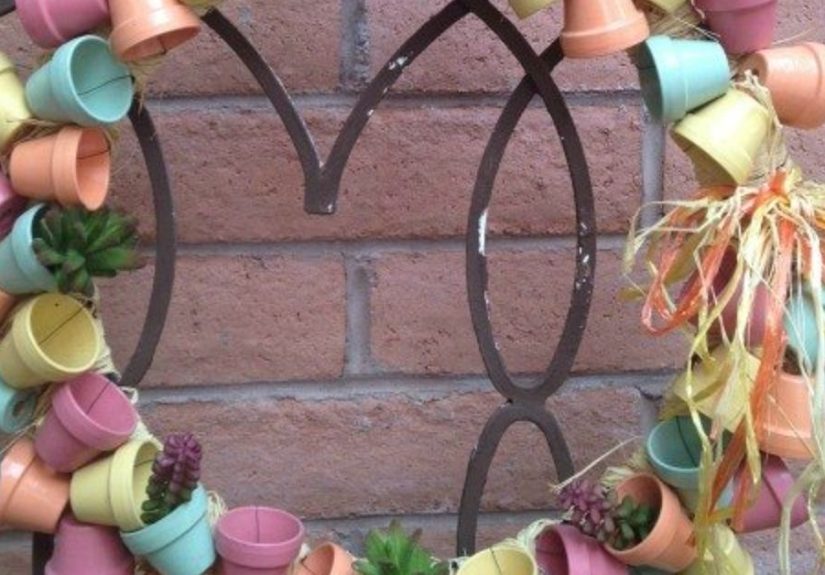
- Paint each pot a different pastel color for a spring wreath.
- Use black or charcoal for a modern farmhouse look.
- Stencil small words or numbers (“No. 1,” “Grow,” “Bloom”) on a few pots.
Let the pots dry completely before you attach them; any moisture or tacky paint can weaken the glue
or wire grip.
Step 3: Attach the Mini Pots to the Wreath
Most tutorials agree: floral wire is your best friend here. To attach each mini pot:
- Cut an 8–12 inch length of floral wire.
- Thread the wire through the pot’s drainage hole so the wire ends come out of the top.
- Place the pot where you want it on the wreath base.
- Wrap both wire ends around the grapevine or wreath frame from the back.
- Pull the wire snug so the pot sits tightly against the wreath, then twist to secure.
Keep the pots close together but not crammed; you want enough room to tuck moss and plants in
between. For a fuller look, slightly overlap the rims of neighboring pots, alternating the angle so
the wreath feels like a little clay pot parade.
Step 4: Fill the Pots with Moss and Faux Plants
Once your pots are wired into place, it’s time to give them “life.” Many crafters start by adding a
small piece of floral foam or crumpled paper inside each pot to lift the decorations higher.
- Place foam or filler inside each pot if needed.
- Hot glue a tuft of moss on top to hide the foam and soften the edges.
- Press faux succulents, small flower picks, or greenery stems into the moss, using a dab of glue if they wobble.
You can mix texturessucculents, eucalyptus sprigs, tiny daisies, or dried hydrangea blossomsto
echo the layered look seen in many clay pot wreath tutorials.
Step 5: Add Finishing Touches
This is where your wreath really becomes your own:
- Tuck extra moss between the pots to hide any visible wire.
- Add a small wooden sign or tag in the center with “Welcome,” “Garden,” or your house number.
- Tie a bow from jute or ribbon and attach it at the top or bottom.
- For a cottagecore feel, add a few butterflies, bees, or bird picks.
When everything is secure and the glue has cooled, attach a hanging loop at the back with wire or
twine, and your mini terra cotta pot wreath is ready for the door.
Design Variations for Every Season
One of the big perks of this project is how easy it is to restyle. Several DIY bloggers show how
they reuse the same clay pot wreath all year, simply swapping out the contents of the pots.
Spring and Summer Ideas
- Spring blooms: Mini tulips, daisies, or lavender picks with bright green moss.
- Succulents: A mix of faux echeveria and trailing vines for a modern, sculptural look.
- Herb-themed wreath: Faux rosemary, thyme, and basil sprigs for a kitchen door.
Fall and Holiday Ideas
- Autumn makeover: Swap in mini pumpkins, berries, and warm-toned flowers.
- Holiday pots: Add tiny ornaments, faux evergreens, and red berries for a Christmas version.
- Winter neutral: Use frosted greenery, pinecones, and white berries for a soft, snowy feel.
Practical Tips and Troubleshooting
Keeping the Wreath Lightweight
Clay is heavier than grapevine and faux flowers, so it’s smart to think about weight. Smaller pots,
fewer pots, and a sturdy wreath hanger make a big difference. Some makers stick to 2–3 inch pots
and avoid filling them with heavy materials, relying mostly on moss and lightweight faux stems.
What If the Pots Shift?
If you hang your wreath and a pot starts to droop, don’t panic. Take it down and:
- Tighten the wire from the back of the wreath.
- Add a second piece of wire for extra stability.
- Use a small dot of hot glue between the pot and the wreath base as a backup.
Indoor vs. Outdoor Display
Many clay pot wreaths are designed for a covered porch or indoor use. Terra cotta and hot glue
don’t always love direct, harsh weather. If your door gets intense sun or rain, consider hanging
the wreath inside a storm door, on an interior wall, or using stronger outdoor-safe adhesive in
addition to wire.
Styling Your Mini Terra Cotta Pot Wreath
Once you’ve built your wreath, it can do more than just hang on the front door.
- Above a console table: Hang it over a narrow entry table styled with a few real plants.
- As a centerpiece: Lay the wreath flat on a table and place a large pillar candle or lantern in the center.
- On a garden fence: Use it as a playful accent among climbing vines.
- In a sunroom: Pair it with plant shelves and woven baskets for a greenhouse vibe.
Extra : Real-Life Experiences and Pro Tips
After you’ve made one mini terra cotta pot wreath, you start to realize just how addictive this
project can be. People who’ve shared their versions online often talk about how it becomes a kind
of “signature piece” for their home. You can swap out the plants for the seasons, tweak the colors,
and even change the theme entirely without rebuilding the whole wreath every time.
One common experience crafters mention is that the planning phase takes longer than the
actual assembly. You might spend a good 20–30 minutes moving pots around the wreath form, adjusting
angles and gaps until it looks right. Don’t rush this part. Taking the time to get a balanced look
at the beginning makes the wiring and decorating feel much smoother.
Another helpful tip people share is to treat the wreath like a clock face when you’re placing the
pots. Start at “12, 3, 6, and 9 o’clock” firstattach a pot in each of those positionsthen fill
in between. That trick helps avoid crowding all the pots at the bottom or accidentally leaving a
bare spot near the top.
If you’re using dollar-store mini pots, you may notice that a few have slightly uneven rims or
rough edges. Many DIYers simply embrace the imperfections, since they add to the rustic charm. But
if a pot wobbles when you set it on the wreath, you can sand the bottom lightly or position it next
to another pot so they support each other. Hot glue between the two pots can also stabilize them
without being visible from the front.
A lot of crafters enjoy the “aging” step more than they expected. Turning bright orange clay into
something that looks like it’s been sitting in a potting shed for years is strangely satisfying.
People often experiment on one test pot first, trying different mixes of paint and water or dabbing
on layers with a sponge. If you’re nervous about overdoing it, start with very watered-down paint
so you can slowly build up the aged effect rather than covering the pot in solid white.
One smart suggestion from experienced makers is to keep the wreath fairly neutral if you’d like to
use it all year. For example, age the pots for a softer finish, use green moss, and stick mostly to
greenery and succulents instead of bold flowers. Then, when a holiday rolls around, you can tuck a
few seasonal pieces into the potstiny hearts for Valentine’s Day, mini flags for summer, or
glittery snowflakes for winterwithout redoing the whole thing.
Storage is another thing people don’t always think about at first. Clay pots are sturdy, but the
wreath still needs a little TLC once the season is over. Many crafters store their terra cotta pot
wreaths flat in a large box, cushioned with tissue paper or bubble wrap between the pots. It’s also
a good idea to remove anything extremely delicate, like dried flowers, if you know they’ll get
crushed in storage. Faux succulents and hardy faux greenery usually hold up well from year to year.
Finally, be prepared for compliments. Visitors tend to notice a mini terra cotta pot wreath right
away, partly because it’s not something you see on every door. People often ask whether you bought
it or made it yourself. If you’re willing to share, you can talk them through the simple steps and
maybe even host a little wreath-making get-together. Since most of the supplies are easy to find at
craft stores, big-box garden centers, and dollar stores, it’s an accessible project for friends and
familyeven those who don’t think of themselves as “crafty.”
Whether you lean into a classic garden look with aged pots and hydrangeas or go colorful and quirky
with painted pots and bright blooms, a mini terra cotta pot wreath is a surprisingly versatile DIY.
It’s small enough for apartment doors, charming enough for farmhouse porches, and customizable
enough that you can reinvent it again and again. Once you’ve made one, don’t be surprised if you
start eyeing the mini pot aisle with a whole new level of excitement.
Wrap-Up: A Small Project with Big Impact
A mini terra cotta pot wreath is proof that you don’t need complicated tools or expensive supplies
to create standout decor. With a simple wreath base, a handful of mini clay pots, some floral wire,
and a bit of imagination, you can build a piece that feels personal, playful, and polished.
The best part is that this project isn’t a one-and-done craft. You can keep updating your wreath
to match the seasons, your mood, or your latest color obsession. If you love gardening or just love
the look of terra cotta, this wreath brings that vibe right to your front doorno green thumb
required.