Table of Contents >> Show >> Hide
- What You’ll Learn
- A Quick Sentence-Structure Primer (So the Steps Make Sense)
- The 12 Steps to Improve Sentence Structure
- Step 1: Audit your “default sentence pattern”
- Step 2: Put the main point where readers expect itearly
- Step 3: Use active voice when it improves clarity
- Step 4: Fix fragments by giving them a complete thought
- Step 5: Break up run-ons and comma splices
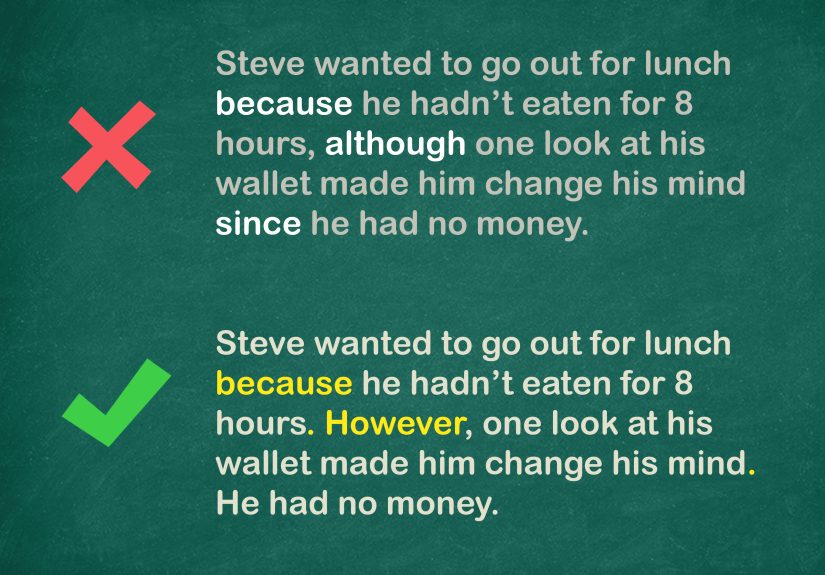
- Step 6: Put modifiers next to what they modify (avoid accidental comedy)
- Step 7: Use parallel structure to make lists and paired ideas smooth
- Step 8: Mix sentence types for rhythm (simple, compound, complex)
- Step 9: Improve flow with transitions (and don’t overdo them)
- Step 10: Cut wordiness without cutting meaning
- Step 11: Check agreement and pronoun clarity
- Step 12: Edit in passesstructure first, polish last
- Quick Practice Drill (5 Sentences)
- Real-World Experiences Writers Commonly Have (and How These 12 Steps Help)
- Wrap-Up
Sentence structure is the skeleton of your writing. When it’s sturdy, your ideas stand tall. When it’s wobbly, even brilliant thoughts can face-plant.
The good news: improving sentence structure isn’t about sounding “fancy.” It’s about sounding clearand clear writing is persuasive writing.
In this guide, you’ll learn 12 practical steps to improve sentence structure for emails, essays, blog posts, and everything in between. Expect real examples,
quick fixes, and a few gentle jokesbecause grammar is serious, but we don’t have to be.
A Quick Sentence-Structure Primer (So the Steps Make Sense)
A sentence usually works best when readers can quickly locate three things: who (subject), does what (verb), and
to what (object). The restdetails, descriptions, timing, reasonsshould support that core.
Clauses: the building blocks
- Independent clause: can stand alone. The team finished the draft.
- Dependent clause: needs help. Because the deadline was close…
Most sentence structure problems happen when clauses get misconnected (run-ons), under-built (fragments), or overloaded (wordy “sentence lasagna”).
The steps below fix those issues in a repeatable way.
The 12 Steps to Improve Sentence Structure
Step 1: Audit your “default sentence pattern”
Most writers repeat a favorite pattern without realizing itoften starting sentences with the same word (“I,” “This,” “There,” “It”) or stacking the
same structure again and again. Repetition isn’t always bad, but unintentional repetition makes writing feel flat.
Try this: Highlight the first 3–4 words of each sentence in a paragraph. If many begin the same way, you’ve found an easy upgrade.
Quick fix: Vary your openings with:
- a dependent clause (When the data arrived, we updated the plan.)
- a transitional phrase (However, the results weren’t consistent.)
- a specific subject (The marketing dashboard showed the drop.)
Step 2: Put the main point where readers expect itearly
If your sentence takes the scenic route before it reaches the verb, readers work harder than they need to. Strong structure often means getting the
subject and verb on the page soonerthen adding details.
Before: In light of the recent changes to our timeline and the new requirements, it is important to note that we need another review.
After: We need another review because the timeline and requirements changed.
This isn’t “dumbing down.” It’s respecting your reader’s attention span (which, on the internet, is basically a goldfish with Wi-Fi).
Step 3: Use active voice when it improves clarity
Active voice usually makes sentences clearer because the doer of the action is obvious. Passive voice isn’t “illegal,” but it can hide responsibility
or make sentences longer.
Passive: The decision was made to postpone the launch.
Active: The leadership team postponed the launch.
When passive voice can be fine: when the doer is unknown, irrelevant, or intentionally de-emphasized (The window was broken overnight.).
Step 4: Fix fragments by giving them a complete thought
A fragment is an incomplete sentence. In blogs and marketing copy, fragments can be a deliberate style choice. In formal writing, they often look like
errorsbecause they usually are.
Fragment: Because the results were inconsistent.
Fix (attach it): We reran the test because the results were inconsistent.
Fix (rewrite it): The results were inconsistent, so we reran the test.
Editing tip: When you see a sentence starting with because, although, when, if, make sure it connects to a full main clause.
Step 5: Break up run-ons and comma splices
Run-ons happen when two independent clauses get glued together without proper punctuation or a connecting word. Comma splices are a specific version:
two independent clauses joined by a comma alone.
Problem: The draft is done, we should publish today.
Fix option A (period): The draft is done. We should publish today.
Fix option B (comma + conjunction): The draft is done, so we should publish today.
Fix option C (semicolon): The draft is done; we should publish today.
Choose punctuation based on the relationship: period = stronger separation, semicolon = closely related, conjunction = shows logic (and/but/so/yet).
Step 6: Put modifiers next to what they modify (avoid accidental comedy)
Modifierswords or phrases that describe somethingshould sit close to what they describe. If they drift, your meaning drifts too, and the sentence may
become unintentionally funny.
Misplaced modifier: She served sandwiches to the kids on paper plates. (Are the kids on plates? Tough childhood.)
Clearer: She served the kids sandwiches on paper plates.
Watch for dangling modifiers toointroductory phrases that don’t clearly attach to the right subject.
Dangling: After reading the email, the mistake was obvious.
Fixed: After reading the email, I noticed the mistake immediately.
Step 7: Use parallel structure to make lists and paired ideas smooth
Parallel structure means using the same grammatical pattern for items in a list or for ideas you’re linking. When structure matches, comprehension is
fasterand your writing sounds more confident.
Not parallel: The goal is to improve clarity, reducing wordiness, and readers should stay engaged.
Parallel: The goal is to improve clarity, reduce wordiness, and keep readers engaged.
Pro tip: If you use not only … but also or either … or, make sure what follows each part matches in form.
Step 8: Mix sentence types for rhythm (simple, compound, complex)
Sentence variety improves readability. Too many short sentences can feel choppy. Too many long sentences can feel exhausting. Structure is your pacing
toollike editing a movie scene.
- Simple: one independent clause. The product shipped.
- Compound: two independent clauses. The product shipped, and customers responded quickly.
- Complex: independent + dependent clause. Because the product shipped early, customers responded quickly.
Try this: In each paragraph, include at least one short sentence for emphasis and one longer sentence for detail.
Step 9: Improve flow with transitions (and don’t overdo them)
Transitions are reader instructions. They show how one sentence relates to the next: addition, contrast, cause, example, or conclusion.
Without transition: The first test failed. We changed the method.
With transition: The first test failed. As a result, we changed the method.
Common transition categories:
- Contrast: however, yet, on the other hand
- Cause/effect: therefore, as a result, because
- Example: for instance, for example
- Sequence: first, next, finally
Keep them natural. If every sentence starts with however, readers will feel like they’re in a debate with your paragraph.
Step 10: Cut wordiness without cutting meaning
Wordy sentences often hide the main action under piles of extra wordsespecially vague openings and long strings of prepositional phrases.
Concision is not about being tiny; it’s about being efficient.
Before: It is important to note that there are several reasons why this approach might not be effective.
After: This approach might not be effective for several reasons.
High-impact edits:
- Replace “there is/there are” with a real subject (There are three issues → Three issues remain).
- Prefer strong verbs (make a decision → decide).
- Delete filler (really, very, basically, in order to).
Step 11: Check agreement and pronoun clarity
“Correct” structure includes clean grammar signals so readers don’t stumble. Two common trouble spots:
Subject–verb agreement
Wrong: The list of items are on the table.
Right: The list of items is on the table. (The subject is list, not items.)
Pronoun reference
Unclear: When Jordan texted Alex, he sounded annoyed. (Who is “he”?)
Clear: When Jordan texted Alex, Jordan sounded annoyed.
If a pronoun could point to more than one noun, rewrite. Clarity beats mystery unless you’re writing a thriller.
Step 12: Edit in passesstructure first, polish last
Great sentence structure usually shows up during revision, not during the first draft. Try editing in passes so you don’t attempt to fix everything at once.
- Pass 1 (structure): fix fragments, run-ons, and confusing clause connections.
- Pass 2 (clarity): move the main point earlier; choose active voice when helpful.
- Pass 3 (style): add variety, parallelism, and rhythm.
- Pass 4 (cleanup): trim wordiness; check agreement and pronouns.
Bonus: Read the paragraph out loud. If you run out of breath, your reader might too.
Quick Practice Drill (5 Sentences)
Rewrite these using the steps above. Then compare with the sample revisions.
- Because the meeting ran long.
- The report is complete, it needs one more chart.
- Walking into the room, the instructions were confusing.
- The plan focuses on improving clarity, to reduce errors, and readers will trust us.
- It is important to note that there are a number of reasons why the change should be made.
Sample revisions
- Because the meeting ran long, we moved the next item to tomorrow.
- The report is complete, but it needs one more chart.
- When I walked into the room, the instructions felt confusing.
- The plan focuses on improving clarity, reducing errors, and earning reader trust.
- We should make the change for several reasons.
Real-World Experiences Writers Commonly Have (and How These 12 Steps Help)
Writers rarely struggle with sentence structure because they “don’t know grammar.” More often, they struggle because real life is messy: deadlines are tight,
ideas arrive out of order, and the brain tries to cram five thoughts into one sentence like it’s packing for a weekend trip with one backpack.
One common experience: you reread a paragraph you just wrote and think, “I know what this means… so why does it sound like a robot wrote it while juggling?”
That’s usually a structure issue, not an intelligence issue. Step 2 (main point early) helps immediately. If you rewrite the sentence so the subject and verb
appear sooner, the fog clears. Suddenly you’re not “noting the importance” of somethingyou’re actually doing something: deciding, testing, explaining,
recommending.
Another classic scenario happens in email. You’re trying to be polite, so you build a sentence that starts with a warm-up lap:
“I just wanted to reach out regarding the possibility that we might potentially…” At some point, the reader has aged three years. Step 10 (cut wordiness)
is the hero here. You can still be friendly while being direct: “Could you review this by Thursday?” Clear sentences reduce back-and-forth, which means fewer
follow-up emails, which means fewer tiny fires in your inbox.
School and academic writing create a different kind of pressure: writers often believe long sentences sound smarter. That’s how you get “sentence lasagna”
layers of clauses, prepositional phrases, and abstract nouns, all baked until nobody can find the verb. Step 8 (mix sentence types) helps you keep detail
without losing readers. You learn to alternate: a longer complex sentence to explain reasoning, then a short simple sentence to land the point. The rhythm
feels intentional, not accidental.
Creative writing has its own version of the problem: you want a scene to feel immersive, so you describe everythinguntil the sentence collapses under its own
descriptions. Step 6 (modifiers close to what they modify) prevents confusion and keeps imagery sharp. Readers can picture the scene without stopping to
interpret who is doing what. And Step 7 (parallel structure) helps when you build lists for style: “the rain, the neon, the late-night silence” hits harder
when the grammar matches.
Finally, almost every writer experiences the “proofreading trap”: fixing commas while the sentence itself is still broken. Step 12 (edit in passes) is a
game-changer. You stop trying to polish a sentence that needs rebuilding. First you fix the structure (fragment, run-on, dangling modifier). Then you refine.
Over time, these steps become automatic. You start drafting cleaner sentences in the first placenot because you memorized rules, but because you trained your
eye to spot patterns. That’s the real win: sentence structure becomes a tool you control, not a mystery you hope behaves.
Wrap-Up
Improving sentence structure is less about perfection and more about control. When you can connect clauses correctly, place modifiers cleanly, use parallel
structure, and vary rhythm, you can say exactly what you meanwithout making readers work overtime.
Pick one step to practice this week. Just one. Sentence structure improves fastest when you make small upgrades consistentlykind of like brushing your teeth,
but for your paragraphs (and with fewer minty aftertastes).