Table of Contents >> Show >> Hide
- Why Aerosol Cans Need Special Attention
- What Counts as an “Empty” Aerosol Can?
- What to Do with Part-Full Aerosol Cans
- What You Should Never Do
- A Simple Step-by-Step Disposal Guide
- Special Situations People Often Ask About
- How to Store Aerosol Cans Before Disposal
- The Best Rule of Thumb
- Real-World Experiences: What People Learn the Hard Way
- Conclusion
Aerosol cans are the overachievers of the household-products world. They spray paint, hairspray, cooking oil, disinfectant, bug killer, air freshener, and that mystery garage lubricant that somehow gets on everything except the squeaky hinge. But when the can is emptyor maybe kind of empty-ishpeople suddenly freeze. Does it go in the trash? The recycling bin? A hazardous waste drop-off? The back corner of the garage where questionable decisions go to age gracefully?
Here is the simple answer: an empty aerosol can and a part-full aerosol can are not the same thing. A truly empty can is often accepted in household trash or metal recycling, depending on your local program. A can that still contains product or pressure usually needs special handling and often belongs at a household hazardous waste facility or collection event. The tricky part is that local rules vary, which means there is one universal truth in the aerosol universe: when in doubt, check your city, county, or hauler’s disposal guide before you toss.
This guide breaks down what “empty” really means, how to handle part-full cans safely, what not to do, and how to avoid turning your cleaning day into a tiny waste-management thriller.
Why Aerosol Cans Need Special Attention
Aerosol cans are not just ordinary containers with an ego problem. They are pressurized metal cans designed to push out a product using gas. That means even when a can looks harmless, it may still contain propellant, leftover chemicals, or both. Depending on the product inside, an aerosol can may be flammable, toxic, corrosive, or simply hazardous when handled the wrong way.
That is why disposal guidance focuses on two big questions:
- Is the can completely empty?
- What kind of product was inside it?
A cooking spray can and a pesticide can may look like cousins at the family reunion, but disposal rules can treat them very differently once they are discarded. The can itself may be steel or aluminum and recyclable, but the leftover contents are what cause most of the trouble.
What Counts as an “Empty” Aerosol Can?
This is where people get into arguments with themselves in the kitchen. “It’s empty,” you say. Then the can makes one last sad hiss and suddenly you are in a gray area.
In practical household terms, an aerosol can is generally considered empty when:
- No more product comes out during normal use.
- You no longer hear pressure releasing when you press the nozzle.
- The can feels empty when shaken, with little to no product left inside.
Notice the phrase during normal use. That matters. The safest approach is to use the product as intended until it is gone. Do not try to “game the system” by spraying out the contents just to make disposal easier. If the label warns against that, believe it. The can is not inviting you to improvise.
Can Empty Aerosol Cans Be Recycled?
Sometimes yes, sometimes no. Many recycling programs accept empty aerosol cans with other metal containers. Others tell residents to place them in the trash. A few make special distinctions based on what the can contained. For example, some programs allow empty hairspray or cooking spray cans in recycling but want certain pesticide containers kept out.
That is why the best advice is wonderfully boring and extremely useful: check your local rules. Search your city or county waste wizard, recycling guide, or hauler’s accepted-materials list. A five-minute lookup beats a rejected bin sticker and a passive-aggressive note from your recycler.
If It Is Empty, Should You Remove the Cap?
Usually, yes. If your local recycling program accepts empty aerosol cans, remove the plastic cap and sort it according to local instructions. In many programs, the metal can and plastic cap are handled differently. If your local guide says otherwise, follow that guidance instead.
What to Do with Part-Full Aerosol Cans
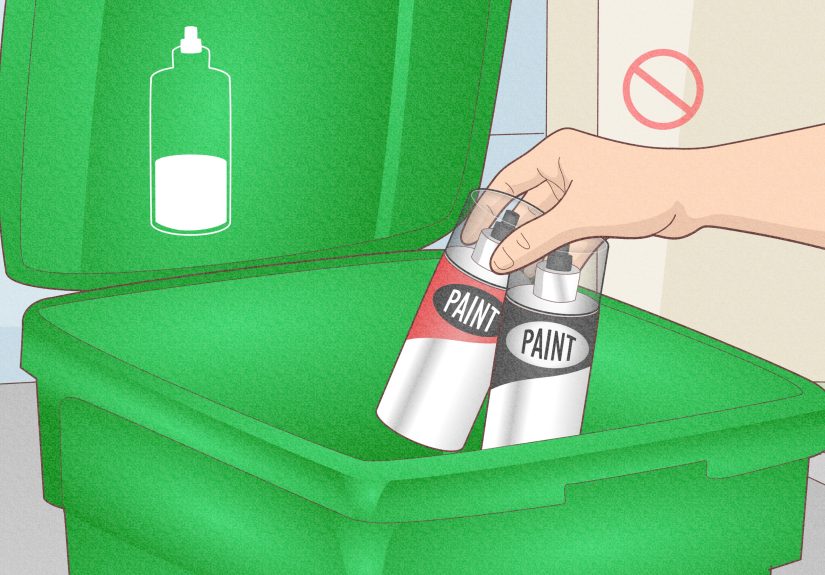
If the can still sprays product, still feels heavy, or clearly has material left inside, do not toss it in the trash or recycling just because you are feeling decisive. A part-full aerosol can may still be pressurized, flammable, or chemically reactive. In many communities, it belongs at a household hazardous waste facility, collection event, or approved special drop-off location.
This is especially true for products such as:
- Spray paint and primer
- Pesticides and insecticides
- Oven cleaner
- Automotive cleaners, lubricants, and degreasers
- Adhesives
- Expanding foam products
- Pepper spray or bear spray, where locally accepted
If your community offers a household hazardous waste program, that is usually the safest destination for part-full cans. Some counties have permanent drop-off sites. Others run weekend collection events. Some require proof of residency, and some charge a small fee. In other words, hazardous waste programs are like gyms: the policies vary wildly, but there is probably one somewhere near you.
Can You Just Use It Up First?
Sometimes, yesbut only through normal intended use. If you have a can of hairspray you already use, finishing it normally is usually the simplest path. But if the nozzle is broken, the product is old, the label warns against further use, or the can contains a hazardous product you no longer want, do not force it. A household hazardous waste program is the better answer.
And no, “I’ll just empty this can into the driveway and let nature sort it out” is not a responsible disposal method. Nature has already filed a complaint.
What You Should Never Do
Here is the short, memorable, magnet-on-the-fridge version:
- Do not puncture the can.
- Do not crush it.
- Do not burn or incinerate it.
- Do not store it near heat, sparks, or open flame.
- Do not pour the contents down a drain, onto the ground, or into a storm drain.
- Do not put full or partially full cans in curbside recycling unless your local program explicitly says you can.
Puncturing aerosol cans is one of those ideas that sounds efficient right up until it becomes a terrible story. Even seemingly “empty” cans can still contain pressure or residue. Crushing and puncturing can create fire risk, chemical exposure, and danger for sanitation workers and recycling staff. For ordinary households, disposal should be about safe handling, not DIY industrial processing.
A Simple Step-by-Step Disposal Guide
Step 1: Read the Label
Before you do anything, read the product label. Many aerosol products include storage, use, and disposal directions. If the label says do not puncture or incinerate, take that seriously. If it gives disposal instructions, start there.
Step 2: Decide Whether the Can Is Truly Empty
Press the nozzle briefly during normal use. If no product or pressure remains and the can feels empty, it may qualify as empty for local disposal purposes. If it still sprays, hisses, or feels heavy, treat it as part-full.
Step 3: Check Local Recycling and HHW Rules
Look up your local waste authority, city recycling guide, county household hazardous waste program, or hauler search tool. This step matters because one city may accept empty aerosol cans in curbside recycling while another wants them in trash, and a third wants them handled through a special drop-off system.
Step 4: Prepare the Can Properly
If your area accepts empty cans for recycling, remove the cap if required and place the can loose in the bin unless local instructions say otherwise. Do not flatten it. Do not bag it. Let the can stay recognizable as a metal container.
If the can is part-full, store it upright in a cool, ventilated place away from children, pets, and heat until you can bring it to the correct drop-off location.
Step 5: Transport It Safely
When taking part-full aerosol cans to a household hazardous waste facility, transport them in a box or bin so they stay upright and do not roll around your trunk like tiny metallic bowling pins. Keep them out of direct sun and avoid leaving them in a hot car longer than necessary.
Special Situations People Often Ask About
Spray Paint
Spray paint gets special side-eye for good reason. If the can is completely empty, some programs recycle it, while others allow it in trash. If it is part-full, it commonly belongs at a household hazardous waste program. Never assume leftover spray paint is curbside-friendly just because the can is metal.
Hairspray, Dry Shampoo, and Personal Care Sprays
These are among the most common household aerosol products. If fully empty, many communities accept them in recycling or trash, depending on local rules. If part-full, they may still be considered hazardous or at least unsafe for regular bins because of the propellant.
Cooking Spray and Whipped Topping
Food-related aerosols are often less dramatic from a hazard standpoint, but they are still pressurized containers. Empty ones may be accepted in recycling or trash, depending on local guidance. Part-full ones should still be checked against local rules, especially if the can remains pressurized.
Pesticide Aerosols
This is the category where caution should lead the parade. Even if the can appears nearly empty, pesticide products often have stricter disposal guidance. Some local programs want these containers trashed when empty, not recycled. If the can is part-full, use the household hazardous waste route unless your local authority says otherwise.
Pepper Spray or Bear Spray
These products are often specifically flagged by local hazardous waste programs. Do not put a full or partially full can into trash or recycling. Follow your local government’s special handling guidance. This is not a product category for guesses, vibes, or heroic optimism.
How to Store Aerosol Cans Before Disposal
If you cannot dispose of a can right away, store it sensibly:
- Keep it in a cool, dry, ventilated place.
- Store it away from stoves, heaters, direct sun, and flames.
- Keep it upright whenever possible.
- Do not leave it loose in a hot car or shed.
- Keep it out of reach of children and pets.
Basically, treat a part-full aerosol can like a moody little pressure vessel, because that is exactly what it is.
The Best Rule of Thumb
If you remember only one thing from this article, make it this: empty and part-full are two different disposal categories. An empty aerosol can is often manageable through regular household systems, though recycling versus trash depends on local rules. A part-full can usually needs household hazardous waste handling or another approved special collection option.
That one distinction can protect sanitation workers, prevent fires in trucks and sorting facilities, and save you from accidentally contaminating a load of recyclables. Not bad for a decision that takes less time than reheating coffee.
Real-World Experiences: What People Learn the Hard Way
Talk to enough homeowners, renters, maintenance crews, or garage-cleanout veterans, and you start hearing the same aerosol-can stories on repeat. Someone finds an old can of spray paint from a project completed during the era when everyone was apparently “distressing” furniture. Someone else discovers a half-used wasp spray can under the sink, a mystery lubricant in the garage, and dry shampoo in the bathroom cabinet that has not been touched since a haircut crisis two years ago. The first instinct is usually the same: toss everything into one bag and declare victory. Then comes the pause. “Wait. Are these safe to throw out?” That pause is the smart part.
One common experience is realizing that “empty” is not a philosophical concept. Plenty of people shake a can, hear almost nothing, and assume it is done. Then they press the nozzle and get one last blast across the patio furniture. Suddenly the can is not empty in spirit or in law. That moment teaches an important lesson: disposal depends on what is actually left inside, not on your emotional readiness to be done with the product.
Another familiar lesson comes during moves. People cleaning out apartments or houses often discover a pile of random aerosols from five different stages of life: hair products from one era, cleaners from another, and a can of spray adhesive that nobody remembers buying. It becomes obvious very quickly that aerosol cans are the junk-drawer version of chemistry. The wise move is to sort them by conditiontruly empty, clearly part-full, and “I do not trust this one”then check the local waste guide. That simple sorting step turns chaos into a manageable errand.
Families also learn that local rules are not always what they expect. One person grows up in a city where empty cans go in recycling, then moves somewhere that wants them in the trash. Another assumes all metal cans belong in the blue bin, only to find out their hauler treats aerosols differently. The experience can be mildly annoying, but it teaches a good habit: never rely on national assumptions when local disposal rules are what actually control the outcome.
Then there is the garage-in-summer lesson. Many people do not think about storage until they open a shed in August and realize they have created a tiny heat chamber full of pressurized products. That is when aerosol cans stop looking like ordinary household clutter and start looking like items that deserve a cooler, safer spot until disposal day. It is not dramatic. It is just responsible. And responsibility, admittedly, is not flashybut it is much better than explaining to a waste worker why your “probably fine” can ended up causing a problem.
The biggest takeaway from real-life experience is simple: aerosol cans are easiest to manage when you do not wait until they become ancient mystery objects. Use products up normally when you can. Buy only what you need. Keep similar products together. And when it is time to dispose of them, separate the truly empty cans from the part-full ones before you do anything else. It is a small habit that saves time, reduces risk, and keeps your garage from becoming an accidental museum of questionable pressurized decisions.
Conclusion
Disposing of aerosol cans is not hard once you know the one big dividing line: truly empty versus part-full. Empty cans may go in recycling or trash depending on your local program. Part-full cans often need household hazardous waste collection or another approved special drop-off. The label matters, the leftover contents matter, and your local rules matter most.
So the next time you find an old spray can under the sink or in the garage, resist the temptation to make a fast guess. Read the label, check whether it is actually empty, and look up your local disposal rules. It is safer, smarter, and much less exciting than an exploding can in a truckwhich is exactly the kind of boring outcome we want.