Table of Contents >> Show >> Hide
- Before You Start: The 5 Rules That Save White Shoes
- What You’ll Need (Basic Kit)
- How to Clean White Shoes by Material
- How to Clean White Rubber Soles and Midsoles
- How to Clean White Shoelaces and Insoles
- Can You Put White Shoes in the Washing Machine?
- How to Remove Common Stains From White Shoes
- How to Keep White Shoes White Longer
- Final Thoughts
- Extra Experience Notes (Real-World White Shoe Cleaning Lessons)
White shoes are the superheroes of your closet: they go with everything, photograph beautifully, and somehow attract dirt like they owe it money. The good news? You do not need a chemistry degreeor a panic-purchase replacement pairto bring them back to life.
This guide breaks down exactly how to clean white shoes based on the material: canvas, leather, mesh, suede, and more. You’ll also learn how to clean white shoelaces, brighten rubber soles, handle stains, and avoid the classic mistakes (like turning your sneakers into a melted art project in the dryer).
If you’ve ever wondered how to clean white sneakers without ruining them, you’re in the right place. Let’s save your shoes.
Before You Start: The 5 Rules That Save White Shoes
- Check the care label (or brand guidance) first. Some shoes can handle more moisture than others, and some should never be submerged.
- Remove laces and insoles. You’ll clean better, dry faster, and avoid mystery gray streaks around eyelets.
- Dry-brush first. Always knock off loose dirt before adding water. Mud plus water equals instant beige soup.
- Spot-test any cleaner. Even mild soap can affect dyes, finishes, or glues on some shoes.
- Air-dry only. Heat can warp shape, weaken glue, and age the material faster.
What You’ll Need (Basic Kit)
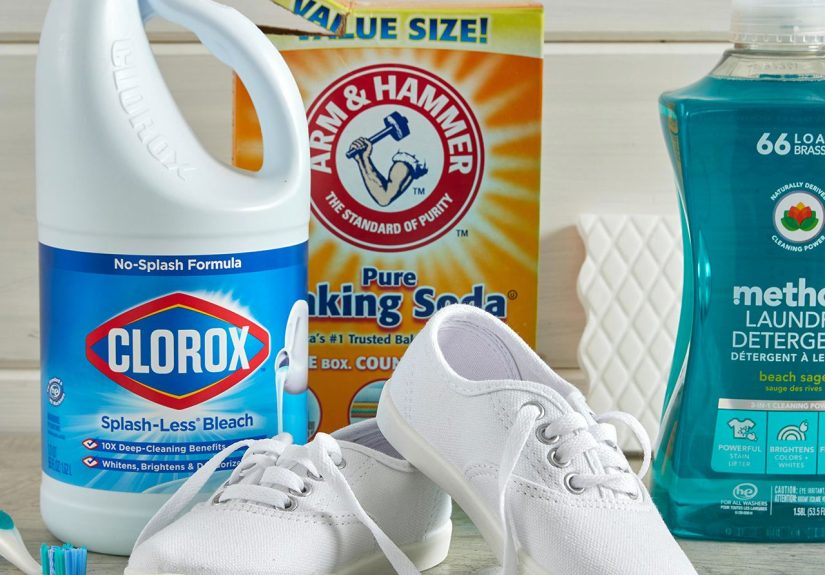
- Soft-bristle brush or old toothbrush
- Microfiber cloths or soft white rags
- Mild dish soap or mild laundry detergent
- Small bowl of lukewarm water
- Magic eraser (for rubber soles only)
- Paper towels or plain white paper (for stuffing shoes while drying)
- Optional: suede brush, suede eraser, leather conditioner, white vinegar, baking soda
How to Clean White Shoes by Material
1) White Canvas Shoes
Canvas is durable, but it’s also a stain magnet. The safest approach is hand-cleaning with a mild solution, especially for everyday sneakers. For lightly dirty canvas, a baking soda and white vinegar paste can work well. For heavier grime, mild soap and water is usually the better first move.
Step-by-step (canvas)
- Remove laces and insoles. Set them aside for separate cleaning.
- Brush off loose dirt. Pay extra attention to the seams, tongue edges, and around the rubber foxing.
- Choose a cleaner:
- Mild soap method: Mix a few drops of dish soap or mild detergent in warm/lukewarm water.
- Paste method (light dirt): Mix baking soda + white vinegar into a paste (or baking soda + water for a gentler option).
- Scrub gently. Use a soft brush or cloth in small circular motions. Don’t attack the shoe like it insulted your familytoo much force can fray canvas.
- Rinse residue. Wipe with a clean damp cloth (not dripping wet).
- Clean the rubber edges/soles. Use a magic eraser or soapy cloth on the rubber only.
- Stuff and air-dry. Use white paper towels/paper to hold the shape and absorb moisture.
Can you use bleach on white canvas shoes? Yes, but only with caution. A diluted bleach solution may help brighten white canvas or laces, but it should be avoided on leather, suede, and often on rubber trim because it can yellow or damage materials. If you use bleach, dilute it properly, wear gloves, spot-test first, and rinse thoroughly.
2) White Leather Shoes
Leather needs a gentler touch than canvas. It cleans up beautifully, but harsh scrubbing and strong chemicals can strip finish, dry the leather, or leave patchy spots.
Step-by-step (leather)
- Remove laces and brush off dust.
- Wipe down first with a slightly damp cloth. This lifts surface grime before soap touches the leather.
- Mix a mild soap solution. A few drops of dish soap in warm water is plenty.
- Clean in sections. Use a soft cloth or soft brush with gentle circular motions.
- Target scuffs carefully. A magic eraser can help on the rubber sole edge, but avoid using it on leather panels because it can wear the top finish.
- Wipe away soap residue. Use a clean damp cloth.
- Air-dry at room temperature. Stuff with paper to maintain shape.
- Condition the leather. Once fully dry, apply a leather conditioner to help keep it soft and less prone to cracking.
Pro tip: For small scuffs, a tiny amount of baking soda on a damp cloth can help, but use a light hand. Leather is not a kitchen pan.
3) White Mesh or Knit Shoes
Mesh and knit materials (including many running shoes) are lightweight and breathablebut they snag easily and can hold onto dirt and odor. The winning strategy is gentle cleaning with minimal abrasion and no harsh chemicals.
Step-by-step (mesh/knit)
- Dry-brush first. Use a soft brush to remove dust and debris.
- Mix mild cleaner + water. Use a small amount of dish soap or detergent in warm water.
- Use a cloth more than a brush. A microfiber cloth or sponge is often safer than heavy brushing.
- Work in gentle circles. Focus on stained zones first, then clean the rest evenly.
- Don’t soak the shoe. Wipe the exterior clean with a damp cloth instead of submerging the whole shoe.
- Air-dry completely. Stuff with paper to preserve shape.
Avoid: Bleach, strong solvents, and aggressive scrubbing. These can discolor or damage mesh. If you’re dealing with persistent odor, clean the insoles separately and let everything dry fully before reassembling.
4) White Suede (and Nubuck)
Suede looks amazing for about nine minutes, then life happens. The biggest rule with white suede is simple: use as little water as possible. Most suede should be spot-cleaned, not soaked.
Step-by-step (suede/nubuck)
- Make sure the shoe is dry before cleaning. Brushing wet suede can make a bad day worse.
- Brush off dirt. Use a suede brush or soft brush, ideally in one direction.
- Use a suede eraser for scuffs. Work slowly in layers.
- Treat stains selectively. Dab (don’t drench) with a suede-safe cleaner. Some guides also use a small amount of diluted white vinegar on a cloth for stubborn spots.
- For oily stains: Sprinkle cornstarch or talc, let it sit, then brush off.
- Let it dry fully. Then brush again to restore the nap.
- Optional: Apply suede protector after the shoe is fully dry.
Important: Do not machine-wash suede, and do not saturate it with water. Suede is dramatic, and honestly, it has earned the right to be.
5) White Patent Leather or Synthetic/Vinyl Finishes
Glossy materials tend to collect scuffs more than dirt. Start simple: wipe with water and a soft cloth. For stubborn marks, use a very gentle, targeted method and test first. These finishes scratch more easily than they look.
Best approach
- Wipe down with a damp soft cloth.
- Use a mild soapy solution if needed.
- Treat isolated scuffs carefully and test in a hidden area first.
- Dry with a clean cloth and avoid heat.
How to Clean White Rubber Soles and Midsoles
Sometimes your shoes are fine, but the soles look like they just finished a camping trip. Rubber usually cleans up faster than uppers, which is great because bright soles instantly make sneakers look fresher.
- Brush off dry dirt.
- Use a magic eraser or soapy cloth on the rubber only.
- For stubborn grime, scrub gently in circular motions.
- Wipe clean and dry.
If you’re using bleach-based methods on rubber, dilute properly, rinse thoroughly, and use caution. In many cases, soap + water + a magic eraser gets the job done without going full science lab.
How to Clean White Shoelaces and Insoles
Shoelaces
- Remove laces.
- Soak in warm soapy water.
- Massage gently by hand.
- Rinse and lay flat to air-dry.
For very dingy all-white laces, some guides recommend a short soak in a diluted bleach solution, then rinsing thoroughly. If you go this route, wear gloves and follow product directions exactly.
Insoles
- Remove insoles (if removable).
- Wipe or scrub gently with mild soap solution.
- Rinse lightly (don’t soak foam insoles if possible).
- Air-dry completely before putting them back.
Can You Put White Shoes in the Washing Machine?
Sometimes. But “sometimes” is doing a lot of work here.
Many cleaning experts and major shoe brands recommend hand-cleaning first because machine washing can loosen glue, warp shape, damage trims, or cause color bleedingespecially on leather, suede, and mixed-material sneakers. If the manufacturer says the shoes are washable and they’re fully fabric-based (like some canvas or mesh shoes), a machine wash may be possible.
If the label explicitly allows machine washing
- Remove laces and insoles
- Brush off mud first
- Use a mesh laundry bag
- Wash with towels to reduce banging
- Use mild detergent
- Use a gentle cycle and lower spin speed
- Air-dry only (never the dryer)
If you don’t know whether a pair is machine-safe, assume it’s not. Your shoes will forgive you for hand-cleaning. They will not forgive you for tumble drying.
How to Remove Common Stains From White Shoes
Grass and Mud
Let mud dry first, then brush it off before cleaning. For grass stains on canvas or fabric, use mild detergent and a soft brush. Some guides use targeted oxygen-based stain removers or bleach pens for white fabric only, but always spot-test and avoid leather/suede.
Yellowing
Yellowing can happen from sweat, sun exposure, product residue, or improper drying. Clean thoroughly, rinse away all cleaner residue, and air-dry away from direct sunlight. Bleach can brighten some white fabric in a diluted form, but overuse or improper use can make yellowing worse on certain materials and trims.
Scuffs
For rubber edges, a magic eraser is often the easiest fix. For leather uppers, use a soft cloth and mild soap first before trying anything abrasive.
Odor
Clean insoles separately, let shoes dry fully, and avoid storing damp shoes. A little baking soda inside the shoe (temporarily, then shake out) can help absorb odor between wears.
How to Keep White Shoes White Longer
- Clean stains early. Fresh stains are easier than “I forgot about this for six weeks.”
- Rotate pairs. Giving shoes time to air out helps preserve shape and reduces odor buildup.
- Use the right protector. Leather and suede benefit from material-specific protectant sprays/conditioners.
- Avoid direct heat and strong sun while drying. Both can mess with glues, shape, and color.
- Store them dry. Never put clean shoes away while still damp.
- Keep wipes handy for emergencies. Quick touch-ups can prevent stains from setting.
Final Thoughts
Knowing how to clean white shoes is less about one “miracle hack” and more about matching the method to the material. Canvas can usually handle more scrubbing, leather needs gentle cleaning and conditioning, mesh needs patience, and suede needs respect (and very little water).
Start with mild soap, a soft brush, and hand-cleaning. Use stronger options only when needed, and only on the right materials. In other words: don’t use a bleach cannon when a toothbrush will do.
Do this consistently, and your white shoes can stay bright enough to look intentionalnot “I wore these to a music festival and now we don’t talk about it.”
Extra Experience Notes (Real-World White Shoe Cleaning Lessons)
I’ve noticed that the biggest difference between shoes that clean up beautifully and shoes that stay dingy is timing. If you clean white shoes the same day they get dirtyor at least within a day or twothe process is usually fast and low-stress. A quick brush, a little soap, a damp cloth, and done. But if you let dirt, sweat, or grass stains sit for weeks, it becomes a full Saturday project with paper towels, multiple bowls, and a level of focus usually reserved for assembling furniture.
Canvas shoes are the most forgiving in everyday life. They may look terrible after a muddy walk, but they often bounce back surprisingly well with a basic cleaning paste or mild soap. The trick is not to oversaturate them. I used to think “more water = cleaner shoe,” and that is exactly how you end up waiting two days for your sneakers to dry while they sit by the window looking judgmental. Now I use a damp cloth for rinsing and only add more moisture where I actually need it.
Leather shoes taught me patience. Scrubbing hard feels productive, but gentle passes usually work better. A soft cloth, mild soap, and a follow-up conditioner can make white leather look dramatically better without damaging the finish. I’ve also learned that cleaning the soles first gives a huge visual win. If the rubber edges are bright again, the whole shoe looks cleaner, even before you finish the upper. It’s the sneaker version of making your bed: not everything is perfect, but the room suddenly looks organized.
Mesh shoes are where people get into trouble because they treat them like canvas. The material looks sturdy until it snags, pills, or gets fuzzy from aggressive brushing. For white running shoes, a microfiber cloth and gentle circular motions work better than “I will defeat this stain through force.” Also, letting them dry fully is non-negotiable. Half-dry mesh shoes can trap odor, and then you’ve solved the dirt problem only to unlock the “gym bag memory” problem.
Suede is the diva of the group. It looks luxurious, but it demands technique. The first time I cleaned suede, I used too much water and ended up with watermark drama. Once I switched to dry brushing, spot treatment, and slow stain removal, the results improved a lot. A suede brush and eraser really are worth having if you own white suede shoes. They save time, reduce risk, and make you feel oddly professional for someone cleaning sneakers at home in old pajamas.
The most useful habit, though, is boring: maintenance. A 2-minute wipe-down after wearing white shoes in dusty or wet conditions prevents deep staining, yellowing, and that “why do these look gray?” mystery. White shoes don’t need constant deep cleaningthey need consistent light cleaning. And yes, that is less exciting than a viral hack, but it’s also how your favorite pair survives another season.