Table of Contents >> Show >> Hide
- Why Box Turtle Care Is Different
- How to Care for Your Box Turtle: 15 Steps
- Step 1: Make Sure Your Turtle Is Legal and Ethically Sourced
- Step 2: Commit to the Long Haul
- Step 3: Choose the Right Enclosure Size
- Step 4: Build a Safe Outdoor Pen If Your Climate Allows
- Step 5: Create a Warm Side, a Cool Side, and a Basking Zone
- Step 6: Provide Proper UVB Lighting Every Day
- Step 7: Maintain Humidity, Not a Desert
- Step 8: Use Safe, Functional Substrate
- Step 9: Add Hides, Cover, and Enrichment
- Step 10: Offer a Balanced Omnivore Diet
- Step 11: Avoid Junk Foods and Common Diet Mistakes
- Step 12: Use Calcium and Vitamins the Smart Way
- Step 13: Keep Fresh Water Available at All Times
- Step 14: Handle Less, Observe More
- Step 15: Schedule Veterinary Care and Know Emergency Signs
- Common Box Turtle Care Mistakes to Avoid
- Conclusion
- What Caring for a Box Turtle Really Feels Like: Real-World Experiences and Lessons
- SEO Tags
Box turtles are charming, stubborn, oddly expressive little roommates. They can also be a surprisingly serious commitment. A healthy box turtle may live for decades, needs specialized lighting and humidity, and absolutely does not thrive on the old “bowl of lettuce and good vibes” method. If you want your turtle to stay active, bright-eyed, and gloriously unimpressed by your existence, proper husbandry matters.
This guide breaks down box turtle care into 15 practical steps, from choosing the right enclosure to spotting health problems before they become expensive emergencies. One important caveat before we start: different box turtle species and subspecies have slightly different needs. Eastern and three-toed box turtles usually need more moisture than ornate box turtles, so always confirm the details for your exact species with a reptile-savvy veterinarian.
Why Box Turtle Care Is Different
Box turtles are terrestrial turtles, not mini pond ornaments. They spend most of their lives on land, like humidity, enjoy burrowing and hiding, and need a shallow water source for drinking and soaking. They also rely on correct temperatures, UVB light, balanced nutrition, and low-stress housing to stay healthy. Get those basics right, and your turtle can do very well in captivity. Get them wrong, and problems such as swollen eyes, shell deformities, respiratory infections, dehydration, and metabolic bone disease can show up fast.
How to Care for Your Box Turtle: 15 Steps
Step 1: Make Sure Your Turtle Is Legal and Ethically Sourced
Before you buy anything, check your local and state laws. Box turtle ownership rules vary widely, and some states restrict or prohibit possession of native box turtles. Just as important, do not take a box turtle from the wild. Wild-caught turtles often decline in captivity, and removing adults from the landscape hurts already struggling populations. A captive-bred turtle from a reputable breeder or rescue is the better route for both animal welfare and conservation.
Step 2: Commit to the Long Haul
Box turtles are not short-term pets. They can live for decades, which means your turtle may outlast furniture, apartments, and at least one phase where you suddenly decide you are “getting really into minimalism.” Long lifespan also means you need a realistic plan for housing, veterinary care, and travel coverage. If you are not ready for a long relationship, this is the moment to be honest with yourself.
Step 3: Choose the Right Enclosure Size
When it comes to box turtles, floor space matters more than height. Adults need room to roam, thermoregulate, dig, and hide. Large indoor tortoise-table-style enclosures work far better than cramped glass tanks, and outdoor pens are often ideal when your climate is appropriate. Think spacious, secure, and escape-proof. Tiny setups may look neat in a corner, but they do not make for thriving turtles.
Step 4: Build a Safe Outdoor Pen If Your Climate Allows
Many keepers prefer outdoor housing because natural sunlight and weather rhythms can benefit box turtles. A proper pen should offer both sun and shade, well-draining soil, shelter from predators, and barriers that prevent climbing or burrowing escapes. In other words, this is not “let the turtle vibe in the yard.” It is a carefully designed habitat. If outdoor temperatures drop too low for your species, bring the turtle indoors rather than hoping it will magically become a weather forecaster.
Step 5: Create a Warm Side, a Cool Side, and a Basking Zone
Box turtles regulate body temperature by moving between warmer and cooler areas. Indoors, that means you need a real thermal gradient, not one lukewarm blob of air. A warm basking spot paired with a cooler retreat allows normal behavior, digestion, and activity. For many commonly kept box turtles, a basking area in the mid-80s Fahrenheit and a cooler side in the low-70s works well, with a slight nighttime drop. Use digital probe thermometers, not guesswork and optimistic hand-waving.
Step 6: Provide Proper UVB Lighting Every Day
UVB lighting is not a luxury add-on; it is essential for calcium metabolism and shell health in indoor setups. Without adequate UVB, box turtles can develop metabolic bone disease and other serious problems. Use a reptile-specific UVB bulb, position it correctly, and make sure no glass or plastic blocks the rays. Most bulbs also need regular replacement because they lose UVB output over time even when they still appear bright. In short, “the bulb still turns on” is not the same as “the bulb is still useful.”
Step 7: Maintain Humidity, Not a Desert
Humidity is where many new keepers go wrong. Most box turtles, especially mesic species like eastern box turtles, need a moist environment rather than bone-dry air. A humid hide, damp substrate, and regular misting can help keep the enclosure in a healthy range. For many eastern-type setups, 60% to 80% humidity is a common target. Dry air can contribute to dehydration, eye issues, poor shedding of skin, and respiratory trouble. Moist is good. Swampy and filthy is not.
Step 8: Use Safe, Functional Substrate
The best substrate depends on whether you are using a simple quarantine setup or a more naturalistic enclosure. For temporary or medical setups, paper-based substrates are easy to monitor and clean. For long-term housing, many keepers use naturalistic soil blends, leaf litter, or moisture-holding substrate that allows digging and maintains humidity. Whatever you choose, it should be non-toxic, easy to keep sanitary, and free of dangerous wood oils or sharp debris. Your turtle should be able to move, burrow, and stay clean without living on something sketchy.
Step 9: Add Hides, Cover, and Enrichment
A stressed turtle is not a happy turtle. Box turtles appreciate hiding places, leaf litter, logs, plants, and visual barriers that make them feel secure. A humid hide on the cool side is especially useful. Enrichment does not need to look like a tiny reptile amusement park; it just needs to encourage natural behavior. A bare enclosure may be easy to clean, but it can also be boring, stressful, and not especially kind.
Step 10: Offer a Balanced Omnivore Diet
Box turtles are omnivores, and their diet should reflect that. A good starting point for many adults is roughly half plant matter and half animal matter, though younger turtles often prefer and need more animal protein while adults usually lean more herbivorous. Good plant options include dark leafy greens, squash, mushrooms, edible flowers, and limited fruit. Good animal options include earthworms, crickets, snails, and other appropriate invertebrates. Variety is the secret sauce here. Feeding the same thing every week is how nutritional gaps sneak in.
Step 11: Avoid Junk Foods and Common Diet Mistakes
Some foods are technically edible but nutritionally weak. Iceberg lettuce is mostly crunchy water wearing a vegetable costume. Muscle meat alone is not a complete diet. Fruit should be a treat, not the main event. If you use commercial foods or low-fat dog food, do so as part of a broader plan, not as the whole menu. Many experts also recommend offering food on a plate or tray so your turtle does not swallow extra substrate with every bite.
Step 12: Use Calcium and Vitamins the Smart Way
Insects should be gut-loaded and dusted with a reptile-safe calcium supplement. Many box turtles also benefit from a multivitamin used in moderation, especially when advised by a veterinarian. Vitamin A is particularly important because deficiency can contribute to swollen eyelids, eye discharge, and other health issues in captive turtles. The goal is balance, not supplement confetti. Too little is a problem, and too much can be one too.
Step 13: Keep Fresh Water Available at All Times
Your box turtle should always have access to clean water for drinking and soaking. A shallow dish or saucer works best, and the water should be easy to enter and no deeper than is safe for your turtle. Many keepers sink the dish into the substrate so the turtle can walk in without feeling like it is climbing Mount Doom. Change dirty water daily, scrub the bowl regularly, and never assume yesterday’s muddy soup still counts as hydration.
Step 14: Handle Less, Observe More
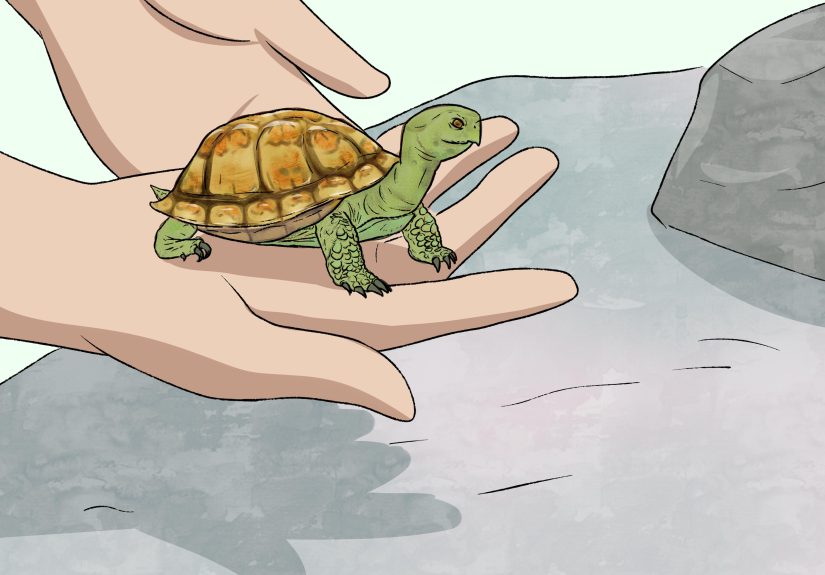
Box turtles are generally not cuddle pets. Most tolerate gentle, necessary handling, but many prefer not to be picked up unless there is a reason. When you do handle one, scoop from below, support the body, and keep a steady grip. Falls can cause serious shell trauma. The better habit is daily observation: watch appetite, posture, movement, shell condition, eyes, nose, breathing, and droppings. Your turtle will not fill out a wellness survey, so this is how you catch trouble early.
Step 15: Schedule Veterinary Care and Know Emergency Signs
A box turtle should see a reptile-experienced veterinarian for routine exams, fecal testing, and any sign that something is off. Do not wait for a full crisis. Urgent warning signs include swollen or closed eyes, bubbles from the nose, wheezing, open-mouth breathing, severe lethargy, refusal to eat beyond a normal brief slowdown, soft or misshapen shell growth, shell pits or foul odor, straining, prolapse, blood in stool, or sudden weakness. Brumation is another area where you need caution. Some keepers choose to keep captive turtles warm year-round, while others brumate healthy adults under veterinary guidance. Either way, do not improvise winter dormancy with a shrug and a basement corner.
Common Box Turtle Care Mistakes to Avoid
The biggest mistakes are remarkably consistent: using a setup that is too small, keeping the enclosure too dry, skipping UVB, feeding too much fruit or random protein, neglecting supplementation, letting hygiene slide, and handling the turtle like a toy. Another major mistake is releasing an unwanted pet into the wild. Captive turtles may not survive, and they can spread disease or disrupt local populations. If you can no longer keep your turtle, contact a reptile rescue, veterinarian, or wildlife authority for responsible next steps.
Conclusion
Good box turtle care is less about buying fancy gear and more about understanding how the animal actually lives. Your turtle needs space, warmth, UVB, humidity, variety in the diet, fresh water, low stress, and regular health checks. None of that is glamorous, but it is what keeps a box turtle healthy for the long haul. If you build the habitat thoughtfully and stay observant, your turtle can reward you with decades of quirky routines, determined little marches, and the occasional expression that says, quite clearly, “I did not ask for your opinion, but thanks.”
What Caring for a Box Turtle Really Feels Like: Real-World Experiences and Lessons
One of the most common experiences new box turtle keepers have is realizing that this animal is much more observant than expected. At first, people imagine a quiet reptile that just sits there like a decorative paperweight with legs. Then the turtle starts recognizing feeding time, exploring the same corners each morning, and heading straight for the favorite soaking dish like it has a schedule to keep. That is often the moment the care routine becomes more personal. You stop thinking of the turtle as a display pet and start thinking, “Oh, you have opinions.”
Another common lesson is that box turtles are creatures of consistency. Keepers often notice that appetite improves when the temperature gradient is correct, the lights come on at the same time each day, and the food arrives after the turtle has had time to warm up. Small husbandry changes can create big behavioral changes. A turtle that seemed lazy may become active once humidity improves. A picky eater may suddenly become enthusiastic when food is chopped smaller, brightened with colorful vegetables, or paired with favorite worms. Caring for a box turtle often teaches patience because the signs of success are subtle at first, then unmistakable.
Many keepers also talk about the learning curve around cleanliness. Box turtles can foul a water dish with incredible speed, often with the dramatic timing of a toddler who has just spotted a freshly cleaned floor. New owners sometimes underestimate how often water needs changing or how quickly damp substrate can go from healthy to nasty if spot cleaning is ignored. Over time, experienced keepers usually settle into a rhythm: clean water every day, messes removed fast, and full maintenance done before odors become a warning sign instead of a hint.
There is also a strong emotional side to the experience. Watching a box turtle bask comfortably, dig into leaf litter, or come over when it sees your feeding tray can be deeply satisfying. It is not flashy pet ownership. It is quieter than that. The reward comes from noticing the details: bright eyes, steady weight, smooth shell growth, a good appetite, and confident movement through the enclosure. Those little signs tell you that your care is working.
At the same time, many keepers learn humility fast. Box turtles are good at hiding illness, and sometimes the first clue is just that the turtle seems “not quite right.” Maybe it stays tucked in longer than usual. Maybe it skips a meal it would normally bulldoze. Maybe the eyes look puffy, or the shell develops a suspicious rough patch. Responsible keepers learn not to ignore those changes. The most valuable experience many people gain is realizing that early action matters. A prompt visit to a reptile veterinarian is almost always easier, cheaper, and kinder than waiting for a minor problem to become a disaster.
In the end, caring for a box turtle is often described as a slow-burn kind of joy. It is not about constant interaction. It is about stewardship. You create the right environment, pay attention, make adjustments, and earn the privilege of watching a fascinating little animal thrive on its own terms. That may not sound dramatic, but ask any dedicated box turtle keeper and they will tell you the same thing: once you learn the rhythm, it is hard not to admire these tiny armored weirdos.