Table of Contents >> Show >> Hide
- Why Canning Peaches Is Still One of the Smartest Summer Projects
- Choose the Right Peaches Before You Touch a Jar
- What You Need to Can Peaches
- Light Syrup vs. No Syrup: Which One Should You Choose?
- Step-by-Step: How to Can Peaches in Light Syrup or No Syrup
- Common Peach Canning Mistakes to Avoid
- How to Use Canned Peaches All Year Long
- What the Experience of Canning Peaches Feels Like in a Real Kitchen
- Final Thoughts
- SEO Tags
There are two kinds of people in January: the ones scraping frost off the windshield, and the ones opening a jar of home-canned peaches and grinning like it is still July. This article is for the second group, or for anyone who wants to join them.
If you have ever wondered how to can peaches in light syrup or no syrup without turning your kitchen into a sticky science experiment, the good news is that peach canning is wonderfully doable. Better yet, you do not need a heavy sugar syrup to preserve peaches safely. For home canning, sugar is mainly about flavor, texture, and color. That means you can choose a light syrup, hot water, or even fruit juice depending on how sweet you want the finished jars to be.
Below, you will find a clear, practical guide to canning peaches at home, including how to choose the best fruit, when to hot pack instead of raw pack, how long to process jars, and how to avoid the common mistakes that cause fruit float, weird color changes, or the dreaded failed seal. In other words: summer in a jar, minus the drama.
Why Canning Peaches Is Still One of the Smartest Summer Projects
Fresh peaches are glorious, but they are also famously rude about timing. One day they are firm and fragrant. The next day they are bruised, dripping, and plotting their own collapse in the fruit bowl. Canning gives those peaches a better ending.
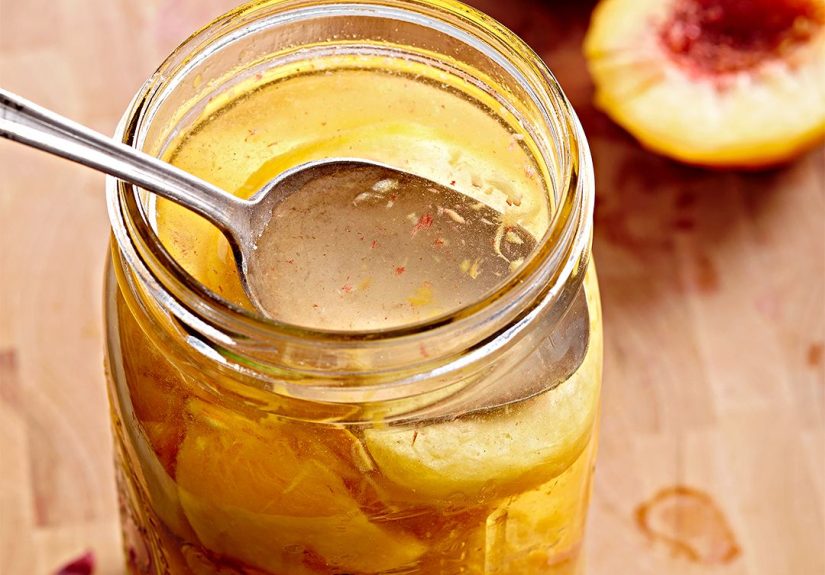
When you can peaches properly, you get shelf-stable fruit that is ready for cobblers, oatmeal, yogurt bowls, pancakes, smoothies, shortcake, or straight-from-the-jar snacking. Light syrup helps peaches hold their shape and flavor a little better during storage, while no-syrup packing keeps the ingredient list short and the sweetness lower. Neither choice is morally superior. This is canned fruit, not a reality show. Pick the version you will actually enjoy eating.
Choose the Right Peaches Before You Touch a Jar
Use yellow-fleshed peaches for safe home canning
This is the part that deserves a highlighter. For tested home canning directions, stick with yellow-fleshed peaches. White peaches are lovely for eating fresh, but they are not recommended for home canning because some varieties may not be acidic enough for standard peach canning instructions.
Look for ripe but still firm fruit
The best peaches for canning are ripe, mature, and flavorful, but not mushy. Avoid fruit with bruises, spoilage, deep cuts, or soft spots. Freestone peaches are especially convenient because the pit comes out easily, though clingstone peaches can still be canned if you are patient and not emotionally attached to speed.
How many peaches do you need?
A good rule of thumb is about 2 1/2 pounds of peaches per quart jar. If you are planning a canner load, expect to need around 11 pounds for 9 pints or roughly 17 1/2 pounds for 7 quarts. Translation: if you come home from the farmers market with a heroic box of peaches, you are on the right track.
What You Need to Can Peaches
- Yellow peaches
- Boiling-water canner with rack
- Clean canning jars, new lids, and bands
- Jar lifter, funnel, bubble remover or nonmetal spatula
- Large pot for syrup, water, or juice
- Large bowl of cold water for peeling
- Ascorbic acid or vitamin C solution to prevent browning
- Sugar, if making light syrup
Use new lids, not reused ones. And follow the lid manufacturer’s instructions rather than boiling lids like it is still 1978. Modern canning lids are not asking for a spa treatment.
Light Syrup vs. No Syrup: Which One Should You Choose?
Light syrup
If you want peaches that taste dessert-ready right out of the jar, light syrup is a great middle ground. It is sweet enough to support flavor and appearance without crossing into candy territory. A simple, practical light syrup is about 1 cup sugar to 1 quart water. Heat it until the sugar dissolves and the mixture comes to a boil.
Light syrup is ideal if you plan to use canned peaches for pies, crisps, upside-down cakes, or holiday desserts, because the fruit tends to hold its shape a little better and stay bright in storage.
No syrup
If you want less added sugar, you can safely can peaches in hot water or unsweetened fruit juice such as apple juice or white grape juice. This is the best option if you want more flexibility later, especially for savory dishes, lower-sugar breakfasts, or recipes where you control the sweetness at serving time.
Peaches canned without syrup may not look quite as glamorous after long storage, and the flavor can taste a bit less rounded than syrup-packed fruit. Still, they are safe, useful, and delicious. Think of them as the practical shoes of the pantry: not flashy, but always welcome.
Step-by-Step: How to Can Peaches in Light Syrup or No Syrup
1. Prepare the canner, jars, and lids
Wash jars in hot, soapy water and keep them hot until you are ready to fill them. Fill your boiling-water canner about halfway with water and start heating it. Prepare lids according to the manufacturer’s instructions.
2. Peel the peaches
Bring a large pot of water to a boil. Dip peaches into the boiling water for about 30 to 60 seconds, just until the skins loosen. Transfer them immediately to cold water. The skins should slip off easily. It is one of the most satisfying moments in home canning, right up there with hearing jars ping shut.
3. Pit, halve, or slice
Cut peaches in half, remove the pits, and slice if desired. Keep the peeled fruit in an ascorbic acid solution while you work so it does not brown. A common prep solution is 1 teaspoon powdered ascorbic acid per gallon of water, or six crushed 500-milligram vitamin C tablets dissolved in a gallon of water.
4. Prepare your packing liquid
For light syrup, combine water and sugar and bring to a boil. For no syrup, heat water or fruit juice to a boil. Keeping the liquid hot matters, because cold liquid and hot jars are a bad combination for both quality and workflow.
5. Decide between hot pack and raw pack
Hot pack is the preferred method for peaches. Simmer the drained fruit briefly in syrup, water, or juice until it reaches a boil, then pack the hot fruit into hot jars. Hot-packed peaches usually look better, float less, and keep quality longer in storage.
Raw pack is allowed, but it is more likely to produce floating fruit, trapped air, and slightly lower quality over time. If you want the prettiest jars and the least amount of pantry disappointment, go with hot pack.
6. Fill the jars
Pack peach halves or slices into hot jars, cut side down when possible. Ladle in hot syrup, water, or juice, leaving 1/2-inch headspace. Remove air bubbles with a nonmetal tool, adjust headspace if needed, wipe the rims, apply the lids, and screw on the bands fingertip tight.
7. Process in a boiling-water canner
At altitudes of 0 to 1,000 feet, use these processing times:
| Pack Style | Jar Size | Processing Time |
|---|---|---|
| Hot pack | Pints | 20 minutes |
| Hot pack | Quarts | 25 minutes |
| Raw pack | Pints | 25 minutes |
| Raw pack | Quarts | 30 minutes |
If you live above 1,000 feet, increase the processing time according to a current altitude chart from a trusted canning source. This is not optional. Altitude is one of those things that does not care about your confidence level.
8. Cool, check seals, and store
When processing is finished, remove the canner lid and let the jars rest briefly before lifting them out. Place jars on a towel or rack and let them cool undisturbed for 12 to 24 hours. Check the seals, clean the jars, label them, and store them in a cool, dark place. For best quality, use them within a year.
Common Peach Canning Mistakes to Avoid
Using white peaches
Stick with yellow-fleshed peaches for tested home canning directions.
Using overripe fruit
Very soft peaches can turn mushy in the jar. Save the squishy superstars for jam, smoothies, or immediate dessert glory.
Skipping the anti-browning step
That ascorbic acid soak helps preserve color and makes your jars look much more appetizing later.
Over-tightening the bands
Bands that are too tight can interfere with proper venting and sealing. Fingertip tight is enough.
Ignoring fruit float
Fruit float is common, especially with raw pack. It looks odd, but it is usually a quality issue, not a safety issue, as long as the jar sealed properly and there are no signs of spoilage.
Forgetting altitude adjustments
Always adjust processing time if you are at higher elevation. This is one of the biggest safety details in water-bath canning.
How to Use Canned Peaches All Year Long
Once your jars are lined up like little golden trophies, the fun begins. Spoon canned peaches over vanilla yogurt. Add them to overnight oats. Fold them into muffins. Layer them in trifles. Warm them gently with cinnamon and serve over pancakes or waffles. Tuck them into a grilled pork dinner for a sweet-savory twist. Or eat them cold with a fork while standing in front of the open fridge like the capable adult you are.
No-syrup peaches are especially handy in smoothies, compotes, and savory sauces. Light-syrup peaches shine in desserts and brunch dishes. So really, the best choice is often to can a few jars each way and let future-you decide.
What the Experience of Canning Peaches Feels Like in a Real Kitchen
Canning peaches is not just a food project. It is an atmosphere. It begins with a counter full of fruit that smells like a roadside stand and sunshine. The peaches are warm from the kitchen, fuzzy in the hand, and just fragile enough to make you feel slightly heroic for taking them on before they pass their prime. There is a rhythm to the whole process: blanch, peel, pit, slice, simmer, fill, wipe, seal. After the first couple of jars, your hands learn the pattern and the kitchen settles into a kind of productive hum.
The peeling step alone can convert skeptics. Once the peaches hit the hot water and then the cold, the skins slide off in a way that feels suspiciously magical. The fruit underneath is glossy and bright, and the bowl of peeled peaches starts to look like summer itself got organized. Then comes the scent. Warm peaches and simmering syrup make the room smell somewhere between a pie shop and a farmers market. It is the kind of smell that causes people to wander into the kitchen asking, “What are you making?” even when they were not interested five minutes earlier.
There is also something deeply satisfying about choosing your own lane. Maybe you make light syrup because you want peaches that are ready for cobbler season the second the leaves turn. Maybe you go with no syrup because you want a pantry ingredient that can swing sweet or savory depending on the day. Either way, canning peaches feels practical without being boring. You are preserving food, yes, but you are also preserving options.
And then there is the soundtrack of the cooling jars. Anyone who cans regularly knows that little “ping” as lids seal is one of the best noises in a home kitchen. It is tiny, irregular, and weirdly triumphant. Each ping says the same thing in a different accent: “Nice work. Summer secured.” You do not need to be sentimental to appreciate that moment, but it helps. Home canning has a way of making even an ordinary Tuesday feel a little storied, like you are taking part in a tradition that existed long before meal prep got a trendy name.
Later, months after the peach season has packed up and left town, opening a jar brings all of that back. The color may soften a little. The fruit may not look quite as glamorous as it did fresh on the cutting board. But it still tastes like intention. It still tastes like you planned ahead in the best possible way. On a gray day, a spoonful of canned peaches can pull your whole menu out of a rut. They turn plain oatmeal into breakfast with personality. They rescue pound cake from mediocrity. They make vanilla ice cream feel like a fully formed opinion.
That is really the experience of canning peaches in a nutshell: a little work up front, a little stickiness on the counter, and a lot of payoff later. It is one of the few kitchen projects that manages to be thrifty, beautiful, useful, and nostalgic all at once. Also, it gives you a very solid excuse to say, “These peaches? I canned them myself,” which never gets old.
Final Thoughts
If you want a pantry full of sunshine, canning peaches in light syrup or no syrup is one of the most rewarding projects of the season. The safest and best results come from using yellow peaches, keeping your prep clean and organized, choosing hot pack for higher quality, and following tested processing times for your altitude. Light syrup gives you prettier, slightly more dessert-ready fruit. No syrup keeps things simple and flexible. Both can be excellent.
So when peach season arrives and your kitchen starts to smell like July, do not overthink it. Heat the canner, grab the jars, and turn that pile of ripe fruit into something future-you will be very happy to meet.