Table of Contents >> Show >> Hide
- Who Is Ron M. Aryel?
- Understanding Cerebral Palsy Without the Myths
- The Hidden Curriculum of Ableism in Medicine
- How He Kept Going When the System Pushed Back
- Discrimination in Medicine Is Not Ancient History
- What Medicine Can Learn From This Pediatrician’s Journey
- The Role of Empathy: Not the Soft Stuff, the Serious Stuff
- Why Pediatric Medicine Needs More Doctors With Disabilities
- Systemic Change: What Hospitals and Medical Schools Should Do
- Five Lessons From Ron M. Aryel’s Story
- Experiences Related to Overcoming Cerebral Palsy and Discrimination in Medicine
- Conclusion: A Better Kind of Medicine
Medicine loves a hero story, but it does not always know what to do when the hero walks into the hospital with a disability, a stethoscope, and the nerve to be excellent. The journey of Ron M. Aryel, MD, MBA, a pediatrician with cerebral palsy, is not a simple “inspirational” postcard. It is a story about grit, yes, but also about systems that made grit unnecessarily expensive.
As a physician with cerebral palsy, Aryel trained in an era when disability inclusion in medicine was often treated like an optional extra, somewhere between “nice to have” and “please do not make this complicated.” During pediatric residency in the 1990s, he encountered support from some peers and deep ableism from others. He faced low expectations, cruel remarks, professional obstacles, and the exhausting task of proving that a disabled doctor was still, in fact, a doctor. Spoiler alert: he was.
His story matters because it reveals something bigger than one career. It shows how medical culture can confuse speed with competence, sameness with safety, and physical difference with professional weakness. It also shows what happens when a physician refuses to shrink himself to fit someone else’s narrow idea of what a healer should look like.
Who Is Ron M. Aryel?
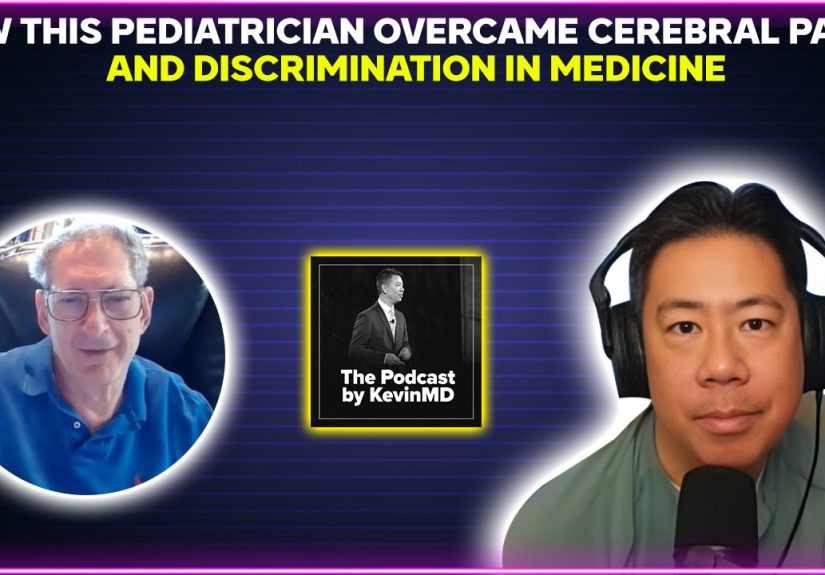
Ron M. Aryel is a pediatrician whose career has included clinical care, public health work, and writing about the intersection of disability, medicine, and professional resilience. In public essays and interviews, he has described what it was like to move through medical training with cerebral palsy while encountering both mentorship and discrimination.
His experience is especially powerful because pediatrics is a field built around development, difference, vulnerability, family advocacy, and long-term support. In theory, a pediatric training environment should be one of the most disability-aware corners of medicine. In practice, Aryel’s story suggests that even compassionate professions can still carry old prejudices in their pockets like lint.
Understanding Cerebral Palsy Without the Myths
Cerebral palsy, often shortened to CP, is a group of disorders that affect movement, posture, balance, and muscle control. It is caused by differences in brain development or injury to the developing brain. CP is also the most common motor disability in childhood. That does not mean every person with cerebral palsy has the same abilities, challenges, or needs. Cerebral palsy is not a personality type, a destiny, or a professional ceiling.
Some people with CP may have noticeable movement differences. Others may have speech differences, muscle stiffness, fatigue, balance challenges, or coordination issues. Many have strong cognitive abilities, advanced education, and careers requiring complex judgment. In other words, cerebral palsy may affect how someone moves through a hospital hallway, but it does not automatically define how well they think through a diagnosis, comfort a family, or lead a medical team.
That distinction is central to Aryel’s story. The problem was not that medicine could not benefit from a doctor with cerebral palsy. The problem was that parts of medicine struggled to imagine one.
The Hidden Curriculum of Ableism in Medicine
Medical school and residency teach anatomy, pharmacology, emergency care, and the fine art of surviving on coffee that tastes like it was brewed in a fax machine. But they also teach a hidden curriculum: who is seen as “doctor material,” who gets the benefit of the doubt, and who must perform twice as well to be judged half as fairly.
Aryel has described facing ableist attitudes during residency, including hostility from people in authority and mocking comments from colleagues. One painful example involved a remark made as he and a nurse with cerebral palsy were leaving to care for a critically ill child. The insult was not just rude; it was a window into how casually disability could be turned into a joke, even in a medical environment where compassion was supposedly part of the dress code.
These moments matter because they are not harmless background noise. Ableism can affect evaluations, opportunities, confidence, mentorship, and career direction. For physicians with disabilities, discrimination may show up as lowered expectations, excessive scrutiny, social exclusion, inaccessible training environments, or the assumption that accommodation equals unfair advantage.
How He Kept Going When the System Pushed Back
1. He focused on patient care, not other people’s doubts
One of the strongest themes in Aryel’s story is that he kept returning to the work. Pediatrics requires attention, humility, stamina, and emotional intelligence. It also requires the ability to listen to parents who are scared, children who cannot always explain what hurts, and clinical clues that do not arrive with neon signs.
By focusing on patients, Aryel refused to let prejudice become the center of his identity. That does not mean discrimination did not hurt. It means he understood that the hospital’s bias was not the same thing as his value.
2. He learned to survive temporary systems
Residency can feel endless while you are inside it, like a marathon designed by someone who thinks sleep is a character flaw. But it is temporary. Aryel has spoken about the need to get through training, protect one’s interests, and reach the other side. That mindset is not passive. It is strategic.
For disabled trainees, survival may include documenting problems, finding allies, knowing institutional policies, asking for reasonable accommodations, and building a support network outside the immediate hierarchy. Medicine often praises resilience, but real resilience is not silent suffering. It is knowing when to endure, when to speak, when to seek help, and when to keep receipts.
3. He turned lived experience into professional empathy
Physicians with disabilities often bring a kind of practical empathy that cannot be downloaded from a lecture slide. They know what it feels like when systems are confusing, when people talk over you, when assumptions replace curiosity, or when access depends on whether someone in power feels generous that day.
For a pediatrician, that perspective can be invaluable. Families of children with disabilities often meet systems that are fragmented, expensive, and emotionally draining. A doctor who understands barriers from the inside may be better equipped to recognize what families need beyond a prescription: clear communication, realistic planning, dignity, and someone who does not treat them like a paperwork inconvenience.
Discrimination in Medicine Is Not Ancient History
It would be comforting to pretend Aryel’s experience belongs entirely to the 1990s, stored next to pagers and hospital smoking lounges. Unfortunately, research suggests disability-based discrimination in medical training remains a real problem.
Recent studies of medical students with disabilities have found that some trainees report denied opportunities, offensive remarks, and lower evaluations connected to disability rather than performance. Clinical faculty and residents are often named as major sources of these experiences. That is a big deal because clinical training is where future physicians build confidence, choose specialties, earn recommendations, and learn whether the profession truly has room for them.
The message is clear: the issue is not whether disabled people are capable of practicing medicine. The issue is whether medical institutions are capable of removing barriers that should not have been there in the first place.
What Medicine Can Learn From This Pediatrician’s Journey
Accommodation is not charity
Reasonable accommodations are not gold stars handed out by benevolent administrators. They are part of equal access. In medical education and health care employment, accommodations may include modified schedules, accessible spaces, adaptive equipment, adjusted training materials, or better communication methods. The goal is not to lower standards. The goal is to measure the right standard.
If a physician can diagnose, communicate, reason, lead, document, and care safely, the question should not be, “Do they look like the traditional picture of a doctor?” The better question is, “What environment allows this physician to practice at the level they are trained to practice?”
Technical standards need common sense
Medical programs often use technical standards to describe the abilities students and residents need. These standards matter, but they can become exclusionary when written too rigidly. A requirement that a trainee must “perform” a task should not automatically mean they must perform it in only one physical way.
Medicine already uses teams, technology, interpreters, lifts, electronic records, voice recognition, adaptive devices, and specialized workflows. The profession adapts constantly for efficiency. It should also adapt for equity.
Disabled physicians improve the profession
Physicians with disabilities can deepen medicine’s understanding of access, communication, bias, chronic care, rehabilitation, and patient dignity. They can notice design flaws that others miss. They can challenge lazy assumptions. They can mentor patients and trainees who have never seen someone like themselves in a white coat.
Representation is not decoration. It changes what people believe is possible. A child with cerebral palsy who meets a pediatrician with cerebral palsy may see more than a doctor. They may see a future.
The Role of Empathy: Not the Soft Stuff, the Serious Stuff
Empathy in medicine is sometimes treated like a scented candle: pleasant, optional, and not as important as the machinery. Aryel’s story argues the opposite. Empathy is a clinical skill. It affects trust, adherence, diagnosis, patient safety, and whether families feel respected enough to return for care.
A physician who has lived through exclusion may be especially alert to subtle forms of dismissal. Is the parent being labeled “difficult” when they are actually exhausted? Is the disabled child being spoken about instead of spoken to? Is the medical plan realistic for a family without transportation, paid leave, or reliable insurance? These are not sentimental questions. They are practical questions that shape outcomes.
In that sense, Aryel’s cerebral palsy did not make him less suited to medicine. It may have sharpened parts of his clinical vision that medicine badly needs.
Why Pediatric Medicine Needs More Doctors With Disabilities
Pediatrics is not only about treating ear infections, asthma, growth charts, and mysterious rashes that appear five minutes before bedtime. It is about helping children become adults in a world that may or may not be ready for them. Children with disabilities and complex medical needs deserve clinicians who understand that development is not a straight line and independence does not look the same for everyone.
Doctors with disabilities can help normalize difference in exam rooms. They can model adaptive problem-solving. They can remind medical teams that quality of life is not measured by how closely someone resembles a nondisabled ideal. And they can push institutions to build systems that serve real bodies, not imaginary perfect ones.
Systemic Change: What Hospitals and Medical Schools Should Do
Create clear accommodation pathways
Students, residents, and physicians should not need a law degree and a treasure map to request accommodations. Institutions should provide clear policies, trained disability resource professionals, confidential processes, and timelines that do not leave people stranded during critical rotations.
Train faculty and residents on ableism
Bias training should include disability, not as a footnote but as a core part of professionalism. Faculty and residents need to understand that mocking, doubting, isolating, or over-scrutinizing disabled trainees damages both people and programs.
Design environments for access from the beginning
Universal design is better than last-minute scrambling. Accessible exam rooms, flexible scheduling, assistive technology, inclusive communication, and thoughtful workflow design help more than disabled clinicians. They also help patients, families, older staff members, pregnant workers, injured employees, and basically anyone who has ever had a human body. So, everyone.
Value lived experience as expertise
Medicine often respects data, titles, publications, and committee reports. It should also respect lived experience. Disabled physicians should not be expected to educate everyone for free, but their perspectives should be included in leadership, policy, curriculum design, and patient-access planning.
Five Lessons From Ron M. Aryel’s Story
1. Competence does not always look familiar
A physician may move differently, speak differently, or use tools differently and still provide excellent care. Familiarity is not the same as quality.
2. Discrimination wastes talent
When institutions push out disabled trainees, they do not protect medicine. They weaken it by losing skilled, motivated, empathetic professionals.
3. Patients benefit from diverse physicians
Different life experiences can improve communication, trust, and problem-solving. Diversity in medicine is not a slogan; it is a patient-care strategy.
4. Resilience should not excuse broken systems
Aryel’s perseverance is admirable, but no trainee should need extraordinary endurance simply to receive fair treatment.
5. Inclusion must be built, not announced
A mission statement is lovely. Accessible policies, trained supervisors, fair evaluations, and respectful culture are better.
Experiences Related to Overcoming Cerebral Palsy and Discrimination in Medicine
Stories like Aryel’s echo across medical schools, hospitals, clinics, and training programs. A student with a mobility disability may be told, politely but firmly, that a specialty is “probably too physical,” even before anyone asks what adaptations could work. A resident with chronic illness may delay requesting accommodations because they fear being labeled unreliable. A physician with a speech difference may notice patients warm up quickly, while colleagues remain weirdly committed to misunderstanding them. Discrimination does not always arrive wearing a villain cape. Sometimes it arrives as concern, lowered expectations, or “we just want to be realistic.”
But the lived experience of disability can also produce remarkable clinical strengths. A doctor who has navigated physical therapy, insurance forms, inaccessible buildings, specialists, fatigue, stigma, and public staring may develop a radar for barriers that others overlook. They may ask better follow-up questions: Can the family actually get to the appointment? Does the child have equipment that fits? Is the school plan realistic? Did anyone ask the patient what independence means to them? These questions can turn routine care into humane care.
For physicians with cerebral palsy, the daily experience of adaptation may become a professional advantage. Medicine is full of adaptation: adjusting a treatment plan, switching communication styles, managing emergencies, working around resource shortages, and finding a Plan B when Plan A decides to take a vacation. Disabled clinicians often come into medicine already fluent in creative problem-solving. They have spent years learning how to do important things in ways the world did not expect.
There is also emotional experience that cannot be faked. A pediatrician who has been underestimated may recognize the quiet frustration of a child who is tired of being praised for “trying” instead of being respected for achieving. A doctor who has faced discrimination may be more careful not to reduce patients to diagnoses. A clinician who knows what it feels like to be discussed as a problem may make sure children and families are included as partners.
These experiences do not make disabled physicians magical. They are not superheroes, and they should not be forced into inspirational packaging every time they successfully complete a shift. They are professionals. They need fair systems, not applause in place of access. The real lesson is not that one pediatrician “overcame” cerebral palsy as if CP were the villain in a movie. The deeper lesson is that he overcame barriers created by people, policies, and assumptions. Cerebral palsy was part of his life. Discrimination was the obstacle medicine chose to add.
That distinction matters. When we say someone overcame disability, we may accidentally imply that disability itself is the enemy. Aryel’s story points to a better conclusion: the enemy is exclusion. The solution is not pity. It is opportunity, respect, flexibility, and a profession brave enough to recognize talent even when it walks, talks, or works differently than expected.
Conclusion: A Better Kind of Medicine
Ron M. Aryel’s journey as a pediatrician with cerebral palsy is not just a personal victory. It is a challenge to medicine’s imagination. Who gets to be seen as capable? Who gets support before they are exhausted? Who gets evaluated fairly? Who gets to belong without first surviving unnecessary humiliation?
The answer should be simple: medicine needs skilled, ethical, compassionate physicians. Some of them will have disabilities. Some will use accommodations. Some will move differently through the hospital. And some, like Aryel, will expose the profession’s blind spots simply by refusing to disappear.
His story reminds us that the future of health care should not be built around a narrow image of the “perfect” doctor. It should be built around excellent care, inclusive systems, and the radical idea that people who understand barriers may be exactly the people medicine needs most.