Table of Contents >> Show >> Hide
- What Google Actually Built
- Why This Is Bigger Than the Old Photoshop Panic
- The Watermark Problem Is Where the Alarm Bells Start Ringing
- Google Knows Trust Is the Real Battlefield
- Truth in Photographs Was Always MessyBut Now It’s Negotiable
- Who Gets Hurt First
- How to Survive the New Visual Internet Without Becoming a Full-Time Cynic
- My Take: Google Didn’t Kill Photographic Truth Alone, But It Put the Process on Fast-Forward
- What It Feels Like When Photos Stop Feeling True
- Conclusion
- SEO Tags
There was a time when a photo felt like a tiny courtroom exhibit. Grainy? Sure. Crooked? Often. Flattering? Not always. But it carried a stubborn little promise: this happened. Maybe not the whole truth, maybe not perfect context, but enough truth to matter.
Google’s latest wave of AI image tools blows a hole straight through that old assumption. With Gemini-powered image generation and conversational photo editing, the company has made visual manipulation faster, easier, and much more ordinary. You no longer need advanced software, steady hands, or the soul of a sleep-deprived graphic designer. You can simply ask for the sky to be moodier, the trash can to disappear, the background to look cleaner, the composition to feel “more cinematic,” and the machine gets to work.
That is a massive shift. The danger is not just that fake images exist. Fake images have existed since the first prankster discovered scissors and glue. The real story is that Google is helping turn image rewriting into a casual, frictionless, everyday behavior. And once that becomes normal, the old idea of photographic truth starts wheezing like a flip phone in a rainstorm.
What Google Actually Built
From image generation to image negotiation
Google’s newer Gemini image tools are not just one-shot image generators. They are conversational systems. That means you can create an image, revise it, refine it, and keep nudging it in plain English until the result matches the picture in your head. In practice, this turns AI from a novelty machine into a visual co-author. The model is not just making an image; it is staying in the conversation and remembering what you wanted a few prompts ago.
That matters because it dramatically lowers the skill barrier. Traditional editing tools required menus, masks, layers, patience, and at least one moment of muttering, “Why is this on a different layer again?” Google’s approach replaces all of that with natural language. In other words, reality now has a chatbot interface.
Google Photos is becoming less of an album and more of a studio
Google has also pushed AI editing deeper into consumer photography. In Google Photos, users can increasingly make changes by describing what they want instead of manually doing the work. Remove an object. Clean up the background. Adjust the scene. Recompose the shot. Add atmosphere. Improve the framing. Make the memory look more like the memory in your head than the one your camera actually captured.
That last part is where the philosophical trouble starts. Cameras used to record a moment. AI editing tools increasingly reinterpret it. Google presents this as convenience, creativity, and accessibility, and to be fair, some of it genuinely is. Not everyone wants to learn pro editing software just to erase a photobomber or fix bad lighting. But convenience has a habit of smuggling in cultural change. When advanced manipulation becomes easy enough for everyone, it stops feeling like manipulation at all.
Why This Is Bigger Than the Old Photoshop Panic
The skill floor has collapsed
For years, people worried that Photoshop could deceive the public. That fear was real, but it had limits. Good edits took skill. Great fakes took even more skill. The number of people who could pull off a convincing visual lie was much smaller than the number of people who could post one.
Generative AI changes that equation. Now the person with the least design experience in the room may still be able to produce the most convincing fake image, simply because the software handles the hard parts. This is what makes Google’s tools so culturally significant. The company is not inventing deception from scratch; it is industrializing the ease of it.
Editing no longer feels like editing
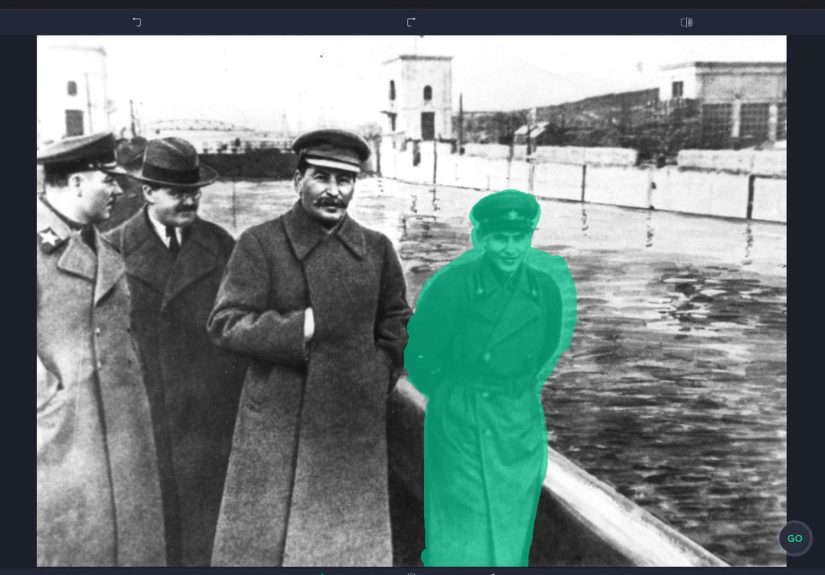
That is another big psychological shift. If you open Photoshop and spend forty minutes cloning out a person, you know you manipulated the image. If you tell an AI assistant, “Remove the guy in the red shirt and brighten the scene a little,” it feels more like requesting a touch-up than authoring a fiction. The language is softer. The intent feels smaller. The result can still be huge.
This is why AI photo tools are so effective at blurring moral lines. They do not arrive dressed like a villain. They arrive dressed like customer convenience. They feel helpful, casual, friendly, almost boring. And boring tools often reshape the world more than dramatic ones do.
The Watermark Problem Is Where the Alarm Bells Start Ringing
One of the most troubling developments around Google’s image tools is how quickly outside observers noticed they could do things that look a lot like copyright laundering. Reporting and public testing showed Gemini’s image-editing capabilities could remove visible watermarks from some photos with unsettling competence. That is not a cute party trick. That is the kind of feature that turns every protected image on the internet into a temptation with a prompt box attached.
Even worse, this creates a weird trust spiral. A visible copyright watermark used to signal ownership and friction. If AI can erase it cleanly, the average user is left with a polished image and much less context. That is a problem for creators, publishers, photo agencies, and anyone who relies on visual provenance. It is also a problem for ordinary viewers, because once one kind of mark can vanish, people begin to wonder what else can disappear without leaving fingerprints.
Google has built countermeasures like SynthID, an invisible watermarking system meant to identify media generated or edited by its AI tools. That is a serious effort, and it deserves credit. But let’s not pretend invisible watermarking is a magic force field. Watermarks help. Provenance systems help. Detection portals help. None of them restore the simpler world we just left.
Google Knows Trust Is the Real Battlefield
SynthID, C2PA, and disclosure are usefulbut incomplete
To its credit, Google is not behaving as if transparency does not matter. The company has rolled out SynthID detection tools, supported broader content provenance work, and moved to add clearer signals around AI-generated or AI-edited material in certain contexts. Google has also backed disclosure rules for political ads that use synthetic imagery or audio, which shows the company understands that manipulated media is not just an aesthetic issue. It is a civic one.
Still, transparency tools face three giant problems.
First, they are uneven. A watermark or credential only helps if the content still carries it and the platform preserves it. Screenshots, re-uploads, compression, crops, and editing chains can muddy the trail.
Second, they are partial. Google can label Google-made media, but the internet is a crowded carnival of tools, models, apps, and anonymous uploads. If only some content has trustworthy provenance, people may wrongly assume that unlabeled content is automatically authentic.
Third, they are downstream solutions. They help after synthetic content exists. They do not eliminate the social damage caused by a fake image that spreads fast, hits hard, and gets debunked six time zones too late.
Labels do not fix human psychology
People do not carefully inspect every image they see online like forensic librarians. They scroll. They react. They share. They remember vibes before footnotes. That means even good labels can fail in practice, especially in emotionally charged moments involving politics, disasters, celebrity scandals, public safety, or outrage bait designed to make your blood pressure do jumping jacks.
By the time a detection system says, “This may have been edited,” the image may already have done its job. It may have sparked panic, moved markets, fueled a rumor, or given a liar just enough plausible deniability to muddy the story.
Truth in Photographs Was Always MessyBut Now It’s Negotiable
To be fair, photography was never pure truth. Photos can be staged, cropped, filtered, timed, framed, and stripped of context. A camera has always been capable of lying by omission. But older photography still had a tether to a physical event. Something stood in front of the lens at some point. Light hit a sensor. A scene existed.
Generative and conversational editing tools weaken that tether. They let users alter a scene after the fact with extraordinary ease, or generate an entirely plausible scene that never existed in the first place. The result is not merely image enhancement. It is the normalization of synthetic plausibility.
That phrase matters. The new risk is not just obvious fake imagery with seven fingers and a haunted-looking coffee mug. The risk is believable enough. Believable enough to spread. Believable enough to support a scam. Believable enough to create doubt. Believable enough to force every real image into the exhausting position of having to defend itself.
Who Gets Hurt First
Newsrooms, institutions, and public trust
When highly realistic fake images circulate during a crisis, the burden on journalists, emergency officials, and fact-checkers rises fast. We have already seen how fabricated visuals can trigger confusion, panic, and false narratives. In that environment, every minute matters, and AI-generated visuals are built to exploit exactly that vulnerable window before verification catches up.
For democracy, this is terrible news. Synthetic political ads, fake event photos, or altered crowd scenes do not need to be flawless to be effective. They just need to be emotionally sticky. A misleading image that confirms what people already want to believe can do real damage even after it is disproved.
Regular people with regular photos
The problem is not limited to world events and election seasons. Ordinary people live inside the new trust crisis too. Family photos can be “improved” until the line between memory and revision gets blurry. Marketplace images can be dressed up beyond recognition. Documentation for claims, sales, reviews, disputes, and everyday proof-of-life situations becomes more suspect when anybody can generate something convincing with minimal effort.
That means the cost of skepticism rises for everyone. More verification. More suspicion. More second-guessing. More, “Can you send the original?” More, “Do you have another angle?” More, “Was this edited?” Welcome to the future, where even a picture of a broken mailbox may need a supporting cast.
How to Survive the New Visual Internet Without Becoming a Full-Time Cynic
Trust systems, not aesthetics
The old rule of thumb was simple: if it looks real, it might be real. That rule is cooked. Now we need a better one: trust the chain, not the shine. Ask where the image came from, who posted it first, whether a reputable outlet verified it, whether provenance or metadata is available, and whether other evidence supports the claim.
That sounds less fun than gasping at a dramatic image on your feed, and yes, it absolutely is. Verification is not sexy. But neither is being fooled by a synthetic explosion, a fake event photo, or an AI-made image that was designed to hijack your attention for six glorious seconds.
Assume friction is healthy
Oddly enough, the smartest response to better AI images may be more old-fashioned skepticism. Not paranoia. Not nihilism. Just friction. Pause before sharing. Check whether trusted sources are using the image. Look for corroborating footage, multiple angles, eyewitness accounts, and source history. If a picture arrives with maximum emotional impact and minimum context, that is not proof. That is bait.
My Take: Google Didn’t Kill Photographic Truth Alone, But It Put the Process on Fast-Forward
The title of this article is dramatic, sure. It is supposed to be. But the underlying point is real. Google’s newest AI image tools do not merely offer creative assistance. They accelerate a cultural shift in how images are made, edited, trusted, and weaponized. The company is embedding this power into products that feel mainstream, approachable, and useful. That is exactly why the shift matters.
Google is hardly the only player here. Plenty of companies are racing toward the same future. But when Google moves, the ecosystem moves with it. Search, Android, Photos, Gemini, ads, creator tools, productivity toolsthis is not some isolated lab demo. It is infrastructure. And infrastructure changes habits faster than hype does.
So no, every photograph is not dead. Real photojournalism still matters. Authentic images still exist. Evidence still exists. But the old default setting is gone. A photograph is no longer automatically a witness. More and more often, it is a claim.
What It Feels Like When Photos Stop Feeling True
Here is the strangest part of this whole shift: the crisis does not arrive with sirens. It arrives as convenience.
You take a family photo and notice a trash can in the background. The AI removes it. Great. Harmless. Then you realize the sky looked prettier in your memory than it did in real life, so you ask for better clouds. Then you brighten the faces. Then you stretch the frame a bit. Then you move one person slightly because they were cut off at the edge. None of those changes feels dramatic on its own. Each one feels like common sense. Each one feels like helping the photo become what it “should have been.”
That is the emotional logic of this new era. AI does not ask you to become a forger. It asks whether you would like a little help polishing reality.
The same feeling shows up online. You see a dramatic image in your feed during a breaking news event. Maybe it is a fire, a protest, a storm, a celebrity sighting, a military strike, or a politician supposedly caught in some damning moment. A few years ago, your first instinct might have been, “Wow, if there’s a photo, maybe it’s real.” Now your first instinct is increasingly, “Well… maybe.” That tiny word is doing a lot of work. It represents the collapse of visual confidence.
And once that confidence breaks, the damage spreads in two directions at once. Fake images become easier to believe, and real images become easier to dismiss. That second part is what keeps me up at night. In a world full of synthetic media, the liar gets a discount. Anyone caught in a real photo can shrug and say it was AI. Anyone confronted with authentic evidence can wave their hand and claim the image was manipulated. The camera used to corner people. Now people can try to corner the camera.
There is also something oddly sad about what happens to personal memory. Family albums, travel shots, school photos, birthday pictures, goofy candid momentsthese used to feel imperfect in a lovable way. The bad lighting, the clutter, the closed eyes, the weird angle from your uncle who somehow always photographed people like he was hanging from a ceiling fanthose flaws were part of the charm. AI editing nudges us toward cleaner, prettier, more optimized memories. More polished, less documentary. More ideal, less honest.
And yes, I know the joke writes itself: humanity finally got a magic wand for photos and immediately used it to remove garbage cans and fix beach weather. Very on brand for us.
But the deeper experience is this: we are losing the casual confidence that photographs once gave us. Not total confidence. Casual confidence. The easy, unthinking trust. The quick assumption that an image probably came from a real moment in the world. That assumption is fading, and once it fades, every image asks more of us. More scrutiny. More patience. More context. More work.
Google’s AI tools did not invent that emotional shift, but they make it more mainstream. They place extraordinary image manipulation inside ordinary products and wrap it in friendly language. That means the future of photography is not just about cameras anymore. It is about credibility, authorship, memory, and whether the image in front of you is a record, a revision, or a beautifully lit hallucination that arrived right on schedule.
Conclusion
Google’s new AI image tools are impressive, useful, and undeniably clever. They also mark a turning point. Once anybody can revise a photograph through conversation, the meaning of a photograph changes. It is no longer enough to ask whether an image looks real. We have to ask how it was made, how it was altered, who benefits from it, and what evidence travels with it.
That does not mean we should panic and throw every camera into the sea. It means we need new habits, better provenance systems, stronger platform signals, and a healthier skepticism about visual media. The age of “pics or it didn’t happen” is ending. The new era is more complicated, less innocent, and much easier to fake. Google did not destroy truth in photographs all by itselfbut it helped make the demolition feel smooth, intuitive, and weirdly user-friendly.