Table of Contents >> Show >> Hide
Some stocks are investments. Some are statements. And then there is MSTR, the ticker that has become the financial-market equivalent of showing up to brunch on a motorcycle while quoting monetary theory. Once known mainly as MicroStrategy, the company has transformed itself into something far louder, riskier, and infinitely more interesting: a publicly traded Bitcoin treasury machine.
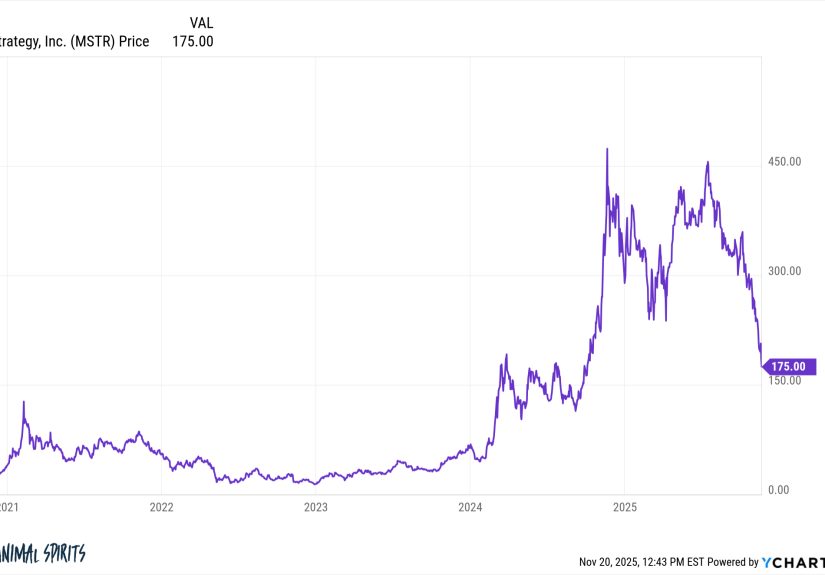
That transformation is exactly why the phrase “going all-in on MSTR” means more than simply buying a stock. It means buying into a thesis, a personality, a capital-markets strategy, and a very specific idea about the future of money. Bulls see a turbocharged Bitcoin proxy with an aggressive management team and a capital-raising engine that never seems to nap. Bears see leverage wearing a Bitcoin costume, with dilution, debt, and premium compression waiting in the parking lot.
So, is going all-in on MSTR brilliant conviction or a very expensive way to discover your true risk tolerance? The honest answer is that it can be either. That is what makes MSTR fascinating, polarizing, and absolutely not a sleepy corner of the market.
What “Going All-In on MSTR” Really Means
To understand MSTR, you have to stop thinking of it like a normal software company. Yes, the business still has enterprise analytics roots. But the market no longer treats it like a plain old software name. It treats MSTR as a highly engineered Bitcoin exposure vehicle, one that sits somewhere between a stock, a sentiment gauge, a leverage wrapper, and a stress test for your nerves.
The company’s playbook is simple in concept and wild in execution: raise capital, buy more Bitcoin, and use the company’s public-market status to keep widening the flywheel. That capital has come through common-stock issuance, convertible debt, and an expanding menu of preferred-stock instruments. As of mid-March 2026, Strategy reported holding 761,068 Bitcoin, which places it in a category of its own among corporate holders.
In other words, buying MSTR is not just betting that Bitcoin goes up. It is betting that Strategy can continue to financially engineer attractive access to Bitcoin, keep investor demand alive, and maintain a market structure that rewards its model. That is a much bigger bet than many new buyers realize.
Why the Bull Case for MSTR Is So Seductive
1. It offers amplified Bitcoin exposure
This is the headline attraction. When Bitcoin runs, MSTR often runs harder. That is why traders love it. For investors who believe Bitcoin is still early in its long-term adoption story, MSTR can look like a way to get more upside than simply holding spot BTC. It is basically the “I would like my volatility with extra volatility” option.
The logic goes like this: if Bitcoin rises, the value of Strategy’s treasury rises. If investors also reward the company’s structure, brand, and ability to raise more capital, the stock can outperform the underlying asset. During bullish stretches, that double-layer effect is the magic trick. Bitcoin goes up, and MSTR sometimes goes up even more.
2. It is easier for many investors to buy than Bitcoin directly
Not everyone wants to mess with wallets, private keys, exchange risk, or the existential dread of wondering whether they copied a receive address correctly. MSTR trades like a stock. It fits inside regular brokerage accounts. It can be bought alongside index funds, dividend stocks, and whatever else lives in your portfolio. That convenience matters.
For some institutions and retail investors, MSTR has historically functioned as a bridge product: a way to express a bullish Bitcoin view without directly holding Bitcoin. Even in a world with more Bitcoin-related products than before, MSTR still attracts people who want that exposure packaged in a listed equity.
3. Management has turned capital raising into a core capability
The Strategy story is not just about Bitcoin. It is also about market access. The company has repeatedly shown it can raise money through multiple instruments and recycle that capital into additional Bitcoin purchases. Supporters argue that this is the hidden edge: Strategy is not merely holding an asset; it is building a machine around that asset.
Bulls believe that machine matters because it can increase Bitcoin exposure per share over time, or at least keep feeding the narrative that MSTR is a dynamic vehicle rather than a static vault. In strong markets, that story can be incredibly powerful. In weak markets, it starts sweating through its shirt.
Why the Bear Case Refuses to Go Away
1. Premium-to-NAV risk is real
One of the longest-running arguments around MSTR is whether investors are paying too much relative to the value of the Bitcoin the company actually holds. If MSTR trades at a substantial premium to the value of its net Bitcoin assets, buyers are effectively paying extra for structure, liquidity, management execution, leverage, and optionality.
Supporters say that premium is justified. Critics say it is the kind of thing that looks fine until the market sobers up. If the premium compresses, MSTR can underperform Bitcoin even when Bitcoin itself is doing reasonably well. That is a nasty surprise for anyone who thought the stock was a simple one-for-one substitute.
2. Dilution is not a side note. It is part of the model.
This is where the dream gets accounting-shaped. Strategy has frequently issued stock and other securities to raise money. That may help the company acquire more Bitcoin, but it can also dilute existing holders. The bull argument is that dilution is acceptable if it funds accretive growth in Bitcoin exposure. The bear argument is that dilution always sounds elegant right before the share count starts multiplying like rabbits on espresso.
If MSTR keeps raising capital in a way that truly benefits shareholders on a per-share basis, bulls look smart. If new issuance mostly keeps the machine running without meaningfully improving shareholder economics, the stock becomes far less charming.
3. Debt and preferred obligations add pressure
MSTR is not simply stacking Bitcoin with spare couch-cushion change. It has used convertible notes and preferred stock as part of its funding architecture. That creates fixed obligations, dividend expectations, refinancing questions, and timing risk. When Bitcoin is strong, that structure can look clever. When Bitcoin weakens, it can look like someone installed rocket boosters on a bicycle.
This is one of the most important points for anyone thinking about going all-in. You are not just buying Bitcoin exposure. You are buying Bitcoin exposure wrapped in corporate finance. Corporate finance can be useful, but it can also become a very expensive hobby if market conditions turn hostile.
4. Earnings volatility is now part of the experience
Since fair-value accounting has made Bitcoin-related swings flow more directly through reported results, Strategy’s financial statements can look like they were generated during an earthquake. Giant gains and giant losses can appear based on market price moves, even when the company has not changed its philosophical commitment at all.
That matters because headlines move stocks, and many investors still respond to earnings releases emotionally. A company can remain strategically consistent while looking financially chaotic. MSTR has become one of the clearest examples of that tension.
The Core MSTR Trade: Torque, Not Stability
If you strip away the memes, the podcasts, and the laser-eyed grand narratives, the core MSTR trade is pretty straightforward: investors are paying for torque. They want amplified upside in a bullish Bitcoin environment. They want a management team that is not shy, not timid, and definitely not interested in “maybe just holding some Treasury bills for balance.”
The problem is that torque is morally neutral. It does not love you. It does not care about your average cost basis. It works in both directions. If Bitcoin surges, MSTR can feel genius-level smart. If Bitcoin stalls, drops, or enters a grinding sideways period, the stock can become a master class in regret.
That is why “going all-in” is such a dangerous phrase here. MSTR is not designed to protect the emotionally fragile. It is built for people who either understand volatility deeply or enjoy learning about it the hard way.
Who Is MSTR Actually For?
MSTR may make sense for a very specific kind of investor:
- Someone already bullish on Bitcoin over a multi-year horizon
- Someone comfortable with large drawdowns and extreme price swings
- Someone who understands dilution, leverage, and capital-structure risk
- Someone who wants equity-market access rather than direct BTC custody
MSTR makes much less sense for people who want stable compounding, low drama, and the ability to sleep through a red week without checking premarket quotes like a weather emergency alert. This is not a “set it and forget it” stock unless your memory is unusually selective.
Should You Go All-In on MSTR?
In most cases, no. Not because MSTR cannot work, but because “all-in” is usually a slogan, not a strategy. Concentrating a portfolio into one security that is itself heavily tied to one volatile asset is not conviction by default. Sometimes it is just concentration wearing a motivational poster.
The smarter question is not whether MSTR is good or bad. The smarter question is what role it should play. For aggressive investors who understand the mechanics, MSTR can be a high-octane expression of a Bitcoin thesis. For everyone else, it may be a reminder that exciting and appropriate are not the same word.
If you believe Bitcoin has a long runway, Strategy may remain one of the market’s most compelling and controversial vehicles. But if you are thinking about going all-in, it is worth remembering that MSTR can behave like a magnifying glass. It enlarges your upside when you are right. It also enlarges your mistakes when you are wrong.
The Experience of Going All-In on MSTR
Going all-in on MSTR does not feel like buying a stock. It feels like adopting a weather system. One day you wake up feeling like a macro genius because Bitcoin rallied overnight and MSTR is acting like it drank three energy drinks before the opening bell. The next day, the exact same position makes you question every life decision that led you to refreshing your portfolio before brushing your teeth.
At first, the experience can be thrilling. There is a seductive clarity to the trade. You tell yourself you have found the purest expression of conviction: not just Bitcoin, but Bitcoin with a corporate jetpack strapped to it. You read about treasury strategy, capital markets, preferred stock, convertibles, and “Bitcoin per share,” and suddenly this no longer feels like speculation. It feels like participation in a new financial architecture. That feeling is powerful. It can also be hilariously dangerous.
The emotional rhythm of owning MSTR is intense because the stock does not merely fluctuate. It performs. Green days feel like validation. Red days feel personal. If Bitcoin rises but MSTR lags, you do not just wonder what happened. You begin conducting a full philosophical inquiry into premium compression, equity issuance, and whether the market has temporarily lost its mind. Spoiler: the market may indeed have lost its mind, but it does not send apology notes.
There is also a strange identity shift that can happen when someone goes all-in on MSTR. They stop sounding like a casual investor and start talking like an amateur capital-markets strategist at family dinner. Suddenly they have opinions on dilution, fixed obligations, dividend coverage, and whether preferred-stock buyers are secretly underwriting the common equity dream. This is either impressive or deeply annoying depending on who is listening.
What makes the experience so different from owning plain Bitcoin is that MSTR adds another layer of interpretation. With Bitcoin, the debate is mostly about the asset. With MSTR, the debate is about the asset, the wrapper, the management team, the financing environment, and the stock’s premium relative to the underlying treasury. You are not just betting on one thing. You are betting on an ecosystem of interlocking assumptions. When those assumptions line up, the stock can look brilliant. When they do not, the whole setup can feel like a machine built out of confidence and expensive PowerPoint slides.
And yet, that is exactly why some investors love it. MSTR does not pretend to be boring. It offers a type of market participation that feels dramatic, ideological, and almost theatrical. People who go all-in on it are rarely looking for mild outcomes. They want asymmetry. They want acceleration. They want the possibility that they spotted the modern version of a balance-sheet revolution before the rest of the market fully priced it in.
The catch is that this experience demands emotional stamina. It requires the ability to separate temporary drawdowns from permanent thesis damage. It requires enough humility to admit that a great story can still be a bad entry point. Most of all, it requires recognizing that conviction is useful only when paired with risk management. Without that, going all-in on MSTR is less an investment process and more a dramatic audition for future hindsight.
Final Take
MSTR is one of the most compelling stocks in the market because it compresses some of the biggest themes in modern finance into one ticker: Bitcoin adoption, monetary skepticism, financial engineering, volatility, and the timeless human urge to turn a strong idea into a stronger risk. That is why people are drawn to it. That is also why it can humble them.
If your thesis is that Bitcoin keeps compounding in relevance and price, MSTR may remain a powerful vehicle. But going all-in on it is a different question entirely. That move assumes not only that Bitcoin wins, but that the wrapper stays attractive, the financing engine stays functional, and the market continues rewarding the structure. That is a lot of “ifs” for one ticker.
So yes, MSTR can be a monster winner. It can also be a lesson. The line between those two outcomes is thinner than the loudest people on the internet would like you to believe.