Table of Contents >> Show >> Hide
- What Can Really Happen in 14 Days?
- The Principles Behind This 2-Week Workout Plan
- Before You Start
- Your 2-Week Workout Plan
- Simple Habits That Make the Plan Work Better
- Mistakes to Avoid During These 2 Weeks
- What Results Should You Expect?
- Real-Life Experiences: What This 2-Week Plan Often Feels Like
- The Bottom Line
If you want to get in better shape in two weeks, let’s clear the air before your sneakers even squeak: you are not going to morph into a movie superhero by next Thursday. But you can make noticeable progress. In just 14 days, many people can improve energy, consistency, posture, daily stamina, workout confidence, and even how their clothes fit. That is not magic. That is momentum.
The secret is not a punishing boot camp, a gallon of celery juice, or a motivational speech shouted by a shirtless stranger on the internet. It is a simple, smart workout plan that combines strength training, cardio, mobility work, and recovery. In other words, the stuff that actually works, even if it is less glamorous than “7-minute abs while holding a kettlebell on a mountain.”
This two-week workout plan is built for real life. It is beginner-friendly, flexible, and realistic enough to follow whether you train at home, at a gym, or in that small patch of floor between your couch and your coffee table. The goal is not to destroy yourself. The goal is to feel stronger, move better, and build habits you can keep after the 14 days are up.
What Can Really Happen in 14 Days?
Two weeks is enough time to create a meaningful jump-start, especially if you have been inactive or inconsistent. You may not see a dramatic body transformation in the mirror, but you can absolutely notice changes in how you feel and function. Many people report better focus, less stiffness, improved mood, smoother movement, and more confidence with basic exercises after just a couple of weeks of steady training.
That is because getting in better shape is not just about weight loss or visible muscle definition. Better shape can mean:
- Walking upstairs without sounding like you just finished climbing Everest
- Doing squats, push movements, and core work with better control
- Feeling more awake during the day
- Improving cardiovascular endurance
- Reducing that rusty-joints feeling when you get up from a chair
- Building the routine that makes long-term results possible
So yes, two weeks is short. But it is also long enough to prove to yourself that progress starts fast when your plan is clear.
The Principles Behind This 2-Week Workout Plan
1. Consistency beats intensity
The fastest way to derail a two-week reset is to go way too hard on Day 1, then spend the next three days walking like a confused crab. A better approach is to train consistently with moderate effort. You want each workout to challenge you, not flatten you.
2. Strength and cardio both matter
If your whole plan is endless cardio, you miss the muscle-building and metabolism-supporting benefits of resistance training. If your whole plan is lifting but you get winded tying your shoes, that is not ideal either. This plan uses both. Strength work helps you build muscle, improve balance, and support everyday movement. Cardio helps your heart, lungs, stamina, and recovery.
3. Progression should be small and smart
You do not need to double your workload in Week 2. You just need a little more: one extra round, a few more reps, slightly better control, a little more walking time, or a little less rest. Tiny upgrades are what turn “I exercised twice” into “I have a fitness habit now.”
4. Recovery is part of training
Rest days are not laziness. They are how your body adapts. Recovery includes sleep, hydration, nutrition, light movement, and not trying to set a personal record every time you touch a dumbbell. Your body improves between workouts, not just during them.
Before You Start
If you are brand new to exercise, returning after a long break, pregnant, injured, or managing a medical condition, check with a healthcare professional before starting a new program. Once you are cleared, keep the first week comfortable enough that you can finish each workout with decent form and enough energy to function like a normal human afterward.
You will also need a simple way to measure effort:
- Moderate cardio: You can talk, but singing would be a stretch.
- Vigorous cardio: You can say only a few words at a time.
- Strength training: The last two reps should feel challenging, but your form should still look clean.
Your 2-Week Workout Plan
This plan works with body weight alone, but a pair of dumbbells or resistance bands is helpful. Each workout starts with a 5- to 8-minute warm-up and ends with a 3- to 5-minute cool-down.
Warm-Up for Every Workout
- 1 minute brisk marching or easy walking
- 10 arm circles forward and backward
- 10 bodyweight squats
- 10 hip hinges
- 10 alternating reverse lunges or step-backs
- 20 seconds each of ankle rolls and shoulder rolls
Week 1
Day 1: Full-Body Strength + Easy Cardio
Do 2 rounds:
- 12 bodyweight squats
- 10 incline push-ups against a bench, wall, or countertop
- 12 glute bridges
- 10 bent-over rows with dumbbells or bands
- 20-second plank
Finish with 15 to 20 minutes of brisk walking or easy cycling.
Day 2: Cardio Intervals + Mobility
Do 20 minutes total:
- 1 minute brisk pace
- 1 minute easy pace
Repeat 10 times. Then spend 10 minutes on mobility: hip openers, calf stretches, chest stretches, and gentle spinal twists.
Day 3: Lower Body + Core
Do 2 to 3 rounds:
- 12 goblet squats or bodyweight squats
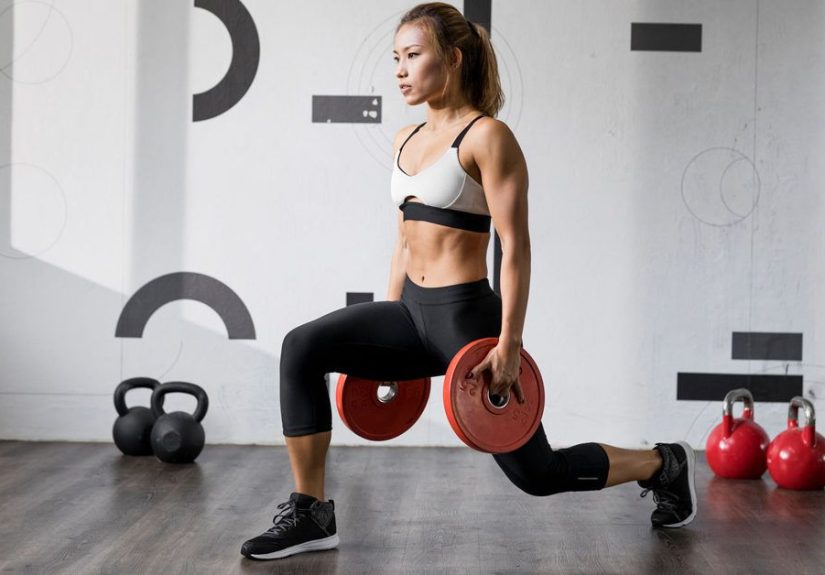
- 10 reverse lunges per side
- 12 Romanian deadlifts with dumbbells or bands
- 15 calf raises
- 10 dead bugs per side
- 20-second side plank each side
Day 4: Active Recovery
Take a 25- to 30-minute walk at an easy pace. Add 5 to 10 minutes of stretching. You should finish feeling better than when you started.
Day 5: Upper Body + Short Finishers
Do 2 to 3 rounds:
- 10 incline push-ups or dumbbell chest presses
- 12 dumbbell or band rows
- 10 shoulder presses
- 12 biceps curls
- 12 triceps extensions or chair dips
- 20 mountain climbers, slow and controlled
Then do 5 rounds of 30 seconds brisk effort and 30 seconds easy effort on a bike, walk, or march in place.
Day 6: Steady-State Cardio
Choose one: brisk walk, cycling, rowing, elliptical, swimming, or dance workout. Go for 30 to 40 minutes at a moderate pace.
Day 7: Recovery and Reset
Take the day off from formal training. A light walk, stretching session, or yoga flow is fine. Hydrate, sleep, and resist the urge to “make up” extra workouts because your body does not hand out bonus points for panic.
Week 2
Week 2 uses the same structure with slightly more work. You are not reinventing the wheel. You are just rolling it better.
Day 8: Full-Body Strength Progression
Do 3 rounds:
- 14 squats
- 12 incline push-ups
- 14 glute bridges
- 12 rows
- 30-second plank
Finish with 20 minutes of brisk walking or cycling.
Day 9: Cardio Intervals Progression
Do 24 minutes total:
- 90 seconds brisk pace
- 60 seconds easy pace
Repeat 9 times. End with 8 to 10 minutes of mobility.
Day 10: Lower Body + Core Progression
Do 3 rounds:
- 14 squats
- 12 reverse lunges per side
- 12 Romanian deadlifts
- 18 calf raises
- 12 dead bugs per side
- 25-second side plank each side
Day 11: Active Recovery
Walk 30 minutes. Add gentle stretching, foam rolling, or yoga. If you feel unusually sore, this is a sign to recover harder, not punish yourself harder.
Day 12: Upper Body + Conditioning
Do 3 rounds:
- 12 incline push-ups or chest presses
- 14 rows
- 12 shoulder presses
- 14 curls
- 14 triceps extensions
- 25 mountain climbers
Then do 6 rounds of 30 seconds hard effort and 30 seconds easy effort.
Day 13: Long Moderate Cardio
Go for 35 to 45 minutes at a steady, moderate pace. You should be breathing deeper than normal but still able to hold a short conversation.
Day 14: Choice Day
Pick one:
- Repeat your favorite full-body workout from the plan
- Take a long outdoor walk or hike
- Do a light circuit and mobility session
The goal is to finish the two weeks feeling capable, not crushed.
Simple Habits That Make the Plan Work Better
Hydrate like an adult, not a cactus
Drink water before, during, and after exercise. If your workout lasts under an hour, water is usually enough. If you are exercising in heat or sweating heavily, pay extra attention to fluids. A simple clue is urine color: pale yellow usually means you are doing fine.
Eat to support training
You do not need a bodybuilder meal prep spreadsheet. Focus on basics: lean protein, fruit, vegetables, whole grains, healthy fats, and enough total food to support your workouts. A balanced snack with carbs and protein before or after training can help with energy and recovery.
Sleep like it matters, because it does
Aim for 7 to 9 hours of sleep if possible. Sleep supports recovery, mood, decision-making, and workout performance. If your workouts are solid but your sleep is chaos, your progress may feel slower than it should.
Mistakes to Avoid During These 2 Weeks
- Doing too much too soon: Soreness is normal. Total collapse is not a badge of honor.
- Skipping rest days: Recovery is where improvement happens.
- Using bad form: Lifting heavier with sloppy technique is just an expensive way to annoy your joints.
- Relying on motivation alone: Schedule workouts like appointments. Motivation is moody.
- Ignoring pain: Muscle fatigue is normal. Sharp pain, dizziness, chest pain, or unusual shortness of breath are not.
- Expecting a miracle: Two weeks is a launchpad, not the entire journey.
What Results Should You Expect?
At the end of two weeks, the best results are often practical. You may feel less stiff in the morning. You may walk faster without noticing. Your workouts may feel less awkward. Your heart rate may recover quicker between efforts. You may sleep better. You may feel proud that you actually followed through, which is wildly underrated in fitness.
Visible changes can happen too, especially if you are starting from low activity levels, but the bigger win is that your body starts remembering how to move. That is where long-term fitness begins.
Real-Life Experiences: What This 2-Week Plan Often Feels Like
One of the most interesting things about a two-week workout plan is that the physical changes usually arrive alongside a mental shift. The first few days can feel clunky. Even simple moves like squats and planks may remind you that your body has been living more of a “decorative furniture” lifestyle than an athletic one. That is normal. In fact, it is almost a rite of passage.
A lot of people describe Day 1 as surprisingly humbling. A brisk walk feels brisker than expected. A set of reverse lunges becomes a negotiation with gravity. Push-ups against a countertop suddenly reveal muscles you forgot existed. But here is the encouraging part: by the middle of the first week, most people stop feeling intimidated by the workouts and start feeling curious about them. Instead of thinking, “Can I do this?” they start thinking, “I wonder if I can do one more rep.” That is a big deal.
For desk workers, the first noticeable improvement is often posture and stiffness. After just a few days of moving on purpose, people commonly say they feel less creaky when getting up from a chair and less tight through the hips and shoulders. It is not glamorous, but it is deeply satisfying to stand up and not feel like an old folding lawn chair.
For people returning to exercise after a long break, the emotional experience can be even more dramatic than the physical one. There is usually some frustration at first. You remember what you used to do, and your current fitness level politely informs you that those glory days are not currently clocked in. But by the second week, that frustration often turns into momentum. Workouts feel more familiar. The warm-up no longer feels like a strange dance recital. Recovery improves. Confidence starts to grow because you are proving, day by day, that you can trust yourself to show up.
Busy parents and professionals often say the biggest surprise is not weight loss but energy. It sounds backward, but spending energy through structured movement can make you feel more energetic overall. Many people notice they are less sluggish in the afternoon, more focused at work, and less likely to crash on the couch at the end of the day. Exercise does not magically give you an extra three hours, but it can make your existing hours feel more useful.
Another common experience is learning the difference between soreness and harm. In the beginning, mild muscle soreness can make you feel like every staircase in your home was designed by a villain. But as the days go on, you become better at reading your body. You learn that muscles can be tired without being injured. You learn that recovery walks help. You learn that drinking water and sleeping well actually matter, which is inconvenient because everyone’s mother was right.
By the end of the two weeks, most people do not say, “I completely transformed my body.” They say something better: “I feel like myself again.” They feel stronger, more capable, more awake, and less intimidated by exercise. They know what workouts they enjoy. They know how hard moderate effort really feels. They know that a short plan can create real progress when it is built on consistency instead of chaos.
And that may be the best outcome of all. Two weeks is enough time to stop seeing fitness as a dramatic event and start seeing it as part of your normal life. That is the mindset that changes everything.
The Bottom Line
If you want to get in better shape in two weeks, do not chase perfection. Follow a simple workout plan, combine strength training with cardio, respect recovery, and keep your effort steady. The goal is not to become a different person in 14 days. The goal is to become a more active version of yourself, then keep going.
That is how real fitness starts: one workout, one walk, one good night of sleep, and one decision at a time.