Table of Contents >> Show >> Hide
- First, Let’s Define “New”: Leopard 2A8 vs. KF51 Panther
- The Leopard 2A8: The “New Tank” That’s Actually Getting Bought
- The KF51 Panther: Rheinmetall’s “Fine, We’ll Build the Future Ourselves” Tank
- Why “Outmatch” Isn’t One SpecIt’s the Whole Package
- How Germany’s New Armor Stacks Up Against Other Top Tanks
- The Real Competition: Drones, ATGMs, and the “Glass Battlefield”
- MGCS: The “Next Tank” That Might Redefine the Word Tank
- So… Will Germany’s Badass New Tank Outmatch All Others?
- Experiences: What It’s Like Around a Modern German “Next-Gen” Tank (500+ Words)
Every few years, the internet collectively discovers tanks again and declares, with the confidence of a man who just learned what “caliber” means,
that this one will “outmatch all others.” Germany’s latest wave of armor headlines has been doing exactly thatbecause there are actually
two “new German tanks” you keep seeing mashed into one megatank in people’s brains.
One is the Leopard 2A8: the real, ordered, spreadsheet-approved evolution of Europe’s most famous main battle tank.
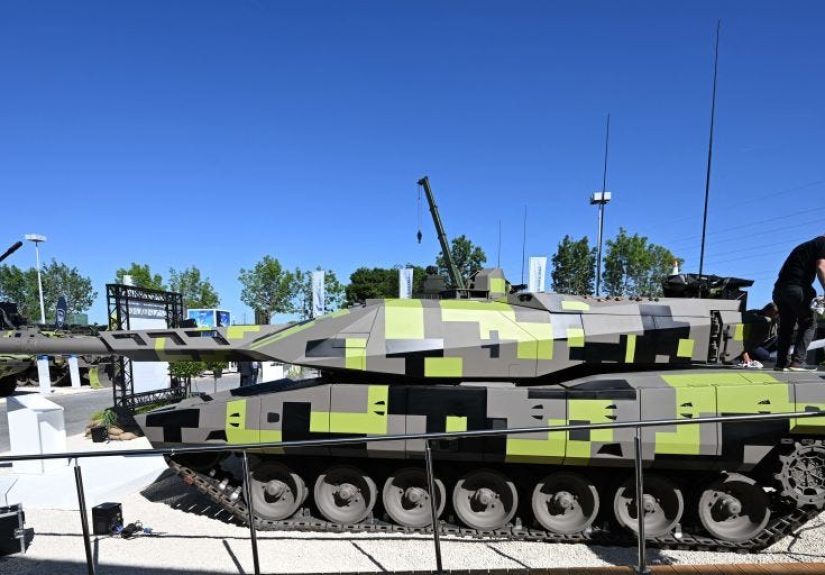
The other is Rheinmetall’s KF51 Panther: a forward-leaning concept (and marketing flex) built around a bigger gun, more automation,
and the assumption that drones will never stop trying to ruin everyone’s day.
So will Germany’s badass new tank outmatch all others? In the real world, “outmatch” isn’t a crownyou don’t win it, you rent it.
But Germany’s current approach does point to what the next decade of armored warfare looks like: survivability first, networked lethality second,
and “please stop that drone” as the unofficial third pillar.
First, Let’s Define “New”: Leopard 2A8 vs. KF51 Panther
If you’re looking for the “new German tank” you can actually count on your fingers (or in parliamentary budget documents), that’s the
Leopard 2A8. It’s the latest production direction for Leopard 2 operators who want a modernized tank with upgrades tuned to today’s
battlefield: better protection, better sensors, andcruciallyactive protection.
If you’re looking for the “new German tank” that feels like it was designed by a committee of engineers, gamers, and one guy who owns a drone racing
league, that’s the KF51 Panther. It’s positioned as a next-gen leap with a 130mm gun, an autoloader, and optional loitering
munitionsbasically, a tank that wants to show up to the fight with its own mini air force.
The smart way to read the hype is this: Leopard 2A8 is Germany’s near-term “win the procurement reality” tank. KF51 Panther is
Germany (via Rheinmetall) saying, “Here’s where we think armored warfare is going, and we’d like to be early.”
The Leopard 2A8: The “New Tank” That’s Actually Getting Bought
The Leopard 2A8 is a “yes, but better” answer to modern threats. The Leopard family already has a reputation for excellent fire control and strong
overall design. The 2A8’s headline move is to treat survivability as a system, not a single armor slab: layered protection, upgraded awareness, and
active defenses intended to defeat incoming anti-tank threats before they hit.
Survivability: When “Armor” Includes Radar and Split-Second Math
The biggest philosophical shift is the normalization of hard-kill Active Protection Systems (APS)the idea that a tank shouldn’t just
take hits; it should intercept them. For the Leopard 2A8, that means Trophy/EuroTrophy-style active protection becoming part of the
baseline conversation for multiple European users.
Why does this matter? Because the battlefield has become a glass house. Drones spot you. Loitering munitions circle you. ATGMs wait for you. And
top-attack threats aim for the parts of a tank that are hardest to armor without turning it into a 90-ton regret.
APS doesn’t make a tank invinciblebut it meaningfully changes the odds, especially against common anti-armor attack profiles.
Situational Awareness: 360 Degrees or It Didn’t Happen
Modern tanks aren’t just shooting platformsthey’re sensor platforms that also happen to weigh as much as a small office building.
The Leopard 2A8’s upgrades are widely discussed in terms of improved all-around awareness and sensor fusion concepts. That’s not a buzzword party trick;
it’s how you survive when the threat can arrive from above, behind, and “somewhere you didn’t know was a place.”
Better awareness supports a simple truth: the first tank to understand the situation usually gets the first clean shot.
And the first clean shot often decides the fightespecially in the era of long-range optics, precise fire control, and digital networking.
Firepower: It’s Not Always About “Bigger”
Most Leopard 2 variants remain centered on proven 120mm smoothbore performancebecause ammunition ecosystems, logistics, training pipelines, and
interoperability are real things that exist (and ruin purely emotional decisions).
You can make a gun bigger, sure, but you also have to feed it, supply it, and sustain it across years of operations.
In other words: the Leopard 2A8 aims for “maximum capability you can field and maintain,” not “maximum caliber you can brag about.”
The KF51 Panther: Rheinmetall’s “Fine, We’ll Build the Future Ourselves” Tank
The KF51 Panther is what happens when a major defense company looks at next-gen requirements and says, “Let’s stop waiting for perfect consensus.”
Unveiled as a next-generation concept, the Panther is designed around three big ideas:
more firepower, more automation, and more integration with uncrewed systems.
The pitch is not subtle: if modern protection systems keep improving, and threats keep multiplying, you want a tank that can reach farther, hit harder,
react faster, and see morewhile keeping the crew safer and the kill chain shorter.
The 130mm Future Gun System: Overmatch by Physics, Not Vibes
The Panther’s headline feature is the 130mm gun. Rheinmetall has described it as delivering a major lethality leap compared to
current 120mm systems, and the broader open discussion often frames it as a “future-proofing” move against increasingly sophisticated armor and
protection measures.
The practical advantage of going bigger is not just “more boom.” It’s more room for growth in ammunition design (kinetic penetrators, programmable
rounds), potentially longer effective engagement envelopes, and improved performance margins as defenses evolve.
The trade-off is equally practical: bigger rounds push you toward an autoloader, which brings complexitybut also enables consistent
rates of fire and reduces crew workload in certain scenarios.
Autoloading and Crew Concepts: Fewer Humans, More Systems
The Panther concept has been presented with automated loading and a more “software-defined” approach to tank architecture. That phrase can sound like a
tech conference badge, but it’s meaningful: a modular, upgrade-friendly digital backbone makes it easier to integrate new sensors, electronic warfare
components, counter-drone systems, and networking without redesigning the tank from scratch.
Think of it like this: older tanks are hardware-first, with electronics bolted on over time. New designs increasingly treat electronics as a core
design elementbecause the tank’s “eyes and ears” have become just as important as its gun.
Uncrewed Teammates: The Tank That Brings Its Own Extras
The Panther’s optional integration of loitering munitions and drones reflects the new math of combat: if drones are everywhere, you either endure them
or you join them. Conceptually, this gives an armored unit more ways to reach targets that aren’t in direct line of sight, scout ahead without risking
the crew, and respond faster to fleeting threats.
This doesn’t magically replace artillery, airpower, or dedicated drone units. But it does compress decision time: the tank crew can become part of a
distributed sensor-to-shooter network where detection and engagement can happen in a tighter loop.
Why “Outmatch” Isn’t One SpecIt’s the Whole Package
If you want to predict whether a tank “outmatches” others, stop staring at the gun caliber like it’s a horoscope.
Real advantage comes from a bundle of factors that work together:
- Survivability: armor + signature management + APS + counter-drone measures
- Awareness: sensors, 360-degree coverage, drone feeds, and fusion
- First-shot capability: optics, fire control, stabilization, training
- Networking: sharing targets, receiving cues, integrating with combined arms
- Sustainment: parts, maintenance, ammunition supply, recovery and repair
Germany’s “new tank” storywhether Leopard 2A8 fielding upgrades or the Panther pushing next-gen conceptstracks this reality.
The best tank is the one that shows up with the best information, survives the first exchange, and stays in the fight long enough for combined arms to
do their thing.
How Germany’s New Armor Stacks Up Against Other Top Tanks
Comparing top-tier tanks is always messy, because classified details are… classified (rude, honestly).
Still, we can talk about the visible trends and design priorities.
Against the M1 Abrams: Power, Protection, and the Logistics Tax
The Abrams familyespecially modernized variantsremains a benchmark for heavy armor and battlefield integration. It also illustrates a core lesson:
capability is inseparable from sustainment. A tank’s power systems, electronics growth capacity, and maintainability matter as much as its armor scheme.
Germany’s Leopard 2A8 approach is similar in spirit: keep a proven platform modern through layered upgrades, especially in survivability and awareness.
Where the Panther tries to leap, the Leopard tries to iteratefast enough to stay ahead of threats without breaking the logistics chain.
Against the Challenger 3: Modern Guns and Modern Architectures
Challenger 3 modernization highlights the same big shift happening across Western armor: modernization isn’t only about armor blocks; it’s about
architecture, sensors, and power management for all the things a tank now has to do. In that context, the Leopard 2A8 sits comfortably in the “modern
Western MBT” family, and the Panther attempts to move that family reunion into the future.
Against the K2 Black Panther: Mobility and Tech-Forward Design
The K2 is often cited for advanced features and mobility-focused design philosophies. Germany’s edge, traditionally, has been in a deeply refined
combination of fire control, protection, and industrial ecosystem maturity across a large operator base. That operator base matters because it drives
upgrades, interoperability, and long-term support.
In simple terms: K2 shows what a tech-forward tank can look like today. Leopard 2A8 shows what a massive user community can modernize into.
Panther shows what happens when a major manufacturer tries to build the next step before everyone agrees what the steps are.
The Real Competition: Drones, ATGMs, and the “Glass Battlefield”
The most important thing to understand about modern armor is that tanks aren’t just competing with other tanks.
They’re competing with:
- Cheap drones that spot and drop munitions
- Loitering munitions that hover until you do something dumb
- ATGMs that punish exposure
- Persistent surveillance that makes hiding harder
- Precision strike networks that compress reaction time
This is why active protection, counter-UAS measures, electronic warfare integration, and rapid obscuration systems are becoming table stakes.
If a tank can’t survive long enough to maneuver, it can’t do what tanks are for.
Germany’s newer configurations reflect that lesson: survivability is being treated as a layered, active, networked problemnot just a passive armor
contest. That’s how you “outmatch” today: not by being invulnerable, but by being harder to kill than the enemy can afford.
MGCS: The “Next Tank” That Might Redefine the Word Tank
Hovering above all these near-term moves is MGCSthe Franco-German next-generation ground combat effort often described as a
“system of systems.” The point is not merely to build a better tank; it’s to build a connected family of platforms and effects that can dominate in a
multi-domain environment.
MGCS timelines are long, and the program’s history includes delays and industrial wranglingbecause nothing says “future warfare” like arguing over
responsibility matrices. Still, the effort has moved through notable organizational steps, including the establishment of structures meant to push the
program into more concrete phases.
The practical takeaway: Leopard 2A8 is the bridge. Panther is a possible leapfrog or parallel path.
MGCS is the long-term bet that future armored dominance will come from networking, automation, and combined effectsnot just one legendary chassis.
So… Will Germany’s Badass New Tank Outmatch All Others?
If you demand a bumper-sticker answer: Germany’s newest armor directions are absolutely among the best-positioned for the next decade.
The Leopard 2A8’s survivability and modernization path make it a terrifyingly sensible choice for allies who want capability now.
The Panther’s 130mm-and-drones approach reflects where high-end armored warfare is trending: increased lethality, increased automation, and increased
attention to threats from above.
But here’s the grown-up answer (sorry): no tank outmatches all others in every context. Terrain, training, logistics, air defense, electronic warfare,
infantry support, and reconnaissance decide outcomes. A tank is a king only inside a kingdom of combined arms.
Still, Germany’s “new tank” story is the right kind of scary: not magical invincibility, but a deliberate shift toward tanks that
see more, survive more, integrate more, and adapt faster. That’s what outmatching looks like in 2026 and beyond.
Experiences: What It’s Like Around a Modern German “Next-Gen” Tank (500+ Words)
You don’t really understand a modern tank until you stop thinking of it as a “vehicle” and start thinking of it as a moving ecosystem.
Around something like a Leopard 2A8or even the KF51 Panther conceptthe experience is less “rolling cannon” and more “heavy armored startup with a gun
that could legally count as a landmark.”
Start with the presence. Tanks aren’t loud; they’re rude. The sound isn’t just engine noiseit’s vibration, heat shimmer, track slap,
and the occasional metallic clank that makes your brain whisper, “That part sounded expensive.” When crews describe modern armor as a team sport, it’s
not a metaphor. A tank crew is a small organization under pressure: communication, role clarity, checklists, and habits that look boring right up until
boring is what keeps you alive.
Inside the crew space, the vibe is increasingly “digital cockpit,” not “World War II movie.” Displays, sensors, and camera feeds change the emotional
texture of fighting. Instead of peering through a single narrow view, crews can increasingly build a shared mental map from multiple perspectives.
That doesn’t remove stressit shifts it. The stress becomes: too much information, too fast. Learning to trust the right feed, ignore the
wrong one, and still make decisions at speed is the new craft.
Then there’s the awkward intimacy with maintenance. Tanks are not just operated; they’re kept alive. The most “real” tank experiences
happen when nobody is shooting: swapping components, checking connections, managing wear, and performing the unglamorous rituals that keep a 60–70 ton
machine from turning into an expensive lawn ornament. Modern upgrades add capability, but they also add systems that need carepower distribution,
sensors, electronic modules, and the practical reality that “software-defined” still lives in hardware that can break.
On the training side, modern armored warfare feels like a constant argument between confidence and humility. Crews build confidence through repetition:
gunnery drills, movement discipline, target handoffs, and emergency procedures that become muscle memory. But humility arrives quickly on a modern
battlefield because the threats don’t behave like a tidy range day. Drones change angles. Spotters appear where you didn’t think line-of-sight existed.
A “safe” position becomes visible because someone’s sensor fusion got better. That’s why experiences around today’s tanks are increasingly shaped by
counter-surveillance habits: camouflage discipline, smoke and obscuration practices, rapid repositioning, and coordination with air
defenses and electronic warfare assets. The tank is still powerfulbut it’s also an obvious target that needs friends.
The most striking shift, though, is how crews talk about survivability. In older tank lore, survivability was “armor and bravery.”
In modern tank reality, survivability is “don’t be detected, don’t be targeted, and if something is coming anyway, let the active protection do its
job.” That changes the psychology. Crews aren’t fantasizing about tank-on-tank duels like it’s a sports match. They’re thinking about layers:
awareness, deception, interception, and teamwork. It’s less “hero machine” and more “hard problem solved by systems.”
And if you hang around these machines long enough, you notice something kind of funny: the “badass” part isn’t the gun (though yes, it’s impressive).
The truly badass part is the disciplinecrews and maintainers building a reliable, repeatable way to survive and fight in a world where the enemy is
watching from above with something that costs less than a nice laptop. That’s the modern tank experience in one sentence:
heavy metal, light drones, and humans trying to stay smarter than both.