Table of Contents >> Show >> Hide
- What Is a Minecraft Seed?
- The Mystery Behind Minecraft’s Classic Title Screen
- Who Found the Minecraft Title Screen Seed?
- Why Are There Two Minecraft Title Screen Seeds?
- How Researchers Narrowed Down the Search
- How to Visit the Original Minecraft Title Screen World
- Why the Discovery Captured So Much Attention
- The Role of Minecraft@Home
- What the Title Screen Seed Teaches About Procedural Worlds
- Specific Example: Recreating the Classic Panorama Moment
- Why This Story Still Matters
- Experiences Related to Finding The Random Seed Of Minecraft’s Title Screen
- Conclusion
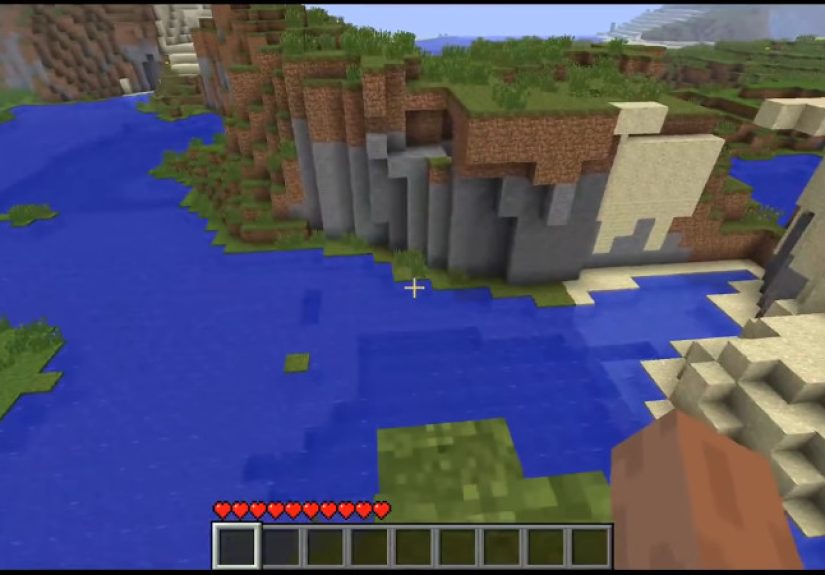
For years, millions of Minecraft players clicked past the same blurry, slowly rotating background without thinking too much about it. It was just there: the classic Minecraft title screen, a foggy little landscape behind the buttons for Singleplayer, Multiplayer, Options, and whatever adventure you were about to ruin with one badly placed creeper hug. But behind that familiar panorama was a real Minecraft world, generated by a real seed. The question was simple, strange, and surprisingly difficult: what was the random seed of Minecraft’s title screen?
The answer became one of the most delightful detective stories in gaming culture. It combined nostalgia, reverse engineering, math, distributed computing, community teamwork, and the sort of obsessive attention to blocky grass colors that sounds ridiculous until you realize it actually worked. The original Minecraft title screen seed was eventually found in July 2020, nearly a decade after the panorama first appeared in the game. The working seeds are 2151901553968352745 and 8091867987493326313, using Minecraft Beta 1.7.3, near coordinates X=61.48, Y=75, Z=-68.73.
That short answer is useful, but it barely captures why the discovery mattered. Finding the Minecraft title screen seed was not just about typing numbers into a world generator. It was about recovering a tiny piece of digital history that had been hiding in plain sight since the early days of the game.
What Is a Minecraft Seed?
In Minecraft, a seed is a value used by the game’s world generation system to create terrain. Enter the same seed in the same version of Minecraft, and you can usually recreate the same world layout: hills, caves, lakes, forests, beaches, and biome placement. It is not magic, though it often feels like it when a random string of numbers turns into mountains, oceans, and the perfect cliff for your definitely-not-abandoned starter base.
A seed acts like the starting instruction for procedural generation. Minecraft does not store every block of every possible world in advance. Instead, it uses algorithms to generate the world as needed. The seed tells those algorithms where to begin. Change the seed, and the game produces a different world. Use an older version of Minecraft, however, and things get more complicated because world generation changed many times throughout the game’s history.
That version dependency was one of the biggest challenges in finding the title screen seed. The classic panorama looked like one stable image, but it came from a particular period of Minecraft development. If researchers searched the wrong version, even the correct seed would not reproduce the landscape properly. It would be like looking for your lost house key in the wrong biome: technically possible to keep searching forever, emotionally damaging after hour three.
The Mystery Behind Minecraft’s Classic Title Screen
The original Minecraft title screen panorama appeared around the Beta 1.8 era in 2011 and stayed familiar to players for years. It showed a soft, blurred view of a Minecraft world: grass, trees, water, cliffs, and sky, rotating quietly behind the menu. Because the image was blurred in-game, many players never noticed enough detail to ask where it came from. It felt like a mood more than a location.
But Minecraft fans are famously allergic to leaving mysteries alone. If a suspicious dirt block exists, someone will dig under it. If an image appears in the game files, someone will ask what world it came from. If a mountain appears in a menu background, someone will organize a project to find its exact seed. That is how the Minecraft title screen seed became part of a larger tradition of Minecraft archaeology.
The title screen panorama was not the only famous image to attract this level of attention. The community also investigated other iconic Minecraft visuals, including the legendary pack.png image. These projects showed that screenshots and menu assets could become historical puzzles. They were not just decoration; they were coordinates waiting to be rediscovered.
Who Found the Minecraft Title Screen Seed?
The discovery is commonly credited to the Minecraft@Home community, with important work from contributors including Tomlacko and other technical Minecraft researchers. Minecraft@Home used volunteer distributed computing, meaning many people contributed spare computer processing power to help test huge numbers of possibilities. Think of it as a digital search party, except instead of flashlights and snacks, everyone brought CPUs, GPUs, code, and the kind of patience that makes normal people nervous.
The key breakthrough did not happen by guessing random seeds one at a time. That would have been hopelessly slow. Instead, researchers first narrowed the problem. They studied the panorama images, matched terrain features, estimated the camera position, worked out orientation, and used visible clues such as biome color, clouds, terrain shape, and block placement. Once they had enough constraints, computers could search through possible seeds far more intelligently.
The seed was announced as found on July 18, 2020, at around 5:45 AM UTC. The project identified the correct version as Minecraft Beta 1.7.3, with the viewpoint around X=61.48, Y=75, Z=-68.73. Two seed values were shared as practical working seeds: 2151901553968352745 and 8091867987493326313. Both can generate the iconic title screen world in the correct version.
Why Are There Two Minecraft Title Screen Seeds?
At first, two seeds may sound like a contradiction. If a seed defines a world, should there not be one perfect number? Minecraft’s older Java world generation makes the answer more interesting. Earlier versions of the game used only part of the seed value for certain generation steps. Because of that, multiple full seed numbers can lead to the same relevant terrain pattern.
For the classic title screen, the community noted that many seeds could technically generate the same world layout because of how older Java random functions handled seed bits. However, the two famous seed numbers are the practical ones most players use when they want to recreate the original panorama. In plain English: Minecraft’s math had a few secret trapdoors, and the researchers knew how to crawl through them without falling into lava.
This is also why the discovery became more than a trivia answer. It revealed how deeply Minecraft’s world generation systems could be understood. By examining visual clues and reverse engineering the game’s behavior, players could recover a hidden origin point from a blurry menu image. That is not just gaming nostalgia; that is technical problem-solving wearing a diamond helmet.
How Researchers Narrowed Down the Search
1. Extracting Clearer Panorama Images
The title screen players saw in-game was blurred and animated, which made it hard to analyze directly. Researchers needed clearer versions of the panorama images from the game files. The classic menu panorama was made from multiple cubemap images, meaning it represented a 360-degree view around a point in the world. Getting the raw images gave researchers better visual evidence than simply staring at the moving menu and whispering, “Enhance,” like a detective in a TV show.
2. Identifying the Correct Minecraft Version
Minecraft world generation changed frequently during beta development. Terrain that exists in one version may not appear the same way in another. The title screen appeared in the Beta 1.8 era, but the world itself matched Beta 1.7.3 generation. This distinction mattered because the search had to reproduce the landscape as it originally existed, not as later versions would generate it.
3. Matching Terrain, Biomes, and Camera Position
The panorama showed enough information to estimate where the virtual camera had been placed. Researchers compared hills, waterlines, trees, grass colors, and other terrain features. Even the clouds helped, because their movement and alignment could reveal direction and coordinate information. It is hard not to admire a project where clouds become evidence. Most of us look at clouds and see a sheep. Minecraft researchers see a Z-coordinate clue.
4. Using Distributed Computing
Once the search space was narrowed, Minecraft@Home used distributed computing to test candidates at scale. Instead of one machine doing all the work, volunteers contributed computing power. This greatly sped up the search. The project compressed what would have been an enormous workload into a much shorter timeframe, eventually locating the seed after the application was launched through the distributed system.
How to Visit the Original Minecraft Title Screen World
To visit the classic Minecraft title screen world, you need the right seed and the right version. Use Minecraft Beta 1.7.3, then create a world with one of these seeds:
- 2151901553968352745
- 8091867987493326313
After generating the world, travel to approximately:
- X: 61.48
- Y: 75
- Z: -68.73
Because Minecraft Beta 1.7.3 is an old version, the experience will feel different from modern Minecraft. You will not have all the newer blocks, mobs, structures, caves, or quality-of-life features. That is part of the charm. Visiting the title screen world is less like loading a fresh survival seed and more like walking into a museum exhibit where the floor is grass and the security guard is probably a skeleton.
Players should also remember that some small details, especially trees or vegetation, can vary depending on how chunks generate. Terrain and major features should match the famous panorama, but living Minecraft worlds are not always perfectly frozen photographs. The seed gives you the stage; chunk generation may rearrange a few props.
Why the Discovery Captured So Much Attention
The Minecraft title screen seed discovery became popular because it connected several powerful feelings at once. First, there was nostalgia. For many players, the old panorama was the first thing they saw before starting a world. It belonged to late-night mining sessions, early multiplayer servers, clumsy dirt houses, and the first time someone learned never to dig straight down.
Second, the discovery felt like solving a hidden riddle. The title screen had never screamed, “Find me!” It simply existed. That made the solution more satisfying. The community took something ordinary and proved it had a recoverable origin.
Third, the story showed how unusual Minecraft’s player community can be. Some games inspire fan art. Minecraft inspires fan art, calculators made of redstone, full-scale city projects, speedrunning science, and distributed-computing investigations into menu backgrounds. That range is one reason Minecraft has remained culturally important for so long.
The Role of Minecraft@Home
Minecraft@Home deserves special attention because it turned curiosity into infrastructure. The group used the BOINC platform, a system often associated with volunteer scientific computing, to solve Minecraft-related research problems. Instead of searching for alien signals or modeling proteins, volunteers helped locate iconic Minecraft seeds. It sounds silly until you see the technical sophistication involved.
The title screen seed project required programming, data extraction, visual matching, mathematical filtering, version research, and large-scale computation. It was a community science project inside a sandbox game. The fact that the subject was a blocky panorama does not make the work less impressive. If anything, it makes the story more charming. People donated real computing power to answer a question that mattered because players decided it mattered.
What the Title Screen Seed Teaches About Procedural Worlds
Procedural generation can make game worlds feel infinite, but it also leaves fingerprints. Every hill, valley, river, and forest pattern comes from rules. If you understand the rules well enough, you can sometimes work backward from the result to the input. That is the core magic behind finding the Minecraft title screen seed.
This process also explains why seeds are so important to Minecraft culture. Players share seeds for villages, mushroom islands, woodland mansions, speedrun routes, survival islands, and dramatic mountain ranges. A seed is not just a number; it is a promise. It says, “Put this into the game, and you can stand where I stood.” The title screen seed is the most poetic version of that idea because it lets players stand inside a scene they had seen for years but never entered.
Specific Example: Recreating the Classic Panorama Moment
Imagine loading Beta 1.7.3, entering the seed 2151901553968352745, and moving toward X=61, Y=75, Z=-69. The world around you is simple compared with modern Minecraft. The terrain feels quieter. The colors feel older. There are no mangrove swamps, no deep dark cities, no copper bulbs, and no suspiciously dramatic cave openings begging for cinematic screenshots. Yet when you reach the approximate camera position and look around, the shape of the old menu begins to appear.
That is the goosebumps moment. The title screen stops being a background and becomes a place. The world that once sat behind the menu buttons is now under your feet. You can walk through it, punch a tree, place a block, or ruin the entire historical atmosphere by building a dirt tower. Minecraft gives you that freedom, for better or worse.
Why This Story Still Matters
Finding the random seed of Minecraft’s title screen matters because it shows how games become shared memory. Not every important gaming location is part of a quest or a boss fight. Some are accidental landmarks: a menu image, a default icon, a background mountain, a loading screen. Players attach meaning to these things because they were present during thousands of personal experiences.
The title screen seed also proves that preservation can be playful. Digital history is often fragile. Files get replaced, versions change, and small details disappear. By locating the original seed, the Minecraft community preserved a piece of the game’s identity in a way that players can actually visit. It is not locked in an archive. It is playable.
That may be the most Minecraft outcome possible. The community did not just document the past; it generated it again.
Experiences Related to Finding The Random Seed Of Minecraft’s Title Screen
There is a special kind of experience that comes from chasing a mystery inside a game you thought you already understood. Finding the random seed of Minecraft’s title screen feels less like reading a fact and more like opening a secret door in your childhood bedroom. The title screen was never a level, never a quest, and never a reward. It was background. Yet once players learned that it had a seed, coordinates, and a real terrain layout, the old menu suddenly became a destination.
For many Minecraft fans, visiting the title screen world is oddly emotional. You load an old version, type in the seed, and accept the clunky feeling of Beta Minecraft. The menus are simpler. The mechanics are rougher. The world feels smaller, even though it is still huge. Then you move toward the famous coordinates, and little by little, the scene becomes recognizable. Maybe the hill shape looks familiar. Maybe the waterline catches your eye. Maybe the trees are not exactly how you expected, but the atmosphere is there. It feels like stepping behind a theater curtain after watching the same stage from the audience for years.
The experience also changes how you look at Minecraft seeds in general. Before learning about this discovery, a seed may seem like a convenient way to spawn near a village or a mountain. Afterward, it feels like a historical address. Seeds can hold memories. They can preserve screenshots. They can connect players across time. The title screen seed is not valuable because it has the best loot or the most dramatic terrain. It is valuable because it is familiar. It is the world that quietly welcomed players before they entered their own.
Trying to recreate the scene can be surprisingly humbling. Modern players are used to polished tutorials, coordinates on screen, and easy access to guides. But this discovery was built from scraps of evidence: blurry images, old game files, terrain rules, and community testing. When you stand at the coordinates, it becomes easier to appreciate the work behind the result. Someone had to care enough to ask the question. Then many people had to care enough to answer it.
There is also a funny side to the whole adventure. Minecraft is a game where you can fight dragons, build castles, automate farms, and accidentally spend three hours organizing chests instead of playing. Yet one of its most beloved mysteries involved identifying the origin of a menu background. That is wonderfully absurd in the best way. It proves that the Minecraft community can turn almost anything into an expedition.
For writers, creators, and players, the title screen seed offers a useful lesson: small details can become big stories. A background image can become a legend. A number can become a landmark. A forgotten panorama can become a community achievement. The next time Minecraft loads and a new panorama rotates behind the menu, it is hard not to wonder where that world is, who might find it, and whether someone is already staring at clouds for coordinate clues.
Conclusion
The search for Minecraft’s title screen seed is one of the best examples of community curiosity turning into digital archaeology. What began as a familiar blurred panorama became a serious technical challenge involving version research, visual analysis, seed filtering, and distributed computing. The final discovery gave players the ability to visit one of the most recognizable hidden places in Minecraft history.
The original title screen seed is not famous because it gives players rare loot or an overpowered spawn. It is famous because it transforms memory into a location. It lets players walk inside the image that greeted them for years. In a game about building, exploring, and reshaping worlds, that feels perfectly appropriate. Minecraft’s title screen was never just a background. It was a world waiting for someone stubborn enough to find it.