Table of Contents >> Show >> Hide
- What Is Farmhouse Vegetable Bin Storage?
- Why Farmhouse Vegetable Bins Are More Than Cute Decor
- Best Vegetables to Store in Farmhouse Bins
- What Not to Store in a Farmhouse Vegetable Bin
- Should Potatoes and Onions Be Stored Together?
- Best Materials for Farmhouse Vegetable Bin Storage
- Popular Farmhouse Vegetable Bin Designs
- How to Choose the Right Farmhouse Vegetable Bin
- Farmhouse Styling Ideas That Still Make Sense
- Cleaning and Maintenance Tips
- Common Mistakes to Avoid
- Small-Kitchen Ideas for Farmhouse Vegetable Storage
- DIY Farmhouse Vegetable Bin Idea
- Farmhouse Vegetable Bin Storage Experience: What It Is Like in Real Life
- Conclusion
Farmhouse vegetable bin storage is one of those home ideas that sounds humble until you actually need it. One minute you are buying a reasonable bag of potatoes, a few onions, two squash, and “just one more” bundle of garlic. The next minute, your countertop looks like a tiny farmers market had a disagreement with your mail pile. A good vegetable bin steps in like a calm, apron-wearing kitchen referee: it keeps produce visible, breathable, separated, and charming enough that you do not have to hide it behind the toaster.
The beauty of a farmhouse vegetable bin is that it blends function with warmth. It is not just a box for potatoes. It can be a wooden pantry organizer, a stackable wire basket system, a rustic kitchen storage cabinet, a rolling produce rack, or a DIY crate setup that makes your kitchen feel more intentional. The right design helps reduce clutter, protects delicate produce from light and moisture, and gives your kitchen that “fresh bread cooling on the counter” personality, even if dinner is frozen pizza and optimism.
In this guide, we will explore how farmhouse vegetable bin storage works, what materials and layouts make the most sense, which vegetables belong in bins, what to avoid, and how to style your storage so it feels cozy instead of chaotic. We will also look at real-life examples, buying tips, DIY ideas, and practical experience from everyday kitchen use.
What Is Farmhouse Vegetable Bin Storage?
Farmhouse vegetable bin storage refers to open, semi-open, or ventilated containers designed to store produce in a way that is practical and attractive. The farmhouse style usually includes natural wood, wire mesh, woven baskets, distressed finishes, labeled compartments, simple hardware, and a homey, rustic feel. Think less “commercial warehouse shelf” and more “grandma’s pantry, but with better lighting and fewer mystery jars.”
These bins are commonly used for potatoes, onions, garlic, shallots, sweet potatoes, winter squash, apples, and other sturdy produce. Depending on the design, they may sit on a countertop, slide into a pantry shelf, mount to a wall, roll on casters, or stack vertically to save floor space. The best farmhouse vegetable storage bins do three things well: they allow airflow, keep produce easy to see, and make it simple to separate foods that should not be stored together.
Why Farmhouse Vegetable Bins Are More Than Cute Decor
Yes, farmhouse vegetable bins look adorable. A wood-and-wire potato bin can make a kitchen feel warmer in about five seconds. But the real advantage is organization. When produce is shoved into plastic grocery bags or hidden in the back of a dark cabinet, it is easy to forget what you bought. Forgotten produce does not become dinner. It becomes a science project with a smell.
A visible bin system encourages rotation. You can see when the potatoes are getting low, when onions need to be used, or when a squash is starting to develop a questionable spot. Better visibility means less waste, fewer duplicate purchases, and smoother meal planning. A farmhouse produce bin also frees up counter space by giving vegetables a dedicated home, which is especially useful in small kitchens, apartments, mudrooms, and walk-in pantries.
Best Vegetables to Store in Farmhouse Bins
Not every vegetable wants the same storage environment. Some love the refrigerator. Some prefer a cool, dark pantry. Some are dramatic and punish you for washing them too early. Farmhouse bins work best for hardy produce that benefits from ventilation and does not need constant refrigeration.
Potatoes
Potatoes are one of the classic candidates for farmhouse vegetable bin storage. They prefer a cool, dark, well-ventilated location. A wooden bin with a slatted front, a wire mesh door, or a breathable basket can help protect potatoes from light while still allowing air to circulate. Light exposure can cause potatoes to green, so a fully open countertop basket may not be the best choice unless the kitchen is dim and you use potatoes quickly.
Onions
Dry onions need airflow and a dry environment. A wire basket, open wood crate, or ventilated farmhouse cabinet works well. Onions should not be crowded into plastic bags because trapped moisture can encourage soft spots and mold. The tiny onion skins will still escape and migrate across the pantry floor, because apparently that is their hobby, but a solid-bottom bin or removable liner can help contain the mess.
Garlic and Shallots
Garlic and shallots are small but mighty, both in flavor and in their ability to vanish behind larger vegetables. A shallow top bin, small basket, or divided compartment keeps them visible. They need dryness and airflow, just like onions. A labeled garlic bin is especially helpful if your household includes someone who buys garlic every time they shop because they are “not sure if we have any.” Spoiler: you have fourteen bulbs.
Sweet Potatoes
Sweet potatoes also do well in a pantry-style bin. They prefer dry storage and should not be refrigerated for routine home storage. A breathable wooden or wire bin keeps them contained and easy to inspect. Since sweet potatoes bruise more easily than they look, avoid dropping them into deep bins like you are unloading landscaping rocks.
Winter Squash and Pumpkins
Winter squash, such as butternut, acorn, delicata, and spaghetti squash, can look beautiful in farmhouse storage. Because these vegetables are larger and heavier, they do best in sturdy lower bins, open shelves, or reinforced crates. They need space around them and should be checked occasionally for soft spots. A row of squash in a rustic bin can double as seasonal decor, which is the kind of multitasking we respect.
What Not to Store in a Farmhouse Vegetable Bin
Farmhouse bins are not the right home for every vegetable. Leafy greens, broccoli, cauliflower, carrots, celery, cucumbers, peppers, fresh herbs, and cut produce usually belong in the refrigerator. These items need colder temperatures and higher humidity than a pantry bin can provide. If you leave lettuce in a rustic wooden bin, it will not become charming. It will become compost with confidence.
Also avoid storing wet produce in a wooden bin. Moisture is the enemy of long-lasting pantry produce. Washing vegetables before storage may feel responsible, but it often shortens their life. In most cases, it is better to store produce dry and wash it right before cooking or eating.
Should Potatoes and Onions Be Stored Together?
Potatoes and onions are often sold together in farmhouse-style storage cabinets, but they are not ideal roommates. Both need cool, dry, ventilated conditions, but they should be kept in separate compartments. Onions can speed up sprouting and spoilage in potatoes when stored too closely, especially in a closed or poorly ventilated space.
The best solution is a divided farmhouse vegetable bin with separate airflow zones. For example, use the bottom bin for potatoes, the middle bin for onions, and the top shelf for garlic or squash. If the storage unit has doors, make sure each compartment has ventilation holes, wire mesh, slats, or an open back. Cute is nice. Airflow is non-negotiable.
Best Materials for Farmhouse Vegetable Bin Storage
Wood
Wood is the classic farmhouse choice. Pine, oak, bamboo, and reclaimed wood all create a warm, natural look. Wooden bins are sturdy, attractive, and easy to customize with paint, stain, labels, or vintage-style handles. However, wood should be kept dry. If a potato leaks or an onion goes soft, clean the bin quickly and let it dry completely.
Wire Mesh
Wire mesh is excellent for airflow. Many farmhouse bins combine wood frames with mesh fronts, which allows produce to breathe while still looking rustic. Wire baskets are especially useful in pantries because you can see what is inside at a glance. They are also lighter than solid wood bins and easy to move.
Woven Baskets
Wicker, rattan, seagrass, and rope baskets add texture and softness to farmhouse kitchens. They work well for onions, garlic, apples, and small squash. The downside is cleaning. Onion skins and bits of dirt can get caught in the weave, so choose baskets with removable liners or use them for cleaner produce.
Metal
Galvanized metal bins can fit beautifully into modern farmhouse kitchens. They are durable and easy to wipe down, but they need ventilation. A solid metal bucket may look cute, but without holes or an open top, moisture can build up. Choose perforated metal, wire sides, or open baskets for produce storage.
Popular Farmhouse Vegetable Bin Designs
Stackable Countertop Bins
Stackable bins are ideal for small kitchens. They use vertical space and keep produce off the counter. A two-tier system might hold onions on top and potatoes below. A three-tier system can add garlic, fruit, or snack storage. Look for bins with front openings so you do not have to unstack everything just to rescue one onion.
Freestanding Wooden Produce Cabinets
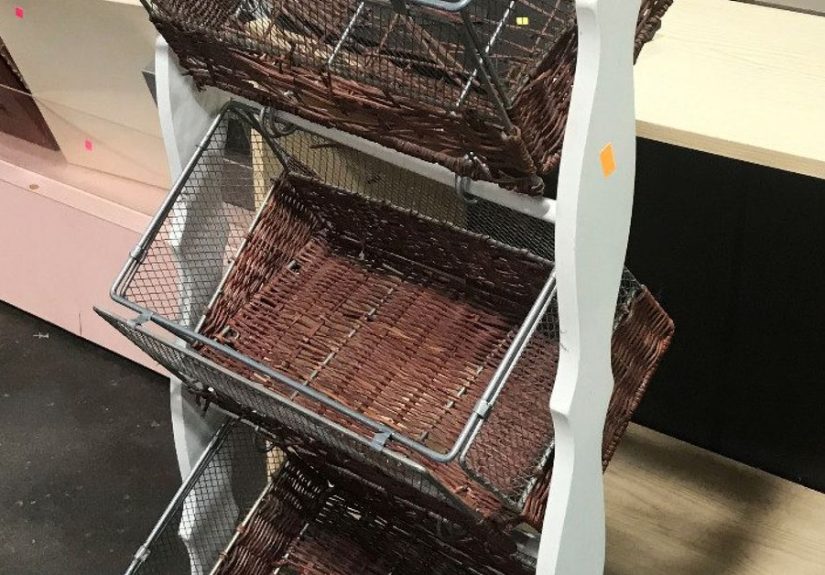
A freestanding vegetable storage cabinet is perfect for larger kitchens, mudrooms, and pantries. These often include two or three tilt-out compartments, mesh doors, and a flat top that can hold a bread box, mixing bowl, or plant. They look like furniture, which is great when storage must be visible.
Wall-Mounted Vegetable Bins
Wall-mounted bins are a smart choice when floor and counter space are limited. They can be made from wood crates, wire baskets, or slim metal racks. Use them for onions, garlic, small potatoes, and lightweight produce. Make sure the wall anchors are strong enough, because potatoes may be humble, but a full bin of them is basically a gym membership.
Rolling Produce Carts
A rolling farmhouse cart gives you flexibility. You can tuck it into a pantry, roll it near the prep area while cooking, or move it out of the way when guests arrive. Choose a cart with locking wheels, breathable baskets, and enough space between tiers to reach produce easily.
DIY Crate Storage
DIY crate storage is budget-friendly and easy to personalize. Wooden crates can be stacked, mounted, painted, stained, or labeled. Add small caster wheels for mobility, chalkboard tags for a market-style look, or wire fronts to prevent rolling vegetables from making a dramatic escape.
How to Choose the Right Farmhouse Vegetable Bin
Before buying or building a vegetable bin, measure your space. A beautiful cabinet is less beautiful when it blocks the dishwasher. Decide where the bin will live: pantry, countertop, kitchen island, mudroom, basement, or breakfast nook. Then think about what you buy most often. A family that eats ten pounds of potatoes a week needs a different setup than someone who stores three onions and calls it preparedness.
Look for ventilation, easy cleaning, sturdy construction, and separate compartments. If the bin will hold potatoes, choose a darker or covered compartment. If it will hold onions or garlic, prioritize airflow. If it will sit in plain sight, choose a finish that matches your kitchen: whitewashed wood for cottage farmhouse, black metal for modern farmhouse, natural oak for warm rustic style, or distressed paint for vintage charm.
Farmhouse Styling Ideas That Still Make Sense
Good storage should not become a clutter stage set. Keep labels simple: “Potatoes,” “Onions,” “Garlic,” and “Squash” are enough. Use neutral tags, small metal label holders, or chalkboard signs. Avoid overdecorating the bin with fake vines, oversized bows, or anything that makes it hard to clean. Farmhouse style works best when it feels relaxed, useful, and honest.
For a cohesive look, repeat materials already in your kitchen. If you have black cabinet pulls, choose bins with black wire mesh or dark hardware. If your kitchen has butcher block counters, natural wood bins will feel connected. If your pantry has white shelving, a distressed white vegetable cabinet can blend in while still adding character.
Cleaning and Maintenance Tips
Inspect your vegetable bins once a week. Remove soft, sprouted, bruised, or moldy produce immediately so it does not affect the rest. Wipe crumbs, soil, and onion skins from the bottom. For wooden bins, use a dry cloth first, then a lightly damp cloth if needed. Avoid soaking wood. For wire and metal baskets, remove produce and wipe with mild soap and water, then dry fully before refilling.
Use breathable liners only when needed. A sheet of brown paper, a washable cotton liner, or a removable tray can make cleaning easier. Avoid sealing vegetables inside plastic liners unless the produce specifically belongs in refrigerated storage. The goal is airflow, not a tiny vegetable sauna.
Common Mistakes to Avoid
The first mistake is overcrowding. Produce needs space for air to move around it. The second mistake is mixing everything together. Potatoes, onions, garlic, fruit, and squash may all look adorable in one big harvest basket, but they do not all age well side by side. The third mistake is placing bins near heat. Keep vegetable storage away from ovens, dishwashers, sunny windows, and heating vents.
Another common mistake is using a bin that is too deep. Deep bins hide older produce at the bottom, where it can spoil unnoticed. Shallow or angled bins are easier to rotate. If you already own a deep bin, use the “first in, first out” method: place newer produce behind or below older produce so you use the older items first.
Small-Kitchen Ideas for Farmhouse Vegetable Storage
Small kitchens need storage that earns its keep. Try a narrow rolling cart between the fridge and wall, a two-tier countertop basket, an under-shelf wire bin, or a wall-mounted crate system. If you have a kitchen island, use open shelving with baskets underneath. If you have a pantry door, consider a hanging rack with breathable baskets for lighter produce like onions and garlic.
For apartments, choose bins that are attractive enough to leave visible. A compact bamboo-and-wire basket can sit on a counter without looking messy. A small wooden crate can fit under a console table or inside a lower cabinet. The goal is to create a produce zone so vegetables do not wander across the kitchen like they pay rent.
DIY Farmhouse Vegetable Bin Idea
For a simple DIY project, start with three wooden crates. Sand rough edges, stain or paint them, and stack them vertically with the openings facing forward. Attach them together with screws for stability. Add small label holders to the front of each crate. For better airflow and a more finished look, attach wire mesh panels across the lower half of each opening, leaving enough space at the top to reach in.
Use the bottom crate for potatoes, the middle crate for onions, and the top crate for garlic or seasonal squash. Add felt pads underneath if the unit sits on a counter, or caster wheels if it will stand on the floor. This project is simple, affordable, and flexible. It also gives you the satisfaction of saying, “I made that,” which is one of the official emotional benefits of owning a drill.
Farmhouse Vegetable Bin Storage Experience: What It Is Like in Real Life
After using farmhouse vegetable bin storage in a working kitchen, the biggest change is not the decor. It is the rhythm. When produce has a clear home, cooking feels easier. Instead of digging through plastic bags or opening three cabinets to find one potato, everything is visible and ready. The kitchen starts to feel less like a storage accident and more like a place where dinner could realistically happen before everyone gets hungry enough to eat cereal.
The most useful setup is usually a three-zone system. Potatoes go in the lowest, darkest bin because they are heavy and prefer less light. Onions go in a separate ventilated basket or middle compartment. Garlic, shallots, and small items go on top, where they are easy to grab. This arrangement sounds simple, but it solves a surprising number of tiny daily annoyances. No more onion rolling behind the coffee maker. No more sweet potato hiding under a bag of chips. No more buying garlic when there is already enough garlic at home to protect a medieval village.
A farmhouse bin also changes shopping habits. When storage is visible, you become more aware of what you already have. That means fewer duplicate purchases and less waste. It also makes meal planning more natural. If you see potatoes, onions, and squash waiting together, soup suddenly seems obvious. If garlic is sitting right there in a labeled basket, roasted vegetables become more tempting. Good storage does not cook dinner for you, sadly, but it does gently remind you that ingredients exist.
There are a few lessons learned the practical way. First, airflow matters more than looks. A closed wooden box without ventilation may match the kitchen perfectly, but produce will not thank you. Second, removable liners or trays are worth it. Onion skins, bits of dry soil, and papery garlic flakes collect quickly. A bin that looks charming on Monday can look like a tiny barn floor by Friday if it is hard to clean. Third, size matters. Oversized bins encourage overbuying, while tiny bins overflow immediately. The sweet spot is enough space for one normal grocery cycle, not enough space to prepare for a root vegetable emergency.
Location also makes a difference. A bin near the stove may look convenient, but heat can shorten produce life. A sunny windowsill may make a wire basket look magazine-worthy, but potatoes dislike light. The best location is usually a cool pantry wall, a shaded counter, a mudroom shelf, or a kitchen corner away from heat and direct sun. In homes with limited space, a rolling cart is especially helpful because it can move wherever it is needed.
The style benefit is real, too. A farmhouse vegetable bin adds warmth without trying too hard. Wood softens a modern kitchen. Wire mesh adds texture. Labels create order. Even a small bin can make everyday ingredients feel intentional rather than dumped. It is one of those rare organization upgrades that is both pretty and useful, which is more than can be said for many decorative baskets that exist only to hold other decorative baskets.
The final experience-based tip is to build a weekly habit around the bin. Before grocery shopping, check each compartment. Use sprouting potatoes first. Toss anything soft. Move older onions forward. Wipe the base if needed. This takes only a few minutes, but it keeps the system working. Farmhouse vegetable bin storage is not about creating a perfect pantry photo. It is about making fresh food easier to store, easier to see, and easier to use.
Conclusion
Farmhouse vegetable bin storage is a smart upgrade for anyone who wants a kitchen that feels organized, warm, and genuinely useful. Whether you choose a rustic wooden cabinet, stackable wire baskets, woven pantry bins, a rolling produce cart, or a DIY crate system, the best option is the one that fits your space and supports how you actually cook.
Focus on airflow, darkness for potatoes, dry storage for onions and garlic, sturdy construction, and easy cleaning. Keep produce separated when needed, avoid overcrowding, and place bins away from heat and direct sunlight. When done well, a farmhouse vegetable bin does more than hold vegetables. It reduces waste, simplifies meal prep, frees counter space, and adds a cozy, lived-in charm to the kitchen.
In other words, it is storage with personality. And if it helps you use the potatoes before they grow little alien arms, that is a farmhouse miracle worth celebrating.
Note: This article is original, publish-ready content based on researched U.S. food storage, produce handling, pantry organization, and farmhouse kitchen storage guidance. Source links are intentionally omitted from the article body as requested.