Table of Contents >> Show >> Hide
- Why It Matters to Know the Difference
- 1. Genuine People Are Consistent, Fake People Are Strategic
- 2. Genuine People Respect Boundaries, Fake People Treat Them Like Suggestions
- 3. Genuine People Do Good Quietly, Fake People Need an Audience
- 4. Genuine People Can Apologize, Fake People Perform Damage Control
- 5. Genuine People Listen to Understand, Fake People Listen to Manage Impressions
- 6. Genuine People Are Honest Without Being Cruel, Fake People Use Truth as a Weapon
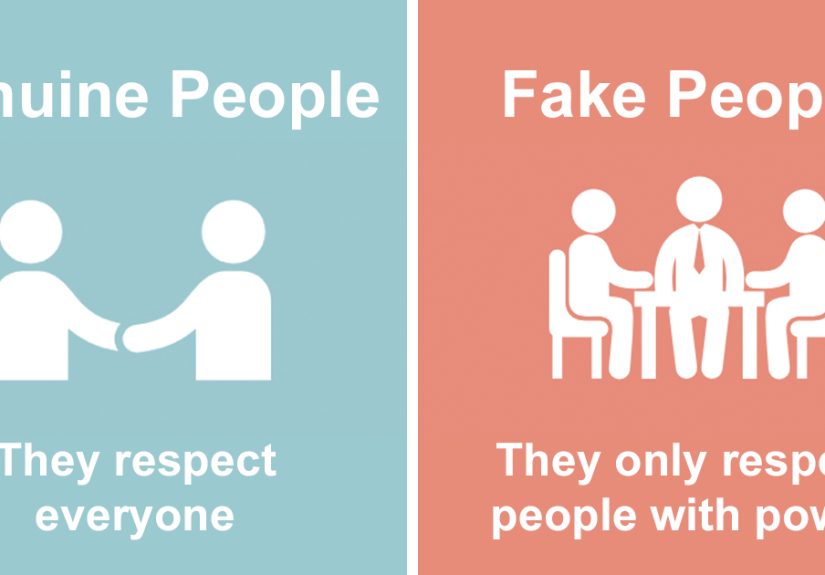
- 7. Genuine People Treat Everyone Like Humans, Fake People Rank People by Usefulness
- 8. Genuine People Bring Clarity, Fake People Leave a Trail of Confusion
- Common Mistakes People Make When Judging Character
- How to Deal With Fake People Without Becoming Bitter
- Experiences That Make This Lesson Real
- Conclusion
Some people walk into your life like warm sunlight. Others show up like a ring light, a rehearsed speech, and a suspiciously perfect smile. Learning the difference between fake vs genuine people is not about becoming cynical or turning into a human lie detector. It is about protecting your peace, choosing healthier relationships, and getting better at spotting character before you hand over your trust, time, or emotional Wi-Fi password.
Here is the truth: most people are not cartoon villains twirling invisible mustaches. Human behavior is messy. Good people can act awkward, guarded, or inconsistent when stressed. Charming people can still be manipulative. That is why identifying fake vs genuine people is less about one dramatic moment and more about patterns. The goal is not to judge everyone in five seconds. The goal is to notice who is real when life gets inconvenient, unglamorous, and mildly annoying.
Below are eight practical ways to tell the difference between performative behavior and authentic character, with examples you can actually use in friendships, dating, family life, work, and the daily Olympics of dealing with other humans.
Why It Matters to Know the Difference
When you spend time around genuine people, relationships usually feel steadier. You know where you stand. Communication is clearer. Boundaries are respected. Trust grows because their actions make sense. Around fake people, things often feel confusing. They may say one thing, do another, flatter you in public, dismiss you in private, or make every interaction feel like a hidden audition.
Knowing how to identify fake people can save you from wasted energy, one-sided relationships, workplace drama, and emotional exhaustion. It can also help you become more genuine yourself, which is the best twist ending of all.
1. Genuine People Are Consistent, Fake People Are Strategic
The first clue is consistency. Genuine people tend to act like themselves across situations. Their values do not disappear when a more powerful, richer, cooler, or trendier person enters the room. Fake people often shift depending on who is watching and what they might gain.
What this looks like in real life
A genuine friend is kind whether you are successful or struggling. A fake friend may cheer loudly when you are useful, popular, or entertaining, then vanish when you need support. At work, a genuine coworker is respectful to the intern, the receptionist, and the boss. A fake one suddenly discovers manners only when management is nearby.
Ask yourself: does this person have a stable character, or are they running a different personality update for every audience?
2. Genuine People Respect Boundaries, Fake People Treat Them Like Suggestions
One of the clearest signs of authenticity is how someone responds to the word no. Genuine people may be disappointed, but they usually respect your limit. Fake people often push, guilt-trip, shame, or act offended that your life does not revolve around their preferences. In their world, boundaries are rude only when other people have them.
Red flags to watch for
- They keep asking after you already said no.
- They joke about your boundary to make it seem silly.
- They punish you with silence, moodiness, or gossip.
- They act entitled to your time, attention, or private information.
Healthy boundaries reveal character fast. Authentic people see limits as part of mutual respect. Fake people see limits as obstacles to control.
3. Genuine People Do Good Quietly, Fake People Need an Audience
There is nothing wrong with sharing good moments. But fake people often turn kindness into performance art. Every favor needs witnesses. Every generous act needs a caption. Every small decency comes with a billing statement, emotional or otherwise.
Genuine people do not need applause for basic integrity. They help because it aligns with who they are, not because they are collecting social points like a loyalty card.
Example
Imagine two friends helping someone move. One shows up, carries boxes, grabs water, and heads home. The other shows up late, takes three selfies with one cardboard box, posts “Always there for my people,” and somehow does less lifting than the houseplant. Same event, very different motive.
Look at whether kindness is steady when there is no spotlight. That is where sincerity usually lives.
4. Genuine People Can Apologize, Fake People Perform Damage Control
Everybody makes mistakes. The difference is in the response. Genuine people can say, “I was wrong,” without dragging in a marching band of excuses. Fake people often turn apologies into negotiations, distractions, or blame-shifting exercises worthy of Olympic scoring.
A genuine apology usually sounds like this
“I said something hurtful. I understand why that upset you. I am sorry. I will do better.”
A fake apology usually sounds like this
“I am sorry you felt that way.”
“I was joking.”
“You are too sensitive.”
“Well, if you had not…”
One response takes responsibility. The other tries to escape it. That difference matters in friendships, dating, family conflicts, and professional relationships.
5. Genuine People Listen to Understand, Fake People Listen to Manage Impressions
Listening is one of the easiest ways to measure whether someone is real. Genuine people pay attention because they care about the person in front of them. Fake people often listen only long enough to respond, impress, interrupt, or redirect the spotlight back onto themselves.
Signs of genuine listening
- They remember details that matter to you.
- They ask thoughtful follow-up questions.
- They do not constantly turn your story into their story.
- They make room for your emotions instead of competing with them.
If every conversation with someone feels like a PR campaign starring them, that is useful information. Real connection usually feels mutual, not staged.
6. Genuine People Are Honest Without Being Cruel, Fake People Use Truth as a Weapon
Some fake people hide behind the phrase “I’m just being honest,” when what they are actually doing is being careless, harsh, or manipulative. Genuine people value honesty too, but they pair it with empathy. They do not use “truth” to embarrass you, dominate you, or make themselves look superior.
Authenticity is not bluntness for sport. It is honesty with integrity. A genuine person can tell you something hard while still protecting your dignity. A fake person often disguises ego, gossip, or hostility as “keeping it real.”
Quick test
After difficult conversations, do you feel respected, even if the topic was uncomfortable? Or do you feel humiliated, confused, or subtly smaller? One indicates maturity. The other suggests manipulation or emotional carelessness.
7. Genuine People Treat Everyone Like Humans, Fake People Rank People by Usefulness
This one is huge. Watch how a person treats people who cannot do much for them. That includes service workers, junior employees, family members, support staff, and people who are not socially impressive. Genuine people do not suddenly become polite only when status is involved.
Fake people are often extremely charming upward and oddly dismissive downward. They flatter people with power, ignore people with none, and switch tones faster than a streaming service switches ads.
Why this matters
How someone treats “unimportant” people is often the clearest preview of how they may treat you once the honeymoon phase ends or once you stop being useful. Character shows up most clearly where there is no reward for showing it.
8. Genuine People Bring Clarity, Fake People Leave a Trail of Confusion
You do not need to over-mystify this. Your body and mind often notice patterns before your logic catches up. Genuine people tend to make relationships feel more secure over time. Fake people often leave behind a fog: mixed signals, contradictions, drama, triangulation, guilt, flattery followed by distance, or endless little tests.
That does not mean every confusing person is fake. Some people are simply immature, avoidant, anxious, or bad at communication. But when confusion becomes a pattern, pay attention. Chronic inconsistency is not mystery. It is information.
Questions to ask yourself
- Do I usually feel calm or on edge around this person?
- Do their words line up with their behavior?
- Do I feel seen, or managed?
- Can I be honest without being punished for it?
If your relationships constantly feel like decoding a riddle written by a committee, that may be less “chemistry” and more “red flag with decorative lighting.”
Common Mistakes People Make When Judging Character
Even when trying to spot fake vs genuine people, it is easy to make mistakes. Charm is not proof of goodness. Social awkwardness is not proof of dishonesty. Confidence is not the same as integrity. Vulnerability can be sincere, but it can also be used strategically by manipulative people who reveal just enough to create fast intimacy.
The smartest move is to avoid snap judgments. Look for repeated behavior across time, settings, and stress levels. Pay attention to how someone handles disappointment, boundaries, criticism, success, and other people’s needs. Patterns tell the truth better than speeches do.
How to Deal With Fake People Without Becoming Bitter
Once you identify fake behavior, the answer is not to become cold, suspicious, or permanently unimpressed by everyone with teeth. A better approach is to stay warm but discerning.
What helps
- Slow down trust. Let people earn access over time.
- Set clear boundaries early and watch their response.
- Believe patterns instead of promises.
- Do not over-explain your limits.
- Reduce access instead of starting unnecessary drama.
- Invest more in people who show consistency, empathy, and accountability.
You do not need a dramatic exit every time you meet a fake person. Sometimes the healthiest response is simple: less access, less disclosure, less emotional investment. Not every lesson needs a speech. Some lessons need a calendar that suddenly gets very full.
Experiences That Make This Lesson Real
I once knew someone who was almost impossibly likable in public. They remembered birthdays, posted inspirational quotes, praised people loudly, and had a talent for sounding emotionally intelligent in exactly the way that makes everyone nod. If charm were a product, this person would have had premium packaging. But over time, the pattern changed. They only helped when the right people could see it. They disappeared when a favor was inconvenient. They listened just enough to collect details, then reused those details later in gossip disguised as concern. At first, it was easy to miss because nothing was dramatic. It was death by a thousand tiny inconsistencies.
Then there was another person who seemed less polished. They were not especially smooth, funny, or socially strategic. In fact, they were awkward sometimes. They forgot the perfect words. They did not always know how to comfort people elegantly. But when life got hard, they were there. Not in a grand cinematic way. They just showed up. They texted back. They followed through. They remembered what mattered. They did not need the moment to be about them. That was when the difference between fake and genuine became obvious: one person had excellent presentation, the other had actual character.
A lot of us learn this lesson in friendships first. You may have had a friend who loved being seen with you when things were fun, exciting, and social. Group dinner? Absolutely. Celebration? First one there. Hard season, loss, burnout, family trouble, money stress, or plain boring life maintenance? Suddenly they were “so slammed right now.” Genuine friendship is not measured only by who claps the loudest when you win. It is measured by who stays kind when there is nothing glamorous to gain.
Many people also experience this in dating. Some partners know how to create instant intensity. They overshare early, move fast, promise big, and act like the connection is uniquely magical by day three. It feels flattering, exciting, and slightly suspicious, like buying a luxury car from someone who keeps saying, “Trust me.” A genuine person may still be enthusiastic, but they make space for pace, clarity, and respect. A fake or manipulative person often wants access before trust is built. They call it chemistry. Your nervous system may call it confusion.
Workplaces are another classroom for this lesson. The fake coworker often has brilliant upward manners. They compliment the boss, take credit strategically, and speak in polished, professional paragraphs. Meanwhile, they dismiss support staff, ignore team labor, and become mysteriously unavailable when shared work gets messy. The genuine coworker may not have the best personal branding, but they communicate honestly, share credit, admit mistakes, and stay useful after the meeting ends. In the long run, genuine people create stability. Fake people create noise.
The hardest part is that fake people are not always evil. Sometimes they are deeply insecure, approval-seeking, image-driven, or afraid to be disliked. That does not make the behavior healthy, but it explains why spotting it requires compassion and boundaries at the same time. You do not have to hate someone to recognize they are not safe for closeness. You can understand them and still keep your distance. That is maturity, not meanness.
Most people who have been burned eventually learn one powerful rule: trust how a person behaves over time, especially when there is no reward for doing the right thing. Real people are not perfect. They get tired, messy, emotional, and occasionally weird. But they are still honest. They are still accountable. They are still recognizably themselves. And once you experience that kind of sincerity, fake behavior becomes easier to spot because it starts to feel exactly like what it is: effort without depth, sparkle without substance, and a lot of wrapping paper around a very empty box.
Conclusion
If you want to get better at identifying fake vs genuine people, stop chasing perfection and start observing patterns. Genuine people are not flawless. They are simply more aligned. Their words, actions, values, and treatment of others make sense together. Fake people often rely on image, convenience, and selective charm. The more closely you watch for consistency, accountability, empathy, and respect for boundaries, the easier it becomes to separate real character from polished performance.
And here is the bonus insight: the best way to attract genuine people is to practice being one. Be clear. Be kind. Be honest. Respect boundaries. Apologize well. Show up consistently. In a world full of branding, sincerity still stands out.