Table of Contents >> Show >> Hide
- What Is Fake Door Testing?
- Why Teams Use Fake Door Tests
- Fake Door Testing vs. Other Validation Methods
- When Fake Door Testing Works Best
- When Fake Door Testing Is the Wrong Tool
- How to Run a Fake Door Test
- Step 1: Start with a specific hypothesis
- Step 2: Pick one variable to test
- Step 3: Choose the right fake door format
- Step 4: Design the post-click experience
- Step 5: Define your metrics before launch
- Step 6: Get enough traffic to make the result useful
- Step 7: Segment the results
- Step 8: Follow up with real learning
- What Good Results Actually Look Like
- Common Fake Door Testing Mistakes
- A Simple Example
- Experience: What Fake Door Testing Feels Like in Real Teams
- Final Thoughts
Product teams love ideas the way toddlers love glitter: with total commitment and very little concern for cleanup. That is exactly why fake door testing exists. It gives you a fast, low-cost way to learn whether people actually want a feature, product, or offer before your team spends weeks building something that will be admired mostly by the engineers who built it.
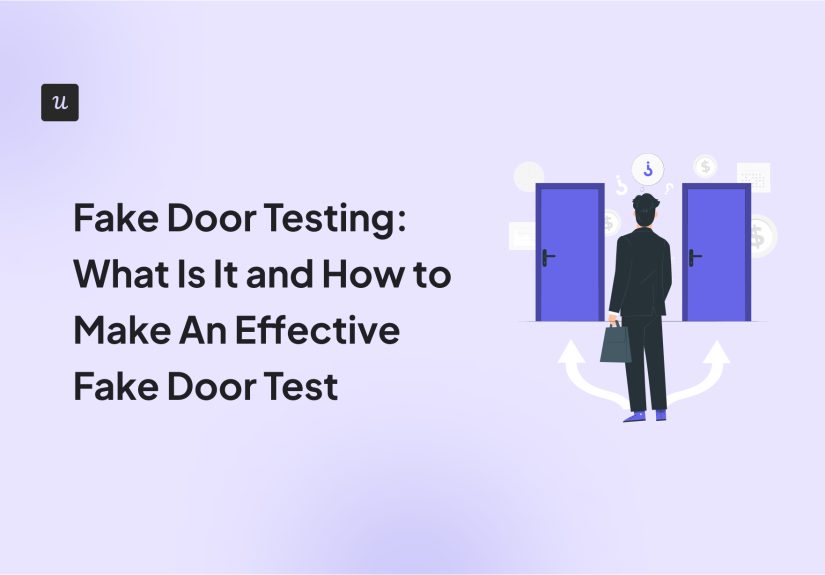
In simple terms, a fake door test places a clickable “door” in front of users for something that does not fully exist yet. That door might be a button, a menu item, a pricing plan, a landing page, or a signup flow. When someone clicks, they do not reach a finished product. Instead, they reach a message, waitlist, survey, or request form that helps you measure real interest. The goal is not to trick people. The goal is to learn whether the idea deserves investment.
If you have ever wondered whether a new feature belongs on the roadmap, whether your messaging is strong enough to spark action, or whether your “must-have” idea is actually a “meh, maybe later” idea, fake door testing can save you time, money, and a fair amount of emotional damage.
Note: In many product circles, “fake door test” and “painted door test” mean nearly the same thing.
What Is Fake Door Testing?
Fake door testing is a demand-validation method that measures whether users show interest in a product idea before it is fully built. Think of it as a lightweight experiment: you create an entry point to a future feature, then track what people do when they encounter it.
For example, imagine your SaaS product is considering an AI-powered reporting dashboard. Instead of building the entire experience, you add a new navigation item called “AI Insights.” When users click it, they see a short message: “This feature is coming soon. Join the waitlist for early access.” Now you can measure impressions, clicks, waitlist signups, segment-level interest, and even willingness to talk further.
That is the essence of fake door testing: measuring intent before building the house behind the door.
Why Teams Use Fake Door Tests
1. To validate demand before spending real money
The biggest advantage is obvious: you can learn quickly without committing months of engineering time. If the response is weak, you have avoided a costly detour. If the response is strong, you have a better reason to invest.
2. To prioritize the roadmap
Every backlog claims to be full of “high priority” work. A fake door test helps separate the loud ideas from the useful ones. Internal opinions matter, but user behavior usually wins the arm wrestle.
3. To test messaging as well as the concept
Sometimes users do not reject the idea. They reject the way it is described. A fake door test can reveal whether the offer is weak or whether the copy simply needs a better haircut.
4. To learn which audience cares most
The test can show whether a feature resonates more with power users, new users, enterprise buyers, mobile visitors, or customers in a specific industry. That makes the eventual rollout much smarter.
5. To reduce ego-driven product decisions
Fake door tests are wonderfully rude in the best possible way. They do not care who suggested the idea. They just report what users did.
Fake Door Testing vs. Other Validation Methods
Fake door testing is not the same as a survey, prototype, or MVP.
A survey tells you what people say they might want. A fake door test shows what they are willing to click on in a real environment.
A landing page test is a close cousin. In many cases, it is effectively a fake door on a dedicated page instead of inside the product.
A prototype helps you study usability and workflow. A fake door test mainly measures initial interest, not the full user experience.
An MVP requires more effort because some real functionality exists. That is useful when you need deeper learning, but it is more expensive and slower.
So where does fake door testing fit? Right near the front of the validation process. It is perfect when your biggest question is, “Do people care enough to act?”
When Fake Door Testing Works Best
Fake door testing works especially well when:
- You are evaluating a new feature idea.
- You want to test demand for a pricing tier or add-on.
- You are exploring a new customer segment.
- You need evidence before assigning scarce engineering resources.
- You are testing a feature that would be expensive or slow to build.
- You want to compare different value propositions before development starts.
It is especially handy for software, subscription products, marketplaces, AI features, and e-commerce offers where user intent can be measured through clicks, signups, waitlists, preorders, or demo requests.
When Fake Door Testing Is the Wrong Tool
Not every question should be answered with a fake door.
It is a poor fit when you need to understand actual usability, performance, trust-heavy workflows, or long-term retention. If the value depends on the full experience, a fake door test may overstate interest. People click on shiny things. They also buy exercise equipment in January. We all know how that story goes.
You should also be careful in regulated, sensitive, or high-stakes contexts such as healthcare, finance, or legal services. In those areas, even a small amount of ambiguity can create trust and compliance risks.
How to Run a Fake Door Test
Step 1: Start with a specific hypothesis
Do not begin with “Let’s see what happens.” That is not a hypothesis. That is a weather forecast.
Write a statement like this: “If we place an ‘AI Insights’ button in the dashboard for active managers, at least 8% of exposed users will click it, and at least 25% of clickers will join the waitlist.”
A good hypothesis identifies the audience, the behavior, and the success threshold.
Step 2: Pick one variable to test
Keep the experiment focused. Test one major idea at a time. If you change the placement, headline, segment, and pricing language all at once, you will learn approximately nothing with impressive confidence.
Step 3: Choose the right fake door format
Common formats include:
- A new button inside the app
- A menu item for an unreleased feature
- A landing page for a not-yet-built product
- A pricing page option for a future plan
- An ad that leads to a waitlist or early-access form
Pick the format that best matches the real behavior you hope to see later.
Step 4: Design the post-click experience
This part matters more than many teams realize. After the click, be honest. Tell users the feature is not available yet, thank them for their interest, and offer a next step.
Good next steps include:
- Join the waitlist
- Request a demo
- Answer one or two short questions
- Book an interview
- Vote for early access
Bad next steps include vague messaging, hidden details, or anything that makes users feel duped. A fake door should test interest, not torch trust.
Step 5: Define your metrics before launch
This is where many teams get sloppy. You need one primary metric and a small set of secondary or guardrail metrics.
Primary metrics might include:
- Click-through rate on the fake door
- Waitlist signup rate
- Demo request rate
- Preorder or deposit intent
Secondary metrics might include:
- Completion rate of the follow-up form
- Segment-level conversion
- Email confirmation rate
- Interview acceptance rate
Guardrail metrics help protect the business and user experience:
- Bounce rate
- Support tickets
- Unsubscribes
- Negative feedback
- Drop in engagement elsewhere
A test is not a win if it gets clicks but annoys users, confuses customers, or damages trust.
Step 6: Get enough traffic to make the result useful
Fake door tests are fast, but they still need enough exposure to reduce random noise. If twelve people see the button and two click, you do not have a trend. You have a coincidence wearing a lab coat.
Run the test long enough to reach a meaningful sample for your traffic volume and business context. The exact number will vary, but the principle is simple: do not call victory too early.
Step 7: Segment the results
Average performance can hide the best insight. Maybe the test underperforms overall but converts extremely well among enterprise admins. That could still be a strong signal if that segment matters most.
Review results by user type, device, acquisition channel, geography, lifecycle stage, and account size when relevant.
Step 8: Follow up with real learning
The best fake door tests do not end with “click rate was 7.3%.” They end with richer context. Reach out to interested users. Ask why they clicked, what outcome they expected, how urgent the problem is, and what they would compare it to.
Quantitative data tells you whether people raised their hand. Qualitative follow-up tells you why.
What Good Results Actually Look Like
There is no universal benchmark for a successful fake door test. A strong result depends on the audience size, product category, exposure quality, and the cost of building the feature.
A niche B2B workflow may justify investment with a small but highly qualified response. A broad consumer feature may need much higher click and signup rates to be worth pursuing. The real question is not “Did people click?” It is “Did the response justify the expected cost and strategic value?”
In other words, success is contextual. A 3% click-through rate can be amazing. It can also be mediocre. The numbers only matter when tied to your business decision.
Common Fake Door Testing Mistakes
Making the promise too vague
If users do not understand what the feature does, poor performance tells you very little.
Using click-through rate as the only signal
Clicks measure curiosity. Follow-up actions measure stronger intent. Treat them differently.
Testing with the wrong audience
A feature for advanced users will not get a fair read if most exposure comes from brand-new users.
Failing to close the loop
If users click and hear nothing back, trust declines. Even a short “Thanks, we’ll keep you posted” message helps.
Crossing the line into deception
Never charge people for something unavailable unless the terms are crystal clear and consent is explicit. Never hide material facts. Never use confusing UI to force signups. That is not experimentation. That is how legal teams become very popular.
A Simple Example
Let’s say a project management platform is considering a feature called “Auto-Build Weekly Status Report.”
The team adds a button to the dashboard for managers only. Users who click see a page that says: “We’re building automated status reports. Want early access? Tell us how you currently create updates.” The page includes a short form and a waitlist option.
After two weeks, the team finds:
- 11% of exposed managers clicked the button
- 41% of clickers joined the waitlist
- Many respondents mentioned they spend 30 to 60 minutes every Friday writing updates
- The strongest demand came from teams with more than eight direct reports
That is a strong signal. The team now knows there is interest, who cares most, and what job the feature should do. That is a far better starting point than building from guesswork.
Experience: What Fake Door Testing Feels Like in Real Teams
In practice, fake door testing tends to humble teams in useful ways. Product managers often begin with one assumption, marketers bring a different angle, sales has its own dramatic monologue, and engineering quietly hopes nobody suggests a six-month rebuild. Then the test goes live, and user behavior becomes the referee.
One common experience is discovering that an idea gets lots of attention but very little follow-through. A shiny feature name may produce a respectable click-through rate, yet the waitlist form barely converts. That usually means the headline created curiosity, but the actual value proposition was weak. Teams learn that interest and commitment are not identical twins. They are cousins who only see each other at holidays.
Another common experience is the opposite: a feature looks modest at first glance, but the people who click are incredibly qualified. This happens often in B2B software. Maybe only a small slice of users engages, but those users represent the highest-value accounts or the most painful workflow. The result may not look flashy on a slide deck, but it can still shape the roadmap in a major way.
Teams also learn that wording changes everything. A fake door labeled “Advanced Analytics” might get polite interest. Rename it “Forecast Next Month’s Revenue,” and suddenly people pay attention. Same underlying concept, very different reaction. That is why fake door tests are not just for validating product ideas. They are also powerful for validating messaging, framing, and perceived outcomes.
There is also a recurring emotional pattern. Before the test, internal stakeholders can be deeply attached to their favorite idea. After the test, the conversation gets more grounded. The room stops arguing about opinions and starts discussing evidence. That does not mean politics vanish forever. It just means the data now gets a chair at the table.
Some of the most useful experiences come from “failed” tests. A low-performing fake door is not a disaster. It is an early warning system. It tells you that the audience may not care, the problem may not feel urgent, the timing may be off, or the framing may be wrong. All of those are cheaper lessons to learn before development than after launch.
Good teams also notice the trust factor. When the post-click message is respectful and clear, users usually respond well. Many are perfectly happy to join a waitlist or share feedback if they feel included in the process. But when the message feels slippery or overly salesy, support complaints can appear fast. That is why the best fake door tests feel candid rather than sneaky.
Over time, organizations that use fake door testing well tend to build a healthier culture. They become more comfortable testing assumptions, more disciplined about defining success in advance, and less likely to confuse enthusiasm with evidence. In other words, fake door testing does not just help you validate a feature. It helps you build better product judgment.
Final Thoughts
Fake door testing is one of the smartest ways to answer an expensive question with a cheaper experiment. It helps teams validate demand, sharpen messaging, prioritize features, and reduce wasted effort before full development begins.
Done well, it is fast, clear, and respectful. Done poorly, it becomes confusing, noisy, or manipulative. The difference comes down to discipline: write a real hypothesis, test one idea at a time, measure both intent and trust, and be honest with users the moment they walk through the door.
Build less on guesswork, more on evidence, and your roadmap will start looking a lot less like a wish list and a lot more like strategy.