Table of Contents >> Show >> Hide
- Table of Contents
- Why the F-16 Still Matters
- From Lightweight Fighter to Global Workhorse
- Design Choices That Aged Well
- Performance & Capabilities (Plain English Edition)
- Variants, Blocks, and the Alphabet Soup
- Engines: Pratt or GEPick Your Loud
- Real-World Missions the F-16 Has Done
- Why It’s Still a Big Deal Today
- Experiences: Life Around a Fighting Falcon (What People Remember)
- Conclusion
The F-16 Fighting Falcon has a résumé that reads like an overachiever’s LinkedIn profile:
air-to-air fighter, bomb truck, precision striker, and “please escort the helicopters” teammateoften all in the same career.
It’s been called the “Viper” (yes, like the snake), and it’s still flying because the original design was smart, simple,
and built to evolve without turning into a maintenance soap opera.
In this deep dive, we’ll unpack how the F-16 went from a lightweight idea to a global workhorse, what makes it such a
pilot-friendly (and maintainer-respected) jet, and why modern upgrades keep it relevant even as newer fighters grab the headlines.
Why the F-16 Still Matters
The F-16 is a compact, multi-role fighter designed to deliver high performance without a price tag that makes accountants cry.
The U.S. Air Force has long described it as highly maneuverable and effective in both air-to-air and air-to-surface roles,
offering a relatively low-cost, high-performance option for the U.S. and allied nations.
But the real secret is balance: the jet is agile enough to win turning fights, stable enough to deliver precision weapons,
and adaptable enough to absorb decades of avionics upgrades. It’s the rare aircraft that can be both “classic” and “still useful,”
like a cast-iron skillet or your friend’s hoodie from college that somehow keeps surviving every move.
From Lightweight Fighter to Global Workhorse
The Lightweight Fighter bet
The F-16’s roots trace back to the U.S. Lightweight Fighter (LWF) effort in the 1970san era when the Pentagon was asking a bold question:
what if a smaller, simpler fighter could deliver serious combat power without the cost and complexity of larger jets?
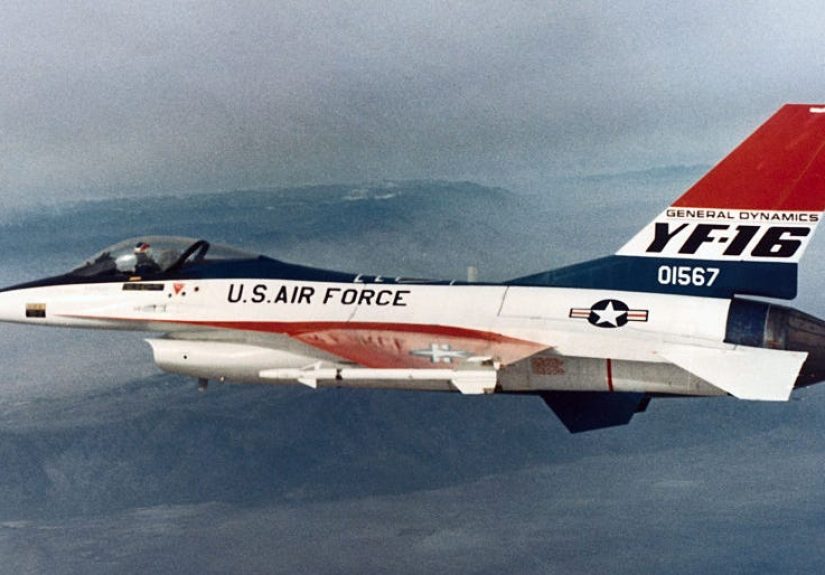
Program history documents describe how the Department of Defense selected two designsGeneral Dynamics’ single-engine YF-16
and Northrop’s twin-engine YF-17to compete for an eventual Air Force fighter production path.
In testing and evaluations, pilots reportedly favored the more maneuverable YF-16, and by the mid-1970s the General Dynamics design
was chosen as the Air Force’s new lightweight fighter. Meanwhile, the Navy ultimately leaned toward the YF-17 lineage for carrier operations,
which became the F/A-18 familyproof that “best” depends on the job description, not just the spec sheet.
Co-production: teamwork makes the airframe work
The F-16 wasn’t just a U.S. projectit became a multinational production effort early on. The U.S. Air Force notes that the aircraft was built under
a consortium agreement with four NATO partners (Belgium, Denmark, the Netherlands, and Norway), with shared manufacturing and final assembly lines in Europe.
This wasn’t only politics; it helped create an international support ecosystem that still matters for training, upgrades, and parts logistics.
Design Choices That Aged Well
Fly-by-wire: letting computers do the heavy lifting
One of the F-16’s most important design decisions is its fly-by-wire flight control systemmeaning pilot inputs are transmitted as electrical signals
rather than through traditional mechanical linkages. The Air Force highlights how this gives excellent flight control, especially during high-G maneuvering,
and supports precise handling in demanding flight regimes.
Translation: the jet can be inherently “unstable” in a way that improves agility, while computers continuously make tiny corrections
to keep it controllable. That’s not the pilot losing controlit’s the pilot getting superpowers with a silicon co-pilot.
Bubble canopy + reclined seat: visibility and G-tolerance
The cockpit is famous for its bubble canopy, which improves all-around visibilityespecially over the shoulder. The Air Force also notes a more reclined seat-back angle
than many earlier fighters, improving comfort and G-force tolerance. That matters because the F-16 is designed to handle up to 9 G,
a number that sounds like a sci-fi rating until you remember it’s “nine times your body weight” trying to move your arms like wet cement.
The side-stick controller: small movement, big consequence
Another signature feature is the side-stick controller. Instead of a center stick, the pilot uses a controller on the side console.
Small pressures translate into flight control commandsuseful when your body is busy experiencing the aerodynamic equivalent of an elephant sitting on your chest.
Performance & Capabilities (Plain English Edition)
Range and roles: a practical fighter, not just a fast one
The Air Force emphasizes that the F-16’s maneuverability and combat radius are strong for its class, and that it can operate in all-weather conditions,
detect low-flying aircraft in radar “clutter,” and fly significant distances, employ weapons accurately, and return to base.
That mixfight, strike, survive, returnexplains why it became a go-to multi-role platform.
Avionics and navigation: modern situational awareness
Over time, the jet incorporated increasingly capable avionics, including GPS/inertial navigation integration, communications,
and defensive systems. The Air Force highlights warning systems and modular countermeasure options, plus room for avionics growth.
That “growth space” is one reason upgrades didn’t require redesigning the whole aircraft every time technology improved.
AESA radar upgrades: the F-16 learns new tricks
Modern F-16 upgrade paths often center on AESA (Active Electronically Scanned Array) radar capability. Northrop Grumman’s APG-83 SABR is described as the U.S. Air Force
program-of-record radar for the F-16V upgrade program and also a baseline radar for new-build Block 70 aircraft, with hundreds delivered.
Air Force Materiel Command has also described testing and modernization efforts tied to integrating and evaluating this radar family and related software improvements.
Why should non-engineers care? Because AESA radars generally improve detection, tracking, reliability, and multi-target performancewhile also helping the jet
operate in more challenging electronic environments. It’s like swapping an old flashlight for a modern headlamp: the job is the same, but the experience changes dramatically.
Variants, Blocks, and the Alphabet Soup
F-16A/B vs. F-16C/D: the big dividing line
The Air Force notes that the original F-16A (single-seat) first flew in December 1976, and the first operational delivery of the F-16A occurred in January 1979
to an operational wing at Hill Air Force Base. The two-seat F-16B provided training capability with tandem cockpits.
Later, improvements and mission expansion led to the F-16C and F-16D variants, incorporating updated cockpit displays and architecture to support
precision strike, night attack, and beyond-visual-range interception missions.
F-16V and newer builds: staying relevant through upgrades
In modern discussions you’ll hear “F-16V,” “Block 70,” and “Block 72.” The naming can vary by customer and configuration,
but the theme is consistent: advanced avionics, modern cockpit improvements, and AESA radar integration.
Northrop Grumman describes APG-83 SABR as central to this modernization path and notes hundreds of radars delivered.
Another reason newer builds are attractive is longevity. Lockheed Martin product materials for Block 70/72 have stated an extended structural life
goal of 12,000 hours, positioning the airframe for long service timelines with modern systems.
In plain terms: the jet isn’t just “updated”it’s designed to keep flying long enough that today’s junior maintainers can become tomorrow’s chiefs.
The Thunderbirds effect: when a jet becomes a public icon
The F-16 also became a crowd favorite in demonstration roles. The National Museum of the U.S. Air Force notes that the U.S. Air Force Thunderbirds transitioned
from the T-38 to the F-16 in 1982, using early F-16As in the demo team before later transitioning within the F-16 family.
Airshows didn’t make the jet better at combatbut they did make the jet famous, which is a different kind of power.
Engines: Pratt or GEPick Your Loud
Pratt & Whitney F100: the established mainstay
Many F-16s are powered by variants of the F100 engine family. Pratt & Whitney describes the F100 as having strong safety and reliability history,
with thousands of engines in service across numerous air forces and tens of millions of flight hours. The key takeaway:
it’s a mature engine family with a global support footprintimportant for readiness and sustainment.
GE Aerospace F110: performance and upgrade pathways
GE Aerospace describes the F110 family as widely used and continually improved. Company materials note major F110 variants,
global orders, and thrust figures for some versions (including the F110-GE-132 class) as well as sustainment and improvement programs.
While “which engine is better” is the kind of argument that can start a friendly war in a squadron bar,
both families have long service histories and robust support ecosystems.
Real-World Missions the F-16 Has Done
The F-16 is often described as a “multi-role” fighter, but that phrase can sound like marketing until you see what it’s been tasked to do:
air defense, strike missions, close air support, suppression of enemy air defenses (SEAD), and a wide range of training and deterrence missions.
The Air Force has even highlighted examples where F-16s escorted helicopters to protect them from air and ground threats in combat search and rescue-related tasking.
What makes the jet practical is not just speed or weapons carriageit’s the combination of:
- Agility for air combat and self-defense
- Sensors and avionics growth to incorporate new radars, communications, and software
- Precision strike capability enabled through modern targeting and navigation systems
- Global interoperability built from decades of allied use, training standards, and logistics experience
Why It’s Still a Big Deal Today
The F-16’s staying power comes down to a simple reality: air forces need jets that can be generated, maintained, upgraded, and flown at scale.
A cutting-edge aircraft is greatunless you can’t afford enough of them, can’t keep them mission-ready, or can’t train the pipeline to staff them.
Modern F-16 upgrade efforts emphasize software, radar, and survivability improvements. Air Force Materiel Command has described modernization programs
that field large sets of enhancements, and industry sources describe modern radar baselines used for upgrades and new builds.
The result is a platform that can continue to contribute meaningfully in many mission setsespecially where numbers, interoperability,
and dependable readiness matter.
In other words: the F-16 is still around because it’s not trying to be everything. It’s trying to be usefulevery day, in lots of places, for a long time.
Experiences: Life Around a Fighting Falcon (What People Remember)
You don’t need to be a fighter pilot to understand why the F-16 leaves such a strong impression. In public interviews, airshow conversations,
and base outreach events, a few themes show up again and againshared across pilots, maintainers, and even the folks who only experience the jet from behind a fence line.
The following snapshots are composite descriptions drawn from commonly reported, public-facing anecdotes and the aircraft’s documented design traits.
The pilot’s view: “It feels like it wants to turn”
Pilots often talk about the F-16 as if it has personality. Part of that comes from fly-by-wire handling and a cockpit built around visibility.
With the bubble canopy and the reclined seat, the sensation is less “sitting in a tube” and more “wearing the airplane.”
The side-stick controller adds to that vibe: inputs are small, and the jet responds quicklyespecially in high-performance maneuvering.
And when people mention “9 G,” it’s not bragging for the sake of bragging; it’s a shorthand for how physically demanding a fight can be.
At high G, even simple taskslike checking a gauge or moving your armcan feel like you’re doing math while someone is turning up gravity.
The maintainer’s reality: fast turns, hot parts, and endless checklists
Maintainers tend to describe the F-16 in practical terms: access panels, line replaceable units, inspections, and the relentless rhythm of sortie generation.
The “experience” is measured in launch times, red Xs, and the satisfaction of watching a jet taxi out that you personally helped make mission-capable.
There’s also a sensory side: the smell of fuel and hydraulic fluid, the metallic heat shimmer over the engine area after shutdown,
and the unmistakable soundscape of a flight line where everything is urgenteven when it’s routine.
If pilots remember the jet’s agility, maintainers remember its pace: it’s built to fly a lot, and that demands a support team that can keep up.
The airshow crowd: the sound is half the story
For spectators, the F-16 experience is visceral. The jet is loud in a way that doesn’t just “make noise”it rearranges your internal organs a little
and makes kids grin like they’ve discovered a new emotion. When demonstration teams fly it, the aircraft’s energy is obvious:
tight turns, high-angle climbs, and that moment when you realize the plane is changing direction with an ease that seems unfair.
Even people who can’t name an engine model will remember the afterburner glow at dusk and the way the jet appears to “hang” in the air for a heartbeat
before it accelerates away.
The enduring takeaway: a jet with a community
The F-16 is more than a piece of hardwareit’s a community of pilots, crew chiefs, avionics specialists, instructors, engineers, and allies who’ve built
decades of shared techniques and culture around it. That matters because aircraft aren’t just purchased; they’re sustained. And in that sustaining,
people build stories: first solo, first night sortie, first time seeing a jet you worked on come home safely, or the bittersweet day a unit transitions
to something new. The F-16 persists in part because it’s a good airplanebut also because generations have learned how to make it better, together.
Conclusion
The F-16 Fighting Falcon started as a lightweight concept and grew into one of the most recognizable, continuously upgraded fighter aircraft in modern history.
Its success isn’t magic. It’s the result of deliberate design choicesfly-by-wire control, pilot-centered visibility, and an architecture built for growthpaired with
decades of upgrades in sensors, software, and mission systems.
If you’re looking for a single reason the F-16 still matters, it’s this: the jet was engineered to evolve. And it haswithout losing the simplicity and performance
that made it famous in the first place. The Viper didn’t just survive the future. It learned how to live in it.