Table of Contents >> Show >> Hide
- Why Crickets End Up Inside (and Why They’re So Annoying)
- First: Find the Cricket Faster (Without Losing Your Mind)
- 10 Easy Ways to Kill a Cricket Indoors
- 1) The Shoe (aka the Classic)
- 2) Paper Towel + Squish (Cleaner Than the Shoe)
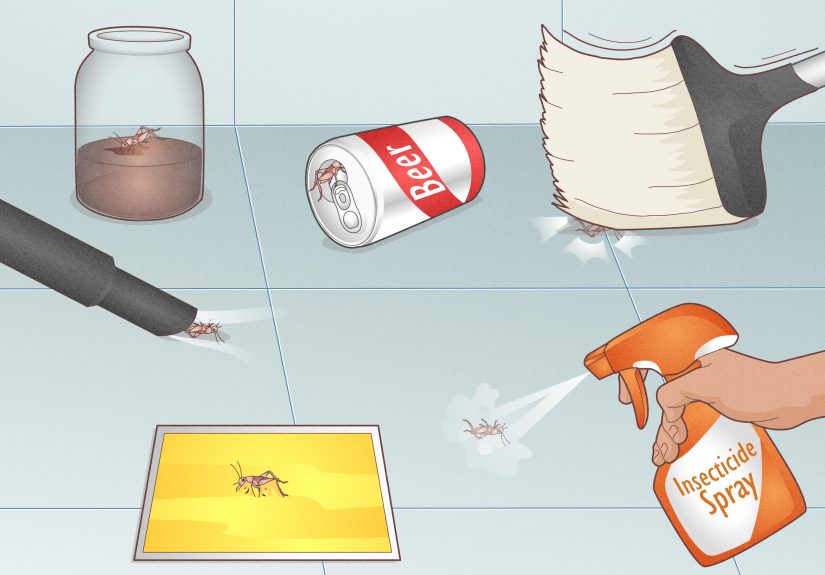
- 3) Vacuum It Up (Fast, Effective, and Weirdly Satisfying)
- 4) The Jar Trap + Swift Finish
- 5) Soapy Water Bowl (Low-Tech, Works Better Than You’d Think)
- 6) Sticky Traps (Set It and Forget It)
- 7) Molasses (or Sweet Bait) Drown Trap
- 8) Diatomaceous Earth (DE) as a Perimeter Kill Zone
- 9) Targeted Store-Bought Cricket Baits (Follow the Label Like It’s a Final Exam)
- 10) Call a Pro (When It’s Clearly Not Just One Cricket)
- How to Keep Crickets From Coming Back
- Common Mistakes That Make Cricket Problems Worse
- FAQ: The Stuff Everyone Wonders (Usually at Night)
- Extra: of Real-World Cricket “Experience” (Because This Bug Has a Fan Club)
- Conclusion
Somewhere in your home, a tiny musician is performing a one-bug concert at 2:13 a.m. And unfortunately, you didn’t buy tickets.
A loose cricket can be harmless… but it can also be loud, sneaky, and weirdly confident for something the size of a paperclip.
The good news: you don’t need a hazmat suit or a flamethrower to end the encore.
This guide walks you through practical, low-drama ways to kill a cricket indoors (plus a few “catch-and-release” options for the soft-hearted),
how to find the little chirper fast, and how to keep future crickets from turning your house into their after-hours venue.
Why Crickets End Up Inside (and Why They’re So Annoying)
Most indoor cricket situations happen for simple reasons: they wander in through small gaps, they’re looking for warmth,
or they’re attracted to moisture and cluttered hiding spots like basements, laundry rooms, and under-sink cabinets.
Many species are most active at night, which is why you usually hear them before you see them.
Quick reality check: one cricket vs. many
One cricket that accidentally hopped indoors is a quick fix. But if you’re hearing chirping regularly, finding droppings,
or spotting more than one in the same week, you might be dealing with a bigger indoor-friendly setup (moisture, entry points, or food sources).
Don’t panicjust switch from “hunt mode” to “home improvement mode” (we’ll get there).
First: Find the Cricket Faster (Without Losing Your Mind)
Before you can handle the cricket, you have to locate it. This is the part where many people end up standing still in a hallway,
holding a shoe like a confused gladiator.
Follow the soundthen flip the script
- Turn off TVs, fans, and white-noise machines so you can pinpoint chirping.
- Wait for a chirp cycle and take two slow steps toward the sound.
- Check classic hiding zones: behind furniture, along baseboards, under sinks, near floor drains, around water heaters, basements, and laundry rooms.
- Use a flashlight at floor level. The low angle makes movement and shadows easier to spot.
Pro move: “lights out” for 60 seconds
Crickets often freeze when startled, but they can also settle down in darkness. Try turning off the lights briefly, then sweeping a flashlight beam
along walls and floors. If it moves, you’ll see it. If it doesn’t move, it’s still thereplotting.
10 Easy Ways to Kill a Cricket Indoors
Below are realistic methods that work in real homes, with minimal mess and minimal “why did I do that?” regret.
Pick the one that matches your comfort level and your tolerance for bug-related cardio.
1) The Shoe (aka the Classic)
The fastest method is also the oldest. If the cricket is on a hard surface, a firm, quick stomp does the job.
Aim slightly in front of where it iscrickets can jump, and they love to do it at the worst possible moment.
- Best for: open floors, garages, patios, tile, hardwood
- Watch out: don’t smear it into carpet (carpet doesn’t deserve that)
2) Paper Towel + Squish (Cleaner Than the Shoe)
If you don’t want to bring “outdoor shoes” energy into your living room, grab a thick wad of paper towels.
Pin the cricket quickly, apply pressure, and then fold the towel inward to contain the mess.
Toss it in a sealed bag if you’re feeling extra civilized.
3) Vacuum It Up (Fast, Effective, and Weirdly Satisfying)
A vacuum is one of the most practical tools for dealing with indoor cricketsespecially if it’s hiding in corners,
behind appliances, or under cabinets. Use the hose attachment to target the cricket directly.
- Best for: crickets in tight spaces, multiple crickets, “I refuse to get close” situations
- Do this after: empty the canister or remove the bag promptly and place it in an outdoor trash bin
4) The Jar Trap + Swift Finish
If you can get a jar over it, you can control the situation. Slide stiff paper or thin cardboard under the jar,
then flip it upright. If your goal is killing (not releasing), you can place the sealed jar in the freezer for a short period.
This is a common pest-control approach for insects and avoids a mess.
Safety note: keep it away from food and label the jar so nobody thinks it’s “overnight oats.”
5) Soapy Water Bowl (Low-Tech, Works Better Than You’d Think)
Crickets are attracted to moisture. A shallow bowl of water with a small squirt of dish soap can act like a drowning trap.
The soap reduces surface tension, making it harder for insects to escape once they fall in.
- Best for: basements, laundry rooms, crawl spaces, corners near suspected activity
- Tip: place near walls where crickets travel
6) Sticky Traps (Set It and Forget It)
Glue boards (sticky traps) are a reliable option when a cricket is hard to catchor when you suspect there’s more than one.
Place traps along baseboards, behind toilets, under sinks, near floor drains, and behind appliances.
- Best for: stealthy crickets, recurring sightings, overnight capture
- Important: keep away from kids and pets (sticky traps don’t care who steps on them)
7) Molasses (or Sweet Bait) Drown Trap
Crickets are drawn to sweet scents and certain food odors. A simple bait trap is a container with water plus a spoonful of molasses
(or another sweet syrup). The smell lures them, and the water finishes the job.
- Best for: when you hear chirping but can’t locate the cricket
- Placement: near the sound source, along walls, or in damp rooms
8) Diatomaceous Earth (DE) as a Perimeter Kill Zone
Food-grade diatomaceous earth is often used as a non-spray option for crawling insects. It works by damaging the insect’s outer protective layer,
leading to dehydration over time. Use a very thin dusting along baseboards, in cracks, behind appliances, and other dry areas where crickets travel.
- Best for: prevention and slow-but-steady elimination
- Safety note: avoid breathing dust; keep it away from pets’ favorite sniffing zones; vacuum excess after it’s done its job
9) Targeted Store-Bought Cricket Baits (Follow the Label Like It’s a Final Exam)
If you have repeated cricket activity, commercial baits or treatments can helpespecially around entry points or in problem zones.
The key is using products exactly as directed and keeping them away from children and pets.
If you’re a teen reading this: involve a parent/guardian for any chemical product. The safest “DIY” is still mechanical methods (vacuum, traps, jar).
10) Call a Pro (When It’s Clearly Not Just One Cricket)
If you’re hearing regular chirping, finding multiple crickets, or noticing other pests (which can attract crickets),
a pest-control professional can help identify entry points and set up a targeted plan.
This is especially useful for basements/crawl spaces with ongoing moisture issues.
How to Keep Crickets From Coming Back
Killing one cricket is a victory. Preventing the sequel is the real triumph.
Most long-term cricket control comes down to: less moisture, fewer hiding spots, fewer entry points, and less attraction outdoors.
Reduce moisture (crickets love “spa conditions”)
- Fix leaks under sinks, behind toilets, and around water heaters.
- Run a dehumidifier in damp basements or laundry rooms.
- Vent bathrooms and kitchens properly (fans matter more than we admit).
Seal entry points (deny them the front door and the side quests)
- Caulk cracks around windows, foundations, and baseboards.
- Add door sweeps and weather-stripping to exterior doors.
- Repair torn window screens and cover vents with proper mesh.
Declutter and clean up food sources
- Vacuum crumbs, especially under stoves and refrigerators.
- Store pantry items in sealed containers.
- Reduce cardboard piles and clutter where insects can hide.
Adjust outdoor lighting and yard habits
Bright exterior lights attract insects, and crickets follow the buffet. Switching to warmer/amber bulbs or motion lighting can reduce activity near doors and windows.
Also, keep vegetation trimmed away from the foundation and remove leaf piles, mulch buildup, and wood stacks close to the house.
Common Mistakes That Make Cricket Problems Worse
- Spraying random things everywhere. It’s messy, often ineffective, and can be unsafe.
- Ignoring moisture. A damp basement can turn into cricket headquarters.
- Setting traps in the middle of the room. Crickets usually travel along walls and edges.
- Leaving the vacuum canister for “later.” Later can become “why is it chirping in my closet?”
FAQ: The Stuff Everyone Wonders (Usually at Night)
Why do crickets chirp inside the house?
Chirping is commonly associated with male crickets. They’re often more active in warm evening conditions, and indoor warmth can keep them noisy.
It’s not personal. They’re not taunting you. They’re just… committed to the bit.
Will one cricket turn into an infestation?
One random cricket doesn’t guarantee an infestation. But repeated sightings or frequent chirping can point to entry points, moisture,
or hidden areas where crickets can survive. If you suspect more than one, use sticky traps and address moisture and gaps.
What’s the cleanest way to kill a cricket?
Vacuuming is usually the cleanest “no-contact” option. Sticky traps are the cleanest “set it and forget it” option.
A paper towel squish is clean if you want immediate closure and don’t mind being the hero of your own story.
Extra: of Real-World Cricket “Experience” (Because This Bug Has a Fan Club)
Ask ten homeowners about crickets, and you’ll get ten variations of the same plot: “It was quiet… until it wasn’t.”
The most common experience starts with a single chirp at nightsoft at first, like a distant ringtone. Then it happens again.
Suddenly you’re lying in bed doing detective math: Is it in the wall? Under the bed? In the vent? Is it… in the pillow??
(It’s not in the pillow. Usually.)
People often discover crickets in the most stereotypical places: basements that feel like they could host a medieval dungeon,
bathrooms with a slow-drip leak, laundry rooms where warm appliances hum all day, and kitchens where crumbs have formed their own tiny civilization.
Many swear the cricket waits until the exact moment the lights go offlike it’s performing for the darkness itself.
This is why sticky traps placed along baseboards feel almost magical: you’re basically setting an invisible boundary line where the cricket already wants to travel.
Another classic story: the “missing cricket.” Someone hears it, follows the sound, gets within a foot of it… and then silence.
The cricket freezes like it’s playing an elite level of hide-and-seek. Five minutes later, when you leave, it resumes chirpinglouder
as if it’s giving commentary on your failure. In these situations, the vacuum method tends to be the most satisfying, because it turns an unpredictable chase
into a one-step solution. Homeowners who hate bugs but love efficiency often call this the “cordless peace treaty.”
Basements and crawl spaces bring their own cricket lore, especially with camel/spider crickets that don’t chirp but jump like tiny spring-loaded sneakers.
People describe opening a storage room and seeing one hop sideways into a shadow like it’s late for a meeting.
In those cases, bowls of soapy water and a dehumidifier are a common combo: the dehumidifier makes the space less inviting,
while the soapy water bowls quietly handle the stragglers. Add decluttering, and suddenly the basement feels less like a bug resort.
Finally, many people report that their “cricket era” ended when they fixed one unglamorous thing: a door sweep that didn’t touch the floor,
a cracked window seal, or a tiny gap where a pipe enters the house. It’s not dramatic, but it’s real.
Once those entry points are sealed, moisture is lowered, and outdoor lighting is toned down, crickets tend to move onbecause your house stops being
the warm, damp, snack-adjacent hangout spot it used to be. In other words, the best cricket story is the one that never gets a sequel.
Conclusion
A loose cricket is annoyingbut it’s also beatable. If you want immediate results, use a shoe, paper towel, or vacuum.
If you want a low-effort approach, set sticky traps or a soapy-water bowl near walls and damp areas.
And if you want to stop the problem at the source, reduce moisture, seal entry points, tidy up clutter, and rethink bright outdoor lights.
Your home should be a place for sleep, snacks, and streamingnot surprise insect concerts.