Table of Contents >> Show >> Hide
- Meet the Original Sirens: Not Your Disney Mermaid
- Odysseus vs. The Playlist From Hades
- Why the Song Works: The Science of Wanting
- Modern Sirens: Where the Rocks Are Now
- Tie Yourself to the Mast (Without Looking Weird at a Party)
- Sirens in Art, Language, and Even Biology
- Real-World Experiences: Life on the Modern Sea
- 1) The midnight scroll that eats an hour like it’s a grape
- 2) The “limited-time offer” that makes math emotional
- 3) The “one more episode” pact that collapses instantly
- 4) The snack that tastes better in anticipation than in reality
- 5) The workplace “ping” that makes focus feel like a mythological creature
- Conclusion: Hear the Song, Keep the Ship
There’s a special kind of temptation that doesn’t feel like temptation. It feels like taste. Like destiny. Like you’re not being luredyou’re being chosen by something delightful, sophisticated, and definitely on sale for “today only.”
That, in a nutshell, is the Siren’s Song: the beautiful pull that makes smart people do shipwreck-flavored things. The phrase comes from ancient myth, but it survives because it keeps being truejust with different outfits. Sometimes the Siren wears feathers. Sometimes she wears a mermaid tail. Sometimes she wears a glossy app icon and whispers, “One more scroll. One more episode. One more purchase. One more…”
Let’s talk about the original Sirens, why their song worked, and what the story can teach us about modern lifewhere the rocks are no longer literal, but they do have a monthly subscription.
Meet the Original Sirens: Not Your Disney Mermaid
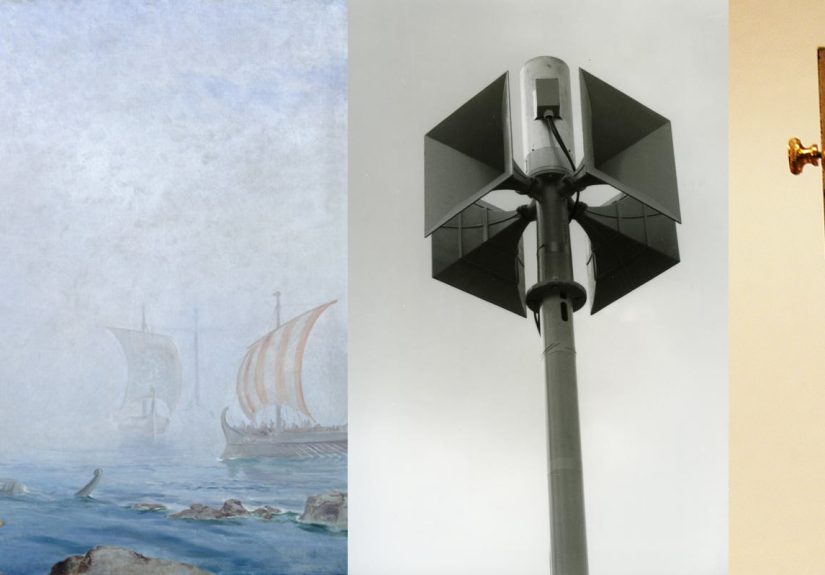
If your brain automatically pictured a beautiful woman with a fishtail combing her hair on a rock: fair. Pop culture did that. But in early Greek tradition, Sirens weren’t fishy glamour models. They were often described and depicted as hybrid creatureshuman-headed, bird-bodiedand their vibe was less “beach day” and more “ominous poetry recital with a side of doom.”
Bird bodies, human heads, and a job description: “Professional distraction”
Ancient art regularly associates Sirens with the afterlife and funerary symbolism. In Greek and Roman contexts, they appear on objects connected to death rituals, as if their song is part lament, part trap, part reminder that beauty can be lethal when it makes you forget where you were headed.
That’s the key: the Siren’s Song isn’t simply “pleasure.” It’s pleasure that reroutes your mission. It hijacks the internal GPS that was supposed to get you home.
Odysseus vs. The Playlist From Hades
The most famous Siren encounter shows up in The Odyssey. Odysseus is warned in advance: the Sirens sing so compellingly that sailors steer toward them, crash on the rocks, and never return. Their island is described as littered with evidence of what happens when curiosity drives the boat.
And here’s the part that makes the story feel weirdly modern: Odysseus doesn’t respond by saying, “I’m strong. I’ll just ignore it.” Instead, he plans like a person who has met himself before.
The two-step safety plan: wax for them, rope for him
He orders his crew to plug their ears with wax so they can’t hear the song at all. Then he has them tie him to the mast so he can hear itbecause he wants tobut can’t act on the wanting. When he inevitably begs to be released, the crew tightens the knots and keeps rowing.
This is not just a mythic flex. It’s an early blueprint for what behavioral scientists and philosophers now call precommitment: setting constraints in advance because you know Future You will be persuasive, dramatic, and full of “exceptions.”
The first “precommitment device” (and it’s not even an app)
Odysseus basically invents the original “disable notifications” and “block this site” strategyexcept his version is wax, rope, and a crew that doesn’t negotiate with tantrums. The brilliance is that it separates two goals that often get tangled: experiencing something alluring and obeying it.
You can appreciate the music without surrendering the steering wheel. That’s the whole trick.
Why the Song Works: The Science of Wanting
If the Sirens were writing a modern résumé, their top skill would be: “Creates intense desire using minimal effort.” That’s not magic; it’s how attention and motivation can be wired.
Cues that hijack attention
Psychology and neuroscience research on temptation often emphasizes how cuessignals linked to rewardscan become powerful magnets for behavior. A notification ping, the smell of fries, the sight of a logo, the opening guitar riff of your favorite “I swear I’m fine” song: they can trigger a spike of motivation before you’ve consciously decided anything.
In some lines of research, individuals differ in how strongly they’re pulled by reward-predictive cues. For some people, the cue becomes almost irresistiblenot because they’re weak, but because their brain tags the cue as especially important. It’s like the mind slaps a neon “THIS MATTERS” sign on something that may not matter at all.
When “I want it” isn’t the same as “I like it”
One of the most useful concepts for understanding Siren-style temptation is the distinction between “wanting” and “liking”. You can intensely want something (especially when prompted by cues) without actually enjoying it as much as you predicted once you have it. That gap is where many modern shipwrecks live: “I chased it all day, and then it was… fine.”
Siren power thrives in that gap. The song is desire-forward. It’s the promise of a feeling, not necessarily the delivery of it.
Modern Sirens: Where the Rocks Are Now
Today’s Sirens don’t need cliffs. They have frictionless design, persuasive copy, and a business model that measures success in “time spent.” The rocks are the consequences: lost sleep, drained budgets, derailed plans, and that peculiar Tuesday feeling where you’re somehow behind on everything and also an expert on a celebrity’s divorce you do not personally know.
The attention economy’s chorus line
Modern platforms are built to be catchysometimes literally. Autoplay, infinite scroll, streaks, “likes,” algorithmic feeds: these are optimized to keep you leaning forward. The song isn’t always pleasant. Sometimes it’s outrage. Sometimes it’s novelty. Sometimes it’s “breaking news” that isn’t breaking anything except your focus.
The common thread is not “evil technology.” It’s the predictable fact that humans are vulnerable to systems that reward quick attention. The Siren doesn’t have to be malicious. She just has to be louder than your long-term goals.
Shopping, gambling, and “limited-time” enchantments
Retail and gambling environments have always understood Siren logic: surround people with cues, reduce friction, and make the next action easy. “One-click buy” is basically an enchanted oar that rows itself. Casino sounds and lights are engineered to keep the reward loop alive. Even everyday marketing leans on scarcity language“only a few left” because scarcity converts interest into urgency.
None of this requires you to be gullible. It only requires you to be human.
Tie Yourself to the Mast (Without Looking Weird at a Party)
The point of the Siren story isn’t “never desire anything.” It’s “don’t let desire commandeer the ship.” The most practical takeaway is to build two layers of protection: one for exposure (wax) and one for action (rope).
Wax for the ears: reduce exposure to the cue
- Remove the trigger: turn off nonessential notifications, keep tempting apps off your home screen, unsubscribe from “deal” emails.
- Change the environment: don’t store snack foods where you see them constantly; don’t work where entertainment is one click away.
- Use “cue friction”: add small barriers (log out, delete saved cards, require a password manager step) so impulse has time to cool.
Rope for the mast: precommitment beats willpower
- Time-box the temptation: “I can watch one episodeat 8 p.m.after I finish my workout.”
- Put money in cages: separate discretionary spending into a specific account or cash envelope.
- Borrow a crew: accountability buddies, focus co-working sessions, or public commitments work because they reduce your ability to “quietly renegotiate.”
- Make the default the good choice: prep healthy food, schedule workouts, set automatic transfersso progress happens even when you’re not heroic.
Enjoy the art, skip the shipwreck
Odysseus didn’t ban music. He engineered a safe way to hear it. That’s a healthier goal than trying to become a person who never wants anything. The world is full of beautiful songsliteral and metaphorical. You just want a listening strategy that doesn’t end with “and then my week disappeared.”
Sirens in Art, Language, and Even Biology
Sirens endure because they’re adaptable. Over centuries, they’ve been reshaped into different symbols: warnings about desire, reflections on art’s power, even shorthand for political or cultural seduction. They show up in museum objects, poems, cartoons, and everyday speechwhenever we need a metaphor for something that’s sweet, persuasive, and slightly suspicious.
From sarcophagi to scrolling
In ancient and later art, Sirens appear in contexts that underline their connection to song, memory, and mortality. In a way, that’s another modern echo: so much of today’s “song” is about memorywhat we replay, what we can’t stop thinking about, what keeps calling us back.
The calm “sirens”: manatees, dugongs, and a name that stuck
Fun twist: “Sirenia” is also the biological order that includes manatees and dugongs. These gentle sea mammals are not out here plotting shipwrecks. Their most seductive move is… floating. Still, the name shows how deeply the Siren idea is tied to the sea and to the long history of sailors trying to explain what they sawand feltout on the water.
Real-World Experiences: Life on the Modern Sea
To make this painfully relatable, here are a few “Siren’s Song” experiences you might recognize. No tridents required.
1) The midnight scroll that eats an hour like it’s a grape
You pick up your phone to check one message. The screen lights up like a tiny stage. You see a headline, then a clip, then a comment thread that feels like watching strangers argue inside your own living room. Thirty minutes pass. Then sixty. You’re not even having funyou’re just there, pulled by novelty and the hope that the next swipe will finally be “the good one.” That’s cue-driven wanting: the promise keeps you moving even when the payoff is thin.
2) The “limited-time offer” that makes math emotional
You weren’t planning to buy anything. Then you see: 20% off ends tonight. Suddenly your brain turns into a motivational speaker. “This is basically saving money,” it says, like it’s filing a Nobel Prize nomination. You imagine your Future Self thanking you. Then the package arrives and you think, “Oh right, I bought this version of myself a costume.” Scarcity doesn’t just increase desire; it accelerates it.
3) The “one more episode” pact that collapses instantly
You promise yourself one episode. The credits roll and the next one begins automatically. Now you’re not choosing; you’re allowing. The platform didn’t steal your willpowerit simply removed the pause where willpower usually gets a word in. Odysseus would recognize this immediately and ask for rope.
4) The snack that tastes better in anticipation than in reality
You think about the chips all afternoon. You finally eat them and… it’s fine. Not life-changing. Not even as crunchy as your imagination promised. Yet tomorrow the craving returns, because the cue (stress, smell, sight of the bag) is still wired to “relief incoming.” Wanting outruns liking, and your brain keeps ordering the trailer instead of the movie.
5) The workplace “ping” that makes focus feel like a mythological creature
You sit down to do deep work. Then a notification pops up. It could be important. It could be nothing. Either way, it trains your attention to stay slightly on guard, like a sailor listening for a distant song. Over time, the ping becomes its own reward cue: a tiny burst of novelty, social relevance, and “maybe I’m needed.” The cost isn’t just distraction; it’s fragmentationyour day broken into a hundred micro-surrenders.
These experiences aren’t moral failures. They’re normal outcomes when clever cues meet a nervous system designed to notice opportunity. The fix isn’t shame. The fix is design: wax where you can, rope where you must, and a clear sense of what “home” means for youyour priorities, your health, your relationships, your craft.
Conclusion: Hear the Song, Keep the Ship
The Siren’s Song persists because it’s not really about monsters. It’s about misaligned incentives inside a human mind: the part of you that loves the immediate, the novel, the shiny, and the part of you that wants a life you’re proud of. Odysseus doesn’t win by pretending he’s immune. He wins by respecting the power of the song and building a system that keeps him safe.
In modern terms: don’t rely on heroic willpower when you can rely on smart structure. Reduce exposure to the cues that hook you. Add friction to the actions that hurt you. And when you choose to listenbecause life should have beautydo it with boundaries sturdy enough to survive your own passionate speeches.