Table of Contents >> Show >> Hide
- What “Double Exposure” Means (From Camera Trick to Tattoo Trend)
- Meet Andrey Lukovnikov: The Artist Behind the Ink
- The Lukovnikov Look: Signature Motifs and Visual “Magic Tricks”
- How Double Exposure Tattoos Are Designed (Without Losing the Plot)
- Why This Style Works So Well as a Tattoo
- Planning Your Own Double Exposure Tattoo: Practical Tips
- Aftercare and Long-Term Maintenance (Keep the Magic)
- Common Mistakes (And How to Avoid Them)
- FAQ: Quick Answers Before You Book
- Experiences: What It’s Like Living With a Double Exposure Tattoo (500+ Words)
- Conclusion: Why Lukovnikov’s Double Exposure Tattoos Keep Captivating
Some tattoos whisper. Some tattoos shout. And some tattoos politely tap you on the shoulder, hand you a tiny art gallery brochure, and say, “Hi, I’m a full storylineplease enjoy me from multiple angles.” That last category is where double exposure tattoos live, and Ukrainian tattoo artist Andrey Lukovnikov has become one of the most recognizable names associated with the style.
If you’ve ever seen an animal silhouette filled with blooming peonies, a galaxy, a forest line, or a painterly burst of colorand thought, “Wait… how is that one tattoo doing the work of two?”you’re already in the right neighborhood. In this deep dive, we’ll unpack what double exposure tattoos are, what makes Lukovnikov’s approach stand out, how to plan your own piece (without accidentally ordering a design that turns into a blurry ink sandwich), and how to keep that color looking crisp long after the bandage comes off.
What “Double Exposure” Means (From Camera Trick to Tattoo Trend)
In photography, double exposure is the technique of combining two images into one frame so both visuals show throughoften creating a dreamy, layered effect. In film days, it could happen by exposing the same piece of film twice. Today, it’s commonly done in-camera or through editing software.
Tattoos can’t literally “expose” a frame twice, but the concept translates beautifully: one bold subject becomes the “container” (a silhouette, outline, or graphic shape), and a second scene becomes the “fill” inside it. The result looks like a picture-within-a-picture a design that feels cinematic, modern, and strangely poetic for something that also hurts a little.
Pop culture helped supercharge the aesthetic. The opening titles of HBO’s True Detective made the silhouette-filled-with-landscape look feel instantly iconic, and the visual language quickly spilled into design, illustration, andyestattoos. Think of it as the rare trend that actually deserves the hype because it’s built on strong composition, not just vibes.
Meet Andrey Lukovnikov: The Artist Behind the Ink
Andrey Lukovnikov is widely described as a Ukrainian tattoo artist, and his work is frequently associated with Wroclaw, Poland, where he’s been based professionally (you’ll see both Ukraine and Poland referenced when people talk about him). His portfolio is known for clean silhouettes, vivid color scenes, and a digital-era precision that feels like Photoshop decided to become a tattoo machine.
What’s especially interesting about Lukovnikov’s work is how he balances “graphic design clarity” with “painterly richness.” It’s not just a cool effectit’s a consistent design system: strong outer shapes, controlled negative space, and interior imagery that pops without turning the tattoo into visual static.
The Lukovnikov Look: Signature Motifs and Visual “Magic Tricks”
1) The silhouette as a window
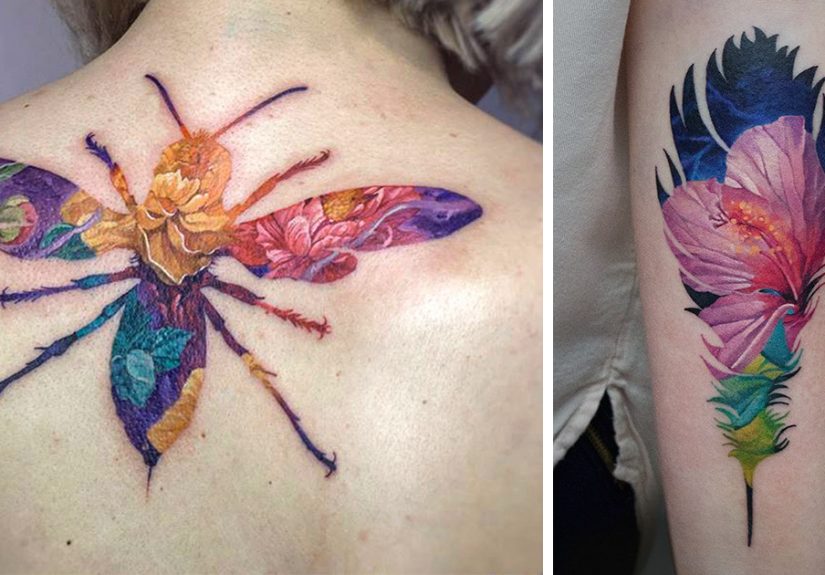
The most recognizable double exposure tattoos start with a bold outer subjectfox, raven, deer, feather, insect, heartthen use that shape like a window. Inside the window: flowers, foliage, nebula textures, landscapes, or painterly gradients. The outer shape stays readable even at a distance, which is a big deal in tattoo design. (No one wants their “wolf” to become a “confused potato” from across the room.)
2) Nature + color that refuses to behave
Lukovnikov’s pieces often lean into nature imagery: animals, insects, and botanical elementsthen crank the saturation just enough to feel alive. It’s not random color splatter. The color typically has a “direction” (flowing through the silhouette, framing key details, or fading into negative space) so the tattoo stays legible.
3) Digital precision, human warmth
Many articles about this style compare it to digital clipping maskswhere a shape defines the visible boundary of whatever is placed above it. That comparison makes sense: the edges are crisp, the fill stays contained, and the contrast is intentional. But unlike a screen, skin has texture, movement, and healing stagesso a successful “digital look” tattoo requires planning for reality, not just perfection.
How Double Exposure Tattoos Are Designed (Without Losing the Plot)
If you’re thinking about getting one of these, it helps to understand how artists generally build them. Even if your tattooer isn’t Lukovnikov, the design logic is similar.
Step 1: Choose the “outer” subject for instant readability
Great outer shapes tend to be recognizable silhouettes: animals with strong profiles (fox, wolf, deer, bird), insects with clear wings, or objects with clean outlines (feather, compass, mountain range inside a geometric frame). The outer subject is the anchorthe part your brain reads first.
Step 2: Pick an “inner” scene that adds meaning (not noise)
The inner image is where storytelling happens. Common choices include:
- Botanicals: roses, peonies, wildflowers, leavesclassic and colorful.
- Landscapes: forests, mountains, ocean linesgreat for calm, grounded symbolism.
- Cosmic textures: stars, nebulas, aurorasperfect for big-feeling concepts.
- Personal references: a city skyline, a meaningful place, a motif tied to a memory.
The best inner scenes have clear shapes and value contrast. If it’s just “a bunch of stuff,” it can heal into mush. The goal is layered meaning, not layered confusion.
Step 3: Control contrast like your tattoo depends on it (because it does)
Double exposure tattoos work when there’s a strong contrast relationship between: outline vs fill, dark vs light, and busy vs quiet. Skilled artists preserve negative space on purposeso the tattoo has breathing room and stays readable as it ages.
Step 4: Decide on color strategy (and be honest about your lifestyle)
Color can be stunning in this stylebut it’s also a commitment. If you’re outdoors constantly, skip sunscreen, and think SPF is a boy band, your tattoo may fade faster than your New Year’s resolutions. If you want a lower-maintenance look, a black-and-gray version with selective color accents can age beautifully.
Why This Style Works So Well as a Tattoo
It gives you two designs without looking indecisive
A double exposure tattoo can combine two themeslike “strength” (animal) and “growth” (flowers)without forcing them to fight for space. The silhouette structure makes the fusion feel intentional.
It’s modern, but not trapped in a trend
The technique feels contemporary because it nods to photography and digital design, but the underlying principlescomposition, contrast, clean shapesare timeless. When done well, it won’t scream “2016 called.”
It photographs insanely well (hello, social media)
High-contrast silhouettes and vibrant interior scenes tend to look great in photos, which is partly why the style exploded online. It’s basically built for the camera… which is funny, given it was inspired by camera tricks in the first place.
Planning Your Own Double Exposure Tattoo: Practical Tips
Size matters (especially for interior detail)
If the inner scene includes flowers, trees, stars, or small shapes, give it room. Tiny double exposure tattoos can look amazing fresh, but micro-detail can blur over time. Consider medium-to-large placementsforearm, upper arm, calf, thigh, shoulder bladeso details have space.
Placement should match the silhouette shape
A long feather may flow better on the forearm. A fox head works nicely on an upper arm or calf. A symmetrical heart can sit cleanly on the chest. Think about how your body movesbecause your tattoo will move with it.
Bring reference images, but don’t demand a copy-paste tattoo
It’s fine to collect references (including Lukovnikov’s work) to communicate the vibe: crisp silhouette edges, saturated florals, cosmic gradients. But the best tattoo experience happens when you treat the artist like a collaborator, not a printer.
Questions worth asking your artist
- How will this design age in 3–5 years?
- What details should we simplify for longevity?
- Do you recommend color, black-and-gray, or a hybrid?
- How many sessions will this likely take?
- What aftercare method do you prefer (and why)?
Aftercare and Long-Term Maintenance (Keep the Magic)
A new tattoo is essentially a controlled skin injuryartistic, intentional, and still very much a healing process. Follow your tattooer’s instructions first, but here are widely recommended, dermatologist-aligned basics for healthy healing and long-term vibrancy.
The first days: clean hands, gentle cleansing, no chaos
Gently clean the area as directed, avoid harsh products, and don’t treat the tattoo like a kitchen countertop you can scrub aggressively. Pat dry instead of rubbing. If you see worsening redness, swelling, heat, or oozing beyond what your artist described as normal, contact a medical professional.
Healing period: avoid soaking and sun
Avoid soaking in pools, hot tubs, lakes, and long baths during healing. Keep clothing breathable, don’t pick scabs, and try not to turn your tattoo into a friction experiment. Many tattoos look “healed” on the surface around the two-week mark, but deeper layers can take longer to fully settle.
Long-term: moisturize smart and use sunscreen
Once healed, daily habits matter. Dermatologists commonly emphasize sun protection because UV exposure can fade ink. A broad-spectrum sunscreen (SPF 30+) is basically anti-aging skincare for your tattoo. And if your skin gets dry, use a suitable lotionyour tattoo will thank you by continuing to look like art instead of a dusty postcard.
Common Mistakes (And How to Avoid Them)
- Overstuffing the inner scene: detail overload heals into blur. Simplify.
- Too small, too complex: tiny “galaxy forest flower deer” tattoos are brave… and often regrettable.
- Ignoring contrast: if everything is mid-tone, nothing pops.
- Skipping sunscreen forever: sun fades tattoos. It’s not personal. It’s physics.
- Choosing style over skill: pick an artist experienced in clean edges, smooth blends, and controlled composition.
FAQ: Quick Answers Before You Book
Do double exposure tattoos take longer than regular tattoos?
Often, yesespecially with color and detailed interior scenes. Crisp edges and smooth gradients take time, and larger pieces may require multiple sessions.
Do they age well?
They can age very well when designed with strong contrast, enough size, and simplified interior details. Good placement, solid aftercare, and sun protection make a big difference.
Can this style be done in black-and-gray?
Absolutely. Black-and-gray double exposure tattoos can look elegant and timeless, especially when the interior scene uses tonal range and negative space strategically.
Experiences: What It’s Like Living With a Double Exposure Tattoo (500+ Words)
People who get double exposure tattoos often describe a very specific kind of satisfaction: it feels like wearing a piece that reveals itself in layers. On day one, friends notice the silhouette“Nice fox!”and then, five seconds later, their eyes catch the inner scene and the conversation shifts: “Wait… are those flowers inside it?” That small moment of discovery is part of the charm. It’s not just decoration; it’s an interactive image.
Another common experience is how these tattoos become personal shorthand. A deer silhouette filled with a forest might represent resilience, a connection to nature, or a meaningful place. A bird shape packed with cosmic color might stand for freedom, reinvention, or that period of life when you realized you were allowed to change direction. Because the design blends two ideas at once, wearers often feel like the tattoo tells a fuller story without needing a paragraph-long explanation at every barbecue.
There’s also a practical side that people don’t always mention until they’re living with the tattoo: double exposure pieces tend to become “favorite-photo tattoos.” The strong silhouette reads cleanly on camera, and the interior colors (or tonal gradients) give the image depth in pictures. If you like documenting your ink, this style is basically cooperativeit doesn’t vanish under bad lighting as easily as ultra-fine minimal linework might. The flip side is that crisp edges and smooth transitions can make wearers more aware of healing stages. During peeling, the interior scene can look temporarily dull, and that can feel alarming if you expected the fresh-tattoo glow to last forever. It doesn’t. The brightness usually settles back in once healing completespatience is part of the package.
Wearers also report an interesting shift in how they choose clothing. A forearm silhouette with vivid florals might inspire more rolled sleeves. A calf piece might make shorts a year-round concept (weather permitting, and yes, some people do this purely out of commitment to the tattoo). The tattoo becomes a styling element, not in a “look at me” waymore like a personal signature that quietly upgrades a simple outfit.
Long-term, the most repeated lesson is boring but true: sun care is everything. People who keep their tattoos moisturized and protected from UV tend to feel their double exposure pieces stay “crisp” longerespecially if the design includes bright color blends. Those who forget sunscreen often notice the inner scene losing contrast first, because the subtle color transitions are what UV light loves to bully. If you want your tattoo to keep that layered, photographic feel, treat sunscreen like part of your morning routinenot a seasonal hobby.
Finally, there’s the emotional experience: double exposure tattoos often become “milestone tattoos.” The style naturally lends itself to combining two chapterswho you were and who you’re becoming, where you came from and where you’re going, the outer identity and the inner landscape. When people talk about why they chose this approach, it’s rarely just “because it looked cool.” It’s usually “because it said two things at onceand both mattered.” And honestly? That’s the best reason to get any tattoo.
Conclusion: Why Lukovnikov’s Double Exposure Tattoos Keep Captivating
Double exposure tattoos hit a sweet spot: they’re modern without being flimsy, bold without being loud, and packed with meaning without turning into clutter. Andrey Lukovnikov’s work stands out because it uses strong silhouettes, controlled composition, and rich interior imagery that feels intentionalnot accidental. If you’re considering a piece in this style, focus on readability, contrast, and scale. Choose an artist who understands the technique, plan the symbolism with care, and treat aftercare like the final (very important) step of the art.
Because when your tattoo is basically two tattoos in a trench coat pretending to be one, you want it to age like fine art not like a mystery stain.