Table of Contents >> Show >> Hide
- Dietary Fat vs. Body Fat: Same Word, Totally Different Job
- Why Fat Got a Bad Reputation in the First Place
- The Big Truth: Energy Balance Drives Weight Change
- But WaitFat Can Help You Feel Full (Yes, Really)
- Not All Fats Are Equal (This Is Where the Real Story Is)
- So… Should You Eat Low-Fat to Avoid Weight Gain?
- When Fat Does Contribute to Weight Gain: The Sneaky Scenarios
- The Most Useful Answer: Do Fats Make You Fat?
- Real-Life Experiences: What People Commonly Notice When They Stop Fearing Fat (About )
- Conclusion
If you’ve ever side-eyed a drizzle of olive oil like it’s plotting against your jeans, you’re not alone.
For decades, “fat” has been nutrition’s favorite scapegoatblamed for everything from expanding waistbands
to making perfectly innocent bagels feel emotionally complicated.
But here’s the real plot twist: eating fat doesn’t automatically turn into body fat.
Your body doesn’t run a tiny courtroom where every gram of butter is found guilty on sight.
Weight change is mostly about overall energy balance (how much energy you take in vs. how much you use),
while the type of fat you eat matters a lot for heart health, hormones, and how satisfied you feel after meals.
So, do fats make you fat? Sometimes they can contributemainly because they’re calorie-dense and easy to overdo.
But “fat” isn’t a villain. It’s a tool. And like any tool, it works best when you use the right kind in the right way.
Dietary Fat vs. Body Fat: Same Word, Totally Different Job
Dietary fat is a nutrient your body actually needs
Dietary fat is one of the three macronutrients (along with carbohydrates and protein). It helps your body:
build cell membranes, make certain hormones, protect organs, and absorb fat-soluble vitamins like A, D, E, and K.
Translation: without fat, your body doesn’t just “get lean”it gets cranky.
Body fat is stored energy (and it’s not automatically “bad”)
Body fat is your body’s storage system. When you consistently take in more energy than you use, your body stores the extra.
That stored energy can come from any macronutrientnot only from fat. Yes, even the “clean” carbs you saw doing yoga on Instagram.
Why Fat Got a Bad Reputation in the First Place
Because fat is calorie-dense (and math is undefeated)
Gram-for-gram, fat contains more energy than protein or carbs. That’s the headline:
fat has 9 calories per gram, while protein and carbohydrates have about 4 calories per gram.
So if you eat a lot of fat-heavy foods without noticing portions, total calories can climb fast.
Think of fat like money in a tiny wallet: it’s concentrated. One tablespoon of oil doesn’t look like much,
but it carries a meaningful amount of energy. Nuts are healthy, but a “small handful” can turn into “a festival”
if you’re eating straight from the bag.
Because “low-fat” got marketed as “problem solved”
In the low-fat era, foods were reformulated to remove fat… and often replaced it with added sugars, refined starches,
and extra salt to keep things tasty. Many people ended up eating the same or more calories,
just in a different outfit. The label said “low-fat,” but your appetite didn’t get the memo.
The Big Truth: Energy Balance Drives Weight Change
Here’s the simplest accurate way to say it: you gain body weight when you consistently consume more energy than you use,
and you tend to lose weight when the opposite happens. This is called energy balance.
That doesn’t mean bodies are calculatorssleep, stress, activity, genetics, medications, and environment all play roles
but energy balance is still the engine under the hood.
This is why two people can eat fat in totally different ways and get totally different results.
One person adds a measured splash of olive oil to vegetables and feels satisfied.
Another person “goes keto-ish” and accidentally adds five extra tablespoons of butter a day because “it’s allowed.”
Same macronutrient. Different totals.
Ultra-processed foods make overeating easierregardless of fat
One reason nutrition feels confusing is that highly processed foods can encourage people to eat more,
even when meals appear similar on paper. In a tightly controlled study at the NIH,
people ate more and gained weight on an ultra-processed diet compared with an unprocessed diet,
despite the diets being matched for several nutrition factors.
The takeaway isn’t “processing is evil.” It’s that modern food environments can make overeating
surprisingly easyespecially when foods are engineered to be hyper-tasty, quick to eat, and not very filling.
But WaitFat Can Help You Feel Full (Yes, Really)
If fat were only a calorie bomb, nobody would recommend it. But fat has benefits that matter in real life:
it adds flavor and satisfaction, and many people find meals with some fat help them feel fuller longer.
That matters because the “best” eating plan is the one you can actually live with without feeling miserable.
The “satiety trio”: fiber + protein + healthy fat
A meal that includes fiber (like vegetables, beans, whole grains), protein (like fish, eggs, tofu, poultry),
and healthy fats (like olive oil, nuts, seeds, avocado) tends to be more satisfying than a meal built mostly from refined carbs.
You’re not just eating “less”you’re eating smarter so your hunger levels don’t stage a comeback tour at 10 p.m.
Examples that feel normal (not like punishment):
- Oatmeal topped with berries and a spoon of nut butter
- Greek yogurt with fruit and chopped nuts
- A big salad with salmon (or beans) and an olive oil-based dressing
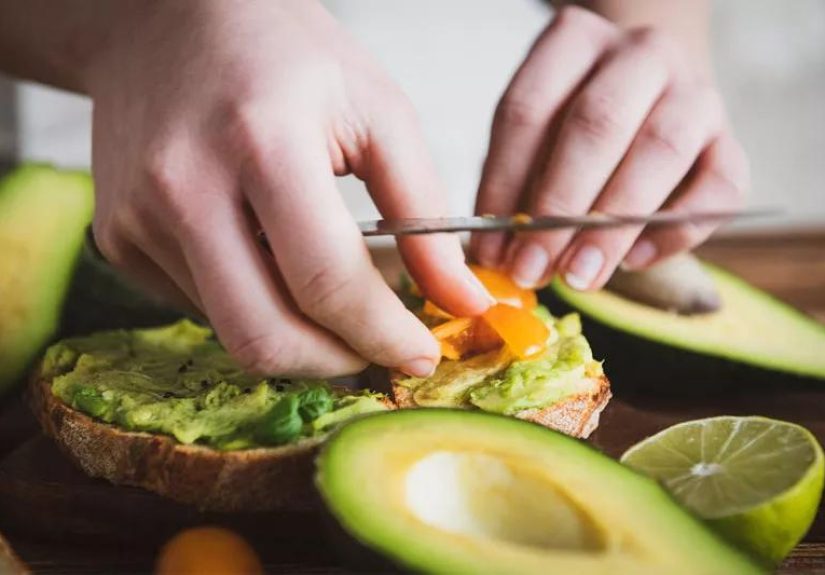
- Whole-grain toast with avocado and an egg
Not All Fats Are Equal (This Is Where the Real Story Is)
Unsaturated fats: the “generally helpful” crowd
Unsaturated fats include monounsaturated and polyunsaturated fats.
They’re found in foods like olive oil, canola oil, nuts, seeds, and fatty fish.
Many heart-health guidelines emphasize choosing unsaturated fats more often, especially when replacing saturated fats.
Polyunsaturated fats include omega-3s and omega-6s. Omega-3s (found in fish like salmon, sardines, and trout,
plus some plant sources like flax and walnuts) are especially well known for supporting cardiovascular health.
Saturated fats: not “poison,” but worth limiting
Saturated fats are often found in butter, cheese, higher-fat meats, and tropical oils (like coconut and palm oil).
Most major health organizations still recommend limiting saturated fat, largely because it can raise LDL (“bad”) cholesterol,
a risk factor for heart disease.
You’ll see slightly different targets depending on the organization.
The U.S. Dietary Guidelines have recommended keeping saturated fat under a certain percentage of daily calories,
and the American Heart Association encourages an even lower limit for many peopleespecially those working to improve cholesterol.
This doesn’t mean you must fear every bite of cheese like it’s a jump-scare.
It means saturated fat is best treated like a “supporting actor,” not the star of every meal.
Choosing unsaturated fats more often is a heart-friendly move.
Trans fats: the one category that really deserves the side-eye
Trans fats (especially industrial trans fats made from partially hydrogenated oils) have been widely recognized as harmful.
They can worsen cholesterol profiles and raise cardiovascular risk.
The U.S. has taken major regulatory steps to remove partially hydrogenated oils from the food supply.
Natural trace trans fats exist in small amounts in some animal products,
but the big nutrition target has been industrial trans fats.
In practical terms: check labels, minimize trans fats, and keep “partially hydrogenated oils” off your regular menu.
So… Should You Eat Low-Fat to Avoid Weight Gain?
Not necessarily. Research comparing “healthy low-fat” and “healthy low-carb” approaches suggests that,
when both diets emphasize high-quality foods (vegetables, minimally processed proteins, whole-food fats),
the average weight-loss outcomes are often similar.
That’s an important point: if your overall food quality improves and your total intake fits your needs,
the macro split alone may not be the deciding factor.
A “low-fat” diet built on refined carbs can backfire.
A “high-fat” diet built on ultra-processed foods can also backfire.
The winning strategy tends to be less about picking Team Fat or Team Carb and more about:
choosing satisfying, minimally processed foods you can stick with.
When Fat Does Contribute to Weight Gain: The Sneaky Scenarios
Fat doesn’t magically become body fat… but it can make it easier to overshoot calories without noticing.
Here are common situations where people accidentally “eat past satisfied”:
1) Liquid fats add up fast
Oils and butter are easy to pour, spread, and “oops.” A tablespoon here and there can turn into several
over the course of a dayespecially with sautéing, roasting, and dressing-heavy meals.
2) “Healthy” high-fat snacks become grazing food
Nuts, trail mix, nut butters, and granola can be nutritiousbut they’re also energy-dense.
If they become an all-day nibble, your total intake can climb without feeling like you ate much.
3) Restaurant meals hide fat in plain sight
Restaurant food often uses extra oil and butter for flavor (because, well, it works).
A salad can be a great choiceuntil the dressing arrives like a tidal wave.
This isn’t a reason to avoid restaurants; it’s a reason to be aware that “healthy-looking” can still be calorie-rich.
4) “Low-carb” can become “high-calorie”
Cutting carbs doesn’t automatically control calories. If carbs go down but fats and portions go way up,
weight change may stall or go in the opposite direction. Your body cares about the full picture.
The Most Useful Answer: Do Fats Make You Fat?
Nodietary fat doesn’t automatically make you gain body fat.
What matters most is whether your overall eating pattern consistently gives your body more energy than it uses.
But also: fat can contribute to weight gain if it pushes your total calories higher,
especially because it’s concentrated and easy to overdo without noticing.
The healthiest, least-stressful way to think about fat is this:
- Keep trans fats as close to “none” as possible.
- Limit saturated fat and choose unsaturated fats more often for heart health.
- Use fat to build satisfying meals (with fiber and protein), not to turn every dish into a buttery slip ’n slide.
- Focus on food quality and consistency, not fear.
Important note for teens: If you’re still growing and you’re worried about weight, food rules,
or body changes, it’s best to talk with a trusted adult and a qualified healthcare professional.
Growing bodies need enough energy and nutrients, and you deserve guidance that supports healthnot anxiety.
Real-Life Experiences: What People Commonly Notice When They Stop Fearing Fat (About )
When people explore the “do fats make you fat?” question in real life, the biggest surprises usually aren’t scientific
they’re practical. A common experience is realizing that fat isn’t just a calorie source; it’s a satisfaction ingredient.
For example, someone who has spent years buying fat-free everything may notice a weird pattern:
they eat a “light” yogurt, feel hungry again quickly, and start hunting snacks like it’s their second job.
When they switch to a version with a bit more fat (and pair it with fruit or nuts), they often say,
“Huh. I’m not thinking about food every ten minutes.” The food didn’t become magicalthe meal became more complete.
Another very common experience: people discover that “healthy fats” can be both helpful and hilarious.
Nuts and nut butters are the classic example. Many people report feeling more energized and satisfied when they add
a small portion of nuts to a snackbut they also learn quickly that eating straight from a jar or bag is a setup.
It’s not a willpower failure; it’s physics and convenience. A spoonful of peanut butter is a snack.
Five “just one more” spoonfuls is suddenly a snack plus a small side quest.
Restaurant eating creates its own set of stories. People often assume that ordering a salad is automatically the “lighter” choice,
then feel confused when they don’t feel great afterwardor when it seems like it didn’t match their expectations.
Many folks eventually notice that the hidden heavy hitter is often the dressing, the cheese, the fried toppings,
or the fact that the kitchen used extra oil to make everything taste amazing (because, again, it works).
Once people become aware of that, they don’t necessarily stop ordering salads.
They just start making small choices that fit their comfortlike choosing a vinaigrette they enjoy,
using less dressing, or prioritizing a protein topping that makes the meal feel real.
Some people also describe the “label whiplash” experience: they see “low-fat” and feel safe,
then later realize the food is packed with added sugars or refined starches.
On the flip side, they see “keto” or “high-fat” and assume it must be automatically better,
then realize it can still be ultra-processed and easy to overeat. This is where many people land on a calmer conclusion:
the best diet is the one that helps you feel satisfied, supports your health, and fits your life.
Finally, a lot of people report that the biggest improvement comes from shifting the goal from “avoid fat”
to “build balanced meals.” When fat is combined with fiber and proteinthink avocado with eggs,
olive oil on vegetables with salmon, or yogurt with fruitit tends to feel grounding.
Instead of chasing the perfect macro ratio, people often do better when they focus on consistency,
food quality, and listening to hunger and fullness cues.
In other words: fat isn’t the enemy. Confusion is. And you can absolutely outgrow that.
Conclusion
Fats don’t “make you fat” by default. They’re a normal, necessary part of eatingand they can even help meals feel satisfying.
The real drivers are overall energy balance, food quality, and how easy it is to overeat certain highly palatable foods.
Choose mostly unsaturated fats, keep trans fats near zero, limit saturated fat, and build meals that actually keep you full.
Your body deserves nutritionnot nutrition paranoia.