Table of Contents >> Show >> Hide
- What “No Sanding, No Priming, No Sealer” Really Means
- Step 1: Pick a Finish Goal That Fits Your Dining Room
- Step 2: Gather Supplies (The No-Sanding MVPs)
- Step 3: Prep Without Sanding (The Part That Makes Paint Behave)
- Step 4: Make Small Repairs That Create Big Results
- Step 5: Paint Strategy for a Hutch (So You Don’t Paint Yourself Into a Corner)
- Step 6: “No Sealer” Doesn’t Mean “No Patience”
- When You Actually Should Break the “No Primer” Rule
- When You Might Want a Sealer Anyway (Even If You Don’t Want One)
- Style Upgrades That Make the Makeover Look Expensive
- Troubleshooting: Common Hutch Paint Problems (and Fixes)
- A Specific Makeover Example: Turning a Traditional Hutch Into a Modern Coffee + Bar Station
- Conclusion: Your Hutch Doesn’t Need to Stay Stuck in the Past
- Real-World Hutch Makeover Experiences (500+ Words of What DIYers Commonly Learn)
A dining room hutch is basically a glass-fronted time capsule. One day it’s proudly displaying “the good plates,” and the next day you’re staring at it thinking,
Why does this thing look like it’s judging my takeout containers? The good news: a hutch makeover can be one of the most dramatic upgrades in a room
and you can often pull it off without sanding, without priming, and without sealing… if you do the right kind of prep and choose the right paint.
This guide walks you through a realistic “skip-the-extra-steps” approach: no sanding dust storm, no primer detour, no topcoat marathon. We’ll also cover the
moments when your hutch will politely demand an exception (like tannin bleed, waxy residue, or a finish so glossy it could double as a mirror).
What “No Sanding, No Priming, No Sealer” Really Means
Let’s set expectations like a responsible DIY friend who still wants you to have fun. “No sanding” doesn’t mean “no prep.” It means you’re using
cleaning + deglossing (often a liquid deglosser) to replace heavy sanding. “No priming” means your paint choice can bond well on its own
as long as the surface is clean and stable. “No sealer” means you’re relying on the paint’s built-in durability and curing, instead of adding a
protective topcoat. Some paints are designed for that. Some surfaces are not.
Quick reality check: can your hutch handle the shortcut route?
- Yes, if the existing finish is solid (not peeling), the surface can be thoroughly cleaned/degreased, and you use a paint made for furniture/cabinets.
- Maybe, if it’s very glossy, previously waxed/polished, or made of laminatedeglosser usually helps, but adhesion testing matters.
- No (or “not without a small exception”), if you see peeling paint, sticky furniture polish buildup, smoke odor stains, or wood tannins bleeding through.
Step 1: Pick a Finish Goal That Fits Your Dining Room
Before you open a paint can, decide what “done” looks like. A hutch can be styled to match almost any vibe:
- Modern minimal: one solid color, matte or satin, with simple hardware.
- Two-tone classic: darker exterior + lighter interior for depth (and for showing off dishes without the “museum lighting” energy).
- Cozy cottage: warm whites, soft greens, or dusty blues with a gentle matte finish.
- Moody statement: charcoal, navy, deep oliveespecially stunning with brass pulls.
Step 2: Gather Supplies (The No-Sanding MVPs)
You don’t need a garage full of tools, but you do need the right few items. Think of this as assembling your makeover “starter pack.”
Must-haves
- Drop cloth or rosin paper + painter’s tape
- Screwdriver (and small containers/baggies for hardware)
- Degreaser/cleaner (plus clean water for rinsing when needed)
- Liquid deglosser (also called liquid sandpaper)
- Microfiber cloths or lint-free rags
- Angled brush for details + small foam roller for flats
- Furniture/cabinet paint (choose a durable formula suited for trim/furniture)
Nice-to-haves
- Wood filler + putty knife (for dents/holes)
- Caulk (for gaps at trim jointsinstant “built-in” look)
- Painter’s pyramids/stands (for doors/drawers)
- New pulls/knobs (the cheapest “wow factor” you can buy)
“Only if needed” items (your backup plan)
- Bonding primer (for super slick surfaces like laminate or high-gloss finishes)
- Stain-blocking primer (for tannin bleed, smoke stains, knots)
- Clear topcoat (only if the hutch will get heavy wearlike a coffee bar with daily traffic)
Step 3: Prep Without Sanding (The Part That Makes Paint Behave)
Most “paint failure” stories start with the same villain: invisible gunk. Dining room hutches collect furniture polish, cooking film, hand oils, and dust that
can sabotage adhesion. Your mission is to remove itwithout turning your weekend into a sanding documentary.
3A) Empty, label, and photograph
Remove everything inside. Then take quick photos of shelves, hardware placement, and hinge orientation. This is the DIY version of leaving yourself breadcrumbs,
except the breadcrumbs are digital and won’t attract ants.
3B) Remove doors, drawers, and hardware
Take off doors and hardware if you can. Bag screws and label them (“top left hinge,” “right door handle,” etc.). You’ll thank Past You when it’s reassembly time.
3C) Clean like you mean it
Start with a degreaser/cleaner to remove oils and residue. Pay extra attention to:
handles, door edges, the lower front rail, and shelf frontsall high-touch zones.
If your cleaner requires rinsing, rinse and let it dry fully.
3D) Degloss (your “no sanding” secret weapon)
Use a liquid deglosser according to the label. The goal is to dull the sheen and improve adhesionespecially on glossy finishes or slick factory coatings.
Work in manageable sections, wipe thoroughly, and keep good ventilation.
Step 4: Make Small Repairs That Create Big Results
This is where you turn “painted furniture” into “wait, did you buy that like that?” Fill old hardware holes, patch dings, and smooth rough edges.
If your hutch has trim gaps, a thin bead of paintable caulk can make it look more custom and less “assembled during a 2006 thunderstorm.”
Step 5: Paint Strategy for a Hutch (So You Don’t Paint Yourself Into a Corner)
A hutch has lots of surfaces: exterior frame, doors, shelves, interior back panel, maybe beadboard, maybe glass. The easiest way to keep your sanity is to use
an order that minimizes smudges and accidental fingerprints.
Best order of operations
- Interior first: back panel and interior sides
- Shelves next: removable shelves are easiest off the unit
- Doors/drawers: laid flat if possible for smoother leveling
- Exterior last: frame, sides, and face
Brush + roller combo (the smooth-finish cheat code)
Use a small foam roller on flat areas (sides, door panels, large rails) and an angled brush for corners and trim details. The trick is to keep coats thin and even.
Thick coats look faster… until they dry slower, show more brush marks, and pick up dust like they’re auditioning to be lint rollers.
How many coats?
Plan on two coats for most colors and most paints. Some furniture paints cover exceptionally well, but hutches have shadows and angles that reveal
thin spots. Two coats usually looks intentional; one coat often looks like you got distracted by snacks halfway through.
Step 6: “No Sealer” Doesn’t Mean “No Patience”
If you’re skipping a topcoat, curing time matters even more. Paint can feel dry to the touch and still be soft underneath. For a hutch, this shows up as:
doors sticking, shelves scuffing, or paint “printing” when objects sit on it too soon.
Simple rules for a durable finish
- Let each coat dry fully before recoating.
- Wait longer before re-hanging doors if your paint feels even slightly rubbery.
- Use gentle handling for the first weekespecially on edges and door pulls.
- Delay heavy styling (stacks of plates, baskets, coffee machines) until the finish feels hard and stable.
When You Actually Should Break the “No Primer” Rule
Sometimes primer is not a “nice-to-have.” It’s the thing standing between you and a hutch that chips if you look at it wrong.
Here are the most common reasons to make an exception:
1) Tannin bleed or mystery stains
If you’ve ever painted wood and watched yellow/brown stains creep through like a horror movie subplot, that’s likely tannins.
In that case, a stain-blocking primer is the fastest path to peace.
2) Super glossy, super slick surfaces
If your hutch has a shiny factory finish, laminate panels, or a surface that laughs at regular paint, use a bonding primer or do an adhesion test
in a hidden spot. A bonding primer is basically the “bouncer” that makes paint behave on difficult surfaces.
3) Peeling or failing finish
If paint is already peeling, no product can magically glue it down forever. Remove loose material, stabilize the surface, and then paint. The shortcut route only works
when the base is stable.
When You Might Want a Sealer Anyway (Even If You Don’t Want One)
Most dining hutches don’t get countertop-level abuse, so skipping a topcoat is often fine. But consider a clear protective finish if:
- You’re converting the hutch into a coffee bar (heat, splashes, daily wiping).
- Kids will be opening/closing doors constantly (high-touch edges).
- You want extra resistance to scuffs on shelves (stacked dishes can be sneaky).
If you do topcoat, follow your paint manufacturer’s recommendationssome paint types don’t play nicely with certain clear coats.
Style Upgrades That Make the Makeover Look Expensive
Swap the hardware
New knobs/pulls are like earrings for furniture: small detail, huge impact. Matte black modernizes instantly; brushed brass warms it up; glass knobs lean vintage.
Paint the interior a lighter color
A brighter interior makes your dishes and decor popespecially in dining rooms with lower natural light.
Add peel-and-stick wallpaper to the back panel
If your hutch has a recessed back, wallpaper there adds personality without overwhelming the room. It’s like giving your hutch a fun secret.
Troubleshooting: Common Hutch Paint Problems (and Fixes)
Problem: Paint chips on corners
Cause: surface wasn’t clean/deglossed enough, or the finish is too slick. Fix: clean/degloss more thoroughly, and consider bonding primer in high-wear areas.
Problem: Brown/yellow stains show through
Cause: tannin bleed or old stains. Fix: stain-blocking primer, then repaint.
Problem: Brush marks look obvious
Cause: paint too thick, over-brushing, or using the wrong brush. Fix: thinner coats, quality synthetic brush, foam roll flats, don’t “touch up” half-dry paint.
Problem: Doors feel sticky when closing
Cause: paint hasn’t cured or coats are too thick at edges. Fix: let it cure longer; avoid re-hanging too soon; keep edge coats light.
A Specific Makeover Example: Turning a Traditional Hutch Into a Modern Coffee + Bar Station
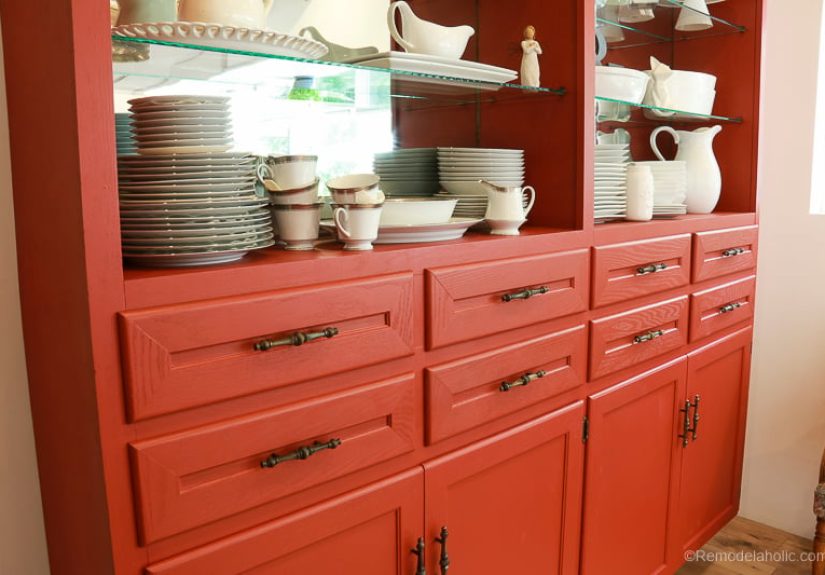
Imagine a standard oak hutch with glass doors and a bulky base cabinet. The goal: modernize it without replacing it.
- Color plan: deep charcoal exterior + warm creamy interior
- Function upgrade: top shelves for mugs and glassware, lower cabinet for syrups/tea/linens
- Hardware: simple brass pulls
- Finish choice: a durable furniture/cabinet paint that cures hard (no topcoat unless it’s daily heavy use)
With proper cleaning and deglossing, this type of transformation can make the dining room feel updatedwithout turning the project into a sanding festival.
Conclusion: Your Hutch Doesn’t Need to Stay Stuck in the Past
A dining room hutch makeover is one of those rare DIY wins where effort turns into instant, room-wide impact. By focusing on what actually matterscleaning,
deglossing, thin coats, and cure timeyou can often skip sanding, skip primer, and skip a sealer while still getting a durable, professional-looking finish.
And if your hutch throws a curveball (glossy finish, stains, bleed-through), you now know exactly how to pivot without losing your momentum.
Real-World Hutch Makeover Experiences (500+ Words of What DIYers Commonly Learn)
Here’s what the “no sanding, no priming, no sealer” hutch makeover experience often feels like in real homesbecause the process is half technique and half
learning how to outsmart furniture that’s been quietly collecting polish residue since flip phones were cool.
First, most people are surprised by how much grime shows up on the rag during cleaning. The hutch might look “fine” from across the room, but once you wipe near
handles and door edges, you realize the finish has been marinating in hand oils, old cleaning sprays, and that invisible dining room dust that appears 12 minutes
after you dust. The funny part is how quickly this changes your confidence: the second you see the rag turn gray, you stop thinking of prep as boring and start
thinking of it as a mystery reveal. (“So that’s why paint chips there…”)
Next comes the emotional roller coaster of the first coat. On a detailed hutch, the first coat almost always looks patchy. People panic, then do the exact thing
that creates problems: over-brushing. The better experience is learning to let the paint level, walk away, and trust coat two. It’s a little like baking: you don’t
open the oven every 30 seconds just to make sure the cake is still a cake.
Doors are where most DIYers discover their “process preference.” Some folks love painting doors flat because it reduces drips and helps paint settle smoothly.
Others prefer hanging them to keep the workflow moving. Either way, the real lesson is that doors are high-touch, high-scrape zones. That means patience matters:
re-hanging too early can lead to sticking, edge wear, or those tiny dents that happen when hardware meets soft paint. The best “experienced DIY” move is letting
doors dry longer than you think they need. It feels slow in the moment, but it saves you from touch-ups that never quite blend.
Another common experience is the “lighting surprise.” In the garage or a workroom, your paint color looks perfect. Back in the dining room, it may look darker,
warmer, cooler, or just differentespecially with evening light. Many DIYers learn to test the color on a removable shelf or inside panel first. It’s also why
two-tone hutches are so popular: a lighter interior softens the overall look, brightens the display space, and makes the whole piece feel intentional rather than
heavy.
Finally, there’s the satisfaction phasewhen you add hardware and style the shelves. This is where people realize a hutch makeover is more than “painting a big
box.” It’s an identity upgrade for the room. Suddenly the dining space feels refreshed. The hutch goes from “holding dishes” to being a focal pointcoffee bar,
hosting station, display shelf, or all of the above. And that’s the best part of the experience: you didn’t just repaint furniture. You changed how the space
functions and feelswithout sanding dust, without a primer detour, and without committing to a topcoat you didn’t even want in the first place.