Table of Contents >> Show >> Hide
- What Is an Avionics Gyroscope, Really?
- The Physics That Makes It Feel Like Magic
- Meet the “Ancient” Aircraft Gyro: Vacuum-Driven vs. Electric
- Cracking It Open: What You’re Likely to Find Inside
- 1) The rotor: the spinning “heart”
- 2) Bearings: tiny rings with huge responsibilities
- 3) Gimbals: the elegant cage that lets the gyro ignore your airplane
- 4) The erection system: how the instrument finds “level” again
- 5) Caging / fast-erect controls: the cockpit’s “please behave” button
- 6) Output linkages and pickoffs: turning motion into information
- Why Old Gyros Drift (and Why Pilots Babysat Them)
- Common Failure Modes in Vintage Gyro Instruments
- History Lesson: Why This “Old Can” Matters
- Modern Gyros vs. Ancient Gyros: Same Job, Different Superpowers
- Safety Notes for Truly Vintage Instruments
- Hands-On Experiences Related to Cracking Open an Ancient Avionics Gyroscope (500+ Words)
- Conclusion
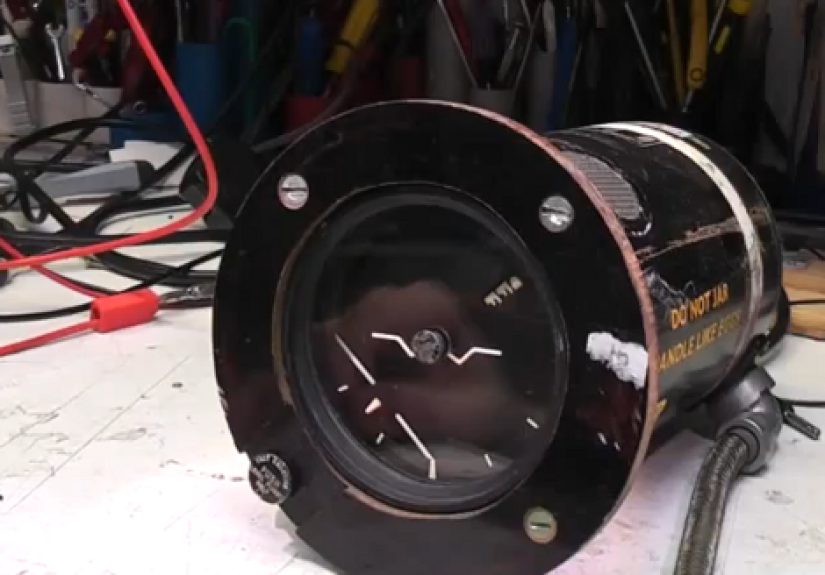
Somewhere in a dusty hangar (or a surplus bin that smells like old electronics and regret), you find a
chunky metal cylinder with a faceplate that looks like it once stared down clouds for a living. Maybe it has
a label that basically screams, “DO NOT JAR. HANDLE LIKE EGGS.” Which, honestly, is solid advice for anything
older than your grandparents’ toaster.
Welcome to the weirdly satisfying world of ancient avionics gyroscopesthe spinning, gimbaled,
precision hearts inside old-school flight instruments like the attitude indicator, heading indicator
(directional gyro), and turn coordinator. These devices helped pilots keep the shiny side up long before
glass cockpits turned aviation into a tasteful iPad collection.
In this deep dive, we’ll explore what’s actually inside that “mystery gyro can,” why it works, what goes wrong
as it ages, and why cracking one open feels like opening a mechanical time capsule built by extremely serious
people who did not have CADbut definitely had opinions.
What Is an Avionics Gyroscope, Really?
In aviation, “gyro” can mean a lot of things, but the classic kind is a rapidly spinning rotor mounted so it can
resist changes to its orientation. Put that rotor in a carefully designed set of rings (gimbals), and you can
measure aircraft attitude (pitch/roll), heading changes, and turn rates.
The most common cockpit instruments historically driven by gyros include:
- Attitude indicator (artificial horizon): shows pitch and bank.
- Heading indicator (directional gyro): shows heading with less “compass drama.”
- Turn coordinator / turn-and-bank: shows rate of turn and coordination.
Modern aircraft often use solid-state sensors and AHRS systems, but the mechanical gyro era built the foundation:
a physical, spinning reference that “doesn’t care” what the airplane is doing around itwithin limits.
The Physics That Makes It Feel Like Magic
Rigidity in space: the “stubborn spinning top” effect
Spin something fast enough, and it resists being reoriented. That’s the basic principle pilots learn early:
a spinning mass tends to keep its axis pointed in the same direction unless acted on by an external torque.
The gyro becomes a reference, and the airplane moves around it (at least from the gyro’s smug perspective).
Precession: the part where the gyro gets petty
Apply a force to a spinning gyro, and it responds 90 degrees later in the direction of rotation. This is
gyroscopic precession, and it’s essential. It’s how instrument designers translate aircraft motion
into needle deflection, horizon movement, or heading card rotation.
The catch: precession also creates errors and drift. Mechanical gyros aren’t perfect. Bearings have friction.
Air jets aren’t ideal. The planet itself rotates under you. Over time, even a beautifully built gyro will wander
like a shopping cart with one bad wheel.
Meet the “Ancient” Aircraft Gyro: Vacuum-Driven vs. Electric
Many legacy aircraft panels used vacuum (pneumatic) systems to spin gyros. The aircraft’s vacuum
pump creates suction; air flows through the instrument and across little scoops or cutouts on the rotor, spinning
it up fastcommonly in the 10,000 to 15,000 RPM range for typical gyro instruments. Some gyro-based
systems can spin even faster depending on design and purpose.
Other instruments are electric, using an internal motor. Electric attitude indicators often include
features like warning flags (power/gyro-off indications) and a caging/fast-erect control that helps re-center the
display after disturbances.
Either way, your “ancient avionics gyroscope” is usually a sealed mechanical ecosystem: rotor, bearings, gimbals,
and a mechanism that gently nudges the gyro back toward a usable reference after small errors.
Cracking It Open: What You’re Likely to Find Inside
Let’s talk about the anatomy of a classic avionics gyro instrumentthe kind you might find behind an attitude
indicator or a directional gyro face. Exact layouts vary by manufacturer and era, but most share the same cast
of characters:
1) The rotor: the spinning “heart”
The rotor is a carefully balanced spinning mass. In vacuum-driven units, you’ll often see rotor features designed
for airflowlittle scoops, cutouts, or vanes that turn suction into rotation. In electric units, the rotor is driven
by a motor through a shaft or coupling.
2) Bearings: tiny rings with huge responsibilities
Bearings are where time, heat, contamination, and vibration go to start arguments. As they wear, friction increases,
drift gets worse, and the instrument may start making that unmistakable “whine of impending replacement.”
3) Gimbals: the elegant cage that lets the gyro ignore your airplane
A gyro meant to sense attitude typically needs freedom in multiple axes. That’s why you’ll see one or more gimbal
ringsprecision pivots that allow the instrument case to move while the rotor maintains its orientation.
4) The erection system: how the instrument finds “level” again
Here’s the clever part: many attitude indicators include a gravity-sensitive system that slowly nudges the gyro
back toward upright. In vacuum-driven attitude indicators, a classic approach uses pendulous vanes
and air jets. If the gyro is displaced, the vanes and airflow create a precession torque that gradually re-erects
the gyro back toward vertical.
This “self-correcting” behavior is helpfulbut it also explains why prolonged turns or sustained acceleration can
fool the instrument. If you hold a bank long enough, some systems will “decide” that must be level (because gravity
isn’t being sensed in the expected way) and slowly drift toward an incorrect reference.
5) Caging / fast-erect controls: the cockpit’s “please behave” button
Many indicators include a caging or fast-erect function. Pulling/engaging it can temporarily align the gyro to the
instrument case (or otherwise speed correction), helping the display settle after turbulence, unusual attitudes,
or startup wobbliness. On some electric attitude indicators, documentation explicitly describes correcting precession
error via the erection system or a “pull to cage” control.
6) Output linkages and pickoffs: turning motion into information
The gyro’s subtle motions have to move something: a horizon bar, a miniature airplane symbol, or a heading card.
Some systems use mechanical linkages and gears. Others incorporate electrical pickoffs that feed signals to
autopilots or flight directors (in more advanced “indicator + reference” units).
Why Old Gyros Drift (and Why Pilots Babysat Them)
Two truths can coexist:
- Mechanical gyros are brilliantly stable in the short term.
- Mechanical gyros are also professional wanderers over longer periods.
Drift comes from friction, slight imbalances, and imperfect correction systems. In heading indicators, drift is
a fact of lifepilots regularly cross-check and re-align to the magnetic compass.
In attitude indicators, the self-erecting mechanism helps keep the gyro aligned with gravity, but it can introduce
its own quirks in sustained maneuvers. It’s not “broken”; it’s doing its best with physics and air jets while you
insist on flying like you’re trying to shake salsa out of a jar.
Common Failure Modes in Vintage Gyro Instruments
When an ancient avionics gyroscope stops being ancient and starts being a paperweight, the cause is often one of
these:
Vacuum system problems
If a vacuum system stops producing adequate suction, gyro speed drops. As gyro RPM falls, stability degrades and
indications become unreliable. This is why many aircraft treated vacuum health like a first-name basis relationship:
“How are you today, suction system? Are you feeling supportive?”
Pendulous vane wear (attitude indicator misbehavior)
The pendulous vane system can wear out. If it can’t create the right corrective precession forces, the gyro may not
re-erect properly, producing sluggish or incorrect attitude indications.
Bearing wear and contamination
Wear increases friction, which increases drift. Contamination (dust, smoke, degraded lubrication) accelerates the
process. Old instruments can be remarkably sensitive to “the environment,” which is a polite way of saying they
do not enjoy your dusty garage.
Power issues in electric gyros
Electric units can fail from motor wear, electrical faults, or unstable supply. Many designs include warning flags
to tell you the gyro isn’t operating properlyan elegant little panic sign that appears exactly when you’d prefer
it didn’t.
History Lesson: Why This “Old Can” Matters
Gyro-based attitude and guidance tools helped make instrument flying practical and scalable. Early innovatorsfamously
associated with the Sperry legacypushed artificial horizons and stabilization systems forward, and by the mid-20th
century these instruments were standard cockpit citizens.
Even in the space age, “gyro” remained central. Spacecraft attitude systems used gyros as inertial reference devices,
while engineers gradually migrated from mechanical gyros (with wear and drift) toward ring laser, fiber-optic, and
other technologies with fewer moving parts.
When you crack open an old avionics gyroscope, you’re not just peeking at hardwareyou’re looking at a bridge
between hands-on mechanical engineering and modern sensor fusion.
Modern Gyros vs. Ancient Gyros: Same Job, Different Superpowers
Mechanical avionics gyros rely on a spinning mass and all the mechanical “stuff” that entails. That means:
- Pros: intuitive physics, robust short-term stability, mechanical elegance.
- Cons: drift, wear, sensitivity to contamination, dependence on vacuum or motors.
Modern systemslike ring laser gyros, fiber-optic gyros, and solid-state IMUsavoid many mechanical wear issues and
can be tightly calibrated. But they still drift (just differently), and they often rely on software correction and
sensor fusion rather than pendulous vanes and air jets.
In other words: old gyros solve the problem with exquisite metal choreography. New gyros solve it with physics,
math, and a computer that never needs to “warm up” its bearings.
Safety Notes for Truly Vintage Instruments
A quick, responsible reality check: some very old aviation and military instruments used luminescent paints on dials
or markings. If you’re dealing with unknown vintage gear, treat it cautiously. Don’t sand, scrape, or create dust.
If anything looks flaky or suspicious, keep it sealed and consult a qualified professional or appropriate guidance
for safe handling.
Hands-On Experiences Related to Cracking Open an Ancient Avionics Gyroscope (500+ Words)
If you’ve never handled an old aircraft gyro instrument before, the first “experience” is usually the weight. It’s
not heavy like a dumbbell; it’s heavy like a story. You pick it up and immediately believe it once had a job that
mattered. The second experience is the build quality: even before you see the rotor, the casing and fasteners feel
like they were designed by someone who assumed turbulence was going to try to ruin their day.
People who restore or study vintage avionics often describe the same emotional arc. It starts with curiosity:
“How does this thing even work?” Then comes awe: “Waitthis is basically a tiny mechanical universe.” And finally,
humility: “I am one dropped screw away from inventing new words.”
The moment the cover comes off (or the moment you first peer through an access opening), you notice how everything
looks intentional. There’s no “extra.” Wires are routed neatly. Parts are balanced. Clearances are tight.
It can feel like looking at a Swiss watch that took a job in aviation and got really into safety regulations.
Even if you don’t touch anything, just studying the geometry teaches you why gyros were trusted: the design is
obsessive in the best way.
Another common experience is realizing how the instrument “thinks.” The gimbals tell you which axes matter. The
linkage layout hints at what motion is being translated to the display. If it’s an attitude indicator, the
mechanism is essentially saying: “I will stay upright; you may pitch and roll around me.” If it’s a heading
indicator, the internal choices tell a different story: “I will resist yaw changes, but please cross-check me
periodically because Earth is spinning and bearings are imperfect.”
Then there’s the sensory side (the part nobody puts in manuals). Old instruments can have a faint smellaged
insulation, old lubricants, and that dry-metal scent that says “I have been in service longer than your last
three smartphones combined.” When powered (in appropriate, safe conditions), many gyros produce a distinctive
whine or hum as they spin up. It’s not the loud scream of a power tool; it’s more like a polite mechanical
“I’m awake now.” That sound alone can make the instrument feel alive.
Practical bench experiences also repeat across hobbyists: documenting everything matters. One photo before moving
anything can save hours later. Small fasteners have a talent for vanishing. And reassembly is less “reverse the
steps” and more “rehearse a tiny mechanical ballet without confusing the dancers.” People learn quickly that the
instrument wasn’t designed for casual tinkering; it was designed for reliability in flight. That means seals,
alignments, and delicate assemblies that reward patience and punish rushing.
Finally, the biggest “experience” is perspective. When you crack open an ancient avionics gyroscope, you’re not
just looking at a spinning wheel. You’re looking at the engineering mindset of an era that solved life-or-death
orientation problems with metal, air, electricity, and geometry. You come away appreciating why pilots trained so
hard on these instruments, why maintenance mattered, and why modern systems still respect the same underlying
physicseven when the spinning mass has been replaced by lasers or vibrating silicon.
Conclusion
Cracking open an ancient avionics gyroscope is like opening a mechanical letter from the past: it explains, in
beautifully overqualified hardware, how humans learned to trust instruments when the horizon disappeared.
Inside you’ll find a fast-spinning rotor, precision bearings, gimbals that grant freedom without chaos, and
clever correction mechanisms that quietly fight drift and precession.
These devices aren’t perfectand they were never pretending to be. They’re stable in the short term, prone to
drift in the long term, and dependent on healthy power or vacuum systems. Yet they made instrument flying safer,
shaped autopilot evolution, and influenced everything from cockpit design to spacecraft attitude control.
And if you walk away thinking, “This is the most dramatic spinning wheel I’ve ever met,” congratulations:
you’ve understood the vibe.