Table of Contents >> Show >> Hide
- Why the Clothes Chair Happens in the First Place
- Step One: Stop Making One Chair Do Four Different Jobs
- Step Two: Make the Right Choice Easier Than the Wrong One
- Step Three: Fix Your Laundry Routine Before It Starts a Coup
- Step Four: Build a System for Small Bedrooms and Real Life
- Habits That Keep the Clothes Chair from Returning
- A Real-Life Experience: What Happened When I Finally Took on My Clothes Chair
- Final Thoughts
Note: The article below is a fresh synthesis of organizing advice and research from 12 U.S. sources, including Better Homes & Gardens, Apartment Therapy, Real Simple, Southern Living, The Spruce, Good Housekeeping, Martha Stewart, House Beautiful, HGTV, Sleep Foundation, UCLA, and Princeton. Across those sources, the most repeated fixes were giving “wear again”
Princeton Alumni Weekly
+5
Southern Living
+5
The Spruce
+5
ller laundry loads, and relying on short daily resets instead of dramatic weekend cleanups.
HGTV
+14
Better Homes & Gardens
+14
Apartment Therapy
+14
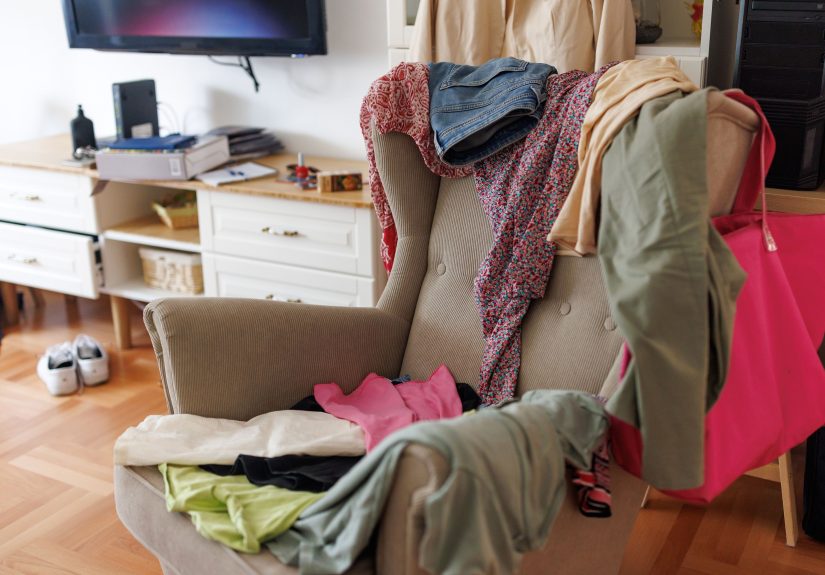
Every home has that one piece of furniture doing far more emotional labor than it signed up for. In some houses, it is the treadmill that became a very expensive coat rack. In others, it is the dining table buried under mail, keys, and one mysterious charger that fits nothing you own. But in bedrooms across America, the true overachiever is the clothes chair: that innocent seat quietly holding yesterday’s jeans, a sweater you might wear again, two clean shirts you forgot to hang up, and one scarf you have not seen since October.
If this sounds familiar, welcome to the club. The good news is that your laundry chair is not proof that you are lazy, chaotic, or one unfolded hoodie away from total collapse. It is usually a sign that your room is missing a system for handling clothes in the awkward in-between stage. Some items are dirty. Some are clean. Some are “probably fine for one more wear.” And when your bedroom does not have an obvious place for each category, the nearest chair gets promoted to acting manager.
The fix is not perfection. It is strategy. Once you stop treating the chair as a bad habit and start treating it as a symptom of a missing routine, the whole problem gets much easier to solve. Here is how to declutter your clothes chair, build a realistic clothing organization system, and keep your bedroom from looking like your outfit options exploded mid-decision.
Why the Clothes Chair Happens in the First Place
The clothes chair usually shows up for one simple reason: your space does not match your real behavior. Most people do not live in neat little categories. We do not wear every item once and immediately wash it. We also do not put every clean item away the second it comes out of the dryer. Real life is messier than that. We try on three tops before work. We drape a cardigan over a chair after dinner. We tell ourselves we will fold laundry “in five minutes,” which is adorable.
That is why bedroom clutter builds so fast. The chair becomes a low-effort parking lot for decisions you do not want to make in the moment. Dirty or not? Hang or fold? Keep or donate? Wear tomorrow or wash now? Multiply those tiny decisions by a busy week, and suddenly your chair is wearing more outfits than you are.
This is also why the pile feels more annoying than it should. Visual clutter has a way of making a room feel unfinished. In a bedroom, that matters even more, because the room is supposed to feel restful, not like a backstage dressing room after a hectic costume change.
Step One: Stop Making One Chair Do Four Different Jobs
The fastest way to conquer your clothes chair is to divide the pile into categories. Your chair gets out of control because it is trying to handle too many types of clothing at once. Once each category has a clear destination, the pile starts shrinking almost immediately.
1. Dirty clothes need a real hamper
This sounds obvious, but a surprising amount of chair clutter is actually laundry that never made it to the basket. If your hamper is hidden in a closet, tucked in the bathroom, or across the room behind a door that sticks, your chair is going to win every time. Put the hamper close to where you naturally change clothes. Convenience beats good intentions.
If you tend to mix everything together, try using two hampers or a divided one: one for lights, one for darks, or one for everyday laundry and one for delicates. The less sorting you have to do later, the more likely you are to use the system now.
2. “Wear again” clothes need a separate home
This is the most important fix of all. A lot of clothes chair clutter is not dirty at all. It is made up of items that were worn briefly and are not ready for the laundry yet: jeans, hoodies, pajama bottoms, jackets, or the sweatshirt you put on for exactly 11 minutes during a chilly Zoom call.
These pieces need a dedicated wear-again clothes zone. That could be a valet rod in the closet, a few wall hooks, one decorative basket, a storage bench, or even a slim ladder rack. The goal is not to pretend these clothes do not exist. The goal is to keep them visible, accessible, and contained so they do not colonize your furniture.
3. Clean clothes need to be put away the same day
Yes, this is the part everyone hates. Clean laundry has a sneaky habit of becoming semi-permanent decor. But once clean clothes land on a chair, they instantly become harder to deal with because the pile looks mixed, random, and mildly accusatory.
Give yourself a simpler rule: if it is clean, it does not live on the chair. It goes in a drawer, on a shelf, or on a hanger. No purgatory. No maybe pile. No “I will get to it after this one episode,” because that is how three episodes and one blanket later, you are right back where you started.
4. Unwanted clothes need a donation or repair bin
Sometimes the chair is not really a laundry problem. It is a wardrobe editing problem. Items land there because you are unsure about them. They do not fit quite right, need a button sewn on, or no longer match your life, your style, or your patience. Put a small bin in your closet for donations and another for repairs if you actually mend things. If you do not mend things, be honest with yourself and stop giving that blouse a six-month performance review.
Step Two: Make the Right Choice Easier Than the Wrong One
Organizing works best when the easiest action is also the tidy one. If your room makes it easier to toss clothes on a chair than to put them away, the chair will stay booked and busy. So change the setup.
Add hooks where your habits already happen
Hooks are one of the simplest organizing tips for clothes chair chaos. Put them behind the bedroom door, inside the closet, or on a nearby wall. They are perfect for robes, cardigans, tomorrow’s outfit, or the jacket you grab every morning. Hooks work because they remove the friction of hangers. No threading, no buttoning, no tiny acts of resistance.
Use open storage for your most-used items
If you hate folding, stop designing a system that depends on loving it. Use bins, baskets, shelf dividers, or open cubbies for casual clothes. A no-fuss storage system beats an idealized one you never follow. The best closet organization is not the prettiest one on Pinterest. It is the one you will still use on a Tuesday when you are tired and hungry.
Keep under-bed storage in rotation
If your closet is stuffed, your chair becomes overflow seating for your wardrobe. Move off-season clothes, extra linens, and occasional items into under-bed containers. Freeing up closet space makes it easier to put everyday clothes away quickly, which is half the battle.
Give your chair a new job
Sometimes the smartest move is to reclaim the chair entirely. Add a pillow, stack books on it, or move it to another room. When the chair no longer feels like an empty landing strip, you will be less tempted to throw clothes on it in the first place. It is hard to build a laundry mountain on a chair that is suddenly trying to be tasteful.
Step Three: Fix Your Laundry Routine Before It Starts a Coup
If your clean clothes always end up on the chair, your laundry process probably ends too early. Washing and drying are only part of the job. The task is not done until the clothes are actually put away.
Do one load at a time
Doing six loads in one heroic burst sounds productive until every surface in your room is covered in folded towers waiting for “later.” A smaller load is easier to finish in one cycle: wash, dry, fold, put away. It may feel slower, but it creates less mess and less mental drag.
Try the one-touch rule
The one-touch rule is beautifully simple: handle an item once whenever possible. If you take off your jeans and they are dirty, put them in the hamper. If they are clean enough to wear again, hang them on the hook. If a shirt comes out of the dryer, hang or fold it right away. Every extra temporary stop creates more clutter and more work.
Set a five-minute reset
You do not need an hour-long bedroom overhaul every night. You need five minutes and a little consistency. Before bed, do a quick reset: toss laundry in the hamper, hang up wear-again pieces, return clean clothes to drawers, and clear the chair. This tiny routine prevents a one-day mess from becoming a weekend project.
Step Four: Build a System for Small Bedrooms and Real Life
Not everyone has a walk-in closet, a spacious dresser, and a charming bench that looks like it came with the house. Some bedrooms are tiny. Some closets are packed. Some people share space with partners, children, or pets who believe a pile of fresh laundry is a personal invitation.
That is why your system should be practical, not precious. In a small bedroom, a narrow hamper can slide beside a dresser. Over-the-door hooks can hold tomorrow’s outfit. A single basket can corral wear-again clothes. A rolling rack can help if your closet is maxed out. Even one designated surface is better than random draping.
The trick is to reduce decision fatigue. You should be able to answer these questions instantly:
- Where do dirty clothes go?
- Where do clothes I will wear again go?
- Where do clean clothes go?
- Where do clothes to donate go?
If you have to think hard about any of those answers, the system still needs work.
Habits That Keep the Clothes Chair from Returning
Once you clear the pile, the goal is maintenance. Not sainthood. Just maintenance.
Edit your wardrobe regularly
The more cramped your closet, the easier it is for clothes to end up elsewhere. Every season, do a quick edit. Remove anything that no longer fits, feels uncomfortable, or never gets worn. A smaller, more realistic wardrobe is easier to manage and much less likely to overflow into chair territory.
Plan outfits with intention
If you routinely try on six things every morning and leave five on the chair, your mornings need more support. Pick outfits the night before or create a short list of reliable staples you can mix easily. The fewer mid-morning costume changes, the fewer rejected garments lounging on the furniture.
Make your bedroom a reset zone
Your bedroom should help you exhale. When the room feels calmer, getting dressed and winding down both become easier. Keeping your chair clear is not just about tidiness. It is about making the room feel less visually noisy and more functional.
A Real-Life Experience: What Happened When I Finally Took on My Clothes Chair
For years, I told myself my clothes chair was not that bad. It was not a garbage pile. It was not dirty dishes. It was just clothes. Respectable clothes. Soft clothes. Helpful clothes. Surely that made it less chaotic. Unfortunately, the chair disagreed. What started as one sweater and a pair of jeans always turned into a full fabric civilization by the end of the week.
The worst part was not even the mess. It was the weird daily confusion. I could never tell what was clean, what was worn once, what needed washing, and what had been sitting there so long it had entered a strange legal category I can only describe as emotionally wrinkled. I would stand in front of the pile each morning like an archaeologist studying textile ruins.
When I finally decided to fix it, I learned very quickly that motivation was not my real problem. Friction was. My hamper was in the closet behind shoes and a tote bag avalanche. My hangers were crammed together so tightly that putting away one shirt felt like negotiating parking in a crowded city. And I had nowhere to put clothes that were not dirty but definitely not drawer-fresh either. The chair was not the villain. It was the only system I had.
So I made a few embarrassingly simple changes. I moved the hamper into plain sight. I added three hooks inside the closet door. I put a donation bag on the top shelf. Then I gave myself one rule: every piece of clothing had to go to one of four places immediately. Hamper. Hook. Drawer. Donation bag. No fifth option called “chair for now.”
The first few days felt suspiciously easy, which made me wonder why I had spent so long acting like this was a personality trait instead of a storage problem. Within a week, my room looked calmer. Within two weeks, I stopped losing track of my favorite hoodie. Within a month, I realized something even better: getting dressed was faster because I could actually see what I owned.
Did I become a perfectly organized person who folds laundry while smiling peacefully into the middle distance? Absolutely not. I still leave a shirt out sometimes. I still have moments when a jacket lands somewhere lazy. But now the mess stops at one item instead of multiplying into a dramatic chair-based saga. The difference is not perfection. The difference is recovery. I have a system that catches the mess before it grows teeth.
That is why I think the clothes chair deserves a little less judgment and a lot more problem-solving. Most of us do not need a bigger closet or a complete lifestyle reinvention. We need a better landing spot for real life. Once I gave my clothes an actual path, the chair stopped acting like my backup closet. It became a chair again. A beautiful, boring, gloriously empty chair.
Final Thoughts
If you want to conquer your clothes chair, do not start with guilt. Start with categories, convenience, and a realistic routine. Give dirty clothes a hamper, wear-again clothes a hook or basket, clean clothes a no-excuses path back to storage, and unwanted items a donation bin. Then support the whole system with smaller laundry loads and a quick daily reset.
That is the real secret. The chair is not the problem. The missing system is. Fix that, and the pile loses its power. Your bedroom looks better, your mornings feel easier, and your favorite chair can finally go back to being a chair instead of a textile cliffhanger.
“` :