Table of Contents >> Show >> Hide
- What Makes a “Perfect” Chocolate Chip Cookie?
- Ingredient Breakdown (and what each one is doing)
- The Reliable Master Recipe
- Texture Dial: Make Them Chewy, Crispy, Thick, or Thin
- Pro Tips That Actually Matter
- Common Problems (and Fast Fixes)
- Storage, Freezing, and Make-Ahead
- Fun Variations
- Conclusion
- of Cookie Experiences (Because Cookies Are Never Just Cookies)
Chocolate chip cookies are the unofficial national anthem of “I deserve a little treat.”
They’re nostalgic, forgiving, and somehow still dramatic enough to start debates about
chewy vs. crispy like it’s a presidential election.
This guide gives you a reliable, high-quality chocolate chip cookie recipe plus the “why it works” details
so you can dial in your perfect cookie: thick and gooey, thin and snappy, or that magical middle
groundcrisp edges with a soft, chewy center.
What Makes a “Perfect” Chocolate Chip Cookie?
There’s no single perfect cookiethere’s your perfect cookie. The good news: cookie texture is controllable.
Change a few variables (butter temperature, sugar ratios, chill time, flour amount, bake temp),
and you can steer the outcome without needing a culinary degree or a lab coat.
The texture map (quick cheat sheet)
- Chewier: more brown sugar, slightly underbake, chill the dough, use melted/warmer butter carefully.
- Crispier: more white sugar, longer bake, lower moisture, thinner dough portions.
- Thicker: colder dough, a touch more flour, taller scoops, and avoid over-creaming.
- More spread: warmer dough, more sugar, more butter, hot pans, or skipping chill time.
Ingredient Breakdown (and what each one is doing)
Flour
All-purpose flour is the classic choice. Too much flour pushes cookies toward “cakey.” Too little can make them
oily or overly thin. The real trick is measuring consistentlyif you can, weigh it. If not, fluff, spoon, and level.
Butter
Butter is flavor and structurealso chaos, because its temperature changes everything.
Softened butter + creaming gives lift and a balanced chew. Melted butter tends to increase chew and spread.
Browned butter adds a nutty, caramel vibe (high reward, small extra effort).
Brown sugar + granulated sugar
Brown sugar brings moisture and chew (thanks to molasses). White sugar helps crispness and promotes spread.
Most great cookies use bothlike a buddy-cop movie where one is sweet and the other is… also sweet, but with crunch.
Eggs
Eggs bind and add moisture. Extra yolk = richer and chewier. Extra white = more structure and a slightly drier bite.
For a dependable “classic,” stick with one whole egg per standard-sized batch.
Leaveners: baking soda + baking powder
Baking soda encourages browning and spread; baking powder adds lift. Many “classic” recipes use baking soda alone,
but a small amount of baking powder can help create a soft, thick centerespecially in larger cookies.
Salt + vanilla
Salt makes chocolate taste more chocolatey. Vanilla rounds everything out.
If you’ve ever eaten a “meh” cookie, there’s a decent chance it was under-salted or shy on vanilla.
Chocolate
Chips hold their shape; chopped bars create melty pools. A blend is ideal: chips for structure + chopped chocolate
for drama (the good kind).
The Reliable Master Recipe
This is a classic, crowd-pleasing chocolate chip cookie recipe: crisp edges, chewy middle, plenty of chocolate,
and enough flexibility to customize without fear.
Ingredients (makes about 24 medium cookies)
- 2 1/4 cups (about 270g) all-purpose flour
- 1 tsp baking soda
- 1/2 tsp baking powder (optional but helpful for a softer center)
- 1 tsp fine salt
- 1 cup (226g) unsalted butter, softened (see brown-butter option below)
- 3/4 cup (150g) packed light brown sugar
- 2/3 cup (135g) granulated sugar
- 2 tsp vanilla extract
- 1 large egg + 1 large egg yolk (for extra chew; use 2 whole eggs if you prefer)
- 2 cups (about 340g) semi-sweet chocolate chips or a mix of chips + chopped chocolate
- Optional: 3/4 cup chopped toasted nuts (walnuts or pecans)
Method
-
Prep: Heat oven to 350°F. Line 2 baking sheets with parchment paper.
(If you have only one sheet, bake in batches and let the pan cool between rounds.) - Mix dry: In a bowl, whisk flour, baking soda, baking powder (if using), and salt.
-
Cream butter + sugars: In a larger bowl, beat softened butter, brown sugar, and granulated sugar
for 2–3 minutes until fluffy and lighter in color. Don’t go full “marathon” hereover-creaming can make cookies cakier. - Add egg + flavor: Beat in the egg, then the yolk, then vanilla until smooth and glossy.
-
Combine: Add dry ingredients and mix just until you no longer see streaks of flour.
Over-mixing = tougher cookies. - Add chocolate: Fold in chips/chopped chocolate (and nuts if using).
-
Chill (recommended): Cover dough and chill at least 1 hour (overnight is even better for flavor and controlled spread).
If you’re in a hurry, 20 minutes in the freezer helps. -
Scoop: Portion into 2-tablespoon mounds (about 40–45g each). Place 2–3 inches apart.
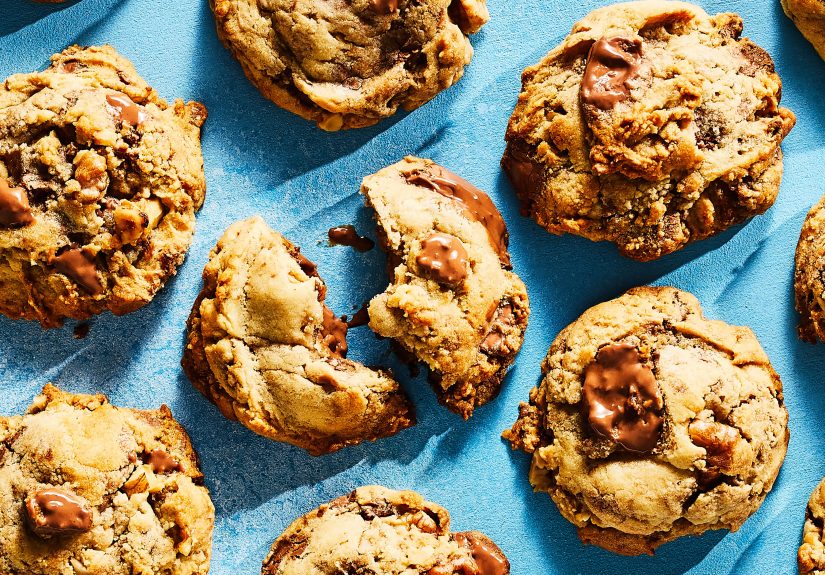
For a bakery look, press a few extra chocolate pieces on top of each mound. -
Bake: Bake 10–12 minutes at 350°F, until edges are golden and centers look slightly underdone.
They’ll finish setting on the hot pan. -
Cool like a pro: Cool on the baking sheet 5 minutes, then transfer to a rack.
(Or “taste-test” one carefully while pretending it’s for quality control. Which it is.)
Texture Dial: Make Them Chewy, Crispy, Thick, or Thin
For extra chewy cookies
- Use more brown sugar than white sugar (you can go up to a 2:1 ratio).
- Keep the dough chilled and slightly underbake.
- Add an extra yolk (already included in the master recipe).
For crispier cookies
- Increase granulated sugar slightly and reduce brown sugar slightly.
- Shape dough into slightly flatter pucks before baking.
- Bake 1–3 minutes longer (watch edges closely so they caramelize, not char).
For thick, bakery-style cookies
- Use cold dough and taller scoops (3 tablespoons each).
- Add 1–2 extra tablespoons of flour if your dough feels very soft.
- Bake a bit longer (12–15 minutes), and let them set on the pan.
For thin and lacy (caramelized) cookies
- Use slightly warmer dough (short chill).
- Use more granulated sugar and skip baking powder.
- Bake a touch hotter (try 375°F) for a deeper caramel flavor and crispier edges.
Pro Tips That Actually Matter
1) Chill the dough (yes, really)
Chilling helps the flour hydrate, mellows sweetness, and slows spreadmeaning better texture and deeper flavor.
If you only adopt one “fancy” technique, make it this one.
2) Brown butter without wrecking the dough
Brown butter adds a toasty, nutty complexity. The key is cooling it so it’s not hot when it hits sugar and eggs.
If you want the flavor without risking greasy cookies, brown some of the butter and keep the rest as softened butter.
3) Use parchment and cool your pans
Parchment prevents over-browning and makes cleanup easy. Also: putting dough on a hot baking sheet
is an express ticket to Cookie Pancake City. Let pans cool between batches.
4) Salt finishing is not “extra,” it’s smart
A tiny pinch of flaky salt on top right after baking boosts chocolate flavor and balances sweetness.
It’s the difference between “good” and “where have you been all my life.”
Common Problems (and Fast Fixes)
My cookies spread too much
- Chill dough longer (or freeze scoops for 15 minutes before baking).
- Check butter: it may have been too soft or partially melted.
- Measure flour carefully; consider weighing for consistency.
- Make sure your baking sheet isn’t hot.
My cookies are dry or cakey
- Reduce flour slightly next time (even 2 tablespoons can matter).
- Don’t overbakepull them when centers look a little underdone.
- Don’t overmix after adding flour.
My cookies didn’t brown
- Oven may run coolan inexpensive oven thermometer can be eye-opening.
- Try baking soda (or ensure it’s fresh).
- Use metal pans (dark pans brown faster; adjust time accordingly).
Storage, Freezing, and Make-Ahead
Storing baked cookies
Store in an airtight container at room temperature. To keep them softer, add a small piece of bread to the container.
The bread dries out first, and the cookies stay tender longer. (Cookie science is sometimes just polite sorcery.)
Freezing dough (best for fresh cookies on demand)
- Scoop dough into balls and place on a parchment-lined tray.
- Freeze until firm, then transfer to a freezer bag or airtight container.
- Bake from frozen: add 1–3 minutes to bake time, and keep the oven at 350°F.
Fun Variations
- Chocolate chunk + chip combo: chips for structure, chunks for melty pockets.
- Nutty: add toasted walnuts or pecans for crunch and depth.
- Espresso boost: 1–2 tsp espresso powder makes the chocolate taste richer.
- Oatmeal twist: swap 1/2 cup flour for 1 cup old-fashioned oats (chewier, heartier).
- Sea salt + dark chocolate: lean into the sweet-salty contrast.
Conclusion
Chocolate chip cookies are simple enough for a Tuesday night craving and special enough for celebrations.
Start with the master recipe, then adjust one variable at a timemore brown sugar for chew, longer bake for crunch,
chill for control, and a pinch of salt for that “wait… why is this so good?” moment.
of Cookie Experiences (Because Cookies Are Never Just Cookies)
The first thing you learn after baking chocolate chip cookies more than, say, three times is that cookies are a mood.
There are “I want a warm, gooey center and I want it now” cookies, and there are “I’m making a batch for people I love”
cookies, which somehow feel like they require at least one bowl bigger than your head and a playlist with confidence.
The second thing you learn is that the kitchen becomes a scent machine. There’s a specific momentright after the cookies
hit the ovenwhen butter and sugar start caramelizing and the whole place smells like comfort. If you live with other humans,
they appear in the doorway like cartoon characters being pulled by an invisible aroma rope. If you live alone, you become
your own doorway human, wandering in to “check” the oven every two minutes as if staring will accelerate baking.
Cookies also teach patience in the sneakiest way. You scoop the dough, you bake, you pull the tray out… and then the recipe
says, “Cool for five minutes.” Five minutes! That’s basically a lifetime in fresh-cookie time. But those minutes matter.
The cookies are still finishing their set, the centers are calming down, and the edges are deciding whether they’ll be crisp
or just politely firm. That cooling time is the difference between a cookie that snaps in half and one that collapses into
a delicious, chocolate-studded landslide.
Over the years, you start collecting tiny rituals. Pressing a few extra chocolate pieces on top so the cookies look bakery-fancy.
Sprinkling a pinch of flaky salt like you’re on a cooking show. Keeping a stash of frozen dough balls for “emergencies”
(a category that includes: bad days, good days, surprise guests, and “it’s Wednesday”).
Then there are the cookie swap lessons: make them slightly smaller than your ego tells you to, because people want to try
everything. Label what you bring, because the “mystery cookie” always gets less love. And always, always bake one test cookie
first. It’s not only practicalit’s also the baker’s tax. Consider it a professional fee for ensuring your batch is, indeed,
dangerously snackable.
Eventually you realize chocolate chip cookies are less about following a strict script and more about learning your own
preferencesyour oven’s quirks, your ideal doneness, the exact level of chew that makes you happy. And that’s kind of the
magic: every batch is a small, delicious experiment that ends with something you can share. Or, if needed, something you can
eat quietly over the sink while pretending you’re “just cleaning up.” No judgment. Cookies understand.