Table of Contents >> Show >> Hide
- Can You Freeze Milk Safely?
- What Happens to Milk When You Freeze It?
- Which Types of Milk Freeze Best?
- How to Freeze Milk the Right Way
- How Long Can You Freeze Milk?
- How to Thaw Frozen Milk Safely
- Can You Drink Milk After It Has Been Frozen?
- Best Ways to Use Thawed Milk
- When Not to Freeze Milk
- Common Mistakes to Avoid
- Test Kitchen Tips for Better Frozen Milk
- Can You Refreeze Milk?
- Our Real-Life Experience With Freezing Milk
- Conclusion: So, Can You Freeze Milk?
Yes, you can freeze milkand no, it does not turn into a science-fair disaster unless you treat it like one. Freezing milk is one of those kitchen tricks that feels slightly suspicious until you try it. Then suddenly you are the person calmly saving half a gallon from a tragic drain-bound destiny while everyone else is still whispering, “Wait, milk freezes?”
The short answer is simple: milk can be frozen safely when it is fresh, stored in the right container, given room to expand, kept at 0°F, and thawed slowly in the refrigerator. The slightly longer answer is that frozen milk may change texture after thawing. It can separate, look a little grainy, or taste slightly different. But for cooking, baking, smoothies, soups, sauces, pancakes, oatmeal, and coffee in a pinch, frozen milk can be a smart way to reduce food waste and stretch your grocery budget.
Below, our test-kitchen-style guide explains how to freeze milk the right way, what types freeze best, how long frozen milk lasts, and how to bring it back from the freezer without making your cereal feel like it has trust issues.
Can You Freeze Milk Safely?
Yes, milk can be frozen safely as long as it is handled properly. Freezing slows the growth of bacteria and helps preserve food, but it does not magically improve old milk. Think of the freezer as a pause button, not a time machine with a cape.
For the best results, freeze milk while it is still fresh and before its “use by” or “best by” date. If the milk already smells sour, looks curdled, or has been left out too long, freezing will not rescue it. Bad milk frozen is still bad milkjust colder and more emotionally confusing.
Your freezer should be set to 0°F or below, and your refrigerator should be at 40°F or below. These temperatures matter because milk is perishable. Once thawed, it should be treated like fresh refrigerated milk and used within a few days for best quality.
What Happens to Milk When You Freeze It?
Milk is mostly water, but it also contains fat, protein, lactose, and minerals. When milk freezes, the water forms ice crystals. Those crystals can disturb the structure of the milk, which is why thawed milk may look separated or feel slightly grainy.
This texture change is normal. Whole milk, because it contains more fat, may show more separation than skim milk or low-fat milk. After thawing, a strong shake, whisk, or quick blend can help bring the milk back together. It may not be exactly as silky as fresh milk, but it is usually perfectly fine for recipes.
Which Types of Milk Freeze Best?
Dairy Milk
Pasteurized cow’s milk freezes well enough for everyday use. Skim and low-fat milk usually freeze with fewer noticeable texture changes because they contain less fat. Whole milk can still be frozen, but it may separate more after thawing.
Lactose-Free Milk
Lactose-free milk can also be frozen. Like regular milk, it may separate or become slightly grainy, but it generally works well in cooked dishes, smoothies, and baked goods after thawing.
Buttermilk
Buttermilk freezes surprisingly well for cooking and baking. Freeze it in small portions, such as 1/2-cup or 1-cup amounts, so future-you can make pancakes without defrosting a whole container like it is a dairy iceberg.
Plant-Based Milk
Almond milk, oat milk, soy milk, and other non-dairy milks can sometimes be frozen, but the results vary. Many plant-based milks separate after thawing and may not return to their original smooth texture. They are usually better in smoothies, soups, or baking than in a glass by themselves.
How to Freeze Milk the Right Way
Step 1: Start With Fresh Milk
Only freeze milk that smells and tastes fresh. If it is close to expiring but still good, freezing can help prevent waste. If it is already questionable, do not freeze it. The freezer is not a legal defense team for suspicious dairy.
Step 2: Choose a Freezer-Safe Container
Use a freezer-safe plastic container, freezer bag, or sturdy plastic jug. Avoid freezing milk in glass unless the container is specifically labeled freezer-safe and you leave enough headspace. Milk expands as it freezes, and glass can crack under pressure. That is not kitchen efficiency; that is a cleanup subplot.
Step 3: Leave Room for Expansion
Do not fill the container to the top. Leave about 1 to 1 1/2 inches of space so the milk can expand as it freezes. If you are freezing a full gallon jug, pour off a cup or so before putting it in the freezer.
Step 4: Freeze in Practical Portions
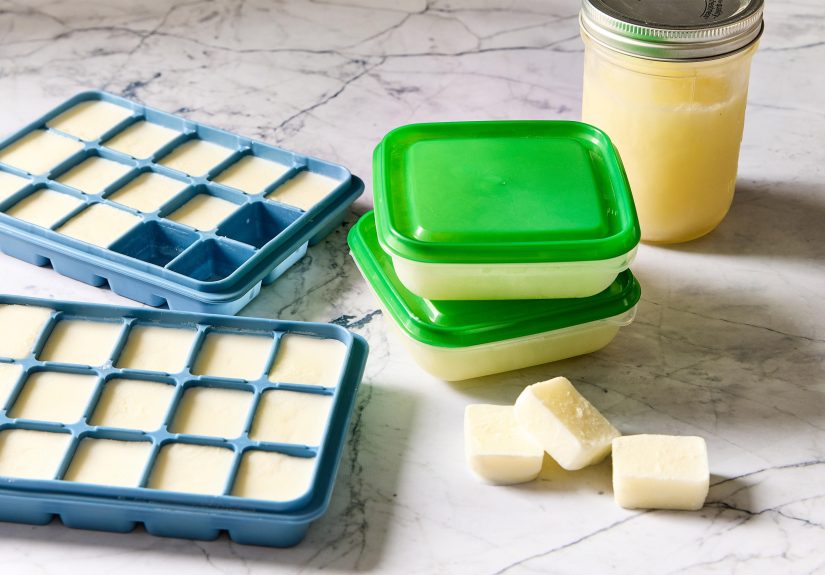
If you rarely use a full gallon quickly, divide milk into smaller containers. One-cup, two-cup, or quart portions are easier to thaw and use. You can also freeze milk in ice cube trays for coffee, sauces, smoothies, or small recipe needs.
Step 5: Label Everything
Write the date and amount on the container. Frozen milk has a way of disguising itself as mystery soup, homemade broth, or “something from last fall.” A label saves you from freezer archaeology.
How Long Can You Freeze Milk?
For best quality, use frozen milk within one to three months. Some guidance allows longer freezer storage if the milk remains continuously frozen at 0°F, but flavor and texture are usually best when used sooner. Milk can also absorb freezer odors, so keep it sealed tightly and away from strong-smelling foods.
Technically, food kept constantly frozen at 0°F remains safe for a long time, but safety and quality are not the same thing. A sweater from 1998 may still be wearable; that does not mean it should headline your outfit. Milk follows a similar logic.
How to Thaw Frozen Milk Safely
Thaw It in the Refrigerator
The safest way to thaw frozen milk is in the refrigerator. Place the container on a plate or in a bowl to catch condensation or leaks. Depending on the container size, thawing can take several hours to a full day or more.
Use Cold Water for Faster Thawing
If you need milk sooner, place the sealed container in a bowl of cold water and change the water regularly. Do not use hot water, and do not thaw milk on the counter. Room-temperature thawing can move perishable food into the danger zone, where bacteria can multiply more quickly.
Shake After Thawing
Once thawed, shake the milk well. If it still looks separated, whisk it or blend it for a few seconds. This will not make it brand-new, but it can greatly improve the texture.
Can You Drink Milk After It Has Been Frozen?
You can drink thawed milk if it was frozen while fresh, thawed safely, and still smells normal. However, some people do not love the texture of thawed milk for drinking. It may taste slightly flatter or feel less smooth than fresh milk.
Our test kitchen recommendation: taste a small sip before pouring it over cereal. If the texture bothers you, use it in recipes instead. Pancake batter is far less judgmental than a bowl of cornflakes.
Best Ways to Use Thawed Milk
Thawed milk shines in recipes where texture changes are less noticeable. Use it in pancakes, waffles, muffins, quick breads, biscuits, mashed potatoes, creamy soups, casseroles, macaroni and cheese, oatmeal, hot cocoa, scrambled eggs, smoothies, and sauces.
It is also useful for baking because flour, eggs, heat, and mixing do a great job of hiding minor texture differences. In a cake or muffin, thawed milk behaves like a quiet team player. It does the job, asks for no applause, and does not mention that it spent six weeks next to frozen peas.
When Not to Freeze Milk
Do not freeze milk that is already spoiled, has been left at room temperature for too long, or has an unusual smell. Do not freeze milk in containers that may burst. Avoid freezing milk in paper cartons for long storage unless the carton is protected inside a freezer-safe bag or container.
You may also want to skip freezing milk if you need it for fresh drinking, delicate coffee drinks, or recipes where a perfectly smooth texture matters. For those uses, fresh milk is still the gold standard.
Common Mistakes to Avoid
Freezing a Full Container
Milk expands as it freezes. A completely full container can split, leak, or pop open. Leave headspace every time.
Thawing on the Counter
Countertop thawing is not recommended for perishable foods like milk. Use the refrigerator or a cold-water method instead.
Expecting Perfect Fresh-Milk Texture
Frozen milk is practical, not magical. Expect some separation, especially with whole milk. Shake, whisk, or blend before using.
Forgetting to Label
Milk should be dated before it goes into the freezer. Otherwise, three months later, you will be holding a frosty white container and negotiating with your own memory.
Test Kitchen Tips for Better Frozen Milk
For the smoothest results, freeze milk in small portions, thaw it slowly, and use it in cooked or blended recipes. If you drink mostly milk in coffee, freeze it in ice cube trays. Once frozen, transfer the cubes to a freezer bag. Drop a cube into iced coffee or blend it into a smoothie.
If you buy milk in bulk, split it into containers as soon as you get home. Keep one container in the refrigerator and freeze the rest. This prevents waste and makes thawing more manageable.
For families, freezing milk in quart-size containers is often the sweet spot. It thaws faster than a gallon, fits better in crowded freezers, and is easier to use before quality drops after thawing.
Can You Refreeze Milk?
Refreezing milk is not ideal. Each freeze-thaw cycle can further damage texture and increase separation. If milk has been thawed safely in the refrigerator and still contains ice crystals, refreezing may be possible from a safety standpoint, but quality will likely decline. For best results, freeze milk in portions you can use after one thaw.
Our Real-Life Experience With Freezing Milk
In our kitchen, freezing milk works best when it is treated as an ingredient-saving strategy rather than a perfect fresh-milk replacement. The biggest win is convenience. There is something deeply satisfying about saving milk before a trip, before a busy week, or after buying more than your household can finish. It feels like beating food waste with a spatula and a freezer label.
The first lesson we learned is that smaller portions are everything. A frozen gallon of milk is impressive in the same way a frozen boulder is impressive: technically useful, but not exactly nimble. A gallon can take a long time to thaw, and once it does, you have a lot of milk to use quickly. Quart containers, two-cup containers, and ice cube trays are much easier to manage.
The second lesson is that texture expectations matter. Thawed whole milk often separates more than reduced-fat milk. At first glance, it may look like something went wrong. Usually, it did not. A firm shake brings it closer together. A blender makes it smoother. But if you pour it into a clear glass and expect it to look exactly like fresh milk, you may feel personally betrayed by dairy science.
For drinking, thawed milk is a mixed bag. Some people do not notice much difference, especially when the milk is very cold. Others immediately detect a thinner or grainier texture. In our experience, thawed milk is best used where it can blend into the background. Pancakes, muffins, waffles, cream soups, mashed potatoes, and oatmeal are all excellent landing places.
Milk cubes are another practical trick. Freeze milk in an ice cube tray, then store the cubes in a freezer-safe bag. They are handy for smoothies, iced coffee, creamy sauces, and single servings of oatmeal. They also prevent the classic problem of thawing two cups of milk when you only need a splash. Kitchen efficiency, thy name is tiny frozen dairy brick.
We also found that labeling prevents chaos. Milk frozen in a bag or plastic container can look a lot like broth, coconut milk, or mystery sauce once frost gets involved. A simple label with the date and amount keeps the freezer from turning into a suspense novel.
The final takeaway: freezing milk is worth it when your goal is reducing waste, saving money, and keeping a backup ingredient on hand. It is not the best choice when you need flawless texture for drinking or fancy coffee foam. Use it wisely, thaw it safely, shake it well, and let it do what it does best: quietly save breakfast from becoming a grocery emergency.
Conclusion: So, Can You Freeze Milk?
Yes, you can freeze milk, and it is one of the easiest ways to prevent waste when you have more than you can use. The key is to freeze fresh milk in freezer-safe containers, leave room for expansion, label it clearly, thaw it in the refrigerator, and shake it well before using.
For the best flavor and texture, use frozen milk within one to three months. After thawing, use it in recipes where small texture changes will not matter. It may not be your first choice for a tall glass with cookies, but for pancakes, muffins, soups, sauces, and smoothies, frozen milk is a quiet little kitchen hero.