Table of Contents >> Show >> Hide
- The quick answer (for people who like living)
- Meet your opponent: the ostrich is basically a running machine
- What “fighting” an ostrich would actually look like
- So what should you do if an ostrich is aggressive? (Safety-first, not fight advice)
- Why do people get into trouble with ostriches?
- FAQ: The questions people type when they should be typing “nearest exit”
- Bottom line: the smartest win is not playing
- Experiences people report around ostriches (500-ish words of reality checks)
Let’s get the obvious out of the way: if you are seriously considering fistfighting an ostrich, I’m going to assume you also believe you can outswim a jetski and outdebate your Wi-Fi router.
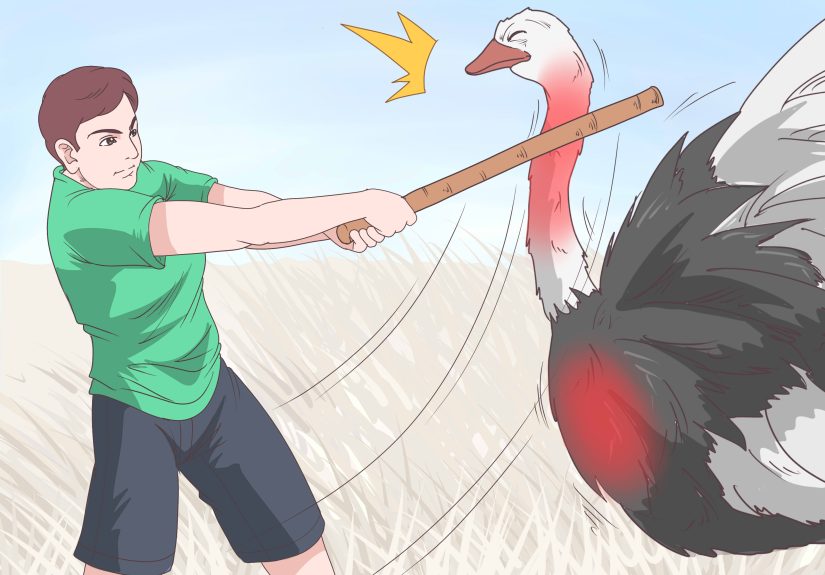
Ostriches are not cartoon birds. They’re giant, fast, alarmingly athletic animals with legs that look like they were designed by someone who thought “what if a drumstick could do parkour… and also ruin your week?” So, can you beat an ostrich in a fight? The honest, practical answer for almost every human is: nonot reliably, not safely, and not without risking serious injury.
The quick answer (for people who like living)
You cannot count on “winning” against an ostrich. Even if you’re strong, trained, or feeling heroic, ostriches have major advantages: speed, height, reach, a powerful kick, and a built-in “I do not respect your gym membership” attitude. The best “win” is avoiding the situation entirely.
Meet your opponent: the ostrich is basically a running machine
They’re huge, and they run like it’s their job
Ostriches are the largest living birds, standing roughly 6.9 to 9 feet tall and commonly weighing in the 200+ pound range. More importantly, they’re built to run: they can sprint up to about 43 mph, maintain around 31 mph for longer stretches, and cover 10 to 16 feet in a single stride. That’s not “fast for a bird.” That’s “fast for a motorized scooter.”
Translation: if an ostrich decides you’re a problem, you are not “escaping” in the traditional sense. You are “reconsidering your life choices at 31 mph.”
Two toes. One big claw. Zero chill.
Ostriches have only two toes per foot, an adaptation that helps them run efficiently. Those feet aren’t cute. They’re functional. The inner toe has a large, tough nail/claw, and the legs are strong enough to deliver a kick powerful enough to seriously injure predatorsand humans.
Many wildlife and zoo sources note that ostrich kicks can be dangerous and, in extreme cases, fatal. Even without dramatic headline scenarios, a well-placed kick can cause deep lacerations, broken bones, and blunt trauma. This is not a creature you want “testing your toughness” on.
They see you. They see your intentions. They see your mistakes.
Ostriches have big eyes (famously among the largest of land animals), excellent vision, and a strong awareness of movement in open terrain. In the wildand even in large enclosuresthey’re wired to notice threats early and react fast.
What “fighting” an ostrich would actually look like
Movies make fights feel like a series of fair exchanges. Real life is not a choreographed dance sequence. Real life is physics, reflexes, and who has the better built-in weapons. Spoiler: the ostrich came pre-installed.
The speed problem: you don’t control the distance
A lot of “could I beat it?” fantasies assume you can choose the rangelike you’ll square up, measure the moment, and execute a plan. Ostriches don’t RSVP to your plan. They can close distance quickly, and they can also retreat quickly. Either way, you’re reacting.
The kick zone: long legs mean long reach
Ostriches don’t need to “grapple” you. Their primary defense is their legs. That means the danger zone is not just “right in front.” It’s also “close enough for a leg to reach you,” which is… farther than most people realize.
And unlike a human punchwhich might bruisean ostrich kick can cut, crush, or break. If you corner or provoke one, you’re increasing the odds that it uses the only negotiation tool it brought to the meeting: violence-by-thigh-muscle.
Stamina is not your secret advantage
People sometimes think, “Sure, it’s fast, but I have endurance.” Ostriches aren’t just sprinters; they can keep a high pace longer than most humans can run. Plus, in a chaotic situation, “endurance” doesn’t matter if you get injured early.
So what should you do if an ostrich is aggressive? (Safety-first, not fight advice)
If you’re near ostrichesat a safari park, zoo, ranch, or farmyour goal is simple: increase distance, reduce escalation, and get help. Here are practical, non-violent safety principles that align with general animal-handling guidance:
1) Put something solid between you and the bird
A fence, a gate, a vehicle, a large barrieranything that prevents contact is your friend. Ostriches are powerful, but most incidents get worse when people stay in the open with no separation.
2) Don’t corner it, crowd it, or tease it
In many animal incidents, escalation happens because humans cut off escape routes, get too close for photos, or approach nests/chicks. If the ostrich feels trapped, it’s more likely to defend itself. Give it space to move away.
3) Back away calmly and angle out of the situation
Sudden running, shouting, or frantic movement can read as threat or chaos. If you can leave safely, do so without dramatic gestures. If you’re with children, keep them close and move as a group toward a barrier or exit.
4) Treat it like an animal problem, not a pride problem
If this is a facility (zoo/farm/safari park), notify staff immediately. If it’s an escaped or illegally kept animal, contact local animal control or wildlife authorities. Also: do not try to “handle it yourself” unless you’re trained and authorized. Even experienced handlers use protocols and equipment because the risk is real.
Why do people get into trouble with ostriches?
They mistake “funny-looking” for “safe”
Ostriches can look goofy: the feather fluff, the long neck, the “what is that walk” energy. But their defense system is serious. The mismatch between appearance and danger is exactly why people get bold.
Breeding season and territorial behavior
Husbandry resources note ostriches may become more aggressive during breeding season, and males can display territorial behavior. That’s especially relevant on farms or breeding operations, where humans are regularly in the birds’ space.
Feeding, selfies, and the curse of “just one quick photo”
Many risky animal encounters begin with someone trying to feed an animal or pose too close. Birds can associate people with food, and close contact can lead to pecking, jostling, or defensive reactionsespecially if the animal feels crowded. The rule is boring but effective: admire from a distance.
FAQ: The questions people type when they should be typing “nearest exit”
Could a human ever beat an ostrich?
In theory, unusual circumstances exist in the universe. In real life, for the average person (and honestly, most athletes), trying to “beat” an ostrich is a high-risk plan with a low payoff. Your best strategy is avoidance and de-escalation.
Can an ostrich kill a human?
Serious injuries are possible, and there are documented cases of people dying from attacks by large flightless birds (including other ratites). With ostriches specifically, the combination of kick force, claws, and body mass can be life-threatening in the wrong circumstances. “Rare” does not mean “not a big deal.”
Do ostriches really bury their heads in the sand?
No. This is a myth. When threatened and unable to flee, ostriches may lower themselves and stretch their neck along the ground. From far away, it can look like their head is “buried,” but it’s camouflage, not denial.
Are ostriches legal to own in the United States?
Laws vary by state and even by city/county. In some places, ostriches may be treated as agricultural livestock under certain rules, while other jurisdictions heavily restrict exotic animal possession or require permits for transport. If you’re dealing with ostriches outside of a regulated facility, check local regulations firstand remember: “legal” doesn’t mean “safe.”
Bottom line: the smartest win is not playing
If your question is really “Could I protect myself if something went wrong?” the answer is: focus on distance, barriers, and getting help. If your question is “Should I test myself against an ostrich?” the answer is: absolutely not. There are easier ways to feel alivelike spicy food or checking your bank balance after a Target run.
Experiences people report around ostriches (500-ish words of reality checks)
Here’s the thing about ostriches: most “stories” start the same waysomeone underestimates the bird because it looks silly, then everything gets serious very quickly. People who work around ratites (zookeepers, farm staff, wildlife educators) often describe the first lesson as surprisingly unglamorous: respect the legs. Not the beak. Not the feathers. The legs. The legs are the business end.
One common theme in reported handler experiences is how fast an ostrich can change the mood. A bird can be calmly pacing, then suddenly posture tall, lift wings, and do a dominance display that reads like, “I am the manager here.” Facilities train staff to read those signals early, because once an ostrich commits to chasing or kicking, the “conversation” is basically over.
Visitors at drive-through safari parks often share a different kind of story: the “window incident.” An ostrich (or emu) sees something shiny, thinks it might be food, and starts pecking at mirrors, trim, or anything reflective. The human experience in the car is usually half laughter, half panic, and one hundred percent regret for rolling the window down. These moments aren’t “attacks” in the dramatic sense, but they’re a perfect example of why close contact is risky: birds don’t follow your script, and curiosity can become chaos.
People who’ve encountered ostriches near fences describe another surprise: the bird’s reach. Even with a barrier, an ostrich can get its head and neck close quickly, and the body language can feel intimidatingespecially given the animal’s height. Some visitors say the strangest part is the eye contact. Ostriches don’t look “cute-confused.” They look alert, steady, and absolutely unimpressed by your presence. That sense of being sized upby a birdsticks with people.
On farms, stories often include breeding season warnings. Even sources that describe ostriches as not generally aggressive also note that behavior can shift during breeding months. Farm owners talk about routines built around minimizing conflict: planning feed/water access, avoiding unnecessary entry into enclosures, and using trained teams rather than solo “cowboy” confidence. Not because ostriches are evil, but because they’re large animals with instinctsand instincts do not care about your schedule.
Then there are the “close call” stories from people who tried to shoo an ostrich away like it was a big chicken. Those stories usually end with the person realizing they’ve never sprinted so hard in their lifeor realizing they can’t sprint at all and immediately reevaluating their fitness goals. If there’s a moral, it’s this: the bravest move is stepping away. Ostriches don’t hand out medals for “most confident human.” They hand out consequences.