Table of Contents >> Show >> Hide
- Can Ultrasound Detect Pancreatic Cancer?
- How Ultrasound Is Used in Pancreatic Cancer Evaluation
- How Accurate Is Ultrasound for Pancreatic Cancer?
- What Ultrasound Can Miss
- What Happens During the Procedure?
- What Are the Risks?
- When Doctors Usually Order Ultrasound for Pancreatic Concerns
- Ultrasound vs. CT vs. MRI: Which Test Is Best?
- Real-World Experiences Related to Pancreatic Ultrasound
- Conclusion
Pancreatic cancer is one of those diseases that likes to play hide-and-seek in the worst possible way. The pancreas sits deep in the abdomen, tucked behind the stomach and surrounded by other structures, which means tumors can stay quiet for a long time. That leads many people to ask a smart and important question: can ultrasound detect pancreatic cancer?
The honest answer is yes, ultrasound can detect pancreatic cancer, but the full story is more nuanced. A standard abdominal ultrasound may spot a large pancreatic mass, changes in the bile ducts, liver abnormalities, or other clues that something is wrong. But because the pancreas is hard to see clearly from outside the body, a regular ultrasound is not the most reliable stand-alone test when pancreatic cancer is strongly suspected. That is where endoscopic ultrasound, often called EUS, becomes much more useful.
In modern pancreatic cancer workups, doctors often combine imaging tools rather than betting everything on one picture. Ultrasound may help start the investigation, but CT scans, MRI, blood work, and biopsy often help finish it. So if you came here hoping for a simple yes-or-no answer, blame the pancreas for being difficult. Medicine is doing its best.
Can Ultrasound Detect Pancreatic Cancer?
Yes, ultrasound can detect pancreatic cancer, but the type of ultrasound matters a lot. There are two main forms used in pancreatic evaluation:
1. Abdominal Ultrasound
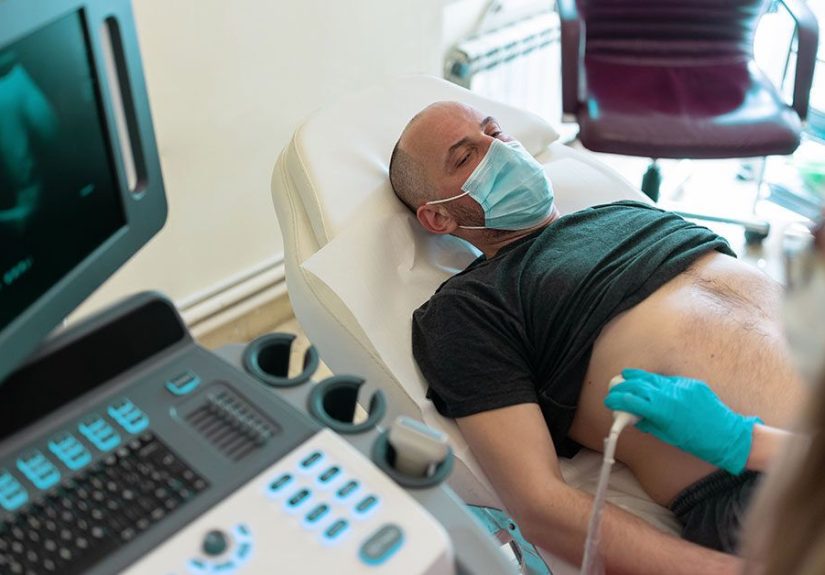
This is the standard ultrasound most people imagine. A technician moves a handheld probe across the upper abdomen while sound waves create pictures on a screen. It is noninvasive, quick, painless, and does not use radiation. Doctors may order it early when someone has abdominal pain, jaundice, unexplained weight loss, nausea, abnormal liver tests, or a possible gallbladder problem.
The catch is that the pancreas is buried deep in the body. Gas in the stomach or intestines, body fat, and nearby organs can block the sound waves and make the pancreas difficult to see clearly. That means abdominal ultrasound may miss small pancreatic tumors or produce inconclusive results.
2. Endoscopic Ultrasound (EUS)
EUS is a more specialized procedure. Instead of looking at the pancreas from outside the body, a doctor places a thin flexible scope through the mouth, down into the stomach and the first part of the small intestine. The ultrasound probe sits at the tip of that scope, which puts it much closer to the pancreas.
Because the probe is closer, EUS can produce far more detailed images than a standard abdominal ultrasound. It is especially helpful for seeing small masses, evaluating nearby lymph nodes and blood vessels, and guiding a biopsy if a suspicious lesion is found. In plain English, EUS is the overachiever of the ultrasound family.
How Ultrasound Is Used in Pancreatic Cancer Evaluation
Ultrasound is not just about finding a tumor. It can play several roles in the diagnostic process:
Finding a Cause of Symptoms
If a patient shows up with jaundice, upper abdominal discomfort, pale stools, dark urine, or unexplained weight loss, an abdominal ultrasound may be one of the first tests ordered. It can help detect bile duct blockage, gallstones, liver changes, or a visible mass. Even when it does not confirm pancreatic cancer, it may reveal enough red flags to push the workup forward.
Looking for Indirect Signs
Sometimes ultrasound does not show a clear pancreatic tumor, but it does show the consequences of one. For example, a tumor in the head of the pancreas may block the bile duct, leading to dilation of the ducts and jaundice. That indirect evidence can be a major clue.
Characterizing Pancreatic Abnormalities
Ultrasound can help distinguish whether the issue looks more like a cyst, inflammation, duct blockage, or a solid lesion. That does not always produce a final diagnosis, but it helps doctors decide whether the next step should be CT, MRI, EUS, ERCP, or biopsy.
Guiding Biopsy
EUS is especially important because it can guide a fine-needle aspiration or fine-needle biopsy. In other words, if the doctor sees something suspicious, they can often collect tissue during the same procedure. That matters because imaging may strongly suggest cancer, but pathology usually provides the final proof.
Helping With Staging
EUS can also help doctors evaluate whether the cancer involves nearby lymph nodes or blood vessels. That information helps determine staging and treatment options, including whether surgery is likely to be possible.
How Accurate Is Ultrasound for Pancreatic Cancer?
This is where patients usually lean forward in the chair and ask the real question: “Okay, but how good is it?”
Abdominal ultrasound is useful, but it is not the most accurate test for suspected pancreatic cancer. It works best as an initial, accessible, radiation-free exam, especially when symptoms are nonspecific or when gallbladder and bile duct disease are also on the table. But it is less reliable for small tumors, deeper lesions, and patients whose anatomy or bowel gas limits the view.
Endoscopic ultrasound is much more accurate. Research has shown that EUS is one of the most sensitive imaging methods for detecting pancreatic tumors, especially small lesions. It can outperform standard transabdominal ultrasound and may identify tumors that are difficult to see on other scans. That is one reason it is widely used when doctors need a closer look or when they want tissue confirmation.
Still, no test is perfect. Ultrasound findings can overlap with pancreatitis, cystic lesions, and other pancreatic disorders. A suspicious image is not always cancer, and a normal abdominal ultrasound does not completely rule it out. That is why doctors often combine ultrasound with:
- Pancreas-protocol CT scan
- MRI or MRCP
- Blood tests such as liver function tests and sometimes CA 19-9
- EUS-guided biopsy
- ERCP when duct blockage needs treatment or sampling
In fact, when pancreatic adenocarcinoma is clinically suspected, cross-sectional imaging such as CT or MRI is often considered more appropriate for initial imaging than a routine transabdominal ultrasound. Ultrasound still has value, but it is often one piece of a bigger puzzle rather than the puzzle box lid.
What Ultrasound Can Miss
If you want the short version, ultrasound can miss pancreatic cancer because the pancreas is stubbornly inconvenient.
Here are the biggest reasons:
The Pancreas Sits Deep in the Abdomen
Unlike the thyroid or a baby on a prenatal scan, the pancreas does not present itself politely for a photo. Its location makes it harder to image from the outside.
Bowel Gas Interferes With Sound Waves
Gas is the eternal photobomber of abdominal ultrasound. Sound waves do not travel well through air, so gas in the stomach or intestines can obscure all or part of the pancreas.
Small Tumors Are Harder to See
Early pancreatic cancers may be tiny. Small lesions are easier to miss on standard abdominal ultrasound than on EUS, CT, or MRI.
Some Findings Are Nonspecific
Inflammation, cysts, benign masses, and cancer can sometimes create overlapping imaging features. Ultrasound may raise suspicion without delivering a final answer.
What Happens During the Procedure?
Abdominal Ultrasound Procedure
An abdominal ultrasound is simple and usually done in an outpatient setting.
- You may be asked not to eat or drink for several hours before the test.
- You lie on an exam table, usually on your back.
- A clear gel is placed on your upper abdomen.
- The technician moves a handheld transducer over the area.
- The images are recorded and later reviewed by a radiologist or physician.
The test is typically quick, often around 20 to 30 minutes. There is little discomfort, though the probe may press on tender areas.
Endoscopic Ultrasound Procedure
EUS is more involved because it is an endoscopic procedure rather than an external scan.
- You usually fast overnight or for several hours beforehand.
- An IV is placed, and you receive sedation.
- The doctor passes the endoscope through your mouth into the stomach and duodenum.
- The ultrasound probe at the tip captures detailed images of the pancreas and nearby structures.
- If needed, the doctor may perform a fine-needle aspiration or biopsy during the same session.
- Afterward, you recover while the sedation wears off and need someone else to drive you home.
EUS may take longer than an abdominal ultrasound, especially if biopsy is performed. Most people go home the same day.
What Are the Risks?
Abdominal Ultrasound
Abdominal ultrasound is very safe. It does not use radiation, and side effects are essentially minimal. The biggest downside is not danger but limited visibility.
Endoscopic Ultrasound
EUS is also generally safe, but because it involves sedation, endoscopy, and sometimes biopsy, it carries a few more risks. These may include:
- Sore throat
- Bloating or mild gas
- Sleepiness after sedation
- Bleeding or infection if a biopsy is taken
- Rare injury to the digestive tract
Your doctor will explain the risks based on your overall health, medications, and whether tissue sampling is planned.
When Doctors Usually Order Ultrasound for Pancreatic Concerns
Ultrasound may be considered when a person has:
- Jaundice
- Unexplained upper abdominal pain
- Unexplained weight loss
- Abnormal liver tests
- Suspected gallstones or bile duct obstruction
- An abnormality already seen on CT or MRI that needs closer evaluation
- High-risk pancreatic surveillance, usually with EUS and/or MRI in select patients
It is important to note that pancreatic cancer screening is not recommended for the general population with routine ultrasound. In people at high inherited risk, specialists may use MRI and endoscopic ultrasound as part of structured surveillance programs.
Ultrasound vs. CT vs. MRI: Which Test Is Best?
There is no single universal winner because each test answers different questions.
Ultrasound
Best for: quick first look, bile duct issues, gallstones, and selected pancreatic evaluation.
CT Scan
Best for: suspected pancreatic cancer, tumor size, spread, and surgical planning. This is often the primary imaging choice when doctors strongly suspect pancreatic adenocarcinoma.
MRI/MRCP
Best for: detailed soft tissue imaging, duct evaluation, and certain lesions that need clarification.
EUS
Best for: close-up pancreatic imaging, small lesions, biopsy, and local staging.
So, can ultrasound detect pancreatic cancer? Yes. Is it always the best first or only test? No. In many cases, the real power of ultrasound lies in how it works alongside CT, MRI, lab testing, and biopsy.
Real-World Experiences Related to Pancreatic Ultrasound
For many patients, the experience begins not with the words “pancreatic cancer,” but with symptoms that feel vague and easy to dismiss. One person may notice yellowing of the eyes and think it is a liver issue. Another may blame upper belly discomfort on stress, acid reflux, or a heavy dinner that fought back. Someone else may lose weight without trying and feel oddly proud for about three days before realizing that was not the kind of “fitness journey” they had in mind.
A common early experience is having an abdominal ultrasound first. Patients often describe it as surprisingly uneventful: fasting, lying on a table, cold gel on the belly, a wand sliding around the upper abdomen, and a technician taking multiple images. The procedure itself is not scary. The emotional part comes later, when the report says something like “limited visualization of the pancreas,” “biliary dilation,” or “further imaging recommended.” That kind of wording does not confirm cancer, but it often changes the tone of the conversation very quickly.
Some patients feel frustrated when they learn that a “normal” or unclear abdominal ultrasound does not completely end the investigation. But that is actually a realistic part of pancreatic care. Because the pancreas is hard to see, many people move on to CT, MRI, or EUS even after an ultrasound. This can feel like a lot of testing in a short time, but from a medical standpoint, it is often the safest way to get a clear answer.
Patients who undergo EUS often describe it differently. The day usually involves fasting, IV placement, sedation, and a recovery period. Most people do not remember much of the procedure itself. What they do remember is the anticipation beforehand and the waiting afterward, especially if a biopsy was taken. A mild sore throat, grogginess, and bloating are common short-term complaints, but the bigger experience is often emotional rather than physical. People want certainty. The pancreas prefers suspense.
Families also experience this process in a very specific way. They may hear that ultrasound “found something,” but not know whether that means cancer, inflammation, a cyst, or blockage. That uncertainty can be exhausting. In real clinical life, doctors often need to put together symptoms, imaging, biopsy results, and sometimes repeated scans before the full picture becomes clear.
For high-risk patients in surveillance programs, the experience is different again. These individuals may alternate MRI and EUS over time. They often describe surveillance as both reassuring and nerve-racking: reassuring because experts are watching carefully, nerve-racking because every scan carries the possibility of new findings. Still, many feel that structured surveillance gives them a sense of control that pancreatic cancer rarely offers on its own.
The practical takeaway from patient experience is simple: ultrasound can be a valuable part of the journey, but it is often not the whole journey. A quick test may open the door, but careful follow-up is what usually provides answers. And when it comes to pancreatic disease, answers are worth chasing, even when they require more than one scan and more patience than anyone requested.
Conclusion
Ultrasound can detect pancreatic cancer, but its effectiveness depends on the type of ultrasound and the clinical situation. A standard abdominal ultrasound is useful, accessible, and radiation-free, but it may miss small or hidden tumors because the pancreas is deep in the abdomen and often obscured by bowel gas. Endoscopic ultrasound is much more accurate for close pancreatic imaging and has the added advantage of guiding a biopsy.
If pancreatic cancer is strongly suspected, doctors often rely on a combination of tests rather than ultrasound alone. That approach may feel complicated, but it improves the chances of finding the right diagnosis and planning the right treatment. In other words, ultrasound is important, but teamwork wins.