Table of Contents >> Show >> Hide
- Why Brown Butter + Sage + Garlic Works So Ridiculously Well
- Ingredients for Brown Butter Sage Sauce with Garlic and Fresh Sage
- Step-by-Step: How to Make It (10 Minutes, No Stress)
- How to Use Brown Butter Sage Sauce (Beyond the Usual Ravioli)
- Variations That Keep It Interesting (Without Making It Complicated)
- Troubleshooting: What to Do When Butter Gets Bossy
- Make-Ahead, Storage, and Reheating
- Kitchen Stories and Lessons Learned ( of Real-Life “Yep, That Happened” Energy)
If there were a “make anything taste like you totally meant to do that” award, brown butter sage sauce would
win it every yearthen politely ask for more Parmesan.
This sauce is fast, fancy, and a little dramatic (in the best way): butter foams, milk solids toast, sage
turns crisp, garlic gets fragrant, and suddenly your Tuesday dinner tastes like it has a reservation.
The best part? You don’t need a blender, a stockpot the size of a bathtub, or a culinary backstory set in Tuscany.
Why Brown Butter + Sage + Garlic Works So Ridiculously Well
Brown butter is butter’s glow-up
Regular melted butter is comforting. Brown butter is comforting and interesting. As butter heats,
the water cooks off and the milk solids sink, toast, and turn golden. That toasty transformation creates
a nutty, caramel-like aroma that tastes “chef-y” without requiring actual chef behavior.
Fresh sage brings earthy, woodsy “holiday energy”
Sage has a bold, savory flavor that can read medicinal if it’s raw and overused. But when it hits hot fat,
it mellows into something warm, aromatic, and gently peppery. Crisped sage also adds texturelike edible confetti
that tastes like autumn.
Garlic adds depthif you treat it kindly
Garlic and brown butter are a power couple, but timing matters. Garlic can burn quickly, and burnt garlic tastes
like regret. The move is to add garlic once the butter is browned (or just as it’s finishing), and let residual
heat gently bloom it until fragrant.
Ingredients for Brown Butter Sage Sauce with Garlic and Fresh Sage
This is a short list, so each ingredient should pull its weight (politely, but firmly).
- Unsalted butter (8 tablespoons / 1 stick) gives you control over salt and browning.
- Fresh sage leaves (10–16 leaves) whole leaves crisp beautifully; chopped sage spreads flavor.
- Garlic (1–3 cloves, minced or finely grated) start mild, add more next time if you’re brave.
- Kosher salt to taste.
- Black pepper freshly ground if possible.
Optional “make it even better” add-ins
- Lemon juice (1–2 teaspoons) brightens richness and helps halt over-browning.
- Pasta water (2–6 tablespoons) makes the sauce silky and clingy instead of oily.
- Parmesan because of course.
- Toasted walnuts or pine nuts crunch that echoes the nuttiness of brown butter.
- Red pepper flakes a tiny spark makes the whole thing feel alive.
Step-by-Step: How to Make It (10 Minutes, No Stress)
1) Prep your sage and garlic first
Once butter starts browning, it’s like a toddler near an open marker: you don’t look away. Pat sage leaves dry
(water makes splatter and slows crisping). Mince or grate garlic and keep it ready.
2) Melt the butter and let it foam
Place butter in a light-colored skillet over medium heat. A pale pan helps you see the color
change clearly. As the butter melts, it will begin to bubble and foamthis is the water cooking off.
3) Add sage and crisp it gently
When the butter foams, add sage leaves. Stir or swirl occasionally. The leaves will darken slightly and turn crisp.
If they crisp fast, remove them to a plate and add them back later (they’ll stay crunchy).
4) Brown the butter (watch for the “nutty perfume” moment)
Keep cooking, swirling and scraping the bottom so the milk solids don’t sit and scorch. You’re looking for
golden-brown flecks and a nutty aroma. The color can jump from “perfect” to “burned” quickly,
so trust your nose and your eyes.
5) Add garlic off-heat (or on very low heat)
As soon as the butter is deeply golden and smells toasted, reduce heat to low or remove the skillet from the burner.
Stir in garlic and cook 15–30 secondsjust until fragrant.
6) Season and finish the sauce
Add a pinch of salt and black pepper. If using lemon juice, stir it in now. If you’re saucing pasta or gnocchi,
add a splash of hot pasta water and swirl to emulsify into a glossy, restaurant-style coating.
How to Use Brown Butter Sage Sauce (Beyond the Usual Ravioli)
Stuffed pasta, gnocchi, and tortellini
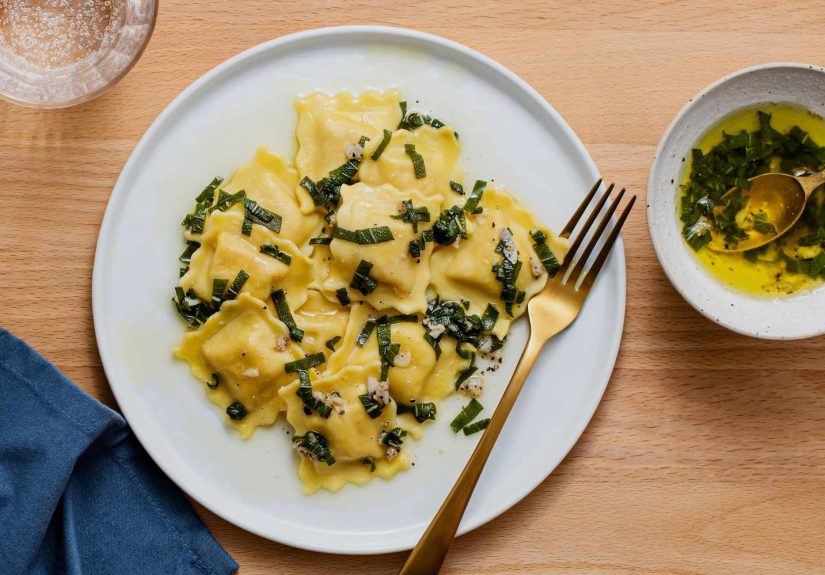
This is the classic move for a reason. The sauce loves soft, pillowy pastaespecially cheese ravioli,
butternut squash ravioli, mushroom tortellini, and potato gnocchi. Add pasta water and Parmesan for a creamy
(but not heavy) finish.
Roasted vegetables and winter squash
Spoon it over roasted butternut squash, sweet potatoes, cauliflower, Brussels sprouts, or carrots. The nutty butter
plays well with caramelized edges, while sage makes everything taste intentionally seasonal.
Proteins that want a simple upgrade
Drizzle over pan-seared chicken, pork chops, or white fish. If you add lemon and capers, you get a brighter,
brinier direction that feels like a cousin of classic browned-butter pan sauces.
Variations That Keep It Interesting (Without Making It Complicated)
-
Brown Butter Sage Parmesan Sauce: Emulsify with pasta water and finish with a generous
handful of Parmesan for a silky coating. -
Garlic + Lemon Brown Butter Sage: Add lemon juice at the end to brighten and balance richness.
Great with shrimp, greens, and broccolini. - Nutty Crunch Version: Stir in toasted walnuts or pine nuts just before serving.
- Spicy-Savory Twist: Add red pepper flakes, then toss with pasta and a squeeze of lemon.
-
Creamy (but still elegant): Add a small splash of cream after browning, then simmer briefly.
Ideal for mushrooms and chicken.
Troubleshooting: What to Do When Butter Gets Bossy
“My butter burned.”
If it smells bitter or looks very dark with black flecks, it’s burned. Start over. (I know. I’m sorry.)
Use medium heat, stir more, and pull it earlier next timecarryover heat continues browning even off the burner.
“My garlic tastes harsh.”
Garlic probably cooked too long or too hot. Add it off-heat, or use grated garlic so it perfumes quickly.
You can also mellow harshness with lemon juice and a pinch more salt.
“My sauce feels greasy.”
Butter sauces love a little water. For pasta, add hot pasta water and swirl to emulsify. For vegetables or proteins,
a tiny splash of warm water or lemon juice can help the sauce coat instead of slide.
“My sage is soggy instead of crispy.”
Make sure leaves are dry. Crisp them earlier and remove to a plate. Add them back right before serving so they keep
their crunch.
Make-Ahead, Storage, and Reheating
You can make the sauce ahead, cool it, and refrigerate it in an airtight container. It will solidify as it chills.
To reheat, warm gently over low heat until melted, then whisk or swirl to recombine the browned milk solids.
If it tastes too intense after chilling, add a small pat of fresh butter or a splash of warm water to soften the edge.
If you plan to store it, consider keeping the sage separate (crisp it fresh when you reheat) so it stays snappy
instead of chewy.
Kitchen Stories and Lessons Learned ( of Real-Life “Yep, That Happened” Energy)
Brown butter sage sauce looks simple on paperjust butter, sage, garlic, heatbut the first time you make it,
you learn why people talk about it like it’s a tiny kitchen rite of passage. It’s not hard; it’s just fast.
The lesson most home cooks learn immediately is that “I’ll just chop the garlic while the butter melts” is
the culinary equivalent of “I’ll just check one email.” You look away, you come back, and the butter has gone from
pale yellow to “smells like toasted hazelnuts” to “smells like a campfire made of dairy.” The best habit is to prep
first, then cook. Mise en place isn’t fancyit’s protective gear.
Another common moment: the sage. Fresh sage leaves are sturdy and fragrant, but they don’t forgive moisture.
If the leaves are even slightly wet, they sputter and steam instead of crisping, and you end up with limp herbs that
taste louder than they should. When the leaves are dry, though, something magical happens: they fry in seconds,
turning into crisp little flavor chips that make people stop mid-bite and ask, “What is that?”
(You get to say “sage,” very casually, like you always keep crispy herbs in your back pocket.)
Garlic is where the sauce becomes personal. Some people want one clovejust a hint, like a warm background note.
Others want three cloves and a commitment. The funny thing is that everyone agrees on the rule after they break it:
garlic goes in late. When garlic hits butter that’s still browning on high heat, it can scorch and turn bitter,
and suddenly your gorgeous nutty sauce tastes like a burned crouton that’s mad at you. Adding garlic off-heat feels
almost too gentle, but it works: the residual heat pulls out aroma without the bitterness.
Then there’s the “what do I put this on?” spiral. You make it for ravioli, but you end up spooning it onto
roasted squash, then drizzling it over chicken, then convincing yourself it’s a good idea on scrambled eggs
(it is), and next thing you know you’re looking at your toast like it owes you something.
The sauce has that rare superpower: it upgrades basic ingredients without covering them up. It doesn’t scream.
It nudges.
The final lesson is about balance. Brown butter can be rich, and sage can be boldso the best versions often have
a bright exit ramp. A squeeze of lemon, a spoonful of pasta water, or a snowy shower of Parmesan can pull the whole
sauce into harmony. Once you learn that, you stop following a recipe and start cooking by senses: color, aroma,
sound, and that tiny moment when everything smells like it’s going to be delicious.
That’s when this quick sauce stops being a “pasta thing” and becomes one of those reliable kitchen tricks you
reach for anytime dinner needs a little more wow and a lot less work.