Table of Contents >> Show >> Hide
- What Was Black Tuesday?
- What Caused Black Tuesday?
- 1) Margin buying (a.k.a. investing with “borrowed confidence”)
- 2) Speculation and “everyone’s a stock picker now” energy
- 3) Investment trusts and financial structures that amplified risk
- 4) Economic cracks behind the Roaring Twenties glow
- 5) Monetary and credit conditions: tightening the room right before the panic
- What Happened on Black Tuesday?
- How Black Tuesday Helped Kick Off the Great Depression
- Key Myths About Black Tuesday (Let’s Retire These)
- Why Black Tuesday Still Matters Today
- Conclusion
- Experiences Related to Black Tuesday (A 500-Word Add-On)
“Black Tuesday” sounds like a superhero’s origin story, but it’s really the day the American stock market’s
confidence did a swan diveOctober 29, 1929. On that Tuesday, panic selling exploded on the
New York Stock Exchange, trading volume hit records for the era, and prices fell fast enough to make the
ticker tape run late (which is basically the 1929 version of “the app is down”). The result: a historic
market collapse that didn’t single-handedly create the Great Depression, but absolutely helped turn a
shaky economy into a decade-long mess that re-shaped how the U.S. thinks about banks, investing, and
financial regulation.
What Was Black Tuesday?
Black Tuesday definition (plain English)
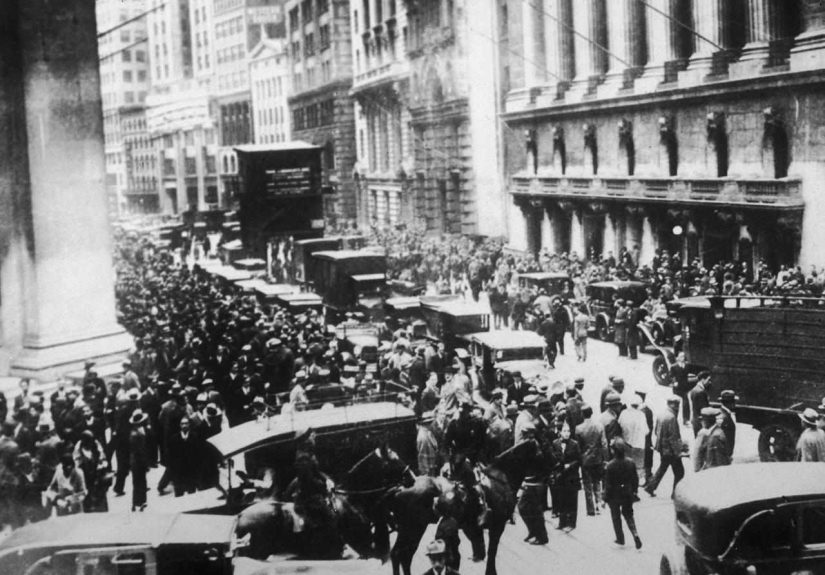
Black Tuesday refers to October 29, 1929, the day the U.S. stock market crash
reached a dramatic peak. Investors rushed to sell, buyers vanished, and stock prices dropped sharply across
the board. It’s the most famous single day of the broader Wall Street Crash of 1929, which
unfolded over several brutal sessions in late October.
Where Black Tuesday fits in the 1929 crash timeline
Black Tuesday wasn’t a one-day plot twist. It was the loudest cymbal crash in a whole drum solo:
- Late summer 1929: Stock prices had risen rapidly during the Roaring Twenties, and speculation was everywhere.
- Thursday, Oct. 24 (Black Thursday): A major selloff hit; bankers tried to steady the market.
- Monday, Oct. 28 (Black Monday): Another sharp drop as fear spread.
- Tuesday, Oct. 29 (Black Tuesday): The selling frenzy peaked, with enormous volume for the time and steep losses.
In other words: if Black Thursday was the warning light, Black Tuesday was the engine actually smoking.
What Caused Black Tuesday?
There isn’t one villain twirling a mustache here. Black Tuesday was the result of multiple pressures piling up:
speculative behavior, leverage, fragile banking structures, and an economy that had real weaknesses underneath
all the jazz-age sparkle.
1) Margin buying (a.k.a. investing with “borrowed confidence”)
One of the biggest drivers was marginbuying stocks with borrowed money. A common setup in the
late 1920s allowed investors to put down a small fraction (often around 10%) and borrow the rest.
When prices rose, margin made people feel like geniuses. When prices fell, margin turned into a trapdoor.
Here’s a simple example:
- You want $1,000 worth of stock.
- You put down $100 and borrow $900.
- If the stock rises 10%, you gain $100doubling your cash (before costs). High fives all around.
- If the stock falls 10%, your $100 is gone. And you may still owe interest and fees.
Worse: when prices drop enough, brokers issue margin calls (requests for more cash or collateral).
If you can’t pay, your stocks get soldright into a falling market. That creates a feedback loop: falling prices
trigger forced selling, which pushes prices down further.
2) Speculation and “everyone’s a stock picker now” energy
The late 1920s had a contagious belief that markets only go up. Ordinary Americans entered the market in
growing numbers, often through brokers, margin accounts, and investment pools that promised easy gains.
The mood wasn’t “careful long-term investing.” It was “why would I not be rich by Friday?”
That kind of optimism can inflate prices beyond what corporate profits realistically justify. Once doubt spreads,
optimism flips to fearand fear is faster than rational analysis.
3) Investment trusts and financial structures that amplified risk
The 1920s featured booming “investment trusts” (early cousins of modern funds). Some were legitimate and diversified.
Others piled on leverage, cross-holdings, and hype. When the market fell, trusts could slide harder than the stocks
inside them, because their structure magnified losses.
4) Economic cracks behind the Roaring Twenties glow
The Roaring Twenties were realmass production expanded, consumer goods spread, and optimism was high.
But beneath the confetti were structural issues:
- Uneven income distribution: Not everyone shared the boom equally, limiting broad-based purchasing power.
- Overproduction in some sectors: Businesses could produce more than consumers could absorb at stable prices.
- Farm economy stress: Many farmers struggled with low commodity prices and heavy debt even before 1929.
When a market built on confidence meets an economy with weak spots, confidence becomes a fragile bridge.
5) Monetary and credit conditions: tightening the room right before the panic
The Federal Reserve and broader credit conditions mattered. As concerns grew about excessive speculation,
tighter money and shifting credit availability contributed to a more fragile environment. Once selling began,
fragile credit conditions made it harder to stabilize confidence.
What Happened on Black Tuesday?
A day of volume, panic, and vanishing buyers
On Black Tuesday, trading volume surged to levels the exchange’s systems could barely process. Prices fell sharply,
and in some cases sellers struggled to find buyers at any reasonable price. This wasn’t just “people took profits.”
This was “people wanted out now.”
One detail that captures the chaos: the ticker tape lagged behind real-time trading, meaning people across the country
didn’t even know the current prices for hours. Imagine trying to make a decision when your “live” quote is actually
from earlier in the afternoon. It’s like playing a video game with lag… except your savings are the controller.
Did the market crash instantly create the Great Depression?
Not instantlyand that’s important. The crash was a major shock, but the Great Depression became “Great” because the
damage spread and deepened through the economy. Banking crises, shrinking credit, business failures, and collapsing
consumer demand turned a severe downturn into a long catastrophe.
How Black Tuesday Helped Kick Off the Great Depression
If Black Tuesday was the match, the Great Depression was the firestorm that followed because the “forest” was dry.
Here are the main pathways from crash to depression:
1) Wealth shock: confidence (and spending) fell off a cliff
When stock values dropped, households that had investedespecially those on marginsaw wealth disappear quickly.
Even people who didn’t own stocks felt the mood shift. Businesses pulled back on expansion, consumers delayed purchases,
and the optimism that fueled growth evaporated.
2) Banking stress and failures intensified the downturn
In the early 1930s, waves of bank distress and failures spread financial panic. Bank runs and collapses destroyed savings,
cut lending, and made it harder for businesses to finance operations. When credit dries up, even healthy companies can fail
because they can’t meet payroll or restock inventory.
3) The credit crunch: fewer loans, fewer jobs, fewer customers
A stock market crash can hurt confidence. A banking crisis can hurt the plumbing of the economy. Together, they’re brutal:
fewer loans mean less business activity; less business activity means layoffs; layoffs mean lower consumer demand; lower demand
leads to more business cuts. That cycle can spiral.
4) Policy responses and global fragility
The early 1930s included policy decisions and international monetary constraints that made recovery harder.
The global financial system was fragile, and the U.S. economy was deeply connected to global trade and capital flows.
The crash didn’t happen in a vacuum; it happened in a world where one major economy stumbling could pull others down.
Key Myths About Black Tuesday (Let’s Retire These)
Myth 1: “Black Tuesday was the only crash day.”
Reality: It was the most famous day, but it was part of a sequence that included Black Thursday and Black Monday.
Think of it as the climax, not the entire movie.
Myth 2: “The crash alone caused the Great Depression.”
Reality: The crash was a huge trigger and symbol, but banking panics, collapsing credit, and broader economic weaknesses
helped turn a downturn into a decade-long depression.
Myth 3: “Only rich Wall Street guys were affected.”
Reality: Plenty of middle-class families participated through brokers and margin accounts, and the downstream effects
job losses, bank failures, and business shutdownshit across society.
Why Black Tuesday Still Matters Today
1) Leverage is excitinguntil it’s not
Margin can multiply gains, but it also multiplies losses and can trigger forced selling at the worst moment.
Black Tuesday is the classic reminder that debt-fueled investing can turn a normal decline into a stampede.
2) Markets run on psychology as much as math
Fundamentals matter, but so does confidence. When trust disappears, prices can move faster than spreadsheets.
Black Tuesday is a case study in how fear can become its own economic force.
3) Financial safety nets didn’t appear by magic
The Great Depression era helped drive major reforms, including deposit insurance and bank regulation changes.
Modern systems aren’t perfect, but they were built in response to real painand Black Tuesday is part of that origin story.
Conclusion
Black Tuesday is remembered because it captured a national mood swing in a single date: from “prosperity forever” to
“wait… can this break?” It was the peak panic day of the 1929 crash, fueled by speculation, margin buying, and a fragile
financial environment. And while the Great Depression wasn’t caused by one trading session alone, Black Tuesday helped
shove a vulnerable economy into a historic collapseone that reshaped American finance for generations.
Experiences Related to Black Tuesday (A 500-Word Add-On)
Numbers tell you what happened on Black Tuesday. Human experiences tell you what it felt like.
And the emotional whiplash of late October 1929 shows up again and again in accounts from the era: confusion first,
then disbelief, then a kind of stunned quiet where people try to do normal life while realizing “normal” has changed.
In big cities, many people experienced the crash indirectlythrough crowds, rumors, and the sudden seriousness of
everyday conversations. Office workers who had been swapping stock tips like baseball cards found themselves swapping
darker updates: “Did you hear what happened to that bank?” “My neighbor says his broker won’t pick up.” The social energy
shifted fast, and not always because someone personally owned shares. Even without a brokerage account, you could feel the
anxiety ripple through workplaces and shops.
For families who had invested, the experience often hinged on margin. Some people remembered the stomach-drop moment of
realizing they didn’t just “lose money”they might owe money. That difference matters. Losing $500 hurts. Owing $500 when
you don’t have it is a new kind of fear, and it changes decisions immediately: postpone purchases, cancel plans, stop
talking about “next year,” start talking about “this week.”
Small business owners described a different kind of shock: customers didn’t vanish overnight, but hesitation did.
A hardware store might still sell nails, but big-ticket purchases slowed. A clothing shop might still see foot traffic,
but fewer bags left the store. Owners noticed more “I’ll come back later” and fewer “I’ll take it.” That shiftsubtle at
firstcan be devastating because many businesses rely on steady cash flow, not perfect long-term forecasts.
Bank experiences became especially intense as the early 1930s unfolded. People lined up to withdraw savings not because
they wanted cash for a purchase, but because they wanted certainty. In some accounts, the line itself created fear:
if you see a line outside a bank, you think, “Do they know something I don’t?” That’s how panic can spread without a single
official announcement. The experience wasn’t always dramatic; sometimes it was painfully ordinaryquiet faces, tight grips
on passbooks, and the kind of silence that tells you everyone is doing mental math.
Over time, these experiences shaped a lasting cultural lesson: the stock market is not just a scoreboard for rich investors;
it’s connectedthrough confidence, credit, jobs, and banksto everyday life. Black Tuesday became a shorthand warning
precisely because so many people could point to a moment when the world felt like it tilted. The details differedan investor’s
margin call, a shop owner’s slow week, a family’s decision to save more and spend lessbut the theme was consistent:
when trust breaks, the economy doesn’t just slow down. It feels different to live inside it.