Table of Contents >> Show >> Hide
- Why This Is the Best Cranberry Cobbler Recipe
- Ingredients for Homemade Cranberry Cobbler
- How to Make Cranberry Cobbler
- Recipe Snapshot
- Fresh vs. Frozen Cranberries: Which Works Best?
- Why Orange Makes Cranberry Cobbler Better
- Tips for the Best Cranberry Cobbler
- Serving Ideas for Cranberry Cobbler
- Variations to Try
- How to Store and Reheat Cranberry Cobbler
- Can You Make Cranberry Cobbler Ahead?
- Common Cranberry Cobbler Mistakes
- Personal Experience: What I Learned Making Cranberry Cobbler
- Conclusion
Some desserts enter the room wearing a tuxedo. Cranberry cobbler arrives in a cozy sweater, carrying a bubbling baking dish and saying, “I brought ice cream.” That is exactly why this cranberry cobbler recipe deserves a permanent spot in your holiday dessert rotation. It is bright, tart, buttery, rustic, and wonderfully forgiving. No pie crust gymnastics. No fancy pastry bag. No dessert drama. Just ruby-red cranberries tucked under a golden biscuit topping until the whole kitchen smells like butter, orange zest, and good decisions.
The best cranberry cobbler is not simply “cranberry pie without the pie.” It has its own personality. Cranberries are bold little berries with serious attitude, so they need the right balance of sugar, citrus, spice, and texture. Too much sugar and the dessert becomes flat. Too little and your guests may politely ask whether this is a side dish for turkey. The sweet spot is a jammy, tangy filling with a soft, golden topping that soaks up the juices without turning soggy.
This guide explains how to make cranberry cobbler from scratch, why the recipe works, what ingredients matter most, and how to serve it like you meant to impress people all along. Whether you are baking for Thanksgiving, Christmas, a winter dinner party, or a random Tuesday that needs improvement, this homemade cranberry cobbler is simple enough for beginners and delicious enough for the dessert table spotlight.
Why This Is the Best Cranberry Cobbler Recipe
A great cobbler needs contrast. The filling should bubble and thicken into a glossy fruit layer, while the topping should bake into something tender, buttery, and lightly crisp at the edges. Cranberries are especially good for cobbler because they pop as they bake, releasing tart juice that becomes naturally saucy. Add orange zest, brown sugar, a touch of cinnamon, and a small amount of cornstarch, and you get a filling that tastes festive without trying too hard.
This recipe uses fresh or frozen cranberries, which makes it practical far beyond the holiday season. It also uses a drop-biscuit topping, not a cake mix topping. Cake-style cobblers can be tasty, but cranberries have enough personality to handle a more old-fashioned biscuit crown. The topping is soft in the center, golden on top, and slightly craggy, which is exactly what a cobbler topping should be. Those little uneven peaks are not mistakes. They are character. Dessert character, the best kind.
Ingredients for Homemade Cranberry Cobbler
For the Cranberry Filling
- 5 cups fresh or frozen cranberries
- 3/4 cup granulated sugar
- 1/4 cup light brown sugar
- 1/3 cup orange juice
- 1 tablespoon orange zest
- 1 tablespoon cornstarch
- 1 teaspoon vanilla extract
- 1/2 teaspoon ground cinnamon
- 1/4 teaspoon kosher salt
- 1 tablespoon unsalted butter, cut into small pieces
For the Biscuit Cobbler Topping
- 1 1/2 cups all-purpose flour
- 1/3 cup granulated sugar
- 1 1/2 teaspoons baking powder
- 1/4 teaspoon baking soda
- 1/2 teaspoon kosher salt
- 6 tablespoons cold unsalted butter, cubed
- 1/2 cup cold buttermilk
- 1 large egg
- 1 teaspoon vanilla extract
- 1 tablespoon coarse sugar, for topping
How to Make Cranberry Cobbler
Step 1: Prepare the Baking Dish
Preheat the oven to 375°F. Lightly butter a 9-inch square baking dish or a 2-quart baking dish. Place the dish on a rimmed baking sheet. This is not optional unless you enjoy cleaning cranberry syrup from the bottom of your oven while questioning your life choices. The baking sheet catches any bubbling juices and keeps the oven peaceful.
Step 2: Make the Cranberry Filling
In a large bowl, combine the cranberries, granulated sugar, brown sugar, orange juice, orange zest, cornstarch, vanilla, cinnamon, and salt. Stir until the cranberries are evenly coated. If you are using frozen cranberries, do not thaw them first. Add them straight from the freezer and give the filling a few extra minutes in the oven if needed.
Pour the cranberry mixture into the prepared baking dish. Dot the top with small pieces of butter. As the cobbler bakes, the butter melts into the fruit and helps create a richer, silkier filling. It is a small detail, but small details are how desserts become the ones people request again next year.
Step 3: Make the Biscuit Topping
In a medium bowl, whisk together the flour, sugar, baking powder, baking soda, and salt. Add the cold cubed butter. Use a pastry cutter, fork, or your fingertips to work the butter into the flour until the mixture looks like coarse crumbs with a few pea-sized pieces. Those butter pieces help create a tender, flaky topping.
In a separate small bowl, whisk together the buttermilk, egg, and vanilla extract. Pour the wet mixture into the dry ingredients and stir just until a soft dough forms. Do not overmix. Biscuit dough likes a gentle hand. Treat it like a sleepy cat: handle it too much and it gets cranky.
Step 4: Assemble the Cobbler
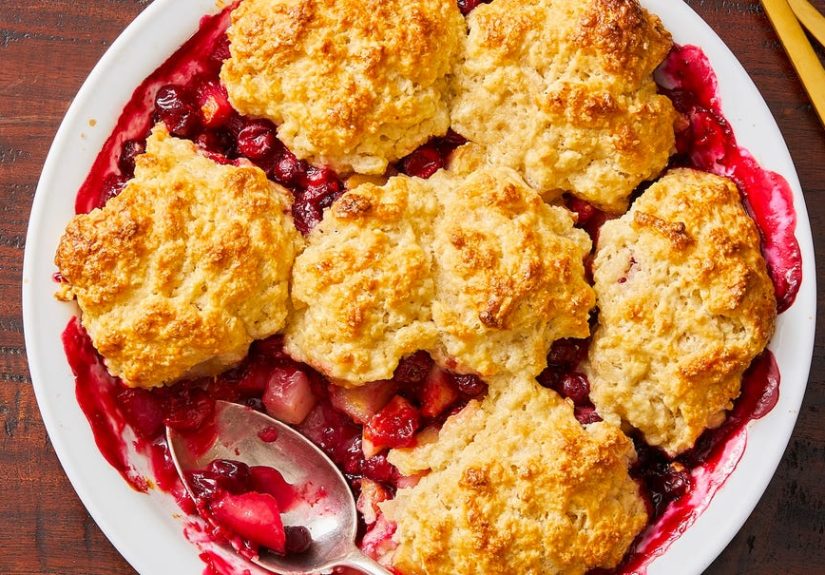
Drop spoonfuls of biscuit dough over the cranberry filling. Leave a few small gaps between the mounds of dough so the cranberry juices can bubble up as the cobbler bakes. This helps the topping cook evenly and gives the dessert that classic rustic cobbler look. Sprinkle coarse sugar over the biscuit topping for a lightly crunchy finish.
Step 5: Bake Until Golden and Bubbling
Bake the cranberry cobbler for 40 to 50 minutes, or until the filling is bubbling around the edges and the biscuit topping is golden brown. If the topping browns too quickly, loosely tent the dish with foil during the last 10 minutes. The cobbler is done when the center of the topping is fully baked and no longer doughy underneath.
Step 6: Cool Before Serving
Let the cobbler cool for at least 20 to 30 minutes before serving. This short rest allows the cranberry filling to thicken. If you scoop it immediately, it will still taste amazing, but it may run across the plate like it is late for a meeting. Warm cobbler should be spoonable, glossy, and jammy.
Recipe Snapshot
- Prep time: 20 minutes
- Bake time: 40 to 50 minutes
- Total time: About 1 hour 10 minutes
- Servings: 8
- Best served: Warm with vanilla ice cream, whipped cream, or crème fraîche
Fresh vs. Frozen Cranberries: Which Works Best?
Fresh cranberries are wonderful when they are in season, especially during fall and early winter. Look for berries that are firm, shiny, and brightly colored. Avoid berries that are soft, wrinkled, or bruised. Fresh cranberries have a lively snap and a clean tart flavor that works beautifully in cobbler.
Frozen cranberries are just as useful for this recipe. In fact, they are one of the easiest ways to make cranberry cobbler when fresh berries are no longer in stores. Use them straight from the freezer. Thawing can make them release too much liquid before baking, which may thin the filling. If your frozen cranberries are clumped together, tap the bag gently on the counter to separate them before measuring.
Why Orange Makes Cranberry Cobbler Better
Cranberry and orange are a classic pair for a reason. Cranberries bring tartness and color; orange adds sweetness, fragrance, and brightness. The zest is especially important because it contains aromatic oils that make the filling taste fresher. Orange juice adds flavor and helps create enough liquid for the cranberries to simmer and soften in the oven.
If you do not have oranges, you can use lemon zest and a splash of apple cider. The flavor will be slightly sharper, but still delicious. For a warmer holiday version, add a pinch of ground ginger or nutmeg. For a more grown-up dessert, stir one tablespoon of orange liqueur into the filling. Just do not overdo the spices. Cranberries are the star here; cinnamon is the backup singer, not the lead vocalist.
Tips for the Best Cranberry Cobbler
Use Enough Sugar, But Not Too Much
Cranberries are naturally tart, so sugar is necessary. However, the goal is balance, not candy. This recipe uses both granulated sugar and brown sugar. Granulated sugar keeps the flavor clean, while brown sugar adds a little caramel warmth. Taste preferences vary, so if you love a sweeter dessert, add two extra tablespoons of sugar to the filling.
Do Not Skip the Cornstarch
Cornstarch helps the cranberry juices thicken into a glossy sauce. Without it, the filling can become watery. One tablespoon is enough for a jammy texture without making the filling stiff. The cobbler should spoon easily, not slice like gelatin.
Keep the Butter Cold
Cold butter is the secret to a tender biscuit topping. When the butter melts in the oven, it creates small pockets in the dough. That gives the topping a better texture and a richer flavor. If your kitchen is warm, place the mixed dry ingredients and butter in the refrigerator for 10 minutes before adding the buttermilk mixture.
Leave Gaps in the Topping
Covering the fruit completely can trap steam and make the topping gummy underneath. Drop the biscuit dough in mounds and let some cranberry filling peek through. Those bubbling red pockets are part of the charm. They also tell you when the filling is properly cooked.
Serving Ideas for Cranberry Cobbler
The classic move is warm cranberry cobbler with vanilla ice cream. The cold cream melts into the tart filling, and suddenly everyone at the table becomes quiet in the way people do when dessert is doing its job. Whipped cream is lighter and also excellent. Crème fraîche or lightly sweetened Greek yogurt adds tang and makes the dessert feel a little more sophisticated.
For a holiday table, serve cranberry cobbler after turkey, ham, roast chicken, or a cozy vegetarian main dish. It is less heavy than pecan pie and less fussy than layer cake. It also looks beautiful in the baking dish, especially with ruby filling bubbling around golden biscuit peaks. Add a dusting of powdered sugar just before serving if you want it to look snowy and festive.
Variations to Try
Cranberry Apple Cobbler
Add two cups of peeled, chopped apples to the cranberry filling. Firm apples such as Granny Smith, Honeycrisp, or Braeburn work best. Apples mellow the tartness and make the cobbler a little sweeter and softer.
Cranberry Pear Cobbler
Replace one cup of cranberries with two chopped ripe pears. Pears add floral sweetness and pair nicely with ginger. Add 1/4 teaspoon ground ginger to the filling for a cozy winter flavor.
Cranberry Pecan Cobbler
Stir 1/2 cup chopped toasted pecans into the biscuit topping or sprinkle them over the top before baking. Pecans add crunch and a nutty flavor that works especially well with brown sugar.
Cranberry Cobbler with Oat Crumble
If you prefer a crisp-style finish, replace half of the biscuit topping with a simple oat crumble made from oats, flour, brown sugar, butter, and cinnamon. The result is part cobbler, part crisp, and fully welcome at breakfast the next day.
How to Store and Reheat Cranberry Cobbler
Let leftover cranberry cobbler cool completely, then cover the dish tightly or transfer portions to an airtight container. Refrigerate for up to four days. The topping will soften slightly as it sits, but the flavor gets deeper and more jammy.
To reheat, warm individual servings in the microwave for 30 to 45 seconds. For a crisper topping, reheat the cobbler in a 325°F oven for 12 to 15 minutes. You can also enjoy it chilled, especially with yogurt. Is it technically breakfast? That depends on how strict your household is. In my professional dessert opinion, fruit plus biscuit equals morning potential.
Can You Make Cranberry Cobbler Ahead?
Yes, but the best method is to prepare the filling and topping separately. Mix the cranberry filling and refrigerate it in the baking dish for up to 24 hours. Make the biscuit topping, cover it, and refrigerate it separately. When ready to bake, spoon the topping over the filling, sprinkle with coarse sugar, and bake as directed. You may need to add 5 extra minutes if the filling is very cold.
Avoid fully assembling the cobbler too far in advance because the biscuit topping can absorb moisture from the fruit. Freshly assembled cobbler gives you the best contrast between bubbling filling and tender topping.
Common Cranberry Cobbler Mistakes
The Filling Is Too Tart
Cranberries vary in sharpness. If your cobbler tastes too tart, serve it with vanilla ice cream or sweetened whipped cream. Next time, add an extra two to four tablespoons of sugar to the filling.
The Filling Is Too Runny
The cobbler may need more cooling time. Hot fruit fillings look looser right out of the oven. If it remains runny after cooling, the cranberries may have released extra liquid, especially if frozen. Add another teaspoon of cornstarch next time.
The Topping Is Doughy
The topping may have been too thick in the center or placed too tightly over the fruit. Use smaller spoonfuls of dough, leave gaps, and bake until the center is fully cooked. If the top browns before the inside is done, cover loosely with foil and continue baking.
Personal Experience: What I Learned Making Cranberry Cobbler
The first time I made cranberry cobbler, I treated cranberries like blueberries with a holiday outfit. That was my first mistake. Cranberries are not mild little background berries. They are loud, tart, and very committed to being noticed. I tossed them with a polite amount of sugar, added a topping, baked the dish, and served it proudly. One bite later, everyone at the table made the same face: cheerful panic. It was edible, but it had the personality of cranberry sauce that had missed its calling as a lemon wedge.
After a few rounds of testing, the lesson became clear. Cranberry cobbler needs balance from several directions. Sugar softens the tartness, but sugar alone is not enough. Orange zest gives fragrance. Brown sugar adds warmth. Salt keeps the filling from tasting flat. Butter rounds the edges. A little cornstarch helps the juices behave themselves. Once those pieces are in place, cranberry cobbler becomes something special: bright but not harsh, sweet but not boring, rustic but still impressive.
I also learned that the topping matters more than people think. A cobbler topping should not be a dry hat sitting on fruit. It should be tender enough to absorb some juice, sturdy enough to hold its shape, and golden enough to make you want the corner piece. Cold butter made a big difference. So did buttermilk. The buttermilk brought a gentle tang that worked beautifully with the cranberries, while the egg helped the topping bake up soft and rich.
Another useful experience: do not chase perfection when dropping the biscuit dough. The first few times, I tried to make the topping neat and symmetrical, like a cobbler wearing a business suit. But cobbler looks best when it is a little uneven. Big spoonfuls, small spoonfuls, bubbling fruit peeking through the cracksthat is the whole point. The dessert should look homemade in the most flattering way, like it came from a kitchen where people laugh loudly and refill coffee without asking.
Serving temperature also matters. Straight from the oven, cranberry cobbler smells so good that waiting feels unreasonable. Still, give it at least 20 minutes. During that time, the filling thickens from lava into sauce, and the topping settles into its best texture. Serve it warm, not scorching. Add vanilla ice cream if you want classic comfort, whipped cream if you want lightness, or crème fraîche if you want people to think you read fancy food magazines in a very relaxed way.
The best part about this cranberry cobbler recipe is that it feels festive without being limited to one holiday. Yes, it belongs on a Thanksgiving or Christmas table. But it also works after a simple roast chicken dinner, at a winter brunch, or as a make-ahead dessert for friends. It is colorful, affordable, and easier than pie. And unlike pie, it does not judge your crust-crimping skills. That alone makes it a keeper.
Conclusion
The best cranberry cobbler recipe is all about balance: tart cranberries, enough sweetness, a little citrus, a buttery biscuit topping, and just enough thickener to turn the fruit juices into a glossy filling. It is simple to prepare, beautiful to serve, and flexible enough for apples, pears, pecans, or warm spices. Most importantly, it delivers that cozy homemade dessert feeling without requiring advanced baking skills.
If you want a holiday dessert that feels bright, comforting, and slightly unexpected, cranberry cobbler is the answer. It is easier than pie, more interesting than a plain cake, and bold enough to stand up to a scoop of vanilla ice cream. In other words, it is exactly the kind of dessert that disappears while everyone claims they were “just having a small spoonful.”