Table of Contents >> Show >> Hide
- What Exactly Was Found Under the Store?
- How Do Skeletons End Up Under a Department Store?
- The Archaeology: Not Just “Digging,” But Documentation
- Brick Burial Vaults: What They Tell Us (Without Saying a Word)
- Was the Medieval Church Found?
- And Then There’s the Roman Layer
- What Can 317 Individuals Teach Us About the Past?
- Why This Find Matters Beyond One City
- What Happens Next to the Site and the Story?
- Conclusion: A Department Store, a Churchyard, a City’s Memory
- Experiences: What It Feels Like When the Past Shows Up Under Your Feet
If you’ve ever joked that a department store has “layers,” you probably meant clearance racks, seasonal décor, and that one aisle that never quite makes sense.
Archaeologists in Gloucester, England, discovered a very different kind of layering beneath a former department store site: the recorded remains of 317 people,
along with 83 brick-lined burial vaults and evidence of long-gone churches and even older Roman-era activity.
The headline is attention-grabbing (because, yes, 317 is a lot), but the real story is less “mystery thriller” and more “urban history in 3D.”
It’s about how modern cities are built on centuries of everyday lifeworship, work, illness, rebuilding, redevelopmentand how archaeology helps translate
those buried chapters with care, context, and receipts (sometimes literal ones, but usually pottery and foundations).
What Exactly Was Found Under the Store?
During excavations tied to a redevelopment project at the site of the former Debenhams/Bon Marché department store in King’s Square, Gloucester,
archaeologists documented and, where necessary, carefully excavated burials that had been part of historic church grounds.
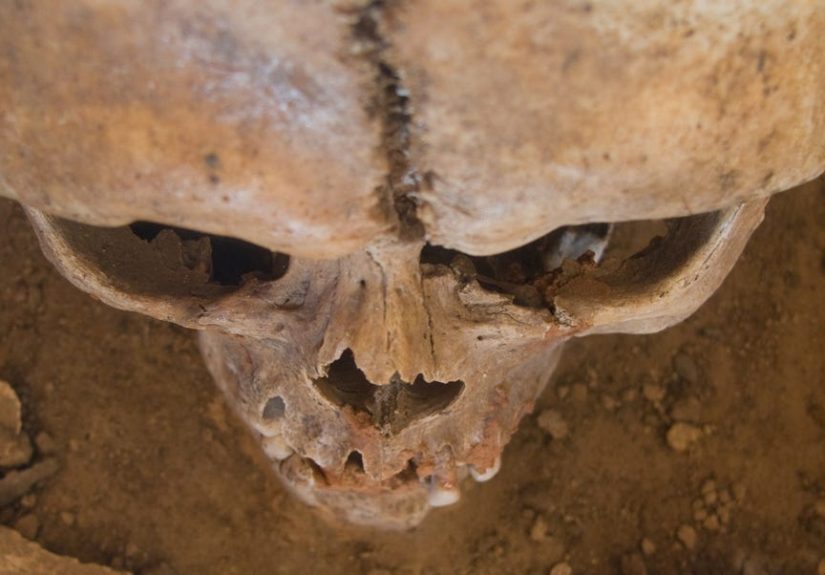
The excavation recorded 317 skeletons in total and identified 83 brick-lined burial vaults.
Two time periods, one tight city footprint
The remains weren’t described as a single catastrophic event. Instead, they reflect a long-used burial landscape: approximately
150 post-medieval burials were identified in the courtyard area, and deeper excavations revealed around
170 earlier burials provisionally linked to the medieval churchyard.
In other words: centuries of city life, recorded one burial at a time, in a space later repurposed for retail and now for education.
How Do Skeletons End Up Under a Department Store?
Short version: cities evolve. Long version: cities evolve… and they rarely put up a giant sign saying, “By the way, there’s a medieval churchyard under aisle nine.”
In Gloucester’s case, the excavation area had previously been occupied by St Aldate’s Churcha church originally founded in the medieval period.
Documentary sources indicate the medieval church was demolished in the mid-1650s, with some of its stone reused to repair other damaged churches.
Later, a new parish church was constructed in the mid-18th century and survived until the early 1960s,
when it was demolished to make way for the department store.
Here’s the part that feels especially “modern city”: many of the brick-lined burial vaults had already been cleared in the mid-1950s
before construction of the department store’s goods/service area. That means later development didn’t just build over the pastit sometimes removed parts of it,
leaving an incomplete puzzle for today’s archaeologists to reconstruct.
The Archaeology: Not Just “Digging,” But Documentation
Urban archaeology is less like treasure hunting and more like high-stakes note-takingexcept your “notes” might include foundations, lime plaster,
brick vaults, and human remains that require strict legal and ethical handling.
Licenses, permissions, and respectful process
Burials impacted by development were recorded and carefully excavated under formal permissions, including a burial license issued by the
Ministry of Justice and a faculty granted by the Diocese of Gloucester. That’s not red tape for the sake of itit’s a framework designed to ensure
dignity, traceability, and accountability when human remains are involved.
Brick Burial Vaults: What They Tell Us (Without Saying a Word)
Brick-lined vaults are more than “old architecture.” They can signal changing burial customs, evolving church layouts, and shifting social patterns.
Vault construction takes resources and planning, and it tends to reflect particular periods and preferences in how communities cared for their dead.
In Gloucester, the excavation fully revealed the footprint of the post-medieval church through limestone and brick foundations,
plus the cluster of vaults within and around the church. That spatial detail matters because it helps archaeologists map how the site functioned:
where the church stood, where the burial ground extended, and how later rebuilding altered the footprint over time.
Was the Medieval Church Found?
Interestingly, the excavation did not confirm the full footprint of the medieval church itself in a clean, “here are the walls” way.
But archaeologists identified a limestone wall with surviving lime plaster that most likely represents part of the earlier church.
If that interpretation holds, it suggests the medieval and post-medieval churches were not built in exactly the same placemeaning the site’s “center”
shifted over time as Gloucester rebuilt and repurposed its core.
The team also recovered worked stone objects consistent with the medieval church, including part of a mid-14th-century window arch with internal tracery.
These kinds of architectural fragments are the opposite of random: they’re evidence you can measure, compare, and use to reconstruct a vanished building’s style and era.
And Then There’s the Roman Layer
If the medieval and post-medieval discoveries weren’t enough, excavation in the basement and external service courtyard areas also produced evidence of
Roman activity. Features reported include walls where stone had been systematically removed (likely reused elsewhere),
timber stakes and planking, a metaled courtyard surface, and pits/ditcheselements comparable to findings recorded during mid-20th-century work in the area.
This is the signature rhythm of a historic city center: Roman-era activity, then medieval church life, then post-medieval rebuilding, then 20th-century retail,
and now a new chapter as a university campus. Gloucester isn’t unique in having layerswhat’s notable is how clearly a single redevelopment site revealed them.
What Can 317 Individuals Teach Us About the Past?
When archaeologists study human remains, the goal isn’t spectacleit’s understanding. The people represented in this burial ground likely reflect
the everyday population of an urban parish across a long span of time: different ages, different life circumstances, different health outcomes.
That’s why scientists often focus on broad, respectful questions: How did diet change? What does dental health show? Are there patterns of stress or disease?
What does burial practice suggest about community structure?
A very human detail: teeth and the sugar story
Researchers involved with the project noted that the impact of increased sugar in the diet during the 16th century
could be visibly clear in dental health. That’s the kind of finding that makes the past feel close: not kings and castles, but ordinary mouths,
ordinary meals, and the slow arrival of new habits that changed bodies over generations.
Why This Find Matters Beyond One City
Discoveries like this are a reminder that redevelopment is also an opportunity. When construction teams, universities, and archaeologists coordinate well,
you can create something modern without bulldozing the story of what came before.
- For historians: the site refines what’s known (and unknown) about Gloucester’s churches and shifting urban footprint.
- For archaeologists: it adds a richly documented dataset spanning Roman activity through medieval and post-medieval life.
- For the public: it turns “local history” into something tangiblefoundations, artifacts, and carefully studied evidence.
The project also highlights a truth that doesn’t always make headlines: archaeology is often done on deadlines, in tight spaces, and in collaboration with
developers who need to keep moving. Good outcomes depend on planning, transparency, and respect for heritage and human remains.
What Happens Next to the Site and the Story?
Excavation is only the beginning. Post-excavation workscientific analysis, cataloging, conservation, reportingis where the story becomes readable.
Researchers indicated that full results of studies would be published in due course, and that retained stone objects are intended to be displayed on-site
so students, staff, and visitors can connect with the site’s history once the campus is operational.
That’s a powerful shift: instead of the past being boxed up and forgotten, it becomes part of the place’s identityan educational campus that literally
sits atop an older educational layer: a record of community life, belief, and change.
Conclusion: A Department Store, a Churchyard, a City’s Memory
“317 skeletons under a department store” sounds like a plot twist. In reality, it’s a geography lesson: city centers are not blank slates.
They’re palimpsestswritten on, erased, rebuilt, and written on again.
Gloucester’s find is remarkable for its scale and clarity, but its meaning is universal:
what we build today becomes the ground someone else will study tomorrow.
Experiences: What It Feels Like When the Past Shows Up Under Your Feet
Even if you’re not the one holding a trowel, discoveries like this create a strange, unforgettable kind of experiencepart curiosity, part humility,
part “I will never look at a basement the same way again.”
For construction crews, the experience often begins with a routine task that suddenly isn’t routine. A trench opens. The soil changes color.
A line appears that’s too straight to be natural. Work pauses, people gather, and you can almost feel the site switch modesfrom “jobsite” to “time capsule.”
In the best cases, there’s a quiet respect in that pause. Nobody’s cheering. It’s more like realizing you’ve walked into a library where the books are made of stone.
For archaeologists, urban excavations can feel like solving a puzzle while someone is already building the frame around you.
There’s noise, scheduling pressure, and the constant need to document every detail because once the next phase begins, you may never see that surface again.
It’s meticulous work, and it can be emotionally heavy when human burials are involved.
Many archaeologists talk about a professional mindset: you focus on method, context, and care.
The human side still sneaks in, thoughespecially when remains reflect everyday lives rather than famous names.
A burial aligned with a church wall. A pattern of wear in teeth. Small details that remind you these were people with routines, families, and worries.
For local residents, the experience can be a mix of pride and disorientation. Pride because their city matters enough to hold deep history.
Disorientation because the familiar placesparking lots, shopfronts, old department store entrancessuddenly have a second identity.
You might have bought a winter coat there years ago and never imagined a medieval churchyard was below your feet.
That mental “double exposure” changes how a city feels. Streets become timelines.
For students and visitors (especially once a campus is open), the experience can be uniquely grounding.
Universities talk about knowledge, research, and discoverythis site turns those words into architecture.
Imagine walking into a lecture and knowing the courtyard outside helped tell a 1,000-year health story.
That doesn’t make the past spooky; it makes it real. It’s a reminder that learning isn’t only about textbooksit’s also about place.
And yes, people will make jokesbecause humans cope with big feelings using humor.
The key is tone. There’s a world of difference between a silly pun and disrespect.
The most thoughtful reactions tend to be along the lines of: “This is wild… and also, wow, those were real lives.”
If anything, the experience of a discovery like this pushes communities toward a more mature kind of curiosity:
fascination that doesn’t forget dignity.
Finally, there’s the broader experience of perspective.
Modern life trains us to think in short cycles: sales seasons, building leases, five-year plans.
Archaeology forces a longer lens. A department store can come and go in a few decades.
A burial ground can hold centuries. When you realize both can occupy the same patch of landone above, one belowyou start to see how temporary “normal” really is.
It’s not a scary thought. It’s oddly comforting. The city changes, but the story continues.