Table of Contents >> Show >> Hide
- What Exactly Is an Antique French Bobbin Leg Milking Stool?
- Why This Stool Has Such Lasting Appeal
- Key Features to Look For When Buying One
- How Antique, Vintage, and Reproduction Pieces Differ
- Why Designers Love It in Modern Rooms
- Styling Ideas That Actually Work
- How to Care for an Old Wooden Stool Without Ruining It
- What Is It Worth?
- Living With an Antique French Bobbin Leg Milking Stool: The Experience
- Final Thoughts
Some furniture walks into a room and politely introduces itself. An antique French bobbin leg milking stool does not. It strolls in wearing a century of character, a little dust in the imagination, and the kind of quiet confidence only handmade furniture can pull off. Small? Yes. Humble? Technically. Forgettable? Absolutely not.
This kind of stool sits at the sweet spot where rustic utility meets decorative charm. It began life as a hardworking object, likely built for daily farm use, but today it has become a favorite among collectors, decorators, and anyone who likes their interiors to feel layered rather than showroom-perfect. The appeal is easy to understand: a low seat, turned bobbin legs, honest wood, visible age, and just enough French country romance to make even a modern room loosen its collar.
In today’s interiors, the antique French bobbin leg milking stool works as a sculptural accent, a practical perch, a plant stand, a bedside catchall, or the kind of conversation piece that makes guests ask, “Where did you find that?” It is proof that good design does not always arrive in giant dimensions. Sometimes it is twelve inches tall and still steals the scene.
What Exactly Is an Antique French Bobbin Leg Milking Stool?
Let’s break down the title, because every word is doing real work.
“Antique”
In the strict furniture world, antique usually means a piece is at least 100 years old. That matters, because many stools sold under this label online are genuinely old, while others are simply vintage, primitive-inspired, or mid-century rustic pieces borrowing the same silhouette. In other words, the phrase is sometimes used loosely in listings, but buyers should not use it loosely with their wallets.
“French”
French country furniture is beloved for balancing refinement and wearability. It is more relaxed than palace furniture, less fussy than formal salon pieces, and often rooted in natural materials, soft age, and handcrafted detail. A French milking stool usually feels earthy rather than aristocratic, but it still carries that unmistakable provincial charm: practical form, pleasing proportions, and a look that says, “Yes, I have seen a stone floor or two.”
“Bobbin Leg”
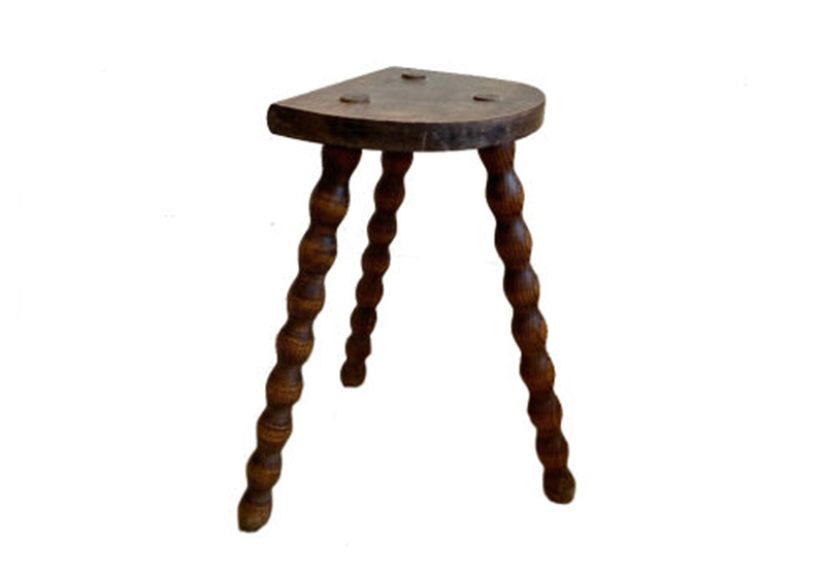
Bobbin legs, also called spool or turned legs in some decorating circles, feature rounded, repeated bulb-like shapes made on a lathe. They add rhythm, movement, and craftsmanship to even the simplest furniture form. Bobbin details have roots in older turned furniture traditions and keep cycling back into fashion because they bring texture without bulk. They are decorative, yes, but not precious. Think of them as jewelry for hardworking furniture.
“Milking Stool”
The milking stool was designed for function first. Traditionally low to the ground and often built with three legs for stability on uneven surfaces, it was made to be sturdy, portable, and easy to use in a barn or dairy setting. That practical origin is exactly what gives these stools their modern appeal. They were not trying to be beautiful. They just accidentally nailed it.
Why This Stool Has Such Lasting Appeal
The antique French bobbin leg milking stool succeeds because it combines three things buyers are always hunting for: scale, story, and texture.
First, scale. Not everyone has room for a monumental armoire or a dramatic farmhouse table. A small antique stool lets you add age and authenticity to a room without rearranging your entire life. It can tuck under a console, live beside a fireplace, or perch in a bathroom with a folded towel and a bar of fancy soap pretending not to be fancy.
Second, story. A milking stool has a past that feels tangible. Even when provenance is modest, the object itself tells you what it was for. The seat is worn where someone sat. The finish has thinned where hands lifted it. The legs are shaped for charm but built for work. That kind of visible history is a big reason collectors prefer old furniture over mass-produced lookalikes.
Third, texture. Modern interiors can get very smooth, very fast. Stone counters, sleek upholstery, flat cabinetry, polished fixtures, and then suddenly the room starts feeling like it is waiting for a software update. A worn wooden stool changes that. It introduces warmth, irregularity, and the priceless visual magic known as patina.
Key Features to Look For When Buying One
Not every low French stool with turned legs deserves a dramatic gasp. Here is what separates the compelling pieces from the merely cute ones.
1. Honest wear
Good antiques show use, but the wear should make sense. Expect softened edges, a rubbed seat, light shrinkage, old finish variation, and maybe a few nicks or old wormholes. What you do not want is aggressively fake distressing that looks as if someone attacked it with a chain during a coffee break.
2. Strong turning on the legs
Bobbin legs should feel rhythmic and balanced. On better examples, the turning is crisp enough to read clearly, even after decades of wear. If the stool also has stretchers, inspect how they join the legs. Those connections help with both stability and character.
3. Good proportions
Some milking stools are squat and chunky. Others are surprisingly elegant. The best ones feel grounded without looking clumsy. A nicely proportioned stool often reads as sculptural from across the room, which is exactly what makes decorators fall in love with them.
4. Surface quality
Original or old finish is usually more desirable than a glossy later refinish. Look for tonal variation in the wood, a dry glow instead of a plastic shine, and a surface that feels aged naturally rather than coated into submission.
5. Structural soundness
Charming wobble is still wobble. A stool can show age and still be solid. Check that the legs sit evenly, the seat is secure, and any repairs are stable. A tiny old repair may be acceptable. A dramatic sideways lean that requires emotional support is not.
How Antique, Vintage, and Reproduction Pieces Differ
This is where smart shopping begins. True antiques are generally 100 years old or older. Vintage versions may be mid-century or early 20th century and still very appealing, especially when they preserve the same rustic French character. Reproductions may mimic bobbin turning and old finishes, but they usually lack the subtle irregularities of handwork and long use.
Makers’ marks can help, though many primitive stools were never heavily marked. In those cases, construction details matter more: tool marks, hand-shaped variation, old joinery, natural seat wear, and finish depth. If a seller uses the word “antique,” ask for age, origin, wood type, dimensions, and close-up photos of the underside and joinery. Antique buying is a little like detective work, except with fewer trench coats and more wax.
Why Designers Love It in Modern Rooms
The magic of the antique French bobbin leg milking stool is that it plays nicely with almost everything. In a pure French country room, it feels native. In a rustic farmhouse interior, it feels essential. In a modern organic space, it becomes the one rough-edged piece that keeps the room from floating off into beige perfection.
It also works beautifully in layered interiors because it adds age without shouting. Put one beside a linen slipcovered chair and it looks collected. Place it under a contemporary console and it feels editorial. Use it in a kitchen corner with a ceramic bowl on top and it becomes the sort of detail people mistake for good taste being effortless.
That is the funny thing about antiques. They are never effortless. Someone had to hunt for them, carry them home, and then pretend they just happened to be there all along.
Styling Ideas That Actually Work
As a bedside table
A low antique stool beside a bed brings instant softness and charm. Top it with a small stack of books, a candle, or a bud vase, and suddenly the room feels less purchased and more composed.
As a bathroom accent
In a bathroom, it can hold folded towels, a jar of bath salts, or a little dish for jewelry. The contrast between weathered wood and tile is especially good-looking.
As a plant stand
A leafy plant on an old stool is an almost unfairly easy decorating win. The stool lifts greenery off the floor while giving the arrangement more presence.
As a coffee-table companion
If your living room needs a small supporting player, a milking stool can sit beside a larger table and hold a drink, a remote, or one dramatic art book you absolutely intend to finish.
As a sculptural object
Sometimes the stool is the decor. No tray. No flowers. No styling gymnastics. Just let the form, turning, and patina do the talking.
How to Care for an Old Wooden Stool Without Ruining It
Antique furniture care should be thoughtful, not aggressive. Start with dry dusting using a soft cloth. Avoid soaking the wood, scrubbing with harsh cleaners, or slathering on random oils because the internet said your furniture needed “feeding.” Old wood is not a houseplant.
If the piece has an old finish, restraint is your friend. Excess polishing and improvised treatments can do more harm than good. A suitable paste wax may be used occasionally on appropriate finished surfaces, but not constantly, and not as a substitute for proper conservation judgment. The goal is preservation, not turning the stool into a slippery caramel-colored mirror.
Keep it out of extreme humidity shifts, direct heat vents, and long blasts of harsh sunlight. Wood moves with environmental changes, and antique joints can loosen when conditions swing too much. If the stool has active insect damage, serious splitting, or a failing structure, consult a qualified conservator or experienced restorer rather than a miracle product with suspiciously enthusiastic packaging.
What Is It Worth?
Value depends on age, authenticity, region, condition, wood type, design quality, and desirability. Primitive antique stools can be relatively accessible, but especially attractive examples with strong patina, excellent turning, and true age can command more attention and stronger prices. Low stools are also popular because they are easy to place, easy to ship, and easy to justify with the phrase, “It’s small, so it doesn’t really count.”
French examples with bobbin turning often sit in a very appealing niche: decorative enough for designers, simple enough for collectors of rustic furniture, and practical enough for everyday use. In short, they do not just decorate well. They market well.
Living With an Antique French Bobbin Leg Milking Stool: The Experience
The experience of owning an antique French bobbin leg milking stool is oddly emotional for such a small piece of furniture. At first, you buy it because it is charming. Maybe it has a worn round seat and those beautifully turned legs that look almost playful. Maybe the wood has that dry, mellow tone that only time seems able to produce. You bring it home thinking it will be an accent. Then, without asking permission, it becomes part of the room’s personality.
One of the pleasures of living with a piece like this is how often you notice it. A larger antique can dominate a room, but a little milking stool rewards attention in quieter ways. Morning light hits the turned legs and suddenly you see every curve. In the evening, the seat catches a shadow and the worn edges become more pronounced. You start appreciating details that would be lost on a brand-new object: a tiny dip in the seat, a softened corner, the slight irregularity of hand turning, the finish rubbed lighter where generations of use once happened.
There is also a tactile pleasure to it. Old wood feels different from new wood. It is less eager to impress and more comfortable in its own skin. When you move the stool from one room to another, you become aware of its weight, the steadiness of its build, and the smoothness that comes only from decades of handling. It does not feel disposable. It feels settled.
Another experience people rarely talk about is how adaptable the stool becomes. One week it is holding books beside a chair. The next week it is in the bathroom with towels. Then it migrates to the entry, where it somehow makes a basket and a pair of boots look intentional. That is the kind of versatility decorators love, but it is also why owners become attached to these pieces. They earn their place over and over again.
There is a deeper satisfaction, too, in knowing the stool was made for use rather than display. It was never supposed to be trendy. It was built to solve a practical problem, and yet here it is, many decades later, still useful and still beautiful. That gives it a kind of dignity modern furniture often struggles to fake. A reproduction may copy the silhouette, but it usually misses that feeling of continuity.
And then there is the storytelling factor. Guests ask about it. Not in the polite way people ask about a generic side table, but with genuine curiosity. “Is that old?” “Where did it come from?” “Was it really used for milking?” The stool starts conversations because it carries visible history. It feels personal even before it becomes yours.
Perhaps the best part of all is that it teaches restraint. Once you live with a piece that has real patina, honest wear, and graceful imperfection, it becomes harder to fall for furniture that looks too finished, too slick, or too eager to trend. The stool quietly raises your standards. It reminds you that beauty can be useful, that age can be attractive, and that the pieces with the strongest presence are not always the biggest ones in the room.
In that sense, an antique French bobbin leg milking stool is more than a decorative object. It is a lesson in texture, history, and lived-in style. Also, it is an excellent place to set a cup of coffee while pretending your home came together naturally.
Final Thoughts
The antique French bobbin leg milking stool is one of those rare pieces that feels equally at home in a collector’s eye and a decorator’s hand. Its beauty comes from proportion, craftsmanship, age, and purpose. It brings French country warmth, sculptural detail, and authentic patina into a room without requiring much space or any grand explanation.
Whether you are buying one for function, styling, or the simple joy of owning something that has survived long enough to become more beautiful, this stool earns its keep. It is modest furniture with major charm, and honestly, that is a combination worth milking.