Table of Contents >> Show >> Hide
- What We Actually Know About the Newborn Photos (And What We Don’t)
- Quick Refresher: Who Are Abby And Brittany Hensel?
- Why “Who Would Be the Mom?” Isn’t a One-Word Question
- The Medical Reality: Shared Body, Shared Stakes
- The Legal Reality: Parenthood Is Paperwork (And Paperwork Is Local)
- The Practical Reality: Parenting Would Be SharedBecause Their Life Already Is
- Why the Viral Question Can Be Harmful (Even When People “Mean Well”)
- So… Who Would Be the Mom? The Best Expert Answer
- Experiences: What People Miss When They Treat This Like a Trivia Question (Extra )
- Conclusion
The internet loves a mystery. The internet also loves an answer that fits in a comment box.
So when Abby and Brittany Henselfamous conjoined twins who’ve spent most of adulthood avoiding the spotlightwere photographed out in public with a newborn,
the group chat didn’t just wake up. It pulled an all-nighter, brewed espresso, and started playing amateur lawyer.
The question that went viral was blunt: If there’s a baby, who would be “the mom”?
And that’s exactly where we need to slow down. Because (1) the baby’s identity and relationship to the twins has not been publicly confirmed in a definitive way,
and (2) even in a hypothetical scenario, “mom” can mean at least three different things: biological, gestational, and legal.
Those don’t always matchconjoined or not.
Let’s unpack what’s known, what’s assumed, and what experts generally say when the law collides with rare anatomy and very normal human boundaries.
What We Actually Know About the Newborn Photos (And What We Don’t)
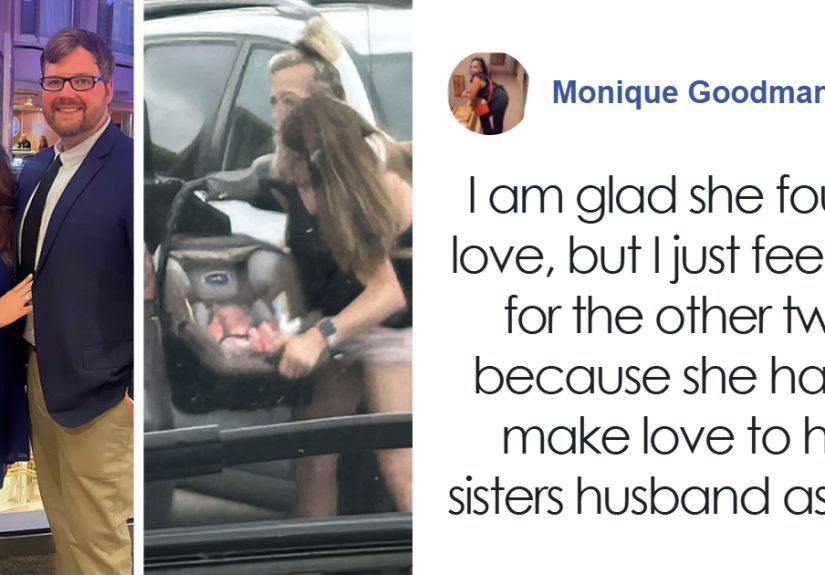
Recent coverage shows Abby and Brittany in public carrying a baby in a car seat during everyday errands and near the school where they work.
The images immediately fueled speculation that they had welcomed a child.
But here’s the key point: public sightings are not the same thing as a public announcement.
A newborn in someone’s arms could be their child, a relative’s child, a friend’s child, or a “please let me hold the baby for 45 seconds so you can find your keys” situation.
(Parents everywhere nodded so hard they pulled a neck muscle.)
Some outlets reported that the twins appeared to acknowledge the attention online with minimal wordingwithout confirming details like the baby’s identity or parentage.
Others reported that family members disputed whether certain social-media accounts were authentic.
The consistent theme across reliable reporting: the twins have not provided a detailed public explanation, and it’s worth respecting that boundary.
Quick Refresher: Who Are Abby And Brittany Hensel?
Abby and Brittany Hensel are American conjoined twins who became widely known through TV appearances and a TLC series.
They are a type of conjoined twins often described as dicephalic parapagustwo heads with one shared body.
In interviews and documentaries over the years, they’ve shown what their day-to-day looks like: teamwork, negotiation, and a level of coordination most of us can’t achieve with our own two hands.
They’ve also built a very normal adult life in many ways: school, careers, routines, and privacy.
In fact, much of the modern fascination with them comes from the contrast between how extraordinary their anatomy is and how ordinary their goals have always been:
independence, work they enjoy, relationships, andyesstarting a family in some form.
Why “Who Would Be the Mom?” Isn’t a One-Word Question
The viral question sounds simple, but it’s actually three questions wearing a trench coat:
- Biological mom: Who provides the egg (genetic material)?
- Gestational/birth mom: Who carries the pregnancy and gives birth?
- Legal mom: Who is recognized by law as the child’s parent (on paperwork, in custody, etc.)?
In many families, those three are the same person. In plenty of families (IVF, surrogacy, adoption, step-parenting), they’re not.
So when social media demands a single label, it’s already forcing a complicated reality into a too-small box.
The Medical Reality: Shared Body, Shared Stakes
Conjoined twins are rareand every case is anatomically unique
Major medical centers describe conjoined twinning as a rare outcome of identical twinning where the embryo does not fully separate.
Where twins are joinedand what organs are sharedvaries widely.
That variability is why doctors are cautious about sweeping statements. “Conjoined twins” is a category, not a blueprint.
So what about Abby and Brittany specifically?
Public reporting has described Abby and Brittany as sharing many organ systems and having one shared body below the neck.
Their exact reproductive anatomy is not something the public is entitled to “audit,” and reliable outlets typically avoid graphic or speculative detail.
What matters for the motherhood question is the broad principle:
if a pregnancy were medically possible, it would involve a shared body and shared health risks.
Translation: there’s no scenario where one twin would be “completely uninvolved.” Pregnancy affects the cardiovascular system, metabolism, mobility, sleep, pain levels,
and day-to-day functioning. In a shared body, those changes are shared in real time.
The Legal Reality: Parenthood Is Paperwork (And Paperwork Is Local)
Here’s where “expert reveals” headlines often oversimplify. In the United States, family law is largely state-based.
That means what is easy in one state can be complicated in another, and what is standard for most families can become novel when the situation is rare.
In general, who is the “legal mother”?
In many jurisdictions, the person who gives birth is recognized as the legal mother by default.
In assisted reproduction or adoption, parentage can be assigned through court orders, adoption decrees, or parentage judgments.
The law is built to answer practical questions: Who has rights? Who has responsibilities? Who can consent to medical care for the child?
If conjoined twins share one body and a child is born from that body, the “default” framework doesn’t map cleanly onto reality because there are two legal persons.
That’s not just a philosophical puzzleit’s a forms-and-systems puzzle.
Most forms assume one birthing parent. Abby and Brittany are not “most.”
So what would likely happen in the real world?
If a family like this sought clear legal parentage, they would almost certainly work with attorneys and (if needed) a family court to formalize it.
The most realistic outcome is not “pick one twin.” It’s “create a legal structure that matches the lived reality.”
That could mean:
- One twin is listed as the birthing parent, and the other becomes a legal parent through a second-parent adoption or parentage order (depending on state law).
- If there is a spouse, marital-parentage presumptions may apply, but courts still typically want clarity in unusual cases.
- Hospitals, vital-records offices, and courts coordinate to ensure the child’s identity documents are valid and usable (school enrollment, insurance, travel, etc.).
In other words, the “expert” answer is usually: it depends on the state, the paperwork, and what the family wantsbecause the law’s job is to reflect reality, not erase it.
The Practical Reality: Parenting Would Be SharedBecause Their Life Already Is
Even if you ignore biology and the law, there’s a simpler truth: Abby and Brittany have lived their entire lives as a highly coordinated team.
The idea that one of them would be “the mom” while the other is… what, a decorative houseplant?… doesn’t match anything we’ve ever seen from how they operate.
Day-to-day parenting is a thousand tiny actionsfeeding schedules, stroller logistics, school pickup, pediatric appointments,
the ongoing quest to locate the one pacifier that isn’t mysteriously teleporting to another dimension.
In a shared body, those actions are inherently shared.
It may be more accurate to say: if a child were part of their household, that child would experience two parents in one coordinated unit.
And the child’s language would likely reflect whatever the family chooses“Mom Abby,” “Mom Brittany,” “Abby and Brittany,” or something entirely their own.
Why the Viral Question Can Be Harmful (Even When People “Mean Well”)
Curiosity is human. But curiosity can slide into entitlement fastespecially online.
Conjoined twins are often treated like a public science exhibit rather than people with jobs, families, and the right to go to Target without becoming a debate prompt.
It’s also worth noting that rumors and fake screenshots have circulated about Abby and Brittany in the past.
That’s not unique to themmisinformation follows anyone with a public profilebut it hits harder when the subject matter is intimate and medical.
The most ethical move as a reader is boring but powerful:
wait for confirmed reporting, avoid sharing unverified claims, and don’t demand private medical details as “proof.”
So… Who Would Be the Mom? The Best Expert Answer
If we’re talking about real life, not headlines: we don’t know what the baby photos ultimately represent, and it’s not responsible to declare a parent-child relationship without confirmation.
If we’re talking hypotheticallybecause the internet will anywaythen the most accurate “expert” answer is:
In a shared-body pregnancy, motherhood would likely be shared in practice, and formalized in law through whatever combination of birth records and parentage orders the state allows.
Not because anyone is trying to be vague, but because that’s how reality works when you step outside the assumptions baked into standard forms.
The internet wants a single label. Life usually wants a team.
Abby and Brittany have been a team since day one.
Experiences: What People Miss When They Treat This Like a Trivia Question (Extra )
If you’ve watched any documentary footage or interviews with Abby and Brittany, one thing stands out fast:
their lives aren’t built around being “conjoined twins.” Their lives are built around being two peoplewith preferences, strengths, moods, and goalswho happen to share one body.
That distinction matters a lot when the conversation shifts to parenting.
The public tends to imagine parenting as one person doing everything and occasionally calling for backup.
But for Abby and Brittany, “backup” is the default setting.
Even basic errands are collaborative: walking, carrying bags, navigating crowds, driving.
Multiply that by the chaos of a newborndiaper bag, car seat, bottles, stroller, appointmentsand you don’t get a neat split like “your turn, my turn.”
You get what they’ve always done: constant coordination, constant communication, and constant compromise.
There’s also the emotional side people don’t think about. Parenting comes with stress, sleep deprivation, and intense feelingsjoy, worry, protectiveness.
In most households, those feelings can be processed privately for a minute.
In a shared body, there’s no slipping into another room to “cool off” alone.
That doesn’t mean it’s impossible; it means the skill set is different.
Abby and Brittany have spent a lifetime developing that skill set: negotiating decisions in real time, managing public attention, and presenting a united front when the world gets noisy.
And the world does get noisy. Conjoined twins often describe strangers staring, asking invasive questions, or taking photos without permission.
When a baby enters the picturewhether it’s their child, a relative, or a friend’s newbornthe attention intensifies.
People feel unusually entitled to information about children, and even more entitled when the adults involved are famous.
That’s a rough combination, because kids deserve privacy even more than adults do.
The healthiest “experience-based” takeaway from this viral moment might be this:
the more the public speculates, the more reason a family has to keep details private.
Another overlooked experience is the difference between “being a mom” and “being called Mom.”
Families build language that fits them. Step-parents, adoptive parents, grandparents raising kids, LGBTQ+ parentslots of families use naming conventions that reflect relationships, not biology.
If Abby and Brittany ever publicly shared a parenting role, it wouldn’t be shocking if their household vocabulary was uniquely theirs.
The child’s experiencelove, care, stabilitymatters more than outsiders’ need to label it.
Finally, there’s a quiet point that gets lost in the spectacle: Abby and Brittany have always had future-facing goals.
Work, independence, relationships, travel, community. Parenting speculation often treats them like a medical headline that wandered into adulthood.
But the lived experience is the reverse: they are adults who have handled a rare medical reality with routine competence for decades.
The public can be curiousbut the most respectful kind of curiosity ends with a simple thought:
they’ll do what works for them, and the rest of us don’t need front-row seats.
Conclusion
Photos can spark conversation, but they don’t automatically grant the public access to a family’s private detailsespecially when the topic involves a child.
If Abby and Brittany are caring for a newborn in any capacity, the most accurate “expert” framing is that parenthood would likely be a shared, coordinated reality,
and legal definitions would depend on state law and formal parentage steps.
The internet can keep its one-word answers. Real life deserves the full sentence.