Table of Contents >> Show >> Hide
- What counts as constipation, anyway?
- How might acupuncture help with constipation?
- What does the research actually say?
- How does acupuncture compare to standard constipation treatments?
- Is acupuncture safe for constipation?
- What to expect at an acupuncture session for constipation
- Who might be a good candidate for acupuncture?
- Combining acupuncture with everyday bowel-friendly habits
- Real-world experiences: what living with acupuncture for constipation is actually like
- Takeaway: should you try acupuncture for constipation?
Constipation isn’t exactly dinner-table conversation, but if you’ve spent way too much time staring at your bathroom tiles, you’re definitely not alone. Millions of people deal with hard, infrequent, or painful bowel movements every year in the United States. When fiber, water, coffee, and “sitting there scrolling on your phone” aren’t cutting it, it’s natural to start looking at other options including acupuncture.
So can tiny needles really nudge your bowels into action, or is this just another wellness trend? Let’s walk through what constipation actually is, how acupuncture is supposed to help, what the research says, and how to use it safely alongside standard medical care.
What counts as constipation, anyway?
Everyone’s bathroom rhythm is a little different, but most medical guidelines describe constipation as having:
- Fewer than three bowel movements per week
- Hard, lumpy stools that are difficult or painful to pass
- Feeling like you haven’t really emptied, even after you go
Constipation can be occasional (after travel, diet changes, or a bad week of takeout) or chronic, meaning symptoms last for several weeks or longer and often keep coming back. Common contributors include:
- Low-fiber diet (hello, white bread and fast food)
- Not drinking enough fluids
- Sedentary lifestyle
- Medications (especially opioids, some antidepressants, iron supplements, and others)
- Hormonal or metabolic issues (such as thyroid disease, diabetes, or pregnancy)
- Functional gut disorders like irritable bowel syndrome with constipation (IBS-C)
Doctors also watch for “alarm symptoms” such as blood in the stool, unintentional weight loss, severe abdominal pain, or constipation that suddenly appears in older age. Those can point to more serious causes and require prompt medical evaluation, not just a wellness experiment.
How might acupuncture help with constipation?
Acupuncture is a key part of traditional Chinese medicine (TCM). In that framework, health depends on the balanced flow of qi (often translated as “vital energy”) along pathways called meridians. When that flow is blocked or out of balance, symptoms like pain, bloating, or constipation can show up.
To address constipation, an acupuncturist might place very thin needles at specific points on your body, often including:
- ST25 (Tianshu): On the abdomen, near the belly button a classic point for gut issues
- ST36 (Zusanli): On the lower leg, used for digestion and overall energy
- SP6 (Sanyinjiao): Near the inner ankle, often used for digestive and gynecologic concerns
- LI11, LI4 and other large intestine meridian points on the arm and hand
From a modern biomedical perspective, researchers think acupuncture may help constipation by:
- Influencing the gut’s nervous system (the “second brain”) and improving motility how quickly stool moves through
- Modulating levels of gastrointestinal hormones that affect movement and secretion
- Changing brain–gut communication pathways that regulate how we perceive and respond to bowel sensations
- Possibly affecting the gut microbiome and low-grade inflammation in people with functional constipation
In other words, acupuncture isn’t magically “pushing” stool out. It seems to nudge several control systems that affect how often you go, how easy it is, and how your gut feels in between trips to the bathroom.
What does the research actually say?
Randomized trials: not just placebo needles
Over the last 10–15 years, there’s been a growing number of clinical trials looking at acupuncture for chronic constipation. Most of these studies come from Asia, especially China, with a mix of traditional manual acupuncture and electroacupuncture (where a mild electrical current is applied to the needles).
Key findings from randomized controlled trials include:
- Chronic severe functional constipation: A large trial of electroacupuncture for people with long-standing constipation found that those receiving real electroacupuncture had more “complete spontaneous bowel movements” per week than those receiving sham treatment (needles placed superficially or at non-acupuncture points). More participants in the real treatment group met response criteria like having at least three complete bowel movements per week and an increase of at least one per week over baseline.
- Acupuncture vs lactulose: Some trials compared acupuncture to lactulose, a commonly used osmotic laxative. In several of these studies, acupuncture performed similarly or better in improving stool frequency and constipation symptom scores, with fewer medication-like side effects such as bloating or cramping.
- Special populations: Smaller studies suggest acupuncture may help with constipation in people with diabetes, in older adults, and in people with opioid-induced constipation. In a trial of cancer patients with opioid-induced constipation, electroacupuncture increased weekly bowel movements and improved quality-of-life scores compared with usual care alone.
These are encouraging results, especially for people who either can’t tolerate laxatives or feel they’re not working well enough. But as always, the details matter.
Systematic reviews and meta-analyses: putting the puzzle pieces together
Several systematic reviews and meta-analyses basically “studies of studies” have pooled data from dozens of trials of acupuncture for constipation. Overall, they tend to find that:
- Acupuncture increases weekly bowel movement frequency compared with no treatment or sham acupuncture.
- Symptoms like straining, hard stools, and the feeling of incomplete evacuation often improve.
- Constipation-specific quality-of-life scores improve more with acupuncture than with control interventions in many studies.
- Serious side effects are rare, and minor adverse events (small bruises, temporary soreness, lightheadedness) are generally mild and short-lived.
One meta-analysis that included more than 3,500 participants concluded that acupuncture is a safe and effective option for chronic functional constipation, especially when used as a course of several weeks of treatment rather than a one-off visit.
So is the evidence strong?
This is where we have to be honest and a bit nerdy.
On the plus side, many studies show meaningful improvements in bowel habits and symptoms, and the safety profile looks good. On the minus side, a lot of the existing trials share some limitations:
- Most are done in a single country or region, so we don’t know how well results generalize to diverse populations.
- Some have small sample sizes or imperfect blinding (it’s surprisingly hard to design a “fake acupuncture” that participants truly can’t distinguish from the real thing).
- Study methods and acupuncture protocols vary different points, number of sessions, and use of manual vs electroacupuncture.
Researchers have also observed robust placebo responses in sham acupuncture groups, which means both the specific needle effects and the overall therapeutic context (time with a practitioner, expectations, relaxation) probably play a role in what people experience.
Bottom line: acupuncture for constipation is backed by promising but not definitive evidence. It’s not snake oil, but it also hasn’t yet reached the same level of evidence as some standard medical treatments.
How does acupuncture compare to standard constipation treatments?
Major U.S. gastroenterology guidelines for chronic idiopathic constipation and IBS-C still focus primarily on lifestyle changes and medications. Typical steps include:
- Increasing dietary fiber (gradually, to avoid major bloating)
- Drinking enough water throughout the day
- Regular physical activity, especially walking
- Over-the-counter options like:
- Osmotic laxatives (polyethylene glycol, magnesium-based products)
- Stool softeners
- Short-term use of stimulant laxatives (senna, bisacodyl)
- Prescription medications for chronic constipation, such as secretagogues and prokinetic agents, if OTC options fail
Acupuncture doesn’t currently appear as a first-line therapy in these guidelines. That doesn’t mean it’s useless it just means the evidence hasn’t yet reached the threshold to be formally recommended ahead of, or on the same level as, medications and lifestyle therapy.
Where acupuncture fits best right now is as a complementary option when:
- You’ve already worked on diet, fluids, and movement
- Standard treatments help but don’t fully relieve symptoms
- You can’t tolerate or prefer not to rely heavily on laxatives long-term
- Your doctor has ruled out serious underlying causes
Is acupuncture safe for constipation?
When performed by a trained, licensed practitioner using sterile, single-use needles, acupuncture is generally considered safe for most adults. Large reviews of acupuncture for various conditions report that serious complications (like organ injury or infection) are very rare.
More common, minor side effects may include:
- Brief pain or stinging when needles are inserted
- Small bruises or bleeding at needle sites
- Temporary soreness or heaviness in the treated area
- Feeling lightheaded or sleepy after a session
People who should be especially cautious or discuss acupuncture in detail with their healthcare provider include those with:
- Bleeding disorders or who take blood-thinning medications
- Uncontrolled heart disease
- Pacemakers (if electroacupuncture is being considered)
- Severe immune compromise or high risk of infection
Red-flag constipation symptoms: see a doctor, not a needle
Acupuncture is not a replacement for urgent medical care. Skip the holistic experiment and get prompt evaluation if you have:
- Blood in your stool or black, tarry stools
- Unintended weight loss
- Severe or worsening abdominal pain
- Vomiting, especially if you can’t keep food or fluids down
- Constipation that starts suddenly in midlife or later
- Constipation that lasts more than a few weeks despite basic treatment
These symptoms can signal serious conditions like bowel obstruction, inflammatory disease, or colorectal cancer. Acupuncture may have a role later for symptom support, but it should never be the first line of defense for alarm signs.
What to expect at an acupuncture session for constipation
If you’re constipated and considering acupuncture, here’s roughly what the process looks like:
1. The consultation
Your acupuncturist will ask about your main symptoms, how long you’ve been constipated, how often you have bowel movements, what your stools look like (yes, we’re going there), and any associated issues like bloating, gas, pain, or stress. They’ll also review your medical history, medications, and lifestyle habits.
In a TCM-style assessment, they may also look at your tongue and feel your pulse at several points on your wrists to assess patterns of imbalance.
2. The treatment itself
During a typical session:
- You lie on a treatment table, usually on your back or side.
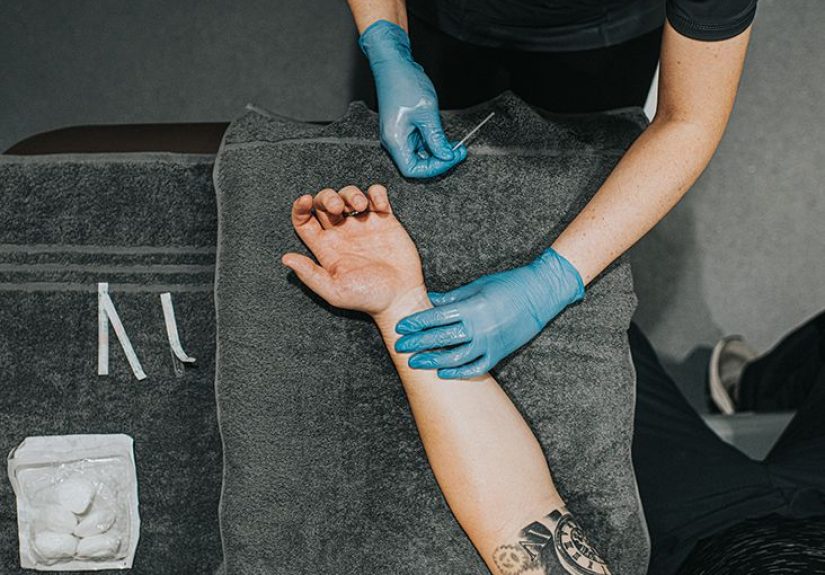
- The practitioner cleans the skin and gently inserts thin, sterile needles at selected points on your abdomen, legs, arms, or sometimes ears.
- You may feel a brief prick, then a dull ache, tingling, or heaviness often described as a “spreading” or “warming” sensation.
- Needles usually stay in place for 20–30 minutes while you rest (and try not to fall asleep).
- If electroacupuncture is used, a mild pulsed current is connected to some of the needles to enhance stimulation.
Many people feel relaxed or slightly spacey afterward. Some notice changes in bowel function within a few days; for others, it takes several sessions.
3. How many sessions might you need?
Study protocols often use 2–5 sessions per week for several weeks. In real life, many practitioners recommend starting with 1–2 sessions per week for 4–6 weeks, then reassessing. If you’re seeing clear benefit, you might taper to maintenance visits spaced further apart. If nothing at all changes after a reasonable trial (for example, a month of consistent treatment), it’s fair to reconsider whether it’s worth continuing.
Who might be a good candidate for acupuncture?
Acupuncture might be worth discussing with your healthcare provider if:
- You have chronic idiopathic or functional constipation where tests haven’t revealed a structural problem.
- You prefer a more holistic or low-medication approach and are willing to combine acupuncture with diet and lifestyle changes.
- You’ve tried the basics fiber, fluids, gentle exercise, and appropriate use of OTC laxatives with only partial success or bothersome side effects.
- You’ve been evaluated for red-flag symptoms and more serious conditions have been ruled out.
Acupuncture may be less appropriate as a primary strategy if your constipation is clearly caused by a mechanical blockage, severe pelvic floor dysfunction, or another condition that needs targeted medical or surgical care.
Combining acupuncture with everyday bowel-friendly habits
Even the best acupuncturist can’t out-needle a lifestyle that’s constipating you every single day. For most people, acupuncture works best as part of a bigger plan that includes:
- More fiber, slowly: Add fruits, vegetables, beans, and whole grains, increasing gradually to avoid gas and bloating. Aim for around 25–35 grams per day unless your doctor says otherwise.
- Steady hydration: Sip water throughout the day, and watch for beverages that may dehydrate you, like excessive caffeine or alcohol.
- Movement breaks: Even regular walks can help stimulate gut motility. Think of your intestines as preferring a gentle shake, not a permanent desk chair.
- Bathroom routine: Don’t ignore the urge to go, and give yourself unhurried time after meals (especially breakfast), when your colon naturally becomes more active.
- Toilet posture: A small footstool to elevate your feet and lean forward slightly can straighten the rectal angle and make passing stool easier.
- Stress management: Stress and anxiety can tighten everything, including your pelvic floor and gut. Relaxation techniques, breathing exercises, or mindfulness can complement both acupuncture and medical care.
If you decide to try acupuncture, let your acupuncturist and your primary care clinician or gastroenterologist know what each one is doing. That way, your care stays coordinated, and everyone is working toward the same goal: a happier, more regular gut.
Real-world experiences: what living with acupuncture for constipation is actually like
Research data is important, but if you’re the person stuck in the bathroom wondering whether to book an appointment, you probably also care about what it feels like to use acupuncture for constipation. While everyone’s experience is unique, here are some themes that often come up.
1. “I didn’t suddenly become a digestive superhero”
Most people who stick with acupuncture for constipation don’t describe a movie-style transformation where one miraculous session solves everything. Instead, they often notice more subtle shifts over several weeks, such as:
- Going from one painful bowel movement a week to two or three less-strained ones
- Feeling less bloated and “backed up” between bathroom trips
- Having fewer days where their gut feels completely stalled out
It’s more like slowly turning up the dial on your gut’s “go” signal than flipping an on/off switch.
2. The emotional side: less anxiety, less embarrassment
Chronic constipation isn’t just a physical problem; it can be surprisingly draining emotionally. People may feel embarrassed talking about it, anxious about traveling, or frustrated when doctors say “just eat more fiber” for the tenth time.
One underrated benefit of acupuncture is simply time and attention. Sessions tend to be longer and more conversational than a typical quick clinic visit. You’re allowed to tell the whole story the weird patterns, the stress, the timing with life events and someone is actually listening. That alone can make people feel less isolated and more hopeful, which sometimes makes symptoms easier to handle.
3. The practical side: cost, schedules, and insurance
On the real-world logistics front, acupuncture does require some commitment:
- Cost: Depending on where you live, sessions can range widely in price. Some insurance plans cover acupuncture for pain but may not explicitly list constipation, so coverage can be inconsistent. Community acupuncture clinics or group settings can sometimes offer lower-cost options.
- Time: If you’re going once or twice a week for several weeks, that’s a chunk of time you’ll need to reserve plus travel.
- Consistency: People who get the most out of acupuncture usually treat it like a course of therapy, not a random drop-in when things get really bad. That means planning ahead rather than waiting until you haven’t gone for 10 days and are desperate.
It’s okay to have a frank conversation with a potential acupuncturist about expected number of visits, costs, and how you’ll know whether it’s worth continuing.
4. Acupuncture isn’t “do nothing and hope” you’re still part of the team
Sometimes people try acupuncture after years of trying to force their body to behave and feel totally burnt out. It can be tempting to say, “Fine, I’ll just lie here, let them poke me, and hope for the best.”
In reality, people who get the most benefit usually stay engaged. They track their bowel movements, notice patterns (for example, “Every Monday after a stressful weekend, I get stuck”), and are willing to keep adjusting things like diet, movement, and stress alongside the needle work.
Think of acupuncture as a tool, not a magic wand. You’re still the captain of the ship it just might help you steer more effectively.
5. A quick word on DIY: acupressure and home care
Some acupuncturists will teach simple acupressure techniques you can do at home, such as gently massaging points on your abdomen or legs to support digestion between sessions. These self-care practices can be a nice bridge between appointments and give you a sense of agency over your symptoms.
Just remember that if your symptoms worsen, become severe, or come with red-flag signs like bleeding or sharp pain, you still need conventional medical evaluation. Pressing on points is not an emergency treatment for potentially serious bowel problems.
Takeaway: should you try acupuncture for constipation?
Acupuncture isn’t a cure-all, but it’s also not just hype. Evidence suggests it can improve bowel frequency, reduce straining, and boost quality of life for some people with chronic constipation, especially when used as part of a broader plan that includes diet, movement, stress management, and when needed medications.
If you’re curious, have already worked on the basics, and your doctor has ruled out more serious causes, acupuncture can be a reasonable option to explore. Go in with realistic expectations, track your symptoms, and give it a defined trial period. If your gut responds and your life gets a little less “bathroom-focused,” it may earn a long-term spot in your self-care toolkit.