Table of Contents >> Show >> Hide
- What Are Neutra House Numbers, Exactly?
- Why the Design Still Feels Fresh
- How Heath Ceramics Turned an Address into Craft
- Size, Presence, and Installation Appeal
- Who Loves These Numbersand Why
- Why They Became More Than a Product
- What to Consider Before Choosing Similar House Numbers
- The Lasting Appeal of Neutra House Numbers
- Experience: Living With the Look and Feel of Neutra House Numbers
- SEO Tags
Some home accessories whisper. Others politely introduce themselves. And then there are house numbersthe tiny but mighty design detail that can either say, “Yes, this is a well-loved home,” or, “We meant to fix the front entry sometime around 2019.” The Neutra House Numbers by Heath Ceramics belong firmly in the first camp. They are the kind of accessory that turns an address into a design statement, not by shouting, but by standing there with perfect posture and excellent taste.
For design-minded homeowners, architects, and renovation enthusiasts, these ceramic house numbers have long held a special kind of appeal. They blend midcentury modern style, handcrafted materiality, and typographic intelligence into one deceptively simple object. At a glance, they look clean and calm. Spend a little more time with them, though, and you start to see why they became such a coveted detail: they are rooted in architecture, shaped by craft, and unusually good at making a front door feel finished.
In a world full of mass-produced metal numerals and forgettable big-box plaques, Heath’s Neutra numbers feel delightfully specific. They are warm where metal can feel cold, tactile where acrylic can feel flat, and refined without drifting into fussy territory. In other words, they do something rare in exterior décor: they make a practical object feel like a thoughtful part of the house itself.
What Are Neutra House Numbers, Exactly?
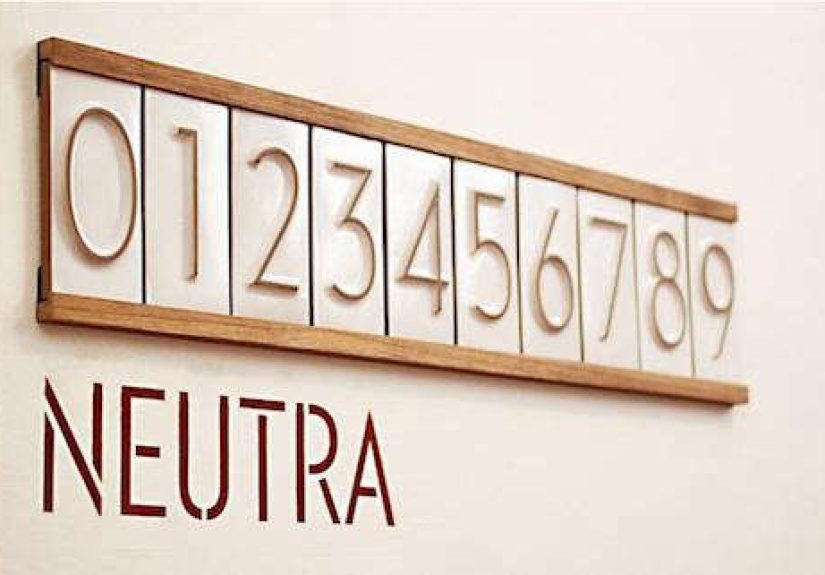
The Neutra House Numbers were created through a collaboration between Heath Ceramics and House Industries, a pairing that makes immediate sense once you know the players. Heath is known for handmade California ceramics with a deep respect for materials, color, and longevity. House Industries is celebrated for typography and graphic design that often carries a strong sense of cultural memory. Put them together, and you get an address marker that feels less like hardware and more like a tiny piece of design history.
The “Neutra” in the name points to Richard Neutra, the influential modernist architect whose work helped define a certain Southern California vision of clean lines, openness, and indoor-outdoor living. The number style draws from the typographic world associated with Neutra’s architectural legacy, which is exactly why these tiles feel so right on homes that appreciate restraint, proportion, and a little midcentury swagger.
Unlike flat stick-on digits or generic brass numbers, these are dimensional ceramic tiles. They have visual depth, subtle shadows, and a calm, architectural presence. They read clearly from a distance, but up close they reveal the kind of handmade surface quality that design lovers tend to notice immediately. They are not flashy. They are just very, very sure of themselves.
Why the Design Still Feels Fresh
1. The typography has architectural DNA
Plenty of modern house numbers try to look sleek. The Neutra versions actually earn it. Their letterform-inspired geometry feels balanced rather than trendy, elegant rather than gimmicky. That distinction matters. Good typography has rhythm, proportion, and personality, and those qualities translate beautifully to something as functional as an address.
Because the numbers are tied to a modernist design language, they work especially well on homes where architecture matters: midcentury ranches, postwar remodels, updated bungalows, minimalist new builds, and even traditional homes looking for one crisp contemporary accent. They provide clarity without losing charm, which is harder to pull off than the average brushed-metal number would have you believe.
2. Ceramic softens modernism in the best way
One of the smartest things about the Neutra House Numbers is the material choice. Modern design can sometimes lean a little too hard into coolnessliterally and aesthetically. Stainless steel, powder-coated aluminum, acrylic, and concrete all have their place, but ceramic brings warmth and humanity to the equation.
Heath Ceramics has built its reputation on exactly that kind of warmth. The company’s surfaces are nuanced, not sterile. Their glazes have depth. Their clay body has character. That means the Neutra numbers do not feel like imported signage bolted onto a wall; they feel integrated, almost as if the house grew them on purpose.
That tactile quality also helps them age gracefully. A well-made ceramic tile does not need to scream “new” to look good. In fact, these numbers often look better when paired with wood siding, textured stucco, brick, concrete block, or mature landscapingmaterials that appreciate subtle variation and natural shadow.
3. They solve a real curb-appeal problem
Every designer knows that a front elevation can be ruined by the wrong details. A beautiful paint color, handsome front door, and perfectly chosen sconce can all be undermined by flimsy or awkward address numbers. The Neutra tiles solve that problem by acting like a visual bridge between architecture and utility.
They do not just identify a house number; they contribute to the facade composition. Their rectangular format encourages alignment, spacing, and rhythm. Their modular nature means a two-digit address can feel intentionally compact, while a four-digit address can stretch across a wall with satisfying order. Suddenly, your address is not an afterthought. It is part of the design language.
How Heath Ceramics Turned an Address into Craft
The appeal of these house numbers is not only conceptual. The production process matters, too. Heath’s approach to ceramics has always emphasized craftsmanship, consistency, and the beauty of small variation. That philosophy gives the Neutra tiles more substance than the average decorative add-on.
These numbers were made as three-dimensional clay tiles, not printed decals on flat slabs. The raised numbers create contrast through both form and shadow, which improves legibility while adding sculptural interest. That little bit of relief is one reason the tiles feel richer than many modern alternatives. You are not just seeing a number; you are seeing shape, depth, edge, and glaze all working together.
Heath’s ceramic heritage is especially important here. The company has long been associated with California-made stoneware and tile that balance utility and beauty. Their material language tends to favor earthy sophistication over glossy perfection, and that choice suits outdoor accessories unusually well. A house number should be durable, yes, but it should also belong to the built environment. These do.
Another reason designers continue to admire the collection is that it merges precision with handwork. The typography is crisp and disciplined, while the ceramic body preserves the slight, appealing irregularity that comes with handmade production. That tensionbetween exact design and human craftis where a lot of the magic lives.
Size, Presence, and Installation Appeal
Part of the success of the Neutra design comes down to proportion. The tiles were large enough to read clearly from the street, but not oversized to the point of theatricality. That made them a sweet spot for residential curb appeal: visible, elegant, and practical.
Their vertical rectangular format also encourages good composition. When arranged in a row, they create a strong linear effect that works beautifully on horizontal siding, stucco entry walls, mailbox columns, or gate posts. When stacked, they can create a more graphic and compact footprint for narrower spaces.
Heath also offered mounting systems that reinforced the architectural look. Instead of forcing every homeowner into an improvised installation, the numbers could be paired with dedicated tracks that made the set feel more resolved. That is a small but important difference. Accessories become timeless when the whole system is designed, not just the decorative part.
Who Loves These Numbersand Why
The obvious audience is the midcentury modern crowd, and yes, these numbers look entirely at home on a low-slung California ranch with clerestory windows and a carport that deserves its own fan club. But their appeal is broader than that.
Homeowners restoring older houses often love them because they add polish without becoming fake-period ornament. Designers specifying exterior details appreciate them because they deliver texture, legibility, and a material story in one move. People who simply want their home to look pulled together love them because they make the entrance feel intentional.
They are also a favorite among those who understand that the best home upgrades are not always the biggest ones. Not every design triumph requires a full kitchen renovation or a dramatic addition. Sometimes, a carefully chosen number tile, a good porch light, and a confident paint color can make the house feel far more expensive than the budget suggests.
Why They Became More Than a Product
Over time, the Neutra House Numbers became something more than a practical exterior accessory. They became a shorthand for a certain kind of homeowner: someone who notices proportion, likes materials with soul, and would rather buy one excellent thing than five forgettable ones.
That status was helped along by design publications, architecture enthusiasts, and renovators who recognized the collection as a near-perfect example of small-scale design done right. The tiles sit at the intersection of typography, architecture, craft, and home improvementa surprisingly rich crossroads for an object whose main job is telling delivery drivers they are in the right place.
In that sense, they also reflect a larger truth about accessories in the home: the little details are rarely little. Exterior hardware, lighting, mail slots, planters, and address numbers can radically change how a house is perceived. The Neutra numbers stand out because they respect that principle. They understand that usefulness and beauty should not be competitors.
What to Consider Before Choosing Similar House Numbers
Even if you are tracking down original Heath tiles, sourcing vintage pieces, or simply using them as inspiration for your own entry update, a few design lessons are worth keeping in mind.
Prioritize contrast
The most beautiful house number in the world is useless if no one can read it. Choose a glaze or finish that contrasts with the wall behind it, especially from the street and at dusk.
Think about scale from the curb
A number that looks perfect in your hand can vanish once it is mounted beside a large garage door or set back behind shrubs. Always judge size from where visitors, drivers, and emergency responders will actually see it.
Design the whole moment
House numbers should relate to the light fixture, door hardware, landscaping, and architectural lines nearby. The Neutra tiles succeeded because they rarely looked isolated; they looked composed.
Embrace material honesty
One reason ceramic house numbers remain appealing is that they look like what they are. They are not pretending to be cast bronze or faux stone. That honesty gives them confidence.
The Lasting Appeal of Neutra House Numbers
Trends come and go, but some objects stick around because they solve design problems with unusual intelligence. The Neutra House Numbers by Heath Ceramics are a perfect example. They are functional without being boring, refined without being precious, and modern without feeling disposable.
They also remind us why good accessories matter. A house number is one of the first things people notice at the entrance, whether consciously or not. When that number is thoughtfully designed, beautifully made, and visually connected to the architecture, the entire home benefits.
So yes, they are just house numbers. In the same way a great chair is “just a chair” or a perfect sconce is “just a light.” Design people know better. The right object can quietly elevate everything around it. And these Heath tiles do that with the calm confidence of something very well designedand fully aware of it.
Experience: Living With the Look and Feel of Neutra House Numbers
The real joy of something like the Neutra House Numbers is that the experience starts long before anyone reads the address. It begins the moment you walk toward the house and notice that the entry feels finished. Not decorated. Not over-styled. Finished. There is a difference, and these numbers understand it.
Imagine approaching a home in late afternoon, when the sun is low enough to throw soft shadows across the facade. The raised ceramic digits catch the light just enough to stand out, while the matte surface keeps everything from getting shiny or loud. A metal number might glare. A plastic one might disappear. These sit somewhere more sophisticated, quietly doing their job while making the whole exterior feel more composed.
There is also something deeply satisfying about the tactile quality. Even though house numbers are mostly visual, ceramic makes people want to get closer. Guests often do a little double-take: “Wait, are those tile?” That reaction is part of the pleasure. The numbers become a conversation starter, but not in a try-hard way. They feel discovered rather than announced.
For homeowners, that experience can be surprisingly emotional. Exterior details are often the last layer of a renovation, which means they arrive at a moment when the house is finally becoming itself. After all the big decisionspaint colors, windows, landscaping, lightingthe address goes up almost like a signature. Choosing something with the design credibility of the Neutra tiles makes that moment feel meaningful. It says the house was cared for all the way to the edges.
These numbers also age well in daily life. They pair beautifully with natural materials, weather gracefully beside wood and stone, and still look intentional when the seasons change around them. In spring, they look crisp against new planting. In summer, they sit comfortably beside sun-faded stucco and warm timber. In winter, they hold their own when the garden is not doing any favors.
Another underrated part of the experience is how they influence perception from the street. A thoughtfully marked address subtly changes how a home is read. It can make a modest house look more considered. It can make a modern renovation feel complete. It can even make a simple front path feel more welcoming. The numbers are not the whole story, of course, but they help tell it.
And perhaps that is the enduring magic here: the Neutra House Numbers make an everyday object feel personal. They are practical enough for delivery drivers, elegant enough for architects, and charming enough to make homeowners smile every time they pull into the driveway. Not bad for a few digits on the wall.