Table of Contents >> Show >> Hide
- What You’re Really Watching (Spoiler: “Collapse” Is Often a Flip)
- Where These Videos Are Usually Filmed in Greenland
- The Step-by-Step Physics of an Iceberg “Collapse”
- Why Greenland’s Iceberg Collapses Matter Beyond the Wow Factor
- What Scientists Actually Learn From a Viral Iceberg Video
- Is a Single “Stunning” Collapse Proof of Climate Change?
- Safety 101: How to Watch an Iceberg Collapse Without Becoming the Plot
- What to Do After the Wow Moment
- Experience Add-On (About ): What It Feels Like When the Ice “Thunderclaps”
- Conclusion
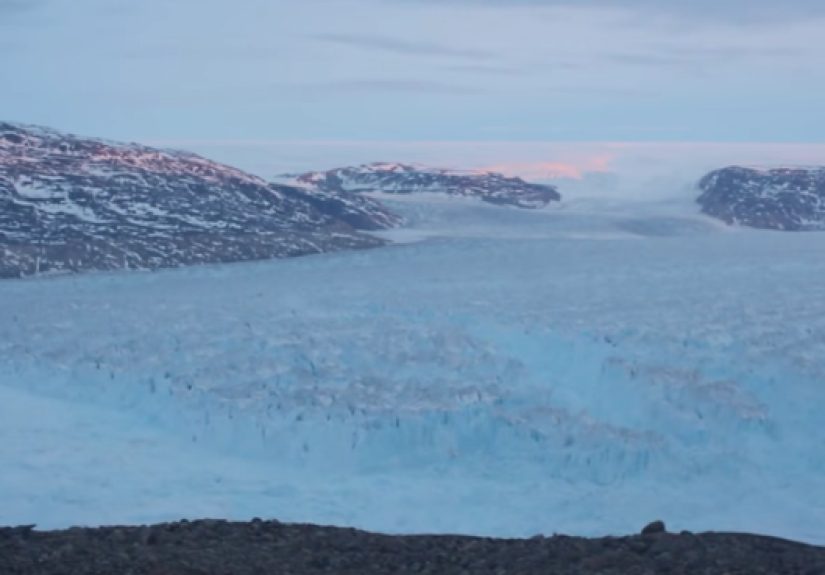
If you’ve ever watched a Greenland iceberg “collapse” on video, you know the feeling: your brain goes
oooh pretty ice and then, two seconds later, why is the ocean trying to stand up?
It’s part nature documentary, part disaster movie trailer, and part physics lesson your high school self
would’ve paid attention to (because there are explosions… of water).
This article breaks down what you’re actually seeing in those jaw-dropping clips, where in Greenland it’s
most likely happening, why the water suddenly goes feral, and what (if anything) one spectacular calving
moment says about the bigger story of Greenland’s changing ice. We’ll keep it accurate, readable, and only
mildly sarcasticbecause the ice is already doing plenty of dramatic acting on its own.
What You’re Really Watching (Spoiler: “Collapse” Is Often a Flip)
In everyday language, “iceberg collapse” sounds like the iceberg is crumbling like a stale cookie. Sometimes
that’s trueice can fracture and crumble in chunks. But many of the most viral Greenland clips show something
even more theatrical: a newly broken iceberg rolling or capsizing.
The not-so-secret reason icebergs love gymnastics
An iceberg isn’t a neat little ice cube. It’s irregular, lopsided, cracked, and loaded with air pockets and
denser “blue ice.” When it breaks free from a glacier front (a process called calving), it can
be temporarily unstable in the water. Ice wants to float in a position where its center of mass is as low as
possibleso the berg may rotate until it finds its “chill” orientation.
That rotation can look like a collapse, because the visible part of the iceberg disappears and a different face
pops up. It’s basically the iceberg saying, “New angle, who dis?”
Why the water looks like it’s punching back
When a large berg calves or flips, it displaces a lot of water fast. Water doesn’t like being displaced fast.
The result is a surge wavesometimes several wavesracing through the fjord. In narrow fjords, waves can reflect
off the sides and bounce back and forth, which is why some videos show the water heaving repeatedly instead of
one neat splash-and-done moment.
This is also why many local authorities and tour operators are strict about distance. A calving event can create
waves strong enough to swamp small boats or knock people off rocks. The scenery is gorgeous; the physics is
absolutely not here to be your friend.
Where These Videos Are Usually Filmed in Greenland
Greenland has hundreds of outlet glaciers that feed ice into fjords and the ocean. The most famous “iceberg video”
hotspots tend to share three things: a glacier terminating in water, lots of ice production, and access for people
(boats, towns, viewpoints, webcams).
Ilulissat Icefjord (a.k.a. iceberg central)
If a video mentions Ilulissat, you’re likely seeing ice from Sermeq Kujalleq (also known as the
Jakobshavn Glacier/Jakobshavn Isbræ). It’s one of Greenland’s best-known outlet glaciers and a prolific producer of
icebergs. The fjord is famous for massive bergs, dramatic calving, and the occasional “did that iceberg just do a
backflip?” moment.
Sermilik Fjord and East Greenland outlets
East Greenland fjords like Sermilik are also frequent stars in dramatic footage. The geometry of these fjordssteep
walls, tight passagescan make waves feel larger and more immediate. When a large berg collapses or a slab falls
from a calving face, the rebound wave can be visually wild (and genuinely dangerous).
Why fjords make everything look more dramatic
Open ocean swallows wave energy. Fjords don’t. In a fjord, energy gets funneled and reflected, like the world’s
coldest bowling alleyexcept the bowling ball is a multi-story iceberg and the pins are your sense of calm.
The Step-by-Step Physics of an Iceberg “Collapse”
Let’s translate the chaos into a simple chain of events. Many spectacular clips follow a pattern like this:
-
Stress builds at a glacier’s front (the terminus). Ice is flowing, pulling, crevassing, and
constantly trying to fail in new and exciting ways. - A crack propagatessometimes from the surface, sometimes from belowuntil a chunk separates.
-
The iceberg calves into the fjord. This can be a slab-like piece, a jagged “pinnacle” chunk, or a
bigger tabular section, depending on local conditions. - It either sinks a bit, bobs, or flips, seeking stable buoyancy.
- Water surges outward as a wave (or a series of waves) due to rapid displacement.
What makes calving more likely (and sometimes more extreme)
Calving is normal for marine-terminating glacierssome calve constantly. But certain conditions can encourage more
frequent or larger events:
- Warmer ocean water can melt and undercut the glacier front from below, weakening it.
-
Surface meltwater can drain into cracks and help force them open (a process often discussed in
glaciology as hydrofracturing). -
Loss or weakening of ice mélange (a dense mix of sea ice and bergy bits) can reduce the “buttress”
effect that sometimes helps hold the front together. -
Local fjord geometry matters: water depth, bed slope, and the shape of the glacier’s terminus can
influence how the front fails.
The key point: the most dramatic videos usually come from a perfect storm of “big ice + unstable front + tight fjord
+ camera already rolling.” Nature does the rest.
Why Greenland’s Iceberg Collapses Matter Beyond the Wow Factor
It’s tempting to treat iceberg-collapse clips as pure spectacle. But calving is part of a larger system that does
affect global sea leveland it reflects how Greenland’s outlet glaciers respond to warming air and ocean conditions.
Greenland is losing ice overall (even when a single year is “less bad”)
Satellite measurements show Greenland has been losing ice mass in the modern era, with year-to-year variation. Some
years have less loss (or more snowfall), others have extreme melt and runoff. But the long-term trend remains net
loss. Greenland’s ice mass changes are tracked with missions like GRACE/GRACE-FO (which detect shifts in Earth’s
gravity as mass moves).
A useful mental model: each dramatic calving event is like one splash in a long, ongoing bathtub drain. It’s not the
only mechanism (surface melt and runoff are huge), but it’s part of the overall outflow of ice to the ocean.
A concrete example: Jakobshavn’s retreat isn’t just a “before-and-after” meme
One of the most cited outlet glacier stories is Jakobshavn (Sermeq Kujalleq). Satellite imagery comparisons over
decades show substantial retreat, and research has quantified large ice losses from this system over time. This is
one reason the Ilulissat area often appears in discussions about Greenland’s changing icenot just because it makes
cinematic video.
What Scientists Actually Learn From a Viral Iceberg Video
A single video is not a climate dataset. But it can still be scientifically usefulespecially when paired with
instruments and repeated observations.
Videos help classify calving styles
Not all calving is created equal. Researchers describe different “styles,” such as serac collapses (smaller chunks
falling), large slab releases, and buoyancy-driven rotations where bergs flip after detaching. Knowing which style
dominates in a location can help researchers understand glacier-front stability and how the terminus responds to
melt, ocean forcing, and seasonal changes.
Seismic “icequakes” and wave dynamics
Large calving events can generate seismic signalssometimes called icequakesalong with pressure waves in the water.
Separately, Greenland has also produced rare but notable hazard events where slope failures or landslides in fjords
created long-lasting oscillations and detectable seismic signals. While that’s not the same thing as a typical
iceberg flip, it’s a reminder that fjord environments can amplify energy in surprising ways.
Satellites and field measurements do the heavy lifting
The real backbone of Greenland monitoring is satellite observation: gravity missions (mass change), altimetry
(surface elevation), optical/radar imaging (front position and velocity), plus ground GPS and weather data. A video
clip becomes much more meaningful when it’s tied to a known glacier, a timestamp, and a measurement record.
Is a Single “Stunning” Collapse Proof of Climate Change?
Not by itself. Glaciers calve in cold climates even without modern warming. A single calving event is weather-level
variability: it’s one moment in one place.
The climate signal shows up in the long-term patterns: sustained mass loss, shifts in melt season length, retreat of
glacier fronts, thinning, and changes in how often certain kinds of large calving events occur. That’s why scientists
rely on decades of satellite records, not just the most dramatic clip on your feed.
Think of it this way: one video is a highlight reel. Climate is the full season’s stats.
Safety 101: How to Watch an Iceberg Collapse Without Becoming the Plot
If you ever travel to Greenland (or watch from a boat, shoreline, or viewpoint), take the danger seriously. Calving
events can create sudden waves, launch ice fragments (“bergy bits”), and trigger strong currents. Even if the iceberg
looks far away, wave energy can travel.
- Keep your distance: Tour operators set buffer zones for a reason.
- Avoid low rocks and shorelines: Waves can arrive after the initial collapse, or bounce back.
- Listen to local guidance: If a sign says “extreme danger,” it’s not a cute suggestion.
- Don’t chase the splash: The “best angle” is not worth getting swamped.
The internet loves “near miss” videos. Your goal is to never star in one.
What to Do After the Wow Moment
If a Greenland iceberg collapse video made you curious (or mildly existential), here are practical ways to turn that
attention into understanding:
-
Follow data-driven resources that track Greenland mass balance and melt seasons (satellite-based monitoring and
annual reporting). -
Learn the vocabulary: calving, ice mélange, outlet glacier, surface mass balance, submarine melt. These terms help
you interpret what you see. - Watch for context: Where is the video? Which glacier? What time of year? Without that, it’s just icy fireworks.
Awe is a great starting point. It just shouldn’t be the finish line.
Experience Add-On (About ): What It Feels Like When the Ice “Thunderclaps”
Watching an iceberg collapse on video is impressive. Hearing one in real lifewhether you’re a researcher on a field
season, a local who’s grown up with the fjord, or a visitor standing at a marked viewpointis a full-body experience.
People who spend time near active glacier fronts often describe the sound first: a deep crack, then a roar that
doesn’t behave like normal thunder. It’s less “boom” and more “the planet just shifted a filing cabinet.”
Then there’s the waiting. In many calving events, the most dramatic motion happens after a pause: the ice detaches,
seems to hesitate, and thenalmost casuallytips or drops. That delay is exactly why it can catch people off guard.
Your eyes say “it’s over,” but the physics says, “we’re just getting to the part where the water gets involved.”
On a boat (with a responsible operator, at a safe distance), you feel the aftermath as much as you see it. The fjord
surface changes texture. Swells arrive like invisible shoulders lifting the hull. Sometimes the wake pattern looks
wrong, as if the water is confused about which direction it’s supposed to go. That’s the fjord acting like a
resonant chamber: waves reflect off steep sides and return, and what started as one calving surge becomes a sequence
of pulses.
Shoreline viewpoints have their own vibe. You’ll see people holding phones perfectly stilluntil the sound hits and
everyone laughs in that universal “I did not expect that” way. And then, almost immediately, you’ll notice the local
etiquette: don’t go scrambling down to the waterline, don’t climb onto slick rocks, don’t treat it like a fireworks
finale where you can rush the stage. In places famous for calving, caution is part of the culture. It’s not fear;
it’s respect for a system that can change from serene to violent in seconds.
There’s also a quieter emotional layer. People talk about the weird mix of wonder and unease: the ice is stunning,
but it’s also a visible reminder that Greenland’s glaciers and ice sheet are not static backdrops. They’re moving,
responding, thinning, retreating, and reorganizing. For scientists, that can feel like standing next to a live data
streamone that’s beautiful, complicated, and urgent. For travelers, it can be the moment the climate story becomes
real: not a chart, not a headline, but a wall of ice in motion, rewriting the edge of a continent in real time.
If you never make it to Greenland, you can still have a version of that experience by watching high-quality webcam
feeds, documentary footage, and satellite animations with context. The goal isn’t to turn every clip into doom. It’s
to let the awe sharpen your curiosityso the next time an iceberg does a surprise flip, you’ll know you’re watching
buoyancy, fracture, and fjord dynamics in one spectacular, humbling event.
Conclusion
A stunning Greenland iceberg collapse video is more than an internet spectacle: it’s calving physics in action, fjord
dynamics turned up to eleven, and a tiny window into a much larger system that scientists monitor with satellites and
field measurements year after year. The most dramatic moments often involve not just ice breaking off, but ice
flipping to find stabilitysending waves outward as the fjord absorbs (and echoes) the energy.
Enjoy the videos. Rewatch the iceberg’s accidental gymnastics. But keep the bigger picture in mind: Greenland’s ice
is changing on a long timeline, and the “wow” moments are snapshots of processes that matter for sea level and ocean
systems worldwide. Awe is powerfulespecially when it leads to understanding.