Table of Contents >> Show >> Hide
- Why Nautical Knots Still Capture Our Imagination
- Classic Nautical Knots Worth Knowing
- A New Twist: Nautical Knots in Modern Home Decor
- Nautical Knots Beyond the Beach House
- DIY Ideas for a New Twist on the Nautical Knot
- Choosing the Right Rope for the Look
- How to Keep Nautical Decor Stylish, Not Cheesy
- The Nautical Knot as a Symbol
- Practical Tips for Styling Nautical Knots
- Experiences Related to “A New Twist on the Nautical Knot”
- Conclusion: Tie the Look Together
Some home decor trends arrive wearing tap shoes and demanding applause. Others quietly sail in, smelling faintly of salt air, old docks, canvas totes, and the kind of weekend where nobody checks email until Monday. The nautical knot belongs to the second group. It is humble, useful, sculptural, and oddly charminglike a sailor who also knows where you hid the good throw pillows.
For centuries, knots have helped sailors secure boats, tie sails, hang fenders, join lines, and keep gear from wandering off into the blue. Today, the nautical knot has taken on a stylish second life in modern interiors, DIY projects, coastal decor, fashion accessories, wedding details, and even minimalist art. The best part? A knot can be both practical and beautiful. It can hold a dock line in place, or it can hold together an entire design theme without screaming, “I bought everything in the beach aisle.”
This new twist on the nautical knot is not about turning your living room into a pirate ship. Please put down the plastic anchor. Instead, it is about using rope, texture, craftsmanship, and maritime-inspired details in fresh, sophisticated ways. Think less “theme restaurant by the marina” and more “sunlit coastal cottage with excellent coffee.”
Why Nautical Knots Still Capture Our Imagination
A nautical knot is more than a rope trick. It represents problem-solving, patience, hand skill, and the long history of people learning to work with wind, water, and friction. The bowline creates a secure fixed loop. The clove hitch fastens a line to a post or rail. The cleat hitch helps secure a boat to a dock. The figure-eight knot keeps a rope from slipping through an opening. Each knot has a job, and that job gives it character.
That practical beauty is exactly why nautical knots translate so well into design. In a world full of glossy surfaces and mass-produced accessories, rope adds honesty. It has fibers, twist, weight, and texture. It looks like something made by human hands, even when it is used in a polished, contemporary setting.
The Appeal of Texture
Texture is the secret ingredient that keeps a room from feeling flat. Rope, jute, sisal, cotton cord, hemp, and seagrass all bring a tactile layer that pairs beautifully with linen, wood, rattan, stone, ceramic, brass, and glass. A small nautical knot on a shelf can soften a modern space. A rope-wrapped mirror can warm up a white bathroom. A knotted wall hanging can turn a blank wall from “rental apartment sadness” into “I absolutely meant to do this.”
The Appeal of Story
People love objects that feel like they have a story. Nautical knots suggest travel, craftsmanship, harbors, fishing towns, summer storms, and old boats that have seen more sunsets than most of us have unread emails. Even a newly made decorative knot can carry that sense of heritage.
Classic Nautical Knots Worth Knowing
You do not need to become a professional sailor to appreciate nautical knot decor. However, knowing a few classic knots helps you choose designs with more intention. It also gives you something impressive to say when a guest points to your rope accent and asks, “Is that just a knot?” You may then sip your drink and answer, “Technically, it’s inspired by a bowline.” Very powerful.
Bowline Knot
The bowline is one of the most famous boating knots because it creates a fixed loop that does not easily slip. In practical boating, it is often used for mooring, attaching lines, and creating a reliable loop. In home decor, bowline-inspired loops work well for hanging planters, curtain tiebacks, towel holders, and wall hooks.
Clove Hitch
The clove hitch is commonly used to fasten rope around a post, pole, or rail. It is quick, adjustable, and visually clean. Because of its simple crossed structure, it works especially well in DIY projects such as rope railings, wrapped handles, fender-style cushions, and decorative ladder displays.
Cleat Hitch
The cleat hitch is associated with docking because it secures a line around a cleat. Its figure-eight motion gives it a graphic, satisfying look. For design inspiration, a cleat mounted on a wall can become a charming hook for keys, towels, dog leashes, hats, or lightweight bags.
Figure-Eight Knot
The figure-eight knot is often used as a stopper knot to keep a line from slipping through a block, ring, or hole. Its symmetrical shape makes it one of the most attractive knots for decorative accents. It looks especially good at the end of curtain ties, hanging cords, drawer pulls, and nautical-style garlands.
Square Knot
The square knot, also called a reef knot in some contexts, is used to join two ends of similar rope. In decorative work, it appears often in macramé, woven panels, belts, and simple craft projects. It is easy to learn and forgiving enough for beginners who may still be arguing with the rope.
A New Twist: Nautical Knots in Modern Home Decor
The modern nautical knot is not limited to beach houses. It can work in city apartments, lake cabins, farmhouse interiors, minimalist bedrooms, boho reading corners, and even polished offices. The trick is restraint. One rope accent can look chic. Twenty-seven rope accents can make your home look like it is preparing to tow a ship.
1. Rope-Wrapped Mirrors
A mirror framed in rope is one of the easiest ways to introduce nautical texture. It works especially well in bathrooms, entryways, powder rooms, and small bedrooms. Choose a thick natural fiber rope for a rustic coastal feel, or a smoother cotton cord for a softer and more refined look.
For a fresh update, try an oversized round mirror with a simple rope border instead of a heavily themed design. The result feels coastal without becoming costume-like. Pair it with white walls, warm wood, woven baskets, and matte black or brushed brass hardware.
2. Knotted Curtain Tiebacks
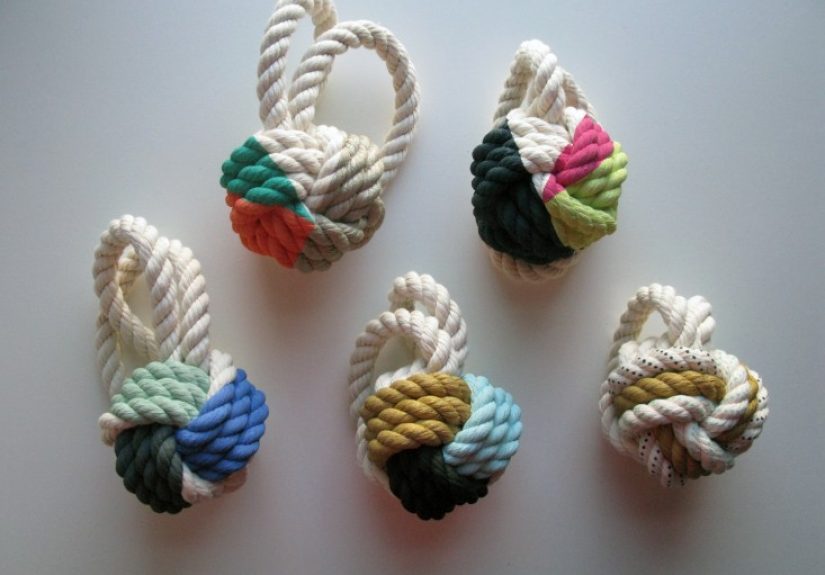
Curtain tiebacks are a perfect place for a nautical knot because they are functional and decorative. A simple loop of rope with a figure-eight knot or monkey fist-style accent can add charm to linen curtains, especially in rooms with natural light.
For a polished look, use the same rope color throughout the room. Natural jute pairs well with warm neutrals. White cotton rope feels crisp and airy. Navy rope can add contrast without overwhelming the space.
3. Nautical Knot Wall Art
Framed knot boards have a long maritime tradition, but today’s versions can be sleek and modern. Instead of a crowded display of many knots, try one large sculptural knot mounted on linen, canvas, or reclaimed wood. Labeling the knot is optional. Looking mysteriously knowledgeable is also optional but encouraged.
For a minimalist home, choose white rope on a white or sand-colored background. For a vintage coastal look, use aged wood, brass pins, and darker rope. The key is to make the knot feel intentional, not like something left behind after assembling patio furniture.
4. Rope Drawer Pulls and Cabinet Handles
Rope handles can transform plain cabinets, dressers, sideboards, and storage benches. They are especially fitting in mudrooms, kids’ rooms, bathrooms, and beach-inspired kitchens. A small rope pull adds softness and texture where metal hardware might feel too formal.
Use durable rope and secure it properly with washers or hardware behind the drawer front. For high-use areas, cotton or synthetic rope may hold up better than delicate decorative twine. The goal is charming, not “the drawer handle gave up during breakfast.”
5. Knotted Lamps and Pendant Lights
Rope-wrapped lamp bases and corded pendant lights are a smart way to add nautical character without taking over a room. A simple lamp with a rope-covered base can look beautiful on a console table, nightstand, or desk. Pendant lights with rope details can warm up a kitchen island or breakfast nook.
Because lighting naturally draws attention, keep nearby accessories simple. Let the rope detail be the star. It has trained for this moment.
Nautical Knots Beyond the Beach House
One reason the nautical knot keeps coming back is its versatility. It can lean coastal, rustic, preppy, bohemian, traditional, or modern depending on the material and styling.
In a Farmhouse Space
Pair rope knots with weathered wood, enamelware, ticking stripes, iron hooks, and vintage baskets. A rope-handled tray or knotted doorstop can add just enough maritime character without disrupting the farmhouse warmth.
In a Modern Apartment
Use rope as a sculptural accent. A single oversized knot on a bookshelf or coffee table can act like an organic art object. Choose clean lines, neutral colors, and minimal accessories so the knot feels curated rather than crafty.
In a Boho Room
Macramé and nautical knots are natural cousins. Both celebrate cord, rhythm, repetition, and handmade detail. Mix knotted wall hangings with plants, layered rugs, woven baskets, and warm lighting for a relaxed, collected look.
In an Outdoor Space
Rope details feel right at home on patios, porches, balconies, and poolside seating areas. Consider rope-wrapped planters, nautical knot coasters, hanging lanterns, or a cleat-style hook rack for towels. If the piece will live outdoors, choose weather-resistant materials and check them regularly for wear.
DIY Ideas for a New Twist on the Nautical Knot
You do not need a workshop, a captain’s license, or a dramatic sea shanty playlist to create nautical knot decor. Though, honestly, the playlist might help.
DIY Rope Coasters
Coiled rope coasters are beginner-friendly and useful. Start with cotton or jute rope, coil it tightly, and secure it with hot glue or stitching. Add a small figure-eight knot as a detail on the edge. These work well for summer tables, patio drinks, or coffee bars.
DIY Nautical Key Holder
Mount a small boat cleat on a wood board and add a short knotted rope loop. Use it as a key holder near the entryway. It is practical, compact, and much better than the traditional key-storage method of “somewhere under a receipt.”
DIY Rope Basket
Wrap rope around a plain basket, bin, or planter to give it coastal texture. Add knotted handles for extra personality. This project is great for organizing towels, toys, magazines, craft supplies, or the mysterious pile of chargers every household seems to grow.
DIY Hanging Plant Holder
A knotted plant holder brings nautical style and greenery together. Use cotton cord or rope and practice square knots for a clean, repeating pattern. Hang it near a sunny window with a trailing plant for a soft coastal-boho effect.
DIY Rope Napkin Rings
For a dinner table with coastal charm, create napkin rings from short lengths of rope tied into simple knots. Pair them with linen napkins, white plates, blue glassware, and a centerpiece of greenery or shells. The result feels relaxed but thoughtful, like you planned dinner instead of panic-cleaning ten minutes before guests arrived.
Choosing the Right Rope for the Look
The material matters. Different ropes create different moods and perform differently depending on where they are used.
Jute
Jute has a rustic, earthy look and works beautifully in farmhouse, coastal, and casual spaces. It is best for decorative indoor projects because it can shed fibers and may not love moisture.
Sisal
Sisal is strong, textured, and slightly rough. It gives projects a natural, beachy look. Use it for baskets, wrapped vases, decorative knots, and accent pieces where a coarse texture is welcome.
Cotton Rope
Cotton rope is soft, flexible, and easy to knot. It is ideal for macramé, curtain tiebacks, wall hangings, plant holders, and projects where comfort matters. It also takes dye well, which opens the door to modern colors.
Nylon and Polyester Rope
Synthetic ropes are often used in boating because they can be strong, durable, and resistant to moisture. For home projects, they work best when durability matters, especially outdoors. Their smoother finish can also give a project a cleaner, more contemporary look.
How to Keep Nautical Decor Stylish, Not Cheesy
Nautical style has one tiny danger: it can turn kitschy faster than you can say “decorative lighthouse.” The goal is to suggest the sea, not build a seafood restaurant lobby in your hallway.
Use Fewer Motifs
Choose one or two maritime elements and let them breathe. Rope plus stripes? Great. Rope plus anchors plus shells plus ship wheels plus a sign that says “Beach This Way”? The room may need a life jacket.
Focus on Materials
Natural materials make nautical decor feel grown-up. Wood, linen, rattan, rope, ceramic, glass, seagrass, and brass all carry coastal energy without becoming too literal.
Keep the Palette Calm
Classic coastal colors include white, cream, sand, navy, sky blue, driftwood gray, warm brown, and sea-glass green. For a modern twist, add black accents, terracotta, muted coral, or olive green.
Mix Old and New
A vintage knot board can look fantastic next to a modern sofa. A rope lamp can soften a sleek console. The magic happens when nautical elements are balanced with contemporary pieces, not when every item seems to have been purchased while wearing boat shoes.
The Nautical Knot as a Symbol
Beyond decor, the knot carries rich symbolism. It can represent connection, strength, memory, protection, teamwork, and commitment. That is why knots appear in weddings, jewelry, tattoos, family keepsakes, and handmade gifts. A knot can say “we are tied together” without needing a greeting card that uses the phrase “forever and always” in curly font.
In design, that symbolism adds emotional depth. A rope knot on a bookshelf can remind someone of summers near the water. A framed knot can honor a family member who served at sea. A DIY knot project can become a small ritual of making something by hand in a very digital world.
Practical Tips for Styling Nautical Knots
Start Small
If you are new to nautical decor, begin with one piece: a knot doorstop, a rope tray, a set of coasters, or a curtain tieback. See how it works with your existing furniture before adding more.
Repeat Texture, Not Theme
Instead of repeating anchors and seashells, repeat natural textures. A jute rug, rope accent, woven basket, and linen pillow can create coastal harmony without being obvious.
Use Scale Carefully
A large knot can be sculptural and dramatic. Several small knots can feel playful. Mixing too many sizes can look cluttered, so give each piece room to stand out.
Think Function First
The best nautical knot accents do something. They hold curtains, hang towels, organize keys, support plants, or frame mirrors. Function keeps the look grounded and prevents it from drifting into novelty territory.
Experiences Related to “A New Twist on the Nautical Knot”
The first time you try to tie a nautical knot for decor, you may discover an important truth: rope has opinions. It twists when you want it straight, loosens when you want it tight, and occasionally behaves like a noodle with a personal agenda. But that is also the fun of it. Unlike buying a finished accessory, working with rope asks you to slow down and use your hands. You have to feel the tension, adjust the loop, dress the knot, and decide whether the final shape looks intentional or like your project had a small emotional crisis.
One of the most satisfying beginner experiences is making a simple rope curtain tieback. It sounds almost too easy, but the result can be surprisingly elegant. You cut a length of cotton or jute rope, tie a neat figure-eight knot near each end, loop it around a curtain panel, and secure it to a small wall hook. Suddenly the room feels breezier. The curtains fall better. The window looks styled instead of merely covered. It is a small change, but small changes often do the most work in a home.
Another memorable project is creating a rope-wrapped vase from a plain glass cylinder. The process is simple: start at the bottom, glue carefully, wrap slowly, and keep each row snug against the last. The transformation feels almost magical. A basic vase becomes textured, warm, and coastal. Add eucalyptus, beach grass, or white flowers, and it looks like something from a boutique rather than a project completed while watching television.
For families, knot projects can become a shared activity. Children can learn simple knots with thick cotton rope, while adults handle cutting and hot glue. A nautical knot key holder or small framed knot display makes a great weekend craft because it is creative but not overly complicated. It also opens the door to stories about boats, camping, fishing, travel, and problem-solving. In a quiet way, knot tying teaches patience. The rope does not care if you are in a hurry. It will only look good when you slow down and pay attention.
There is also a practical pleasure in learning knots that work beyond decoration. Once you know a bowline, clove hitch, or cleat hitch, you start seeing uses everywhere. You can tie down a tarp, secure a bundle, hang a plant, fix a loose outdoor cushion, organize extension cords, or make a temporary handle. The skill follows you outside the craft room. It becomes part of your everyday toolkit.
The best experience, though, is discovering that nautical style does not have to be loud. A single knot on a shelf can feel quiet and sculptural. A rope handle on a tray can make breakfast in bed feel slightly more vacation-like. A knotted plant hanger can bring life to a blank corner. These details do not demand attention; they reward it. They invite people to look closer, touch the texture, and ask where the piece came from.
That is the real new twist on the nautical knot. It is not only a sailor’s tool or a beach-house cliché. It is a design language: practical, tactile, symbolic, and endlessly adaptable. Whether you live near the ocean or in a city apartment miles from the nearest marina, a well-placed knot can bring a little craftsmanship, calm, and coastal wit into your space. And if the first knot comes out crooked? Congratulations. You have made modern art.
Conclusion: Tie the Look Together
A new twist on the nautical knot is all about balance. It honors the maritime roots of knot tying while giving the look a fresh role in modern homes and creative projects. By choosing quality rope, using classic knots thoughtfully, and styling them with natural materials, you can create a coastal-inspired look that feels warm, personal, and current.
Whether you start with a rope mirror, a knotted curtain tieback, a handmade plant hanger, or a sculptural knot on a coffee table, the nautical knot offers something rare in decor: beauty with purpose. It is simple, sturdy, and full of story. In other words, it is the kind of trend that can weather a few design storms.