Table of Contents >> Show >> Hide
Most floods leave behind mud, broken branches, and the kind of cleanup bill that makes everyone sigh into the middle distance. But in Central Texas, one devastating flood did something wildly unexpected: it peeled back layers of dirt and debris and revealed a set of dinosaur footprints that had been hidden for roughly 115 million years. That is an absurd sentence, which is precisely why science is so much fun.
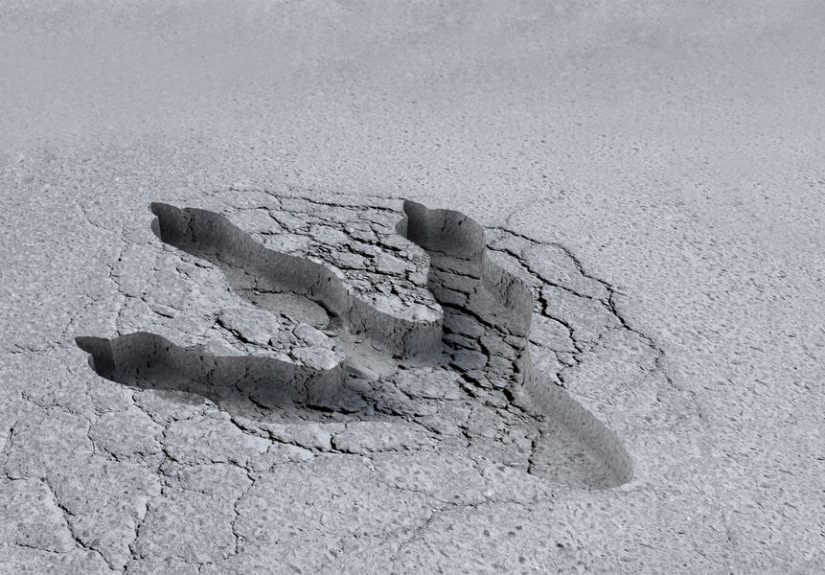
The tracks, found in northwest Travis County near Austin, appear to belong to a large meat-eating dinosaur similar to Acrocanthosaurus, an Early Cretaceous predator that can look a little like a budget version of Tyrannosaurus rex if you squint hard enough and ignore about 45 million years of evolution. It was not actually a tyrannosaur. It just had the same general “I would not like to meet this animal in a dark swamp” energy.
What makes this story so compelling is not just the age of the prints or the size of the animal that made them. It is the collision of two timelines: a modern natural disaster and a prehistoric world preserved in stone. One violent event in the present uncovered the quiet traces of another world from the deep past. That contrast is part of what makes the discovery feel so cinematic. Nature, it turns out, has excellent timing and a flair for drama.
Factual basis for the discovery, location, count, age range, and flood exposure.
The Flood That Pulled Back the Curtain
According to reporting and statements from officials and researchers, volunteers helping with flood cleanup discovered the tracks after high water stripped away sediment, brush, and other material that had covered the rock surface for decades. University of Texas paleontologists later confirmed at least 15 individual footprints. Each measured about 18 to 20 inches long, making them much too large to be dismissed as quirky erosion or a giant bird having an absolutely unbelievable day.
The prints were preserved in rock layers associated with the Glen Rose Formation, one of Texas’ most famous fossil-bearing formations. That geological setting is a big reason scientists can estimate the age of the tracks with confidence. In other words, this is not a vague “sometime before the invention of pizza” type of date. The tracks fit into a well-studied Early Cretaceous context in a region already known for preserving dinosaur activity.
There is something poetic about the way the discovery happened. Floods are destructive. They destroy homes, roads, and routines. Yet they also reshape landscapes, cut through sediments, and sometimes expose things that have been hidden for millions of years. Paleontology has always depended, at least in part, on this kind of accidental reveal. Erosion is one of nature’s roughest but most effective excavation tools.
That does not make the flood “good,” of course. Researchers themselves have described this kind of find as bittersweet. The same event that caused tragedy also exposed a remarkable piece of natural history. Science can appreciate the discovery while still respecting the human cost of the disaster that revealed it.
Factual basis for Glen Rose Formation context and flood/erosion exposure.
Meet the “T. Rex Wannabe”
Let’s address the headline phrase. Calling this dinosaur a “T. rex wannabe” is catchy, but it needs an important correction. Acrocanthosaurus was not trying to be T. rex, because T. rex did not arrive on the scene until tens of millions of years later. If anything, Acrocanthosaurus was doing its own thing first, long before the celebrity tyrant showed up and stole the blockbuster spotlight.
Still, the comparison works at a glance. Acrocanthosaurus was a big, bipedal carnivore with a large skull, serious teeth, and the general body plan of an apex predator. To a casual observer, it reads as “yep, definitely one of the giant murder lizards.” But paleontologists point out important differences. Acrocanthosaurus had proportionally longer forelimbs, shorter hind limbs, and a distinctive row of tall neural spines along its back that gave it a more dramatic profile. Its name even means “high-spined lizard,” which sounds like the title of a prog-rock album and a terrifying animal at the same time.
The dinosaur lived during the Early Cretaceous, around 110 to 115 million years ago, and is widely considered one of the top predators of its ecosystem in North America during that period. It was large, powerful, and built for taking down substantial prey. Yet it remains less famous than T. rex, partly because fewer skeletal specimens have been found and partly because pop culture tends to play favorites. T. rex got the publicist. Acrocanthosaurus got the fossil footprints and the respect of paleontologists.
That relative obscurity actually makes the Texas tracks more interesting. Bones tell us what a dinosaur was. Footprints can hint at what it was doing. When a rare or lesser-known predator leaves tracks in a pattern that can be studied, researchers get a chance to move beyond anatomy and into behavior, movement, and environment. That is when the science gets especially juicy.
Factual basis for Acrocanthosaurus age, rarity, body traits, and nickname comparisons.
Why Texas Keeps Handing Us Dinosaur Footprints
If Texas seems unusually good at turning up dinosaur tracks, that is because it is. Central Texas preserves a remarkable record of Early Cretaceous life, especially in places where ancient muddy surfaces were buried, hardened, and later exposed by rivers and erosion. The state’s famous Dinosaur Valley State Park is the best-known example, but it is far from the only one.
Roughly 113 to 115 million years ago, much of this region looked nothing like modern Texas. Instead of highways, subdivisions, and barbecue joints, parts of the area were coastal mudflats, tidal environments, estuaries, and shallow marine margins near an advancing inland sea. Dinosaurs walked across soft, wet sediment. Their weight pressed tracks into the mud. Later, those impressions were covered by more sediment, protected from destruction, and eventually turned into stone. Fast-forward an absurd amount of time, add a drought here or a flood there, and suddenly ancient trackways are back in the daylight.
This is not even the first time Texas weather has staged a dinosaur reveal. In recent years, drought conditions at Dinosaur Valley State Park exposed additional ancient trackways usually hidden under the Paluxy River. In that sense, the new Travis County discovery fits a bigger pattern. Texas geology is full of stories, and weather keeps yanking open the filing cabinet.
What is especially striking is how these track sites changed paleontology itself. The famous Glen Rose and Paluxy River tracks helped establish that sauropods were land animals walking on all fours, not giant swamp creatures doomed to spend their lives half-submerged like grumpy botanical islands. That is a major scientific shift produced not by a full skeleton, but by footprints. Never underestimate a good set of tracks.
Factual basis for Texas track abundance, coastal/shallow sea setting, and scientific significance of trackways.
What Footprints Can Tell Scientists That Bones Cannot
To many people, footprints may sound like the less glamorous cousin of a skeleton. No giant skull. No giant claws. No museum gift shop frenzy. But to paleontologists, tracks are a gold mine of behavior. They can preserve direction, spacing, stride length, speed, weight distribution, and even clues about whether one animal was moving alone or several were moving across the same surface around the same time.
The newly exposed Texas tracks were described as being laid out in a crisscross pattern, raising the possibility that more than one dinosaur was involved. That does not automatically prove pack behavior. Scientists are too careful for that, and honestly, they have been burned before by overexcited prehistoric storytelling. But it does invite fresh questions. Were multiple animals using the same route? Did they pass through at different times? Were they moving together? With better mapping and 3D modeling, researchers may be able to refine those possibilities.
This is where modern technology changes the game. Paleontologists at UT Austin have discussed returning to the site with drones and surface-scanning tools to create detailed three-dimensional models of the trackways. That kind of documentation helps researchers preserve information even if the physical site is later damaged by weather, human activity, or natural erosion. It also allows scientists to compare track depth, shape, and stride more precisely than older field studies often could.
In other words, these are not just cool footprints. They are data. Very old, oddly dramatic data, but data all the same.
Factual basis for crisscross pattern, multiple-dinosaur possibility, and planned 3D documentation.
A Discovery With a Human-Sized Dose of Humility
There is also a philosophical side to this story that makes it resonate beyond paleontology circles. One week, a creek is just part of the landscape. The next, it becomes a time machine. A patch of stone that seemed ordinary suddenly turns into proof that gigantic predators once marched across what is now suburban Texas. That kind of discovery compresses human scale in the best possible way.
It reminds us that landscapes have memories. The places we build on, drive across, and complain about in traffic were other worlds before they were ours. Central Texas was once a coastline. The dry ground under modern neighborhoods once received the footfall of carnivores the size of buses. And those steps lasted longer than mountains of human drama, which is humbling if you think about it for more than five seconds.
That may be one reason dinosaur footprint stories grab people so quickly. Bones are impressive, but footprints feel intimate. A bone says, “This creature existed.” A footprint says, “This creature was here.” It captures a moment. One step. One patch of mud. One movement through a living world. Suddenly the dinosaur is not just a skeleton in a museum hall. It is an animal in motion.
That is the emotional power of the Texas discovery. It is science, geology, history, and atmosphere wrapped into one muddy reveal. The flood did not create the story. It simply uncovered a page that had been buried for 115 million years.
Factual basis for the ancient shoreline setting and preservation context.
What It Feels Like to Stand Near a Trackway Like This
There is a particular kind of awe that comes from seeing a dinosaur footprint in person, and it is not the same as looking at a skeleton behind glass. A skeleton is spectacular, but it often feels curated, assembled, and translated for you by a museum. A footprint is more immediate. It is a moment that escaped extinction. It is a frozen action. When you stand near a trackway, your brain does a funny thing: it stops thinking in facts and starts thinking in scenes.
You imagine the ground soft underfoot, not stone. You imagine humidity in the air, water nearby, insects buzzing, smaller animals skittering around the margins. You picture the animal lifting one foot and planting the next with a force heavy enough to punch a shape into wet sediment. Suddenly the footprint is not a hole in a rock. It is a verb. It is the past still in motion.
That is why the Texas flood discovery feels bigger than a typical science headline. It is not just about fossil evidence. It is about the strange emotional whiplash of realizing that an ordinary creek bed can become a doorway into deep time. One day you are looking at storm damage. The next day you are staring at the path of a predator that lived long before humans, cities, or even flowering landscapes as we know them today.
For local residents, there is probably an extra layer of wonder. Imagine learning that your familiar patch of Central Texas, a place associated with roads, fences, neighborhoods, and flood alerts, was once part of a prehistoric shoreline crossed by giant theropods. That kind of realization rewires the mental map of a place. Home becomes older, stranger, and much more interesting.
For scientists, the experience is different but no less emotional. Paleontologists are trained to measure, compare, verify, and doubt their own first impressions. But even the most careful researcher is still human. To kneel beside a newly exposed footprint and know that it has not been clearly seen in perhaps decades, or maybe far longer, must create a small electric jolt of connection. Field science is full of paperwork, patience, and sunburn. Moments like this are the reward.
There is also a quiet tension at sites like these. Tracks are durable, but they are not invincible. Water can expose them, and water can destroy them. Heavy equipment can damage them. Curious visitors can accidentally wear them down. That fragility adds urgency to the experience. Seeing a trackway is not like seeing a mountain. It can disappear again, be buried again, or erode away. The encounter feels lucky because it is lucky.
And perhaps that is the deepest appeal of this story. The footprints are ancient, but the experience of finding them is fleeting. A volunteer notices a shape. A photo gets sent. A scientist confirms it. For a brief moment, the present and the Early Cretaceous touch. Then the work of preservation, study, and interpretation begins.
So yes, a flood revealed the footprints of a T. rex-ish predator from 115 million years ago. That is the headline. But the real experience goes beyond the headline. It is the feeling of standing at the edge of your own timeline and realizing the Earth has been keeping records far longer than we have. Some are written in books. Some are written in stone. And a few, if you are very lucky, are written in the shape of a giant three-toed step.
Conclusion
The newly revealed Texas footprints matter because they combine everything that makes paleontology irresistible: a dramatic discovery, a formidable predator, a rich geological setting, and the promise of more science to come. The tracks likely belong to an Acrocanthosaurus-like theropod, a powerful Early Cretaceous carnivore that looked enough like T. rex to earn the comparison, even if it arrived on Earth’s stage much earlier and with its own distinct build.
More importantly, the find underscores why dinosaur trackways are so valuable. They are not just fossil souvenirs pressed into rock. They are evidence of behavior, environment, and movement. In Central Texas, where ancient mudflats and shallow marine settings once preserved these fleeting impressions, every new exposure has the potential to sharpen our picture of prehistoric life. Sometimes that exposure comes from drought. Sometimes it comes from flood. Either way, the Earth keeps surprising us.
And maybe that is the best takeaway. Long after headlines fade and debris is cleared, the footprints remain a reminder that our landscapes are layered with stories we have not fully read yet. Some of them are hidden under water. Some are hidden under dirt. And some are waiting for exactly the wrong storm to reveal exactly the right mystery.