Table of Contents >> Show >> Hide
- 1. Extend the Patio With Matching Pavers for a Seamless Look
- 2. Add a Pergola to Create a Defined Outdoor Room
- 3. Build Out a Dining Zone for Outdoor Meals That Feel Like an Event
- 4. Create a Sunken Lounge or Slightly Lowered Conversation Pit
- 5. Add a Fire Feature Patio Extension for Year-Round Use
- 6. Expand Into an Outdoor Kitchen or Grill Station
- 7. Use Multi-Level Extensions to Separate Functions
- 8. Soften the Edges With Landscape Beds, Privacy Screens, and Lighting
- How to Choose the Right Patio Extension Idea
- Final Thoughts
- Extended Experience: What Patio Extensions Feel Like in Real Life
If your backyard patio currently feels like a lonely slab with a grill and one chair that squeaks like it has secrets, good news: it does not have to stay that way. A smart patio extension can turn a plain outdoor area into a true living space for dining, relaxing, entertaining, and pretending you are the kind of person who casually serves lemon water in a glass dispenser.
The best patio extension ideas do more than add square footage. They create function, improve comfort, solve awkward layout problems, and make your outdoor living space feel connected to your home instead of looking like it got dropped there by a confused forklift. Whether you want shade, privacy, better flow, or more room for guests who somehow always show up hungry, the right design can make your patio work much harder.
Below are eight patio extension ideas that balance style and practicality. Some are budget-friendly, some are splurge-worthy, and all of them can help you create an outdoor living area that feels intentional, comfortable, and actually worth using.
1. Extend the Patio With Matching Pavers for a Seamless Look
One of the simplest and smartest patio extension ideas is also the most visually effective: continue the patio with the same pavers, brick, or concrete finish so the addition looks original to the house. This works beautifully when you already have a decent patio, but it feels undersized for modern outdoor living.
Why it works
Matching materials create visual continuity. Instead of screaming, “We added this later during a long weekend and three arguments,” the extension feels integrated and polished. A seamless expansion is especially useful when you want more room for an outdoor dining table, chaise loungers, or a conversation area with enough elbow room for actual conversation.
Best use cases
This approach is ideal for patios located right off the back door, where homeowners want the space to feel like a natural extension of the indoor living room or kitchen. It also works well in smaller backyards because a consistent surface helps the yard feel larger and less chopped up.
For extra charm, consider a subtle border pattern rather than changing the whole material palette. That tiny design detail can define the extension without making it look disconnected.
2. Add a Pergola to Create a Defined Outdoor Room
If your patio extension needs a little architecture and a little drama, a pergola is your best friend. Pergolas create overhead structure, define space, and make even a simple patio feel like an intentional outdoor room rather than a place where furniture goes to weather dramatically.
Why it works
A pergola adds vertical presence, which matters more than many homeowners realize. Patios can feel flat and exposed, especially in wide-open backyards. Add a pergola, and suddenly the space has boundaries, scale, and a focal point. It can also support shade canopies, climbing vines, curtains, string lights, fans, and privacy screens.
Design tip
Use a pergola over one portion of the patio instead of covering the entire thing. That creates zones: a shaded lounge area beneath the pergola and an open-air section for sun lovers, container plants, or a grill station. It is the outdoor equivalent of giving your patio a well-tailored blazer.
Black aluminum pergolas feel modern and low-maintenance, while stained wood pergolas offer a warmer, more classic look. Pick the material that matches your home’s architecture, not the one that looked irresistible at 1:00 a.m. on your fifth home-improvement scroll.
3. Build Out a Dining Zone for Outdoor Meals That Feel Like an Event
Not every patio extension needs a fireplace, a pizza oven, and a soundtrack that whispers “luxury resort.” Sometimes the most useful upgrade is simply creating enough room for outdoor dining that does not involve balancing plates on knees.
An extended patio dining zone can include a table, chairs, buffet console, grill access, and enough circulation space for people to move around without playing an accidental game of musical elbows.
Why it works
Outdoor dining is one of the most common reasons homeowners invest in patio improvements. A dedicated dining zone makes gatherings feel organized and comfortable, especially when it sits close to the kitchen or back door. The convenience matters. Carrying burgers across a yard while dodging garden hoses is not charming. It is cardio.
How to make it better
Anchor the area with an outdoor rug, a pendant-style light or string lights overhead, and planters at the edges. These touches make the dining area feel like a room with purpose. If space allows, add a serving station or bar cart nearby so guests are not wandering inside every seven minutes asking where the napkins live.
4. Create a Sunken Lounge or Slightly Lowered Conversation Pit
Want your patio extension to look custom, upscale, and just a little smug in the best possible way? A sunken lounge or lowered seating area can add instant architectural interest. This design is especially effective in larger yards where a standard flat patio might feel predictable.
Why it works
Changing elevation helps define a separate use zone without needing walls or fences. A sunken patio lounge feels intimate, cozy, and intentional. It also creates a built-in sense of destination, which is exactly what great outdoor living design should do.
Keep in mind
This is one of the more complex patio extension ideas, so drainage, grading, and material selection matter a lot. The result, however, can be stunning: think built-in seating, plush cushions, a central coffee table, and mood lighting that makes everyone suddenly speak in softer tones like they are at a boutique hotel.
If a true sunken area is too ambitious, a slightly lower secondary patio connected by one or two broad steps can create a similar layered effect with less construction drama.
5. Add a Fire Feature Patio Extension for Year-Round Use
If you want your outdoor living space to earn its keep in spring, fall, and cool summer nights, extend the patio around a fire feature. A fire pit or outdoor fireplace instantly creates a gathering zone, and people naturally circle around it like moths with better taste.
Why it works
Fire features add warmth, ambiance, and a social focal point. More importantly, they increase how often the patio gets used. A backyard that feels too chilly after sunset suddenly becomes an inviting place to linger, snack, and have long conversations about absolutely nothing important.
Layout idea
Use the extension to create a dedicated conversation area separate from the dining zone. Built-in seat walls, Adirondack chairs, or deep outdoor lounge chairs all work well. Curved seating often makes the space feel more welcoming and helps the fire area read as its own destination.
Choose fire-resistant, slip-resistant materials around the feature, and leave enough room for comfortable movement. This is not the place for cramped layouts or decorative optimism.
6. Expand Into an Outdoor Kitchen or Grill Station
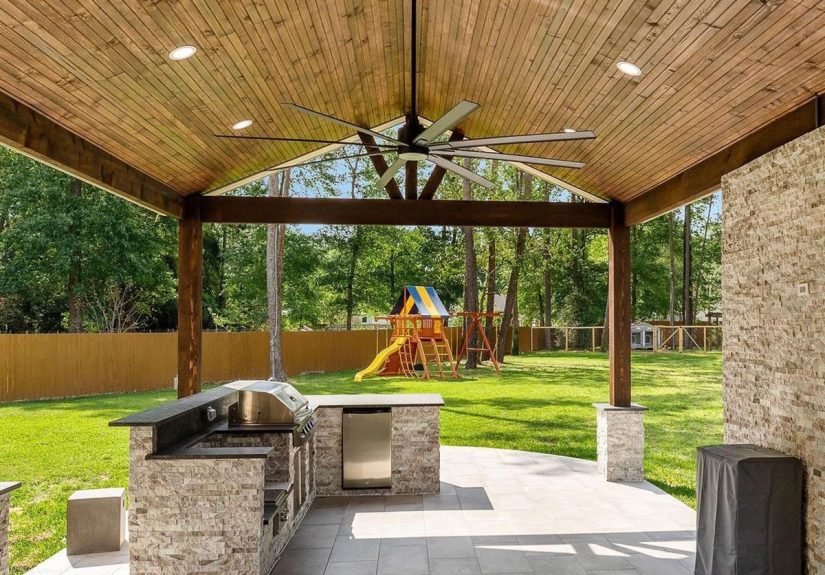
For homeowners who treat backyard cooking like a competitive sport, a patio extension that supports an outdoor kitchen is pure gold. Even a modest grill station with counter space can make a patio more functional, while a full setup with storage, refrigeration, and prep surfaces can transform the entire backyard.
Why it works
Cooking zones make entertaining easier because the host can stay outside instead of running in and out of the house like a sitcom character. They also help organize the patio layout: prep on one side, dine in the middle, lounge on the other. Suddenly the entire outdoor living space makes sense.
What to plan for
Think beyond the grill itself. Consider wind direction, traffic flow, nearby seating, and whether you need electrical, gas, or plumbing lines. Even a simple countertop and storage cabinet can make a big difference. If your budget is not ready for the deluxe version, start with a compact built-in grill zone and leave space for future upgrades.
This is one of the best patio extension ideas for people who host often, meal-prep outdoors, or simply believe that anything tastes better when cooked within sight of potted rosemary.
7. Use Multi-Level Extensions to Separate Functions
Flat patios are great, but multi-level patio extensions are where design starts showing off. By creating two connected levels, you can separate cooking, dining, and lounging without making the backyard feel fragmented.
Why it works
Different levels create visual hierarchy. A raised dining terrace can feel formal and connected to the house, while a lower lounge area around a fire pit feels relaxed and tucked away. This is especially helpful in sloped yards, where working with the grade often looks better than fighting it.
Style benefits
Multi-level patios add depth and sophistication. They also open the door to features like seat walls, wide steps, built-in planters, and integrated lighting. In practical terms, they help organize how people move through the space. In visual terms, they make the yard look like somebody with a plan touched it.
Use consistent materials across levels to keep the design cohesive, then vary furniture and decor slightly in each zone so every section has its own personality.
8. Soften the Edges With Landscape Beds, Privacy Screens, and Lighting
Technically, this idea extends the patio experience more than the hardscape footprint, but it matters just as much. A patio extension is not only about stone, concrete, or pavers. The edges around it determine whether the space feels exposed and unfinished or cozy and complete.
Why it works
Landscape beds, privacy panels, decorative screens, and layered lighting help blur the line between patio and yard. They soften hard surfaces, block unwanted views, and make the outdoor living area feel finished. It is the difference between “new patio installed” and “outdoor retreat achieved.”
Ideas to try
Add raised planters filled with ornamental grasses, herbs, or flowering shrubs. Use slatted wood screens or outdoor curtains for privacy. Layer lighting with path lights, step lights, lanterns, and string lights rather than relying on one lonely bulb near the back door. This combination improves ambience and helps the patio stay useful after sunset.
If drainage is a concern, this is also where smart planning can shine. Permeable pavers, gravel accents, and properly graded edges can help manage runoff while still looking polished.
How to Choose the Right Patio Extension Idea
The best patio extension is not necessarily the biggest or most expensive one. It is the one that fits how you actually live. If you host dinner parties, prioritize a dining zone and food-prep space. If you mostly want quiet evenings outside, a pergola lounge or fire feature may matter more. If your yard is small, focus on layout, shade, and edges instead of trying to cram in every Pinterest dream at once.
Also consider maintenance. Natural stone is beautiful, but it can be pricier. Pavers are flexible and design-friendly. Concrete can be affordable and sleek. Gravel is casual and budget-conscious. The right material depends on your home style, climate, budget, and tolerance for weekend upkeep.
And yes, before building anything major, check local permit, setback, and utility requirements. Your dream patio should not begin with a code violation and end with a very stern letter.
Final Thoughts
Patio extensions work best when they do two things at once: add space and improve the way that space feels. A good design makes the backyard more useful. A great design makes it hard to go back inside.
Whether you choose a seamless paver expansion, a pergola-covered lounge, a fire feature retreat, or a multi-level outdoor living layout, the goal is the same: create a backyard that supports the life you actually want to live outside. More comfort, more function, more atmosphere, and fewer folding chairs pulled out in desperation.
In other words, your patio should not just exist. It should participate.
Extended Experience: What Patio Extensions Feel Like in Real Life
On paper, patio extension ideas can sound straightforward. Add pavers. Install a pergola. Create zones. Done. In real life, though, the magic of a patio extension usually shows up in the little moments. It is the first time you walk outside with coffee and realize the patio finally feels finished. It is the night guests stay longer than usual because the fire pit area is genuinely comfortable. It is the strange joy of discovering that one extra stretch of hardscape completely changes how your family uses the yard.
Many homeowners start with one problem: the patio is too small. The grill crowds the table. The chairs nearly touch the grass. People have to stand in weird places during gatherings, pretending they enjoy balancing a paper plate on one hand while waving mosquitoes away with the other. After an extension, the same backyard often feels calmer. There is room to breathe. Traffic flows better. The dining area no longer crashes into the lounging area like two cousins forced to share a tiny guest room.
Another common experience is that once shade is added, the patio suddenly becomes part of daily life instead of a place used only during perfect weather. A pergola, awning, umbrella cluster, or covered section can make a huge emotional difference. Without shade, a patio may look nice from the window but feel punishing at noon. With shade, it becomes a place to read, work, snack, chat, scroll, nap, or simply sit outside and pretend you are “taking in nature” when really you are avoiding laundry.
Fire features create another layer of experience. A plain patio often gets abandoned the moment temperatures dip. Add a fire pit, however, and the backyard gains a second shift. Evenings become longer. Conversations stretch out. Kids want marshmallows. Adults suddenly become amateur philosophers. There is something about a fire feature that turns a backyard into a destination, even when the destination is only fifteen steps from the kitchen.
Outdoor kitchen extensions change the hosting experience in a different way. The cook stops disappearing indoors every few minutes. The patio becomes more social because food preparation is part of the gathering instead of being hidden away from it. Even a simple counter next to the grill can create that effect. You do not need a celebrity-chef setup with a pizza oven and chilled beverage drawers to feel the benefit. Sometimes all it takes is enough surface area for a tray, tongs, and a bowl of marinating something-or-other.
Perhaps the most underrated experience is how a well-designed patio extension changes the view from inside the house. You look out the window and see an inviting outdoor room instead of an unfinished edge. That visual connection matters. It makes the home feel larger, more coherent, and more welcoming. The yard becomes part of the home’s identity rather than just the green area beyond the glass.
That is why the best patio extension ideas are not only about construction. They are about lifestyle. They are about making ordinary routines feel a little better and special occasions feel a lot easier. A thoughtful patio extension gives outdoor living structure, comfort, and personality. And frankly, if it also makes your backyard look like it has its life together, that is a lovely bonus.