Table of Contents >> Show >> Hide
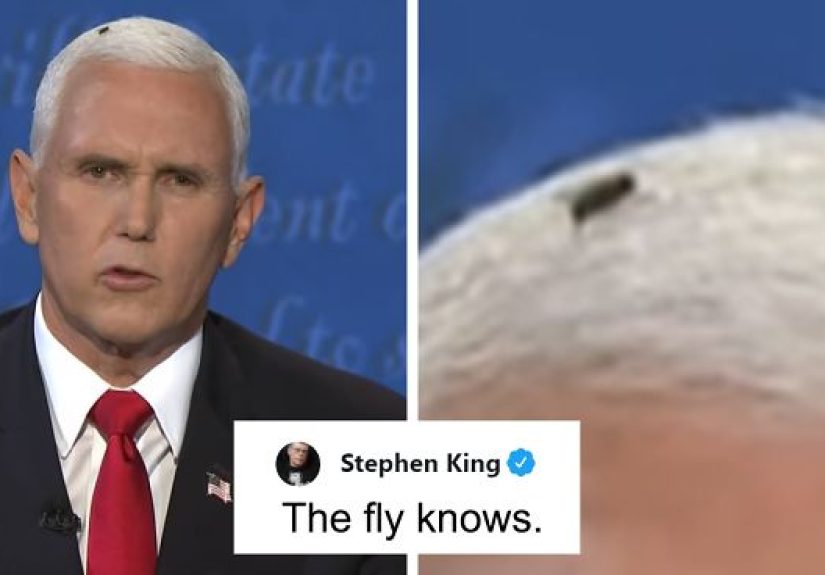
Some political moments change the news cycle. Others change campaign strategy. And then there are the rare, weird little miracles that change the internet for one extremely online evening. During the 2020 vice presidential debate, a fly landed on Mike Pence’s head and stayed there long enough for America to stop arguing for a second and start posting. It was absurd, perfectly timed, and visually impossible to ignore. In other words: it was born to become a meme.
Why One Tiny Fly Became a Giant Internet Event
The beauty of the Mike Pence fly moment was not just that it happened. It was how it happened. The debate was already taking place in a strange political atmosphere: plexiglass barriers, pandemic anxiety, a nation exhausted by nonstop election coverage, and an audience primed to react to anything unusual. Then came the bug. It landed on stark white hair, sat there for what felt like an entire semester, and instantly transformed a serious political event into a piece of accidental performance art.
That is the kind of visual the internet loves. A meme does not need a committee meeting or a strategic rollout. It needs a split second of universal recognition. Everyone watching understood the joke at the same time: there was a fly on the vice president’s head, and nobody on stage acknowledged it. The silence around the moment made it even funnier. Viewers were basically forced to become co-authors, filling social media with captions, fake campaign slogans, parody accounts, and enough fly-based wordplay to keep an entomologist employed for years.
The moment also arrived during a debate that was far calmer than the first 2020 presidential debate. That mattered. Instead of chaos swallowing every clip, the fly had room to become the clip. People who had not watched the debate could still understand the joke from a single screenshot. That kind of instant readability is meme gold. You did not need context, a policy brief, or even audio. You just needed eyes.
What followed was classic internet behavior at peak speed. Journalists posted the clip. Group chats lit up. Brands briefly forgot shame existed. Viewers created parody “Fly 2024” tickets. Late-night hosts grabbed it. The Biden campaign even jumped into the moment with branded fly swatters because when the internet hands you a joke on a silver platter, campaigns do not exactly send it back to the kitchen.
So no, the fly did not change the election on its own. But it absolutely changed the conversation for a night. And in the age of social media, a night is more than enough time to build a small digital civilization out of one six-legged guest appearance.
47 Memes That Basically Wrote Themselves
The Instant-Reaction Classics
- The “The Fly Won the Debate” meme. The cleanest joke of the night and still one of the best. No explanation needed. Just a scorecard, and somehow the insect comes out on top.
- The “Uninvited Moderator” meme. Susan Page had the job title, but the fly had the attention economy. Brutal business.
- The “Most Memorable Participant” meme. People watch debates hoping to remember policy arguments. Instead, America remembered a bug with excellent camera instincts.
- The “Nature Has Entered the Chat” meme. The fly felt like the outdoors filing a formal objection to televised politics.
- The “Audience Surrogate” meme. The bug looked like it landed there because it, too, was trying to figure out what was going on.
- The “Please Don’t Move, This Is Comedy” meme. Every viewer became a nervous stage manager begging the universe not to ruin the bit.
- The “Longest Two Minutes in Television” meme. Sports fans know about clock management. Meme fans learned that time moves differently when a fly is involved.
- The “This Is the Clip We’re All Taking to Class Tomorrow” meme. Policy notes? Forgotten. Fly screenshot? Saved immediately.
Visual Jokes the Internet Couldn’t Resist
- The “Black Brooch on White Hair” meme. The color contrast was so perfect it looked like an accidental costume choice.
- The “Tiny Hat, Wrong Position” meme. If you squinted, the fly looked like a badly placed fascinator from a very chaotic royal wedding.
- The “Hair Accessory Nobody Ordered” meme. Not exactly from the campaign store, but somehow unforgettable.
- The “National Geographic Debate Edition” meme. Suddenly the vice presidential debate became wildlife programming with stronger neckties.
- The “Zoom Cursor in Real Life” meme. It looked like the kind of dark shape people point at during screen-share disasters.
- The “Accidental Minimalist Art” meme. One dark speck, one pale backdrop, one nation losing its mind. A museum piece, honestly.
- The “The Fly Found the Brightest Landing Strip” meme. Mean? Maybe. Effective? Extremely.
- The “I Can’t Believe the Camera Did This to Him” meme. Except the camera did nothing wrong. The bug simply understood angles.
Political Internet Brain at Full Power
- The “Fly 2024” campaign poster meme. Fake tickets and mock slogans appeared so fast you’d think the fly had already hired consultants.
- The “Pence/Fly 2020” meme. A classic formatting joke: just slap the insect onto the campaign branding and watch the internet handle the rest.
- The “Running Mate Energy” meme. The bug did not speak, but it absolutely occupied the ticket.
- The “Debate Fact-Checker” meme. When people get punchy online, every unexpected object becomes a truth commission.
- The “Truth Over Flies” meme. The pun was inevitable, and once the slogan surfaced, there was no putting it back in the jar.
- The “The Fly Has Better Timing Than Most Strategists” meme. Enter on cue, stay for maximum impact, exit before overexposure. Professional work.
- The “The Real October Surprise” meme. Campaign veterans dream in headlines. Nobody planned for this one.
- The “Bipartisan Attention Span” meme. For a brief moment, left, right, and center all agreed to stare at the same bug.
Social Media Chaos, Served Fresh
- The fake fly Twitter account meme. Of course the fly got a personality online. That is how the internet says hello.
- The “Main Character of the Night” meme. Debates are supposed to feature two candidates. Social media added a third billing line.
- The “Group Chat Emergency Meeting” meme. Every friend group had at least one person typing in all caps the second the bug landed.
- The “Refresh Timeline, Same Fly” meme. No matter where you scrolled, there it was again, ruling the feed like tiny airborne royalty.
- The “Everyone Opened the Same App at Once” meme. Some moments are cultural. Some are algorithmic destiny.
- The “This Is Why I Pay for Wi-Fi” meme. The modern internet subscription is mostly for shared nonsense of exceptionally high quality.
- The “Live-Tweeting Has Never Been More Literal” meme. A fly landed, and suddenly every phone in America became a newsroom.
- The “The Meme Was Faster Than the Clip” meme. People were posting jokes before some networks had even replayed the shot.
Pop Culture Crossover Territory
- The “Jeff Goldblum Is On Line One” meme. Any moment involving a famous fly is contractually obligated to nod toward horror-comedy history.
- The “Pixar Side Character With Better Reviews” meme. The bug had supporting-character charm and franchise potential.
- The “Saturday Night Live Cold Open Was Just Written” meme. You could practically hear the comedy writers warming up.
- The “Late-Night Monologue Gift Basket” meme. Hosts love a clean visual joke. This one arrived pre-wrapped.
- The “Halloween Costume Starter Pack” meme. White wig, black toy fly, confused expression. Costume solved.
- The “Reaction Image for the Rest of Time” meme. One crop from that debate became reusable internet currency.
- The “The Fly Deserves a Talent Agent” meme. Screen presence, timing, discipline. Representation was the only thing missing.
- The “Award for Best Supporting Insect” meme. The Emmys were not ready, but the timeline absolutely was.
The Think-Piece and Meta-Meme Era
- The “Why This Tiny Moment Felt So Big” meme. The joke kept mutating because the country was exhausted and needed comic oxygen.
- The “Plexiglass Stops People, Not Flies” meme. Pandemic staging created the perfect setup for a joke about nature refusing to follow protocol.
- The “Absurdity Is the Official Language of 2020” meme. If someone wrote this into a screenplay, the producer would call it too obvious.
- The “We Have Reached Peak Election Internet” meme. Once a fly becomes the headline, there is nowhere left to go but stranger.
- The “Attention Is a Savage Thing” meme. A debate can feature taxes, health care, and foreign policy, yet a single insect hijacks the room.
- The “Temporary National Unity Through Weirdness” meme. Not exactly civics class, but it was still a collective experience.
- The “The Internet Will Remember This Longer Than Most Answers” meme. And that may be the sharpest joke of all.
What the Meme Storm Actually Revealed
The reason this moment still gets remembered is not that the fly was historically important by itself. It is that it exposed how modern political culture works online. People do not simply consume events anymore; they instantly remix them. Every debate, award show, sports final, and awkward public appearance now has a second life on social media. In many cases, the meme becomes more memorable than the event that produced it.
The Pence fly moment was a near-perfect case study. It combined visual comedy, timing, cultural fatigue, and a collective audience all staring at the same screen. It also highlighted the weird democracy of the internet. A candidate can spend weeks preparing talking points, and then a random fly becomes the unofficial headline. That is not fair, exactly. But it is very online.
It also showed how quickly politics, entertainment, and commerce now blur together. Within hours, people had made jokes, media outlets had rounded up the best reactions, comedians had incorporated it into monologues, and the Biden campaign had monetized the moment with merch. That is not just meme speed. That is industrial meme speed.
And yet, beneath the jokes, the reaction made emotional sense. The country was tense. The election was heavy. The pandemic hung over everything. People were not laughing because a fly solved anything. They were laughing because for one brief stretch of live television, absurdity gave everyone a pressure valve.
Experience Section: What That Night Felt Like Online
If you were online that night, you probably remember the exact rhythm of it. The debate began the way high-stakes televised politics usually begin: people posting serious expectations, journalists loading up fact-check threads, viewers half-watching while pretending they were totally there for policy substance. Then the fly appeared, and the whole internet seemed to inhale at once.
First came the disbelief. Was that really a fly? Was it still there? Why was nobody saying anything? Then came the universal modern reflex: grab the phone, open the app, and confirm that thousands of strangers had just seen the same impossible little image. They had. Instantly. Within seconds, the timeline stopped being a set of separate opinions and became one giant digital living room with everyone pointing at the television.
That is what made the experience feel so vivid. It was not just the joke itself. It was the simultaneity of the joke. Your group chat was making the same crack as a journalist in Washington, a comedian in Los Angeles, a college student in Chicago, and someone’s aunt in Atlanta. For one brief, ridiculous window, everyone had the same homework assignment: say something funny about the fly.
There was also a very specific kind of relief in it. The 2020 election season had been exhausting, and most public conversation felt like a treadmill set to emotional sprint. The fly interrupted that mood without erasing the seriousness underneath it. It gave people a weird little island to stand on. You could laugh, refresh, laugh again, and feel, for two minutes, like the internet was good for something besides panic.
And because the image was so clean, it traveled with supernatural speed. You did not need to hear the answer Pence was giving. You did not need to understand the broader context of the race. One screenshot was enough. A tiny black bug parked on bright white hair during a nationally televised debate was visual shorthand for the entire age of “you can’t make this up.” It was concise, strange, and instantly shareable.
What many people remember most is how the joke kept evolving in real time. It was not one meme. It was a chain reaction. First came disbelief, then captions, then parody accounts, then mock campaign posters, then late-night jokes, then merch, then think pieces about why the whole thing felt so symbolic. Watching the internet build that ladder rung by rung was almost as entertaining as the original moment. Maybe more.
That is the real experience tied to this story: not merely seeing a fly land on a vice president’s head, but watching millions of people convert one accidental visual into a temporary shared language. It was silly, fleeting, and maybe a little embarrassing for everyone involved. But it was also memorable in the way only live internet culture can be. For one night, a debate stopped being just a debate. It became a meme factory with wings.
Conclusion
The fly on Mike Pence’s head did not become famous because it was politically profound. It became famous because it was instantly legible, deeply weird, and perfectly timed for an exhausted online public ready to turn one bizarre image into collective comedy. The 47 memes above are really variations on one larger truth: in the social media era, attention does not always go to the person holding the microphone. Sometimes it goes to the insect stealing the frame.
That is why the moment still sticks. Not because it changed history in some sweeping way, but because it captured the mood of the time with absurd efficiency. It was funny, surreal, a little mean, a little brilliant, and impossible to ignore. Which, now that you think about it, is basically the job description of a great meme.