Table of Contents >> Show >> Hide
- Before You Knock Down Anything: A Quick Reality Check
- 36 Open Kitchen Ideas (That Actually Help You Cook and Host)
- Anchor the space with a hardworking island
- Try a peninsula when an island would clog the flow
- Design the “guest lane” so people don’t drift into your knife zone
- Use an island overhang for comfortable perch seating
- Build a banquette for a cozy, space-saving eat-in moment
- Layer lighting like you mean it
- Make statement pendants do double duty
- Use a limited color palette to calm the visual noise
- Repeat materials across zones for a seamless look
- Create a soft boundary with a rug in the adjacent living area
- Consider a partial wallyes, you’re still allowed
- Use a glass partition when you want separation without darkness
- Move the messy work to a hidden prep zone
- Prioritize ventilation like your couch depends on it (because it does)
- Put the sink where you can face the room
- Keep the cooktop placement strategic
- Plan a serving zone so hosting isn’t a traffic jam
- Create a dedicated drink station
- Use open shelving intentionally, not impulsively
- Mix closed storage and display storage
- Go vertical with storage to keep counters clear
- Add a “drop zone” so your island doesn’t become a mail mountain
- Use contrast to define zones without walls
- Choose durable, easy-clean surfaces for real entertaining
- Make a “landing strip” near appliances
- Use furniture-style pieces to warm up the open plan
- Scale your furniture to the room (no tiny chairs in a cavern)
- Add soft materials to reduce echo
- Use a ceiling feature to “roof” the kitchen zone
- Let windows and natural light guide the layout
- Plan for outlets where entertaining happens
- Use stools that tuck in fully
- Keep sight lines tidy with panel-ready or integrated elements
- Hide the trash (your open plan deserves this kindness)
- Use the dishwasher as a stealth cleanup tool during parties
- Pick a menu that matches the space (and your ventilation)
- Consider flexible separation if you’re open-plan curious but cautious
- Putting It All Together: A Simple Game Plan
- Conclusion: Open Kitchens That Feel Like a Party (Not a Problem)
- of Real-World Experience and Lessons (So You Don’t Learn the Hard Way)
An open kitchen is basically the home’s command center: you’re sautéing onions, answering “Is that gluten-free?” and trying not to let your dog steal a slider bun all while staying part of the conversation. When it works, it’s magic: better flow, more light, more togetherness, and a kitchen that feels like it’s hosting with you, not against you.
When it doesn’t work, you get the greatest hits of open-plan chaos: echo-y noise, everyone hovering at your elbow, and your entire living room smelling like last night’s salmon. The good news? Most open-kitchen problems are design problems, and design problems are wonderfully fixable.
Before You Knock Down Anything: A Quick Reality Check
Open concept kitchen design is less about removing walls and more about creating “zones” that behave like roomswithout feeling like rooms. The best open kitchen ideas do three things at once: (1) keep the cook’s path efficient, (2) give guests a place to land that isn’t in the way, and (3) make the whole space look intentional even when you’re mid-meal-prep and mildly dramatic about it.
36 Open Kitchen Ideas (That Actually Help You Cook and Host)
-
Anchor the space with a hardworking island
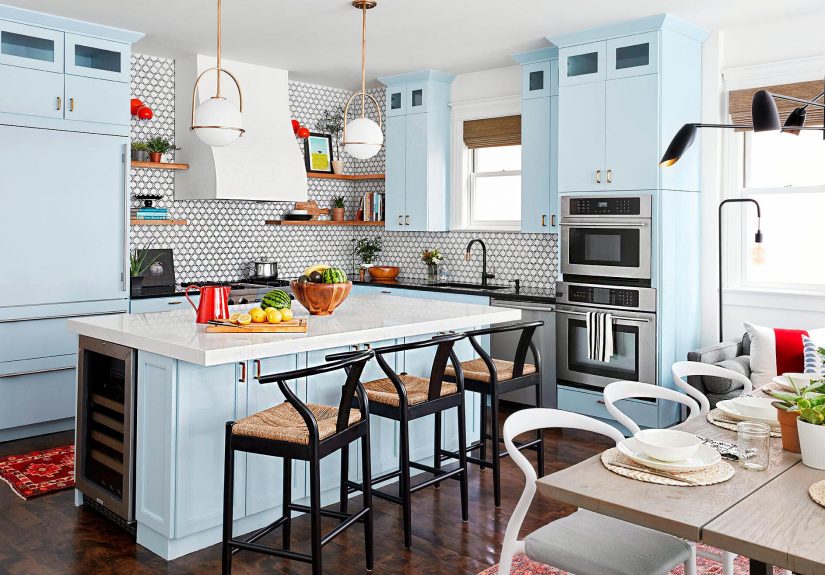
In open kitchens, the island is the unofficial mayor. Use it to define the kitchen zone, add prep space, and create a natural gathering point. If you entertain, prioritize an island layout that supports both chopping and chattingwithout forcing guests to watch you wrestle a stuck jar lid.
-
Try a peninsula when an island would clog the flow
If your space is tight, a peninsula can deliver most island benefits while keeping traffic lanes clearer. It’s a smart open kitchen layout move for smaller homes, condos, and “this looked bigger on the floor plan” situations.
-
Design the “guest lane” so people don’t drift into your knife zone
Open kitchens invite wandering. Create a clear circulation path that leads guests aroundnot throughthe cooking area. Your future self (and your shins) will be grateful.
-
Use an island overhang for comfortable perch seating
Bar stools are the social glue of an entertaining kitchen. Add an overhang so knees have room and guests can sit without doing that awkward sideways hover. Bonus: this keeps them close enough to talk, far enough not to stir your sauce “just to help.”
-
Build a banquette for a cozy, space-saving eat-in moment
A banquette (or built-in bench) gives you a “restaurant booth” vibe at homecasual, welcoming, and efficient. It’s especially useful in open kitchen and living room designs where you want an intimate dining nook without adding visual clutter.
-
Layer lighting like you mean it
Open kitchens need lighting that works across multiple activities: prep, dining, relaxing. Combine ambient lighting (overall glow), task lighting (work zones), and decorative fixtures (style points). Good lighting is the difference between “warm and inviting” and “why do I look like I’m in a documentary?”
-
Make statement pendants do double duty
Pendants over an island visually mark the kitchen zone while adding personality. Choose fixtures that feel proportional to your island and ceiling height so they don’t look like tiny earrings or, conversely, a chandelier that could qualify as a small aircraft.
-
Use a limited color palette to calm the visual noise
Open concept spaces can feel busy fast. A tighter palette helps the kitchen, dining, and living areas read as one cohesive environmentespecially in smaller open kitchens where every surface is “on stage.”
-
Repeat materials across zones for a seamless look
Want your open plan to feel intentional? Repeat at least one finish across spaceswood tone, metal finish, countertop vibe, or a paint color. It’s a subtle design trick that makes the whole room feel “designed,” not “assembled.”
-
Create a soft boundary with a rug in the adjacent living area
Rugs help define zones and reduce echo. In an open kitchen living room setup, a rug can visually “start” the lounge area while adding warmth and sound absorption. It’s basically a quiet little hero, like the friend who refills everyone’s water glass without announcing it.
-
Consider a partial wallyes, you’re still allowed
Open doesn’t have to mean “no boundaries ever.” A half wall can hide countertop mess, provide furniture backing in the living space, and keep sight lines airy. This is a great compromise if you love openness but also love not seeing your dish pile from the sofa.
-
Use a glass partition when you want separation without darkness
If cooking odors and noise are your nemesis, a glass divider can offer some control while preserving light and visibility. It’s open-concept with a “volume knob.”
-
Move the messy work to a hidden prep zone
If you have space, create a “back kitchen” moment: a tucked-away prep counter, a pantry with workspace, or even a small scullery. It keeps the main open kitchen guest-ready while you do the chaotic parts elsewhere (aka: your personal kitchen backstage).
-
Prioritize ventilation like your couch depends on it (because it does)
In an open kitchen, ventilation matters more because smells travel farther. A strong, well-placed hood and good airflow keep the rest of the house from turning into “Eau de Garlic.” Noise matters tooif the hood sounds like a jet engine, everyone will flee to the backyard.
-
Put the sink where you can face the room
A sink in the island (or positioned toward the open area) lets you participate while washing produce or stacking plates. If you host often, this turns cleanup into a social activityless “I disappeared,” more “I’m still here, just fighting a casserole dish.”
-
Keep the cooktop placement strategic
A cooktop on the island can be great for interaction, but think through splatter, grease, and safety with kids or guests nearby. If you’d rather keep things tidy, place cooking against a wall and reserve the island for prep, serving, and seating.
-
Plan a serving zone so hosting isn’t a traffic jam
Give guests a clear spot to grab plates, napkins, and utensilsaway from the main prep area. This can be a sideboard, a section of counter, or a built-in niche. Your goal is fewer people hovering near the stove asking, “Where are the forks?”
-
Create a dedicated drink station
A beverage fridge, coffee bar, or small counter with glassware keeps guests out of your primary work triangle. It also makes your open kitchen feel like a venue, in the best way.
-
Use open shelving intentionally, not impulsively
Open shelves can lighten the look of an open kitchen, but they work best when curated. Store your everyday essentials (matching dishes, glasses) and keep the random plastic lids… somewhere that doesn’t require therapy.
-
Mix closed storage and display storage
For a clean open concept kitchen, balance is everything: closed cabinets hide the chaos; open shelving adds personality. Think of it as “Instagram in front, real life in back.”
-
Go vertical with storage to keep counters clear
In open kitchens, clutter is more visible. Use tall cabinets, pantry towers, and smart vertical storage so your counters can stay mostly openespecially important when guests can see everything from the living room.
-
Add a “drop zone” so your island doesn’t become a mail mountain
Open kitchens attract life-stuff: keys, backpacks, packages. A small built-in shelf, drawer, or cabinet near the kitchen keeps everyday clutter from colonizing the island.
-
Use contrast to define zones without walls
Subtle contrastlike a different cabinet color on the island, a shift in backsplash material, or a different ceiling treatmentcan separate kitchen from living space while keeping the open feel.
-
Choose durable, easy-clean surfaces for real entertaining
Hosting-friendly kitchens aren’t precious; they’re practical. Pick finishes that handle spills, heat, and frequent wipe-downs. If a countertop requires a special ritual to clean, it’s going to resent your taco night.
-
Make a “landing strip” near appliances
Give yourself counter space next to the fridge, oven, and microwave so you can set things down without juggling. This is one of those invisible layout wins that makes everyday cooking feel dramatically easier.
-
Use furniture-style pieces to warm up the open plan
In open kitchens, adding a hutch, sideboard, or furniture-style island detail can soften the “all-cabinet” look and help the kitchen blend into the living space.
-
Scale your furniture to the room (no tiny chairs in a cavern)
Open kitchen and living room combinations need proportion. If you have high ceilings and a large footprint, choose furniture and fixtures with enough visual weight so the space feels grounded, not scattered.
-
Add soft materials to reduce echo
Open plans can sound like a gymnasium. Curtains, upholstered seating, rugs, and even textured wall décor help absorb sound. Your conversations will feel less like they’re being announced through a megaphone.
-
Use a ceiling feature to “roof” the kitchen zone
A beam detail, soffit, subtle ceiling color shift, or a focused lighting grid can visually define the kitchen without closing it off. It creates a sense of place like the kitchen has its own “address.”
-
Let windows and natural light guide the layout
The best open kitchen layouts often align key zones with natural light. If you can, orient your prep or dining area near windows so the space feels energetic and welcoming during daytime gatherings.
-
Plan for outlets where entertaining happens
People plug in slow cookers, phone chargers, and occasionally a blender for “one more margarita round.” Add outlets (including pop-ups on islands where appropriate) so hosting doesn’t turn into a cord obstacle course.
-
Use stools that tuck in fully
In busy open kitchens, protruding stools become shin assassins. Choose seating that slides under the counter cleanly so your walkways stay open.
-
Keep sight lines tidy with panel-ready or integrated elements
In an open concept kitchen, appliances are highly visible. If your style leans clean and calm, consider panel-ready fronts or thoughtful appliance placement so the kitchen reads as part of the living space, not a showroom of stainless rectangles.
-
Hide the trash (your open plan deserves this kindness)
A visible trash can in an open layout is like wearing sneakers with a tuxedo. Build in a pull-out bin or conceal it in a cabinet so your entertaining kitchen looks polished, even when you’re cooking like a maniac.
-
Use the dishwasher as a stealth cleanup tool during parties
Hosting tip: keep the dishwasher empty at the start so dirty dishes can disappear quickly. In open layouts, mess is more visible, and “quietly vanishing clutter” is a legit entertaining strategy.
-
Pick a menu that matches the space (and your ventilation)
Open kitchens reward “low-smoke, low-drama” cooking when guests are nearby. Sheet-pan appetizers, braises, and make-ahead dishes keep you present and prevent the living room from smelling like a food truck for three days.
-
Consider flexible separation if you’re open-plan curious but cautious
If you love the look but fear the noise and odors, add adaptable separation: sliding doors, pocket glass panels, or shelving partitions. That way you can go fully open for a party and partially closed for weekday sanity.
Putting It All Together: A Simple Game Plan
If you’re overwhelmed, start with three decisions: (1) where people gather (island, peninsula, banquette), (2) how people move (guest lane vs cook lane), and (3) how the space behaves (lighting layers, sound softness, ventilation). Nail those, and your open kitchen design will feel effortlesslike you casually host while making everything from scratch, even if the dessert is… “strategically store-bought.”
Conclusion: Open Kitchens That Feel Like a Party (Not a Problem)
The best open kitchen ideas aren’t just prettythey’re practical. They help you cook efficiently, keep guests comfortable, and make your home feel connected. Whether you’re building a new layout or improving what you have, focus on flow, zones, and the little details that keep real life from looking like a mess on display. Because in an open concept kitchen, you’re not just designing a roomyou’re designing the way people gather.
of Real-World Experience and Lessons (So You Don’t Learn the Hard Way)
People who live with open kitchens often say the biggest surprise isn’t the layoutit’s the behavior of the space. An open kitchen amplifies everything: light, sound, smells, mess, and energy. That can be wonderful. It can also be the reason you suddenly care deeply about how loud your range hood is and why your bar stools feel like medieval furniture after 20 minutes.
One common “aha” moment is realizing that guests don’t naturally know where to stand. In a closed kitchen, the doorway is a boundary. In an open plan, people drift toward the most magnetic surface (usually the island) and then… they stay there. If the island is also your main prep space, you’ll feel like you’re cooking on a stage while the audience sits in your lap. Homes that feel easiest to host in usually provide a second destination: a drink station, a snack counter, or a sideboard where people can congregate without blocking your workflow. It’s not about controlling guestsit’s about giving them a comfortable “place to be.”
Another real-life lesson: open kitchens are brutally honest about clutter. A couple of mixing bowls and a cutting board? Charming. A stack of mail, three school backpacks, and yesterday’s Amazon box? Suddenly your entire home looks “busy,” even if the living room is spotless. The fix isn’t perfection; it’s systems. A drop zone drawer, a hidden charging shelf, and a cabinet for the random stuff keep your island from becoming a life-collector.
Sound is also a bigger deal than most people predict. Hard surfaceswood floors, stone counters, high ceilingscan make conversation echo-y and tiring. The most comfortable open spaces tend to add softness intentionally: a rug in the living area, upholstered dining chairs, curtains, and even textured décor. These aren’t just style choices; they change how the room feels when it’s full of people. If your open plan feels “cold,” it’s often an acoustic problem disguised as a décor problem.
Finally, open kitchens reward a hosting mindset that’s more “prep ahead” than “perform live.” When everything is visible, it’s worth doing the messy steps earlierchopping, marinating, pre-loading serving traysso you can stay present when people arrive. That doesn’t mean you can’t cook while hosting; it just means your space works best when you treat the kitchen like a stage: tidy enough to be seen, functional enough to work, and set up so the fun isn’t trapped behind the cooktop.
If you take only one lesson: design your open kitchen around how you actually live. Some people love constant togetherness; others want the option to quiet the room down. With the right zoning, lighting, and ventilation, an open kitchen can be the easiest place in the house to cook, talk, and celebratewithout turning every dinner into a full-contact sport.