Table of Contents >> Show >> Hide
- Why These Moments Matter
- 30 Times Men Stepped In And Said, “Absolutely Not, My Guy”
- The coworker who recognized pain instead of laziness
- The boss who fired a vendor from the room, not the intern from her dignity
- The guy who stopped “Not to be sexist, but…” at the opening credits
- The supervisor who corrected “pretty strong girl” to “electrician”
- The boss who sent a sexist customer right back to the expert he ignored
- The man who reported harassment even when it felt messy
- The boss who treated a “compliment” like the problem it was
- The male colleagues who refused to let customers “wait for a man”
- The stranger outside the club who used his outside voice for good
- The man in the pharmacy who stopped the creep mid-performance
- The restaurant customer who defended the worker who could not defend herself back
- The manager who took a disgusting comment seriously
- The students who shut down sexism in class
- The friend-group “wet blanket” who ruined the sexist joke party
- The witness who offered to testify
- The employee who threatened to tell the boss’s wife
- The guy who made “drunk means no” painfully clear
- The friend who physically blocked a bad decision being forced into place
- The man who intervened when rejection turned ugly
- The stranger who redirected instead of lecturing
- The stroller moment that exposed how shameless catcallers can be
- The man who stopped the comment before it became workplace wallpaper
- The guy who refused to let “locker-room talk” stay in the locker room
- The bar regular who backed up a bartender dealing with a creep
- The commuter who turned public transit into a no-creep zone for five minutes
- The online ally who did more than type “yikes” and disappear
- The man who did not make himself the hero afterward
- The colleague who backed up the woman expert in front of clients
- The men who walked women to their cars because the threat did not end at the doorway
- The guy who understood that “respect women” is not a slogan, it is a behavior
- What These Experiences Tell Us About Harassment, Bystanders, and the Men Who Actually Help
- Conclusion
There are moments when the bar for decent behavior is so low it could trip over a dust bunny, and yet some men still manage to limbo under it. That is exactly why stories about men stepping in to call out harassment hit so hard: they should be ordinary, but they still feel memorable. Too many women can tell you about the rude comment, the creepy customer, the guy who treated “no” like a fun group project. Fewer get to say, “And then someone shut it down.”
This article is about those moments. Not movie-scene heroics. Not chest-thumping speeches delivered under dramatic lighting. Just real, practical interventions: a coworker who says, “Knock it off.” A boss who refuses to reward sexist behavior. A stranger who notices a woman being cornered and makes the situation less dangerous. In other words, men behaving like decent adults with functioning moral software.
Below are 30 paraphrased, condensed examples based on documented public accounts and recurring scenarios shared in reporting about harassment and bystander intervention. Some happened at work, some in public, some online, and some in friend groups where a lazy sexist joke was finally told to pack its bags. Different settings, same lesson: when one man refuses to stay silent, the whole social script changes.
Why These Moments Matter
Harassment thrives on silence, social cover, and that grim little assumption that everyone nearby will pretend nothing weird is happening. The most effective interventions often are not grand performances. They are fast, specific, and clear. Name the behavior. Interrupt the moment. Support the woman. Bring in backup if needed. Follow up afterward. That is the real magic trick: not “saving” someone, but making it obvious that the harasser does not control the room.
And yes, it matters when men do this with other men. Not because women need male permission to define disrespect. They absolutely do not. It matters because a lot of harassment is fueled by peer culture. When men challenge other men, they strip away the old excuse that “guys just talk like that” or “he was only kidding.” Funny how the joke gets less hilarious when another man refuses to laugh.
30 Times Men Stepped In And Said, “Absolutely Not, My Guy”
-
The coworker who recognized pain instead of laziness
One woman shared that she froze at work because of severe cramps, only for a male coworker to start berating her for “doing nothing.” Before she could defend herself, another man stepped between them, pointed out that she outworked the loudmouth on a normal day, and told him to show some respect. Bonus points: he recognized the expression because he had sisters and actually paid attention.
-
The boss who fired a vendor from the room, not the intern from her dignity
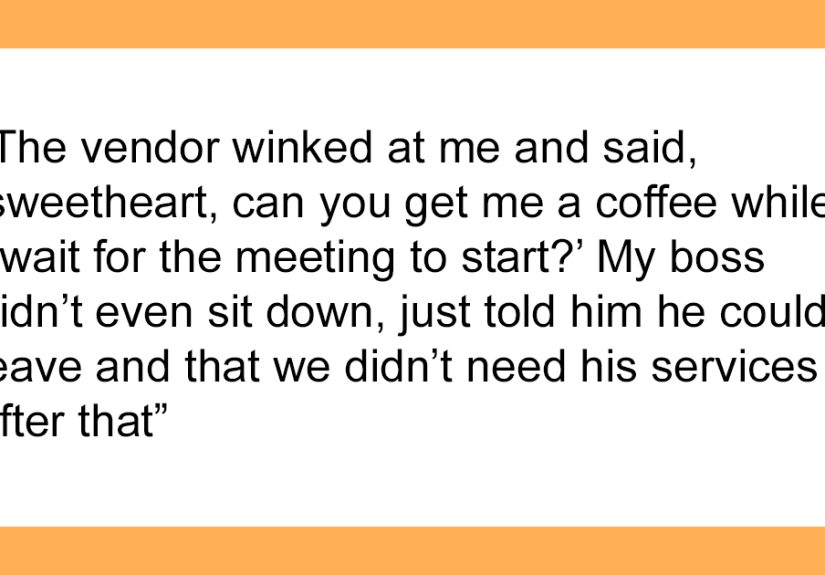
At a finance internship, a vendor reportedly looked at the young woman in the room, called her “sweetheart,” and asked her to fetch coffee. Her boss did not do the usual corporate tap dance. He told the man he could leave and that the company would not need his services. Sometimes leadership is not a seminar. Sometimes it is one sentence and a door.
-
The guy who stopped “Not to be sexist, but…” at the opening credits
One of the cleanest shutdowns ever came when a man began a sentence with, “Not to be sexist, but…” and another male coworker cut in with, “Then maybe don’t talk.” Elegant. Efficient. Almost eco-friendly in its lack of wasted words.
-
The supervisor who corrected “pretty strong girl” to “electrician”
A woman on a work site was carrying heavy equipment when a supervisor made a patronizing comment about a “pretty strong girl.” Her boss instantly corrected him: she was not “just a girl,” she was an electrician. It was a small linguistic correction with a big message: competence is not a novelty item just because a woman brought it.
-
The boss who sent a sexist customer right back to the expert he ignored
In another workplace story, a male customer brushed off the woman at the desk and asked her male boss for help instead. The boss listened, then calmly told him that she was the person he needed to ask and that he doubted she would want to help after being dismissed. That was not just support. That was accountability with excellent customer-service seasoning.
-
The man who reported harassment even when it felt messy
One woman admitted she did not want to “make waves” about a coworker who was harassing her. A male colleague reported it anyway. The story turned frightening when the harasser later threatened her, but the reporting created a record, triggered a response, and ultimately led to the man being fired. Silence would have protected the wrong person.
-
The boss who treated a “compliment” like the problem it was
A woman came into work dressed up and got one of those invasive comments disguised as friendliness: “Who are you looking good for?” Later, her male boss pulled her aside, apologized for overhearing it, and said he had already spoken to the coworker about why it was inappropriate. No fanfare, no awkward speech, just adult management.
-
The male colleagues who refused to let customers “wait for a man”
Women in male-dominated fields often hear the same tired nonsense: “I’ll wait for one of the guys.” In public accounts, several women described male colleagues immediately correcting customers and making it clear that the woman being dismissed was the most qualified person in the room. Harassers hate when the facts get involved.
-
The stranger outside the club who used his outside voice for good
One woman recalled leaving a club when a group of men started catcalling her, throwing racial slurs into the mix, and generally behaving like a warning label. A random man nearby intervened, yelled at them to stop talking to her that way, and then checked whether she was okay. That quick public rebuke changed the balance immediately.
-
The man in the pharmacy who stopped the creep mid-performance
Another account described a young man stepping in when a guy was harassing a woman in a pharmacy. Nothing fancy. He noticed, intervened, and ended the interaction before it could escalate. That is what people often forget about good bystander action: it does not need choreography. It needs attention.
-
The restaurant customer who defended the worker who could not defend herself back
A woman working in a restaurant described a man screaming at her and calling her names. Another male customer stepped in, told the harasser to back off, and asked whether he treated all women that way. The worker later said the best part was that he voiced everything she could not say without risking her job.
-
The manager who took a disgusting comment seriously
One public story involved a male customer making a vile sexual remark to a young female employee. Her coworkers stepped in, her manager got furious for all the right reasons, and he said he would call the police if the man returned. That is the correct amount of patience for a customer who mistakes a store for his personal sewer pipe.
-
The students who shut down sexism in class
Women have shared stories of male classmates publicly challenging sexist remarks during discussions, refusing to let them pass as “debate,” and then walking female students to their cars or dorms afterward. The intervention did not stop with words. It included care after the moment, which is often the part people forget.
-
The friend-group “wet blanket” who ruined the sexist joke party
Not every intervention happens in a crisis. Some happen in that swampy zone where misogyny dresses up as humor. Public accounts from men and women alike praised the guy in the friend group who says, “Explain why that’s funny,” or “No, we’re not doing this.” Turns out forced joke autopsies kill bad comedy fast.
-
The witness who offered to testify
A lot of bystanders think their job ends with, “Wow, that was bad.” A better version is the guy who says, “I saw what happened, and if you report it, I’ll back you up.” That kind of support shows up in many stories because it reduces one of the biggest barriers women face: the fear that nobody will believe them.
-
The employee who threatened to tell the boss’s wife
One man described calling out his own boss after the boss kept making creepy comments to an intern about her looks and wanting private time with her. His retort was blunt, memorable, and apparently effective enough to change the boss’s behavior at work. Not poetic, perhaps, but useful. Utility counts.
-
The guy who made “drunk means no” painfully clear
Across many bystander stories, one theme repeats: men stepping in when another man tries to treat intoxication like an invitation. One especially direct account boiled it down to the truth: if she is drunk, she cannot consent. The fact that this still needs saying is embarrassing for the species, but saying it still matters.
-
The friend who physically blocked a bad decision being forced into place
Related stories describe men stopping other men from leading visibly drunk women away from parties, bars, or gatherings. No macho showdown required. Just a firm interruption, a redirect, and a refusal to let predatory behavior hide behind “she said it’s fine.” Predators love ambiguity. Good bystanders remove it.
-
The man who intervened when rejection turned ugly
Several public anecdotes follow the same pattern: a woman turns someone down, the man being rejected gets angry, and another man steps in before the situation escalates. These moments matter because harassment often becomes dangerous right after rejection, when entitlement starts throwing furniture around in a person’s brain.
-
The stranger who redirected instead of lecturing
Not every situation calls for direct confrontation. Sometimes the smartest move is distraction. Men have described pretending to know the woman being targeted, asking her for directions, or starting a conversation so she can step away safely. It is not flashy, but it works because it breaks the harasser’s tunnel vision.
-
The stroller moment that exposed how shameless catcallers can be
One reaction to a public story summed it up perfectly: a woman was pushing a baby stroller and still got harassed. A man nearby stepped in and confronted the harassers. Some guys will apparently catcall through any available evidence of humanity. Which is why it matters when another man makes it instantly uncool.
-
The man who stopped the comment before it became workplace wallpaper
In offices, a lot of sexist behavior survives because everyone treats it like weather. Public stories praised the men who refused to let repeated remarks become background noise. The coworker who says, “That’s inappropriate,” during the first offense may save everyone from a year of fake-laughing through HR bait.
-
The guy who refused to let “locker-room talk” stay in the locker room
Men who shared anti-misogyny stories often mentioned challenging friends, teammates, or colleagues when conversations slid into ranking women’s bodies, making rape jokes, or swapping demeaning comments like baseball cards. The intervention was sometimes clumsy, but the point landed: silence would have counted as approval.
-
The bar regular who backed up a bartender dealing with a creep
In nightlife settings, employees cannot always say what everyone wishes they could. More than one account involved male patrons or regulars stepping in when a customer crossed the line with a bartender or server. A simple “She said stop,” or “Leave her alone,” from another man often changed the whole temperature of the room.
-
The commuter who turned public transit into a no-creep zone for five minutes
Some of the most useful interventions happen in weird in-between places: buses, trains, sidewalks, lineups, elevators. Men have described moving physically closer, making themselves a witness, or asking the woman a normal question so she can disengage. Harassers hate when the audience becomes active instead of passive.
-
The online ally who did more than type “yikes” and disappear
Harassment is not limited to streets and offices. Women also deal with dogpiling, threats, and gendered abuse online. Good male allies in those situations report threats, document evidence, publicly back the woman being targeted, and redirect the discussion without centering themselves. Digital bystander action still counts as real action.
-
The man who did not make himself the hero afterward
One underrated version of support is the guy who intervenes and then does not ask for applause, a podcast deal, and a commemorative plaque. Women repeatedly remember men who checked in quietly afterward, asked if they needed anything, and then respected the answer. Help is help. A victory lap is optional at best.
-
The colleague who backed up the woman expert in front of clients
In male-heavy industries, women often get interrupted, second-guessed, or treated like the note taker when they are actually leading the meeting. Public accounts praised male colleagues who used their status to reinforce, “She’s leading this,” “She already answered that,” or “Ask her directly.” It sounds small until you have been erased in real time.
-
The men who walked women to their cars because the threat did not end at the doorway
Several stories included practical follow-through after a hostile moment: walking a woman to her car, waiting for her ride, standing nearby while she called someone, or checking in later. That matters because harassment is not just the comment. It is the after-effect, the adrenaline, the question of whether the guy will come back.
-
The guy who understood that “respect women” is not a slogan, it is a behavior
Across all these examples, the pattern is not masculine bravado. It is clarity. Men stepped in, called the behavior what it was, and refused to let another man hide inside the old excuses: joke, compliment, misunderstanding, bad flirtation, boys being boys. Translation: nonsense wearing a cheap mustache.
What These Experiences Tell Us About Harassment, Bystanders, and the Men Who Actually Help
If you line up enough stories about harassment, certain patterns jump out fast. First, women often remember the intervention in vivid detail even years later. Not because the man who helped became the center of the story, but because the interruption broke a familiar and exhausting script. So many women are used to calculating, minimizing, laughing things off, or pretending not to hear because they are trying to get through the moment safely. When a bystander steps in, the math changes. Suddenly the burden is not entirely on the woman to manage the danger and the social awkwardness at the same time.
Second, the most effective interventions are usually not theatrical. They are clear. “Leave her alone.” “That’s not appropriate.” “She already said no.” “You can go.” In some situations, distraction works better: a fake conversation, a new question, a reason to move. In others, delegation matters more: tell a manager, flag security, back up a report, offer to witness what happened. Delayed support matters too. A woman may freeze in the moment and only later realize how rattled she feels. The check-in after the fact is not an afterthought. It is part of the intervention.
Third, these stories reveal something uncomfortable but important: male approval still acts like social currency in many spaces. A harasser who ignores a woman may suddenly go quiet when another man speaks up. That does not mean women’s voices matter less. It means misogyny is often tangled up with performance, ego, and peer norms. Some men do not stop because they discover empathy in real time. They stop because another man just informed them that they look ridiculous, predatory, or both. Not ideal, sure, but still better than silence.
There is also a difference between helping and grandstanding. Helpful men do not escalate recklessly if that would put the woman in more danger. They do not hijack the moment to look brave. They do not turn afterward and ask for gratitude like they just rescued a cat from a volcano. They pay attention to what the targeted person seems to need. Sometimes that is a direct confrontation. Sometimes it is an exit route. Sometimes it is a witness. Sometimes it is a quiet, “Do you want me to stay here with you?”
And then there is the workplace. Harassment at work can be especially slippery because it hides inside power, hierarchy, and everyday repetition. The sexist vendor, the “friendly” creep, the customer who insults a woman employee, the manager who thinks discomfort is part of the furniture. In those settings, male allies often matter most when they use their position properly. A boss can refuse business. A coworker can document what happened. A witness can confirm a complaint. A team member can challenge the joke before it becomes company wallpaper. That is not extra credit. That is how healthier cultures get built.
Most of all, these experiences prove that calling out harassment is not rare because it is complicated. It is rare because too many people hesitate. They fear conflict. They worry about being wrong. They hope someone else will handle it. But respectful intervention does not require perfection. It requires attention, judgment, and a willingness to be mildly inconvenient on behalf of someone else’s safety. Frankly, that sounds like the minimum. And when more men start treating it that way, these stories might finally stop sounding exceptional and start sounding normal.
Conclusion
The best thing about these stories is not that a few men behaved well. It is that they show how ordinary decent intervention can be. A sentence. A correction. A refusal to laugh. A witness statement. A walk to the car. A boss who actually acts like one. Harassment feeds on the assumption that nobody will challenge it. Every time a man calls out another man for harassing a woman, that assumption takes a hit.
So no, the lesson here is not that men deserve medals for basic humanity. The lesson is better than that: stepping in works. It protects women, embarrasses harassers, changes peer norms, and reminds everyone in the room that disrespect is not just “how things are.” Sometimes the most powerful line in the whole story is also the simplest: “Knock it off.”