Table of Contents >> Show >> Hide
- Way 1: Build a Strength Foundation (Squat, Hinge, Lunge, Bridge)
- Way 2: Add Conditioning That Loves Your Legs (Intervals, Hills, and “Sneaky” Cardio)
- Way 3: Win the Other 23 Hours (Daily Habits That Make Your Workouts “Stick”)
- Why habits matter more than people admit
- Habit 1: Add “NEAT” movement (the easiest calorie burn and leg builder)
- Habit 2: Do a 5-minute “glute wake-up” routine (especially if you sit a lot)
- Habit 3: Recover like it’s part of training (because it is)
- A quick “checklist” for getting in shape without burning out
- Common Mistakes That Slow Results (And How to Fix Them)
- of Experiences People Commonly Report (So You Know What to Expect)
- Experience #1: “My glutes finally showed up to the workout.”
- Experience #2: Stairs get easier before your jeans fit differently
- Experience #3: The “too much HIIT” lesson arrives right on schedule
- Experience #4: Small habit changes quietly create big weekly totals
- Experience #5: Progress feels non-linear, then suddenly obvious
- Conclusion
If your legs feel like they’re running on “battery saver mode” and your butt has quietly resigned from its job as “hip stabilizer,”
welcome. Modern life is basically a glute-deactivation program: we sit, we scroll, we sit some more, and then we stand up and wonder
why stairs feel like a plot twist.
The good news: getting your legs and butt in shape doesn’t require a mysterious “30-day peach protocol” or a gym membership that
silently renews until the sun burns out. It requires three things done consistently: smart strength training, leg-friendly conditioning,
and everyday habits that stop undoing your hard work.
A quick safety note (especially if you’re a teen or new to training): you don’t need to lift maximal weights to get strong. Focus on
good form, gradual progression, and rest. If you have pain, past injuries, or a medical condition, check in with a qualified clinician
or coach before pushing intensity.
Way 1: Build a Strength Foundation (Squat, Hinge, Lunge, Bridge)
Why this works (aka “shape follows function”)
Your legs and glutes change most reliably when the muscles get a reason to adaptmeaning they’re challenged with resistance and asked
to produce force. Strength training supports muscle development, joint stability, posture, and everyday performance (walking, running,
jumping, climbing stairsyour glutes are involved in all of it).
Think of strength training like upgrading your lower body’s operating system. Conditioning is great, but if your “hardware” (glutes,
quads, hamstrings, calves) isn’t strong, everything else feels harderand sometimes crankier (hello, knees and lower back).
The four movement patterns that matter most
- Squat (quads + glutes): sit-to-stand, goblet squat, bodyweight squat
- Hip hinge (glutes + hamstrings): Romanian deadlift pattern, good morning pattern, hip hinge with a dowel
- Lunge / split squat (single-leg strength + balance): reverse lunge, split squat, step-up
- Bridge / thrust (glute emphasis): glute bridge, hip thrust, single-leg bridge
Form cues that save your joints and keep the glutes “online”
- Squat: keep your chest tall, sit back like you’re aiming for a chair, and keep your knees tracking in line with your toes.
- Hinge: push your hips back while your spine stays neutral (imagine closing a car door with your buttpolitely).
- Lunge: take a step long enough that your front foot stays flat; control the descent; push through your whole foot to stand.
- Bridge: ribs down, squeeze glutes at the top, and avoid turning it into a low-back “mini limbo.”
A simple “2-days-per-week” lower-body plan (beginner-friendly)
If you want your legs and butt in shape, consistency beats chaos. Start with two non-consecutive days per week for lower body strength.
You can add a third day later if recovery is good.
Workout A (30–45 minutes)
- Warm-up (5–8 min): brisk walk, easy cycling, or marching + leg swings
- Squat pattern: 2–3 sets of 8–12 reps (chair squat or goblet squat)
- Glute bridge or hip thrust: 2–3 sets of 10–15 reps
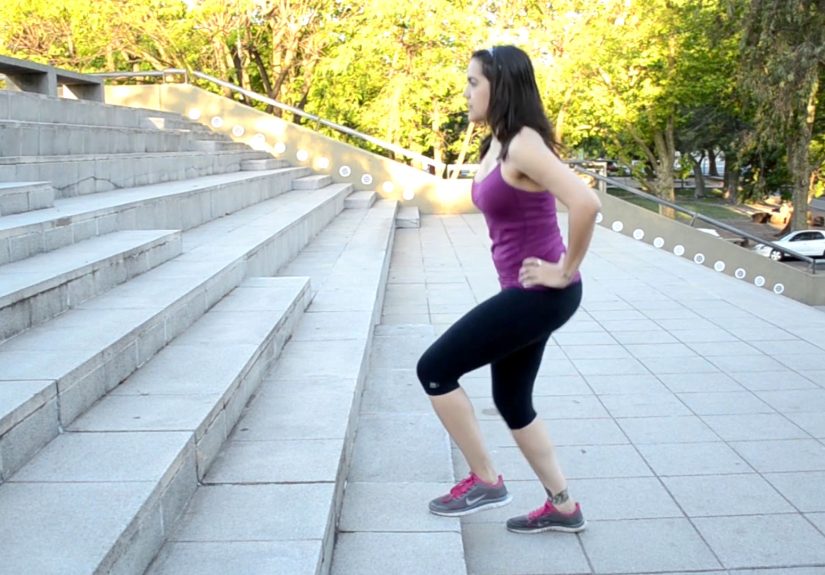
- Step-ups (stairs or sturdy box): 2 sets of 8–10 reps per side
- Calf raises: 2 sets of 12–20 reps
- Optional finisher: 1 set of 20–30 seconds wall sit (only if it feels good)
Workout B (30–45 minutes)
- Warm-up (5–8 min): easy cardio + hip mobility (gentle, not painful stretching)
- Hip hinge pattern: 2–3 sets of 8–12 reps (Romanian deadlift with light dumbbells or a resistance band)
- Reverse lunges or split squats: 2–3 sets of 6–10 reps per side
- Single-leg glute bridge: 2 sets of 8–12 reps per side
- Side steps with a mini band (optional): 2 sets of 10–15 steps per direction
How hard should it feel?
Aim for “challenging but controlled.” A helpful guideline: finish most sets feeling like you could do about 2 more reps with good
form. If your technique falls apart, the set is overno heroic reps that turn into interpretive dance.
Progression ideas (pick one at a time): add 1–2 reps per set, add a small amount of load, slow the lowering phase (3 seconds down),
or add an extra set. Small upgrades add up fast.
Way 2: Add Conditioning That Loves Your Legs (Intervals, Hills, and “Sneaky” Cardio)
Why conditioning matters for “in-shape” legs and glutes
Strength training builds capacity. Conditioning helps you use that capacity repeatedlyso your legs don’t quit halfway through a hike,
a game, a dance class, or a day that includes stairs. Intervals and hill/stair work recruit a lot of lower-body muscle, raise your heart
rate efficiently, and can be scaled for beginners.
The key is dose: you don’t need brutal workouts every day. Two or three focused conditioning sessions per week is plenty for most people,
especially if you’re also strength training.
Three conditioning options (choose the one you’ll actually do)
Option 1: Incline walking or hill repeats
- Great for: glutes, hamstrings, and cardio without high impact
- Try this: 5-minute easy warm-up → 6 rounds of 1 minute “hard-ish” incline + 1–2 minutes easy → 5-minute cool-down
Option 2: Stair intervals (the “glute elevator”)
- Great for: quads and glutes, plus it’s oddly satisfying
- Try this: 8–12 minutes totalclimb at a steady strong pace for 30–45 seconds, then walk easy for 60–90 seconds
- Beginner version: step-ups on the bottom step, slow and controlled
Option 3: Low-impact intervals (bike, rower, swimming)
- Great for: building conditioning while staying kind to joints
- Try this: 10 rounds of 20 seconds faster + 40 seconds easy (total: 10 minutes)
How to keep intervals safe (and not turn them into “regretvals”)
- Start smaller than your ego wants. Your body adapts faster than your tendonsgive them time.
- Leave recovery days. If intervals are intense, give yourself at least a day of easier movement afterward.
- Use a talk test. During hard efforts, you should only be able to speak in short phrases; during recovery, full sentences come back.
- Stop if sharp pain shows up. “This is hard” is fine. “This is stabbing” is not.
Weekly example (balanced and realistic)
- Mon: Strength Workout A
- Tue: Easy walk + light mobility (10–30 minutes)
- Wed: Intervals (hills, stairs, or bike)
- Thu: Rest or easy movement
- Fri: Strength Workout B
- Sat: Fun cardio (sports, dance, hike, long walk)
- Sun: Rest + gentle mobility
If you’re a teen: daily movement matters a lot. Aim for a mix of aerobic activity plus muscle- and bone-strengthening activities each week.
The “best” plan is the one that fits your school schedule, sleep, and recovery.
Way 3: Win the Other 23 Hours (Daily Habits That Make Your Workouts “Stick”)
Why habits matter more than people admit
You can do the world’s best leg workout… and then spend the next two days sitting like a folded lawn chair. Muscles respond to training,
but your daily life influences posture, mobility, recovery, and how often those muscles actually get used.
The goal isn’t perfection. It’s stacking small habits that keep your hips moving, your legs active, and your recovery solidso your next
workout feels better instead of feeling like you were hit by a polite bus.
Habit 1: Add “NEAT” movement (the easiest calorie burn and leg builder)
NEAT is non-exercise activity: walking, taking stairs, carrying groceries, pacing while on the phone, doing chores. It’s not glamorous,
but it’s powerful. Try one of these:
- Take a 10-minute walk after a meal (great for energy and consistency).
- Choose stairs once a day (start small; your legs will send thank-you notes later).
- Set a timer: stand up every 45–60 minutes and move for 1–2 minutes.
Habit 2: Do a 5-minute “glute wake-up” routine (especially if you sit a lot)
Glutes can get lazy when you sit for long stretches. A quick activation routine helps you feel them during squats and lunges, instead of
letting your lower back or knees do all the work.
- Bodyweight glute bridges: 10–12 reps
- Side-lying clamshells (or banded clamshells): 10 reps per side
- Hip hinge practice (hands on hips): 8 slow reps
- Optional: 20–30 seconds of a “proud posture” hold (ribs stacked over hips)
Habit 3: Recover like it’s part of training (because it is)
- Sleep: muscles rebuild during rest. If your sleep is short, your recovery budget is smaller.
- Protein and balanced meals: you don’t need a weird dietjust regular meals with protein, carbs, and healthy fats to fuel training.
- Hydration: being under-hydrated can make workouts feel harder than they need to.
- Mobility: gentle hip and ankle mobility keeps squats and lunges feeling smoother.
A quick “checklist” for getting in shape without burning out
- Strength train lower body 2 days/week (add a 3rd later if recovery is great).
- Do intervals 1–3 days/week depending on your fitness and schedule.
- Walk often and break up long sitting blocks.
- Progress gradually: small increases beat big injuries.
- Track something simple: reps, sets, or how you feltproof beats vibes.
Common Mistakes That Slow Results (And How to Fix Them)
Mistake 1: Only doing random exercises
Variety is fine, but randomness isn’t a plan. Fix it: choose 4–6 staple moves (squat, hinge, lunge, bridge, step-up, calf raise) and
repeat them for 6–8 weeks while gradually progressing.
Mistake 2: Going too hard, too often
More intensity isn’t always more progressespecially with HIIT. Fix it: limit hard interval sessions, leave recovery days, and keep most
training “challenging but doable.”
Mistake 3: Letting form fall apart
If your knees cave, your back rounds, or your hips twist, your target muscles don’t get the best stimulus. Fix it: reduce load, shorten range
of motion, use a chair for squats, or work with a coach for cues.
of Experiences People Commonly Report (So You Know What to Expect)
Results aren’t just “before-and-after photos.” Most people notice changes first in how their body feels and performsthen the mirror catches up.
Here are a few real-world patterns that come up again and again when people use the three methods above (strength + smart conditioning + daily habits).
Experience #1: “My glutes finally showed up to the workout.”
A common early frustration is doing squats and lunges but feeling them everywhere except the glutesusually in the front of the thighs or the
lower back. When people add a short glute “wake-up” (bridges, clamshells, and hinge practice) before training, they often report a surprising
shift: the same exercises suddenly feel more stable and more targeted. The best part is that it’s not magicit’s better coordination.
Your brain learns to recruit the right muscles at the right time, so the glutes stop acting like they’re on airplane mode.
Experience #2: Stairs get easier before your jeans fit differently
Many people expect visible changes first, but the earliest wins are usually performance wins: you climb stairs without huffing, your knees feel
less cranky, you stand up from a chair like a normal human (not a dramatic reenactment of “surviving leg day”), and your posture feels more
stacked and confident. This is one reason tracking performance helps motivation. When you can do more step-ups or hold a stronger wall sit,
you have proof you’re improvingeven if your body composition changes more gradually.
Experience #3: The “too much HIIT” lesson arrives right on schedule
Plenty of people try to sprint their way to being in shapeliterally. They stack hard interval workouts day after day because it feels productive.
Then they hit the classic combo: lingering soreness, fatigue, moodiness, and a sudden urge to avoid stairs forever. When they switch to a more
balanced approachhard sessions only a couple times per week, easier walks or mobility on other daysenergy rebounds and workouts become consistent.
Consistency is the real secret sauce. Your body can adapt only when it has time to recover.
Experience #4: Small habit changes quietly create big weekly totals
People are often shocked by how much “extra” movement they can accumulate without formal workouts. A 10-minute walk after lunch, taking stairs
once a day, and standing up for a two-minute stretch break a few times daily can add up to hours of activity per week. Over time, those habits
make legs feel more athletic and less stiffespecially for students or desk workers who sit a lot.
Experience #5: Progress feels non-linear, then suddenly obvious
One week you feel unstoppable. The next week you feel like gravity increased. That’s normalsleep, stress, school, work, and recovery all matter.
People who stick with the plan typically notice that after 4–8 weeks, a few things become “suddenly obvious”: better balance on single-leg moves,
stronger hip drive during bridges or thrusts, and more control in lunges. The lesson is boring but true: gradual progression plus patience beats
“all-or-nothing” every time.
Conclusion
If you want your legs and butt in shape, keep it simple and repeatable:
build strength with squat/hinge/lunge/bridge patterns, add leg-friendly conditioning like hills or intervals (without overdoing it),
and support the whole process with daily movement and recovery habits. Do that for long enough, and your lower body will feel differentstronger,
steadier, and more capable in the things you do every day.