Table of Contents >> Show >> Hide
- Why Random Movie Facts Stick (Even When We Don’t Want Them To)
- 27 Random Bits of Movie Trivia
- 1) The “blood” in Psycho was basically a dessert topping in disguise.
- 2) That same Psycho shower scene is edited like a lightning storm.
- 3) Dorothy’s slippers were red for a very practical reason: color flexing.
- 4) Those ruby slippers were hand-built sparkle machines.
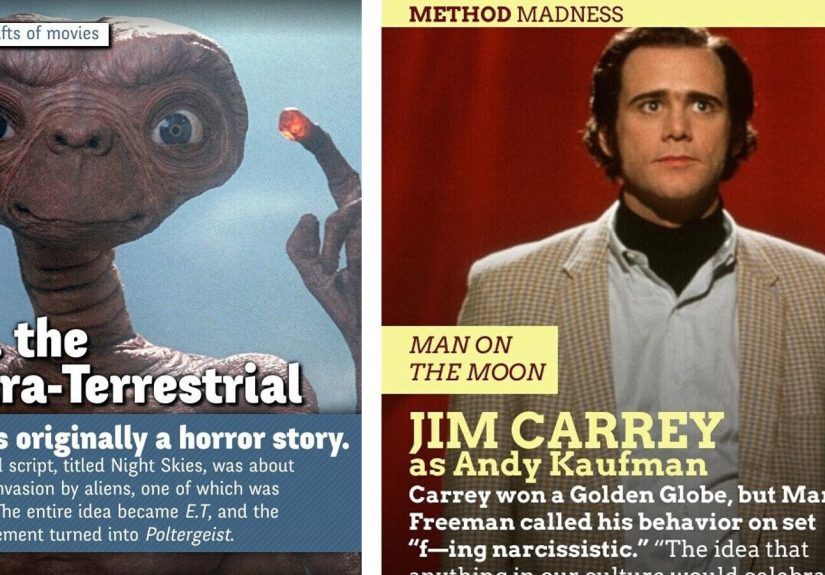
- 5) E.T. didn’t plan on Reese’s PiecesHollywood’s candy fate just swerved.
- 6) The “sword guy” scene in Raiders of the Lost Ark changed because real life happened.
- 7) The Jaws shark worked so poorly that it made the movie better.
- 8) The shark even had a nickname: “Bruce.”
- 9) There’s a real, surviving full-scale “Bruce,” and it’s huge.
- 10) Jaws has official cultural-history status in the U.S.
- 11) The Jurassic Park T. rex roar is basically a “best-of” album of other animals.
- 12) Science doesn’t exactly endorse the classic movie-dino “roar.”
- 13) The green “digital rain” in The Matrix came from… cooking inspiration.
- 14) And the code isn’t meant to be “read” like a normal recipe anyway.
- 15) Back to the Future nearly used a refrigerator as the time machine.
- 16) Also, Marty McFly wasn’t always Marty McFly (on screen).
- 17) The Godfather didn’t plan the cat. The cat planned The Godfather.
- 18) Yes, the famous horse-head prop was realHollywood gets oddly literal sometimes.
- 19) The “big reveal” line in The Empire Strikes Back was guarded like a state secret.
- 20) Also: people quote that line wrong constantly.
- 21) In Titanic, Jack’s “art moment” has a real-world artist behind it.
- 22) Toy Story wasn’t just a hitit was a technical milestone.
- 23) Before that, a short film helped open the door for computer animation’s Oscar moment.
- 24) The Oscar statuette’s nickname has a “maybe-true” origin story.
- 25) The first Academy Awards ceremony was tiny by today’s standards.
- 26) Who Framed Roger Rabbit was so ambitious it set “record” vibes while it was still being made.
- 27) The movie even gave animators a phrase for obsessive perfectionism.
- Movie-Trivia Experiences: How These Facts Live in the Wild
- Conclusion
Some movie trivia struts onto the screen like it owns the place. Other facts? Total turtles.
You look directly at them, and they quietly retract into their shellshiding behind a clapperboard, a
prop closet, or a suspiciously glittery pair of slippers.
This list is for the shy stuff: the behind-the-scenes details, production choices, and Hollywood oddities that
feel like they shouldn’t be real… except they are. Along the way, you’ll also spot a few
film trivia “cousins” (awards history, sound design secrets, and animation milestones) that help
explain why certain movies still live rent-free in our brains.
Why Random Movie Facts Stick (Even When We Don’t Want Them To)
Good behind-the-scenes facts do two things at once: they make a movie feel more human (messy,
improvised, full of problem-solving) and more magical (how did they pull that off?). It’s the same reason you
can forget your email password but remember that one weird production detail from a film you watched in 2007 at
2 a.m.
27 Random Bits of Movie Trivia
-
1) The “blood” in Psycho was basically a dessert topping in disguise.
Because the shower scene was shot in black-and-white, filmmakers used chocolate syrup for the blood effect.
It read better on camera, and it’s one of the most famous examples of “cinema is deliciously weird.” -
2) That same Psycho shower scene is edited like a lightning storm.
The sequence is famous for rapid cutting, with dozens of edits and carefully planned camera setups that
create panic without showing very much. It’s basically a masterclass in how film editing can “scream”
without raising its voice. -
3) Dorothy’s slippers were red for a very practical reason: color flexing.
In L. Frank Baum’s original story, Dorothy’s shoes were silver. For the 1939 film, they became ruby so the
production could show off Technicolor in a bold, unforgettable way. -
4) Those ruby slippers were hand-built sparkle machines.
The museum-grade details are wild: thousands of sequins per pair, plus beading and rhinestones in the bows.
The result looks like a magical artifact… because it basically is one. -
5) E.T. didn’t plan on Reese’s PiecesHollywood’s candy fate just swerved.
The production originally approached Mars about using M&M’s, but that deal didn’t happen. Reese’s Pieces
ended up in the film, proving that sometimes the most iconic “creative decisions” start as Plan B in the
snack aisle. -
6) The “sword guy” scene in Raiders of the Lost Ark changed because real life happened.
The famous moment plays like a perfect character beatbut it also came from practicality. Instead of a
longer, physical fight, the scene was simplified on the day for health-and-energy reasons, and the movie
got an instant classic gag. -
7) The Jaws shark worked so poorly that it made the movie better.
The mechanical shark was famously unreliable. Because of the technical issues, the film leans harder into
suspense and suggestionturning limitation into style and helping define the modern summer blockbuster. -
8) The shark even had a nickname: “Bruce.”
The mechanical shark used in production was nicknamed “Bruce,” and it’s the kind of detail that becomes
instant film-nerd currency. (This is the part where trivia blushes and hides behind the nearest buoy.) -
9) There’s a real, surviving full-scale “Bruce,” and it’s huge.
For the film’s anniversary, a major museum exhibit highlighted the artifactsincluding the only surviving
full-scale mechanical shark. It’s a reminder that movie history isn’t just reels and scripts; sometimes it’s
also a giant shark in a building, quietly daring you to make eye contact. -
10) Jaws has official cultural-history status in the U.S.
The movie was added to the National Film Registry, which recognizes films for cultural, historical, or
aesthetic significance. Translation: this isn’t just a thrillerit’s part of the American film canon now. -
11) The Jurassic Park T. rex roar is basically a “best-of” album of other animals.
Sound designers created the roar by mixing and manipulating animal recordingsbecause, last time anyone
checked, there weren’t many working dinosaur microphones lying around. The final sound is engineered
intimidation. -
12) Science doesn’t exactly endorse the classic movie-dino “roar.”
Modern research suggests many dinosaurs may have sounded very different from Hollywood’s thunderous
bellowing. So the movie roar isn’t a documentaryit’s a dramatic special effect designed to hit your nervous
system like a drum. -
13) The green “digital rain” in The Matrix came from… cooking inspiration.
The cascading code wasn’t random symbols. The designer drew from Japanese characters influenced by recipes
and cookbook-style referencesan iconic visual born from something as everyday as food text. -
14) And the code isn’t meant to be “read” like a normal recipe anyway.
The characters were stylized and arranged for mood, not for literal decoding. It’s a perfect example of
movie design: it feels meaningful, and that feeling is the point. -
15) Back to the Future nearly used a refrigerator as the time machine.
Early concepts had the time-travel device as a fridge. The idea was changedpartly because of concerns that
kids might imitate it (which is a very “we love our audience” reason to rewrite science fiction). -
16) Also, Marty McFly wasn’t always Marty McFly (on screen).
The film famously recast the role after shooting had begun, and Michael J. Fox took over. It’s one of the
biggest “reset and rescue” moves in mainstream movie historyand it worked. -
17) The Godfather didn’t plan the cat. The cat planned The Godfather.
In an early scene, Marlon Brando holds a cat that wasn’t originally part of the momentthe animal was found
on set and used spontaneously. The purring even complicated the sound, which is about as on-brand for movie
chaos as it gets. -
18) Yes, the famous horse-head prop was realHollywood gets oddly literal sometimes.
In one of the most talked-about behind-the-scenes facts about the film, the production used a real horse
head sourced through industry channels. It’s unsettling trivia, but it’s also a snapshot of how different
prop practices could be in earlier eras. -
19) The “big reveal” line in The Empire Strikes Back was guarded like a state secret.
The production worked hard to protect the twist, using limited script access and secrecy tactics so the
reveal would land in theaters the way it was intended: like a cinematic thunderclap. -
20) Also: people quote that line wrong constantly.
Pop culture often repeats it as “Luke, I am your father,” but the actual line is different. It’s a classic
example of how shared memory edits movies into “the version everyone thinks they saw.” -
21) In Titanic, Jack’s “art moment” has a real-world artist behind it.
The drawing seen in the film was done by James Cameron himself. It’s a neat little behind-the-camera flex:
the director didn’t just stage the scenehe contributed the artwork, too. -
22) Toy Story wasn’t just a hitit was a technical milestone.
It’s widely recognized as the first feature-length computer-animated film and Pixar’s first feature release.
A movie about toys became a turning point for how movies themselves get made. -
23) Before that, a short film helped open the door for computer animation’s Oscar moment.
Pixar’s short Tin Toy won the Academy Award for Animated Short Film, showing that computer animation
wasn’t just a noveltyit could carry character, storytelling, and emotion in a major awards space. -
24) The Oscar statuette’s nickname has a “maybe-true” origin story.
“Oscar” wasn’t the Academy’s official name for it at first. The Academy has shared stories about how the
nickname caught on over timeone of those industry traditions that becomes real simply because enough people
keep repeating it. -
25) The first Academy Awards ceremony was tiny by today’s standards.
The earliest Oscars were a modest dinner eventnot a global marathon broadcast. It’s a fun reminder that the
film industry’s biggest night started as something closer to a fancy meeting than a pop-culture super-bowl. -
26) Who Framed Roger Rabbit was so ambitious it set “record” vibes while it was still being made.
At release, it carried an enormous budget for its time and pushed technical boundaries for blending
animation with live action. It’s the kind of production that makes trivia go quiet, like it’s impressed with
itself. -
27) The movie even gave animators a phrase for obsessive perfectionism.
“Bumping the lamp” became shorthand for doing extra work most viewers won’t consciously noticelike matching
animated lighting to a swinging lamp. It’s a love letter to craft… and a warning label for overachievers.
Movie-Trivia Experiences: How These Facts Live in the Wild
Once you start collecting movie fun facts, you notice they don’t behave like normal knowledge.
They behave like party tricks with social anxiety. They show up when you least expect themduring a rewatch,
halfway through a group chat, or at the exact moment someone says, “Wait, how did they even film that?”
One of the most common trivia “habitats” is the rewatch. The first time you see a movie, you’re riding the story.
The second time, you’re scanning the edges: the props, the sound cues, the weird little choices. That’s when a
fact like “the Matrix code came from cookbook-inspired characters” becomes a lens. Suddenly the visuals
aren’t just coolthey’re designed. Intentional. You start to see how movies are built, not just watched.
Then there’s the commentary-track experiencewhether it’s a director Q&A, a behind-the-scenes featurette, or
a cast interview. These aren’t just bonus content; they’re the origin stories of your future trivia obsession.
Learning that a scene changed because of a real-world constraint (like a simplified stunt or a reworked prop)
makes filmmaking feel like creative problem-solving under pressure. It also makes the final product feel more
alive. You’re not just watching a polished storyyou’re watching thousands of decisions stacked on top of each
other like cinematic Jenga.
Movie trivia also thrives in groups, especially in trivia nights and watch parties. There’s a specific joy to
recognizing a detail and watching your friends’ faces do that “I did not know that, but now I must live with it”
expression. The best facts don’t make people feel corrected; they make people feel like they’ve been let in on a
secret. (That’s why “The quote is misremembered” works better as playful curiosity than as a gotcha.)
And finally, there’s the personal “memory glue” factor. A lot of film trivia sticks because it has a tiny story
attached: the spontaneous cat, the museum exhibit, the accidental limitation that became a signature style. Our
brains like narratives, even in miniature. So the next time someone mentions Jaws, you don’t just think
“shark movie.” You think “technical problems,” “suspense,” “American film history,” and yes“Bruce.”
If you want to build your own stash of cinematic Easter eggs and behind-the-scenes knowledge
without turning your brain into a useless-but-delightful filing cabinet, try this: pick one film you love and
learn five verified facts about it. Then rewatch and see if those facts change what you notice. That’s the
secret perk of trivia: it makes old movies feel new againlike you’ve unlocked a second viewing mode.
Conclusion
The silliest thing about movie trivia is that it’s not just “extra information.” It’s a backstage pass to how
stories get engineeredthrough craft, accidents, limits, and occasional snack-based destiny. The next time a shy
little fact tries to retract into its shell, just be patient. It’ll come back out when the timing is funny.