Table of Contents >> Show >> Hide
- Why Stan Korabelnikov’s absurd comics work so well
- 25 absurd comics that might make you smile
- Moon and wolves singing “Queen”
- A frog turning into a frog prince
- Snakes order a bunny for delivery
- A man ordering soup with a chicken as the companion
- The professor and his pigeon assistant
- Santa flying over Earth without stopping
- A croissant escaping the pigeon
- A pig turning into a wolf to lose weight
- Worms having smart talk
- A thin fish becoming invisible to a hammerhead shark
- A worm and a snail being watched by a bird
- A dinosaur waiting for the meteor
- The devil watching the news
- Ants at work
- The ducks flying north
- Ants on a Zoom call
- The year of the tiger is over
- Dad pigeon giving a lesson about women
- A bunny on vacation, buried in text messages
- A snail mailing photos of the caterpillar to the butterfly
- Worms under the rain of a bird’s tears
- A bunny finding out about the future
- Two worms discussing business
- The directors’ meeting
- A fish learning about the world
- Why absurd comics travel so well online
- What it feels like to binge absurd comics when you need a mood lift
- Final thoughts
Some comics try to change your worldview. Others try to make you gasp, cry, or stare at the ceiling for twenty minutes while questioning capitalism, mortality, and whether your houseplants secretly judge you. Then there are the comics by Stan Korabelnikov, creator of the Proidemtes series, which seem to stroll in wearing a goofy grin and say, “What if a pigeon had opinions? What if a fish got a life lesson? What if a dinosaur saw the meteor coming and still somehow made it funny?”
That is the strange magic of absurd comics. They take ordinary logic, stretch it like cheap pizza dough, and snap it into a punchline you never saw coming. Korabelnikov’s style works because it looks approachable at first glance: bright colors, cute characters, simple setups. Then the joke lands sideways. A croissant becomes prey. Ants become office workers. A moon ends up in a full-blown rock performance with wolves. Suddenly, you are laughing at something completely ridiculous that also feels weirdly familiar.
In this article, we are diving into 25 absurd comic ideas associated with this artist’s wonderfully weird world, along with what makes each one so charming. Think of it as a guided stroll through surreal humor with a cup of coffee in one hand and your remaining grip on logic in the other.
Why Stan Korabelnikov’s absurd comics work so well
Absurd humor usually succeeds because it plays with expectation. Your brain starts to predict one thing, then the joke yanks the steering wheel into a ditch full of talking animals and emotional vegetables. That surprise is a huge part of what makes readers laugh. Korabelnikov’s comics also lean into anthropomorphism, which is a fancy way of saying he lets animals, food, planets, and random objects behave like people with very specific problems. The result is playful, surreal, and oddly relatable.
His best strips also move fast. They do not over-explain. They trust you to connect the dots between innocence and nonsense, which is exactly why the humor feels light instead of forced. The jokes are silly, but they are rarely empty. Under the absurdity, there is usually a wink at human habits: vanity, laziness, anxiety, office culture, awkward social rules, or the universal experience of being alive and slightly confused.
25 absurd comics that might make you smile
-
Moon and wolves singing “Queen”
This one is funny before you even unpack it. Wolves howling at the moon is classic nature imagery. Turning that into a cosmic singalong with Queen energy makes the scene feel epic, melodramatic, and delightfully dumb in the best possible way.
-
A frog turning into a frog prince
Fairy tales usually move from frog to prince. Flipping that logic into a frog becoming a frog prince is absurd wordplay with visual punch. It is the kind of joke that feels innocent for one second and then lands with a smug little grin.
-
Snakes order a bunny for delivery
Predators ordering dinner like it is takeout is exactly the kind of civilized nonsense absurd comics were born to celebrate. The humor comes from treating the food chain like a food app, which is both sinister and weirdly polite.
-
A man ordering soup with a chicken as the companion
This comic sounds like a restaurant mistake, a moral crisis, and a prank all at once. It turns a normal meal into a social disaster, which is great comedy territory. One tiny twist, and dinner becomes a full existential side dish.
-
The professor and his pigeon assistant
Academia is already one step away from absurdity. Add a pigeon assistant, and the whole structure collapses beautifully. The joke works because pigeons already act like they belong everywhere, including, apparently, a research department with terrible coffee and unpaid internships.
-
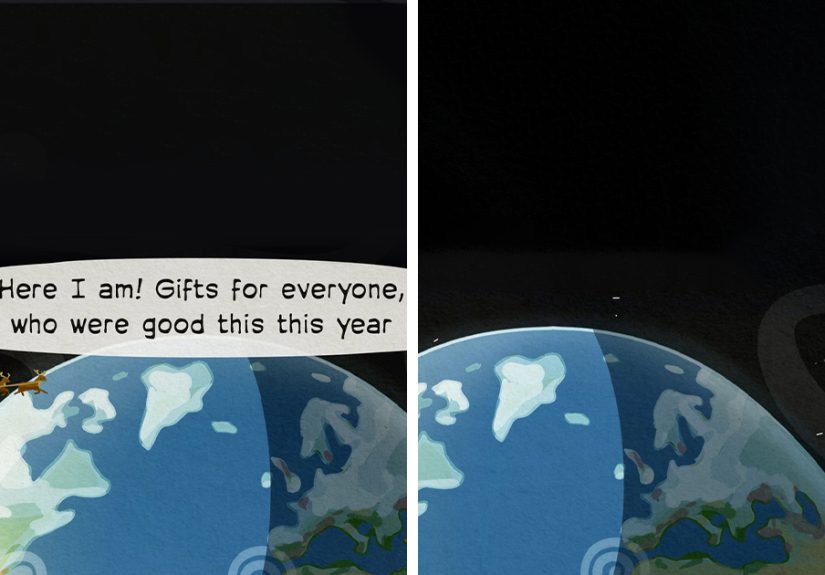
Santa flying over Earth without stopping
Holiday warmth gets replaced by ruthless efficiency here. Santa becomes less magical gift-giver and more overworked delivery professional who has absolutely had enough. It is funny because it punctures a sweet tradition with one brutal, relatable mood.
-
A croissant escaping the pigeon
Everybody knows pigeons treat public spaces like buffet halls. Giving the croissant survival instincts turns a bakery item into an action hero. Suddenly breakfast is a chase sequence, and somehow that feels exactly right for the internet age.
-
A pig turning into a wolf to lose weight
This one takes body-image culture, fairy-tale symbolism, and predator-prey logic and tosses them in a blender. It is absurd, but there is also a sly satire underneath it. The joke is silly on the surface and sneakily sharp underneath.
-
Worms having smart talk
There is something endlessly funny about very small creatures acting intellectually superior. Worms discussing ideas like tiny philosophers creates a delicious contrast between appearance and attitude. That mismatch is where absurd comics often do their best work.
-
A thin fish becoming invisible to a hammerhead shark
It sounds like marine biology rewritten by a stand-up comic. The humor comes from applying cartoon logic to survival strategy. Instead of speed or camouflage, the fish wins through ridiculous technicality, which feels both unfair and deeply satisfying.
-
A worm and a snail being watched by a bird
Sometimes a comic does not need a loud punchline. Sometimes tension is the joke. A worm and a snail under the eye of a bird feels like a tiny thriller directed by someone with a wicked sense of humor and a love of bad odds.
-
A dinosaur waiting for the meteor
Dark humor meets prehistoric resignation. There is something hilariously modern about imagining a dinosaur seeing doom approach and responding with the emotional energy of a tired office worker on a Monday morning. Catastrophe has rarely felt so relatable.
-
The devil watching the news
This joke practically writes itself, which is exactly why it works. The devil being shocked, impressed, or maybe even worried by current events turns human chaos into the punchline. It is absurd commentary with one very efficient visual setup.
-
Ants at work
Ants already have the reputation of being tireless workers, so placing them in a work-culture parody feels painfully logical. The humor is in how little exaggeration is needed. Sometimes the best absurdity starts with a truth nobody wants to admit.
-
The ducks flying north
Migration jokes should not be this funny, yet here we are. Reversing a natural pattern or presenting it as a confident group decision is enough to create instant comic friction. It is the humor of certainty applied to obviously wrong behavior.
-
Ants on a Zoom call
Office humor got tiny. The beauty of this idea is how quickly it clicks: ants are organized, busy, and everywhere, which makes them perfect stand-ins for remote workers trapped in endless meetings. Nothing says modern life like insect-sized burnout.
-
The year of the tiger is over
This sounds like a horoscope, a branding problem, and a species-level identity crisis bundled into one joke. It works because it borrows the language of celebration and turns it into comic disappointment, which is basically adulthood in one sentence.
-
Dad pigeon giving a lesson about women
There is a timeless comic tradition of terrible advice from deeply unqualified characters. A dad pigeon stepping into that role makes it even better. He is somehow both an authority figure and a bird who would absolutely fight over a french fry.
-
A bunny on vacation, buried in text messages
This strip probably hurt because it is too real. Even the cutest vacation setup can collapse under nonstop notifications. Turning a bunny into the victim of digital overload makes the point gently, then lets the absurdity finish the job.
-
A snail mailing photos of the caterpillar to the butterfly
Slow mail plus transformation humor equals a beautifully nerdy punchline. The idea of documenting a caterpillar phase for a future butterfly feels weirdly sweet and hilariously bureaucratic at the same time. It is nature reimagined as awkward correspondence.
-
Worms under the rain of a bird’s tears
This comic sounds poetic until you remember that worms and birds are not exactly friends. That tension between sentiment and danger is what makes it funny. The image feels dramatic, but the situation underneath it is pure comic menace.
-
A bunny finding out about the future
Fortune-telling is already a minefield. Add a bunny, and the emotional stakes somehow become both lower and higher at the same time. The joke likely works through innocence colliding with doom, which is an absurd formula with a very strong track record.
-
Two worms discussing business
Corporate language sounds funny coming out of almost anyone’s mouth, but worms elevate it into art. The humor here comes from seriousness in a body shape that simply refuses to look managerial. It is a boardroom meeting with absolutely no spine.
-
The directors’ meeting
Any comic with this title invites workplace satire. The beauty of absurd office humor is that you barely need to push reality for it to become ridiculous. A directors’ meeting in Korabelnikov’s universe probably lands because it feels far too plausible.
-
A fish learning about the world
This is a perfect closing note because it captures the larger mood of absurd comics. A fish discovering reality can be innocent, philosophical, or spectacularly unfortunate. Either way, it transforms a simple image into a joke about perspective, curiosity, and the limits of what any of us really know.
Why absurd comics travel so well online
Absurd comics thrive online because they are fast, visual, and instantly shareable. You do not need a long setup. You only need one sharp idea, one unexpected turn, and a reader willing to say, “Well, that was nonsense,” while immediately sending it to three friends. That is exactly the sweet spot Korabelnikov seems to understand. His comics are brief enough for scrolling culture, but clever enough to stick in your brain after the app closes.
They also feel global. You do not need deep lore or niche knowledge to understand a bunny, a pigeon, a fish, or an ant acting just a little too much like a stressed human. The visuals do the heavy lifting, while the absurdity carries the mood. It is humor that crosses language with surprising ease.
What it feels like to binge absurd comics when you need a mood lift
There is a very specific experience that comes with reading a batch of absurd comics all at once, and it is not quite the same as watching a sitcom or reading a traditional joke list. It feels more like stepping into a tiny alternate universe where the rules of reality are still technically present, but only as loose suggestions. You start out thinking you are just going to glance at one or two strips. Five minutes later, you are deeply invested in the emotional arc of a worm, suspicious of pigeons, and oddly convinced that a croissant deserves legal protection.
That is part of the appeal. Absurd comics do not demand a huge emotional commitment. They do not ask you to memorize characters across six seasons or decode a giant mythology chart. They simply open a door, hand you one weird idea, and invite your brain to enjoy the ride. On a stressful day, that can feel surprisingly helpful. You are not escaping reality so much as loosening its collar for a minute.
What makes Korabelnikov’s kind of humor especially effective is the balance between sweetness and nonsense. The drawings often have a soft, approachable quality, which lowers your guard. Then the joke shows up from the side wearing clown shoes and carrying a philosophical question. That contrast is powerful. A harsh joke can make you laugh once. A strange, playful, almost affectionate joke tends to linger.
There is also something comforting about the way absurd comics shrink human problems into cartoon scale. Office burnout becomes ants on Zoom. Social awkwardness becomes snakes ordering delivery. Overthinking becomes a fish learning about the world one baffling fact at a time. Suddenly the mess of modern life looks smaller, lighter, and just silly enough to survive. You are still stressed, sure, but now the stress has a beak or fins, which helps.
And then there is the private little ritual of it all. You laugh, screenshot, send it to someone, and wait for that reply that usually says something like, “Why is this so stupid?” which, in comedy terms, is often the highest possible praise. Absurd comics create mini communities of shared confusion. Everyone meets in the same place: half amused, half bewildered, fully entertained.
Maybe that is why these comics land so well. They remind us that humor does not always need a giant setup or a polished punchline. Sometimes all it takes is a moon, some wolves, and a wildly unnecessary Queen reference. Sometimes it is enough to let the world become ridiculous for four panels. Sometimes a smile arrives not because something makes perfect sense, but because it makes gloriously no sense at all.
Final thoughts
If you enjoy comics that are playful, surreal, and just a little unhinged, Stan Korabelnikov’s absurd style is easy to appreciate. His strips tap into that sweet spot where visual simplicity meets sideways thinking. The result is humor that feels light on the surface but smart enough to keep echoing after the laugh. In a world full of heavy headlines and endless scrolling, that kind of comic relief is not small at all. It is a tiny, colorful reminder that nonsense still has value, and sometimes the quickest path to a better mood is a bunny, a pigeon, or a fish having a deeply unreasonable day.