Table of Contents >> Show >> Hide
- Before You Plant: What “Shade” Really Means
- Shade-Garden Success: The Low-Drama Formula
- 24 Easy Shade Perennials to Grow (With Tips to Make Them Shine)
- 1) Hosta (Hosta spp.)
- 2) Astilbe (Astilbe spp.)
- 3) Hellebore / Lenten Rose (Helleborus spp.)
- 4) Siberian Bugloss (Brunnera macrophylla)
- 5) Coral Bells (Heuchera spp.)
- 6) Lungwort (Pulmonaria spp.)
- 7) Bleeding Heart (Dicentra spp.)
- 8) Barrenwort / Bishop’s Hat (Epimedium spp.)
- 9) Solomon’s Seal (Polygonatum spp.)
- 10) Foamflower (Tiarella spp.)
- 11) Toad Lily (Tricyrtis spp.)
- 12) Columbine (Aquilegia spp.)
- 13) Black Cohosh / Bugbane (Actaea racemosa)
- 14) Bigroot Geranium (Geranium macrorrhizum)
- 15) Bugleweed (Ajuga reptans)
- 16) Spotted Deadnettle (Lamium maculatum)
- 17) Japanese Painted Fern (Athyrium niponicum)
- 18) Lady Fern (Athyrium filix-femina)
- 19) Japanese Forest Grass (Hakonechloa macra)
- 20) Sedge (Carex spp.)
- 21) Turtlehead (Chelone spp.)
- 22) Leopard Plant (Ligularia dentata)
- 23) Bergenia (Bergenia cordifolia)
- 24) Wild Ginger (Asarum canadense)
- Simple Shade-Garden Planting Combos (That Look Like You Hired a Designer)
- Common Shade-Perennial Problems (and Easy Fixes)
- Conclusion: Shade Can Be the Prettiest Part of Your Yard
- Real-Garden Experiences (Because Shade Gardens Teach You Things)
If your yard has more shade than a pair of oversized sunglasses, you’re not doomed to a sad patch of bare dirt and regret. Shade gardens can be downright gorgeouslush foliage, surprising blooms, and that cool “secret garden” vibe that makes people whisper, “How is this so pretty… in the dark?”
The trick is choosing shade perennials that actually like low light (instead of merely tolerating it while plotting their escape). Below are 24 easy-to-grow perennials for shadea mix of bold foliage, long bloomers, woodland classics, and tough groundcovers that know how to behave under trees, beside porches, and along north-facing walls.
Before You Plant: What “Shade” Really Means
Not all shade is created equal. Knowing what you’ve got helps you pick plants that thrive instead of sulk.
- Dappled shade: Filtered light through tree canopiesoften the easiest for flowering perennials.
- Part shade / part sun: About 3–6 hours of sun (usually morning sun is gentler).
- Full shade: Less than ~3–4 hours of direct sunthink deep under trees or the north side of a building.
- Dry shade: The “boss level” (tree roots + low light + soil that never stays moist).
Shade-Garden Success: The Low-Drama Formula
1) Improve the soil (your future self will thank you)
Many shade perennials come from woodlands, where soil is naturally rich in decayed leaves. Work in compost or other organic matter before planting, especially if you’re dealing with compacted soil under mature trees.
2) Water smartespecially the first season
Shade doesn’t always mean “moist.” Tree roots are thirsty. Keep new plants evenly watered until established, then adjust based on whether your shade is dry or damp.
3) Use layers for a “designed” look
Combine groundcovers (low), mounding foliage (mid), and vertical bloomers (tall). This gives your shade garden depth, texture, and the kind of visual interest that makes neighbors suddenly want to “borrow” plants.
24 Easy Shade Perennials to Grow (With Tips to Make Them Shine)
1) Hosta (Hosta spp.)
The undisputed mayor of Shade Town. Hostas come in every leaf color imaginableblue, gold, chartreuse, variegatedand they bulk up into lush mounds. Give them consistent moisture and some slug protection, and they’ll perform for years.
Best for: Part shade to full shade • Bonus: Great texture and color all season
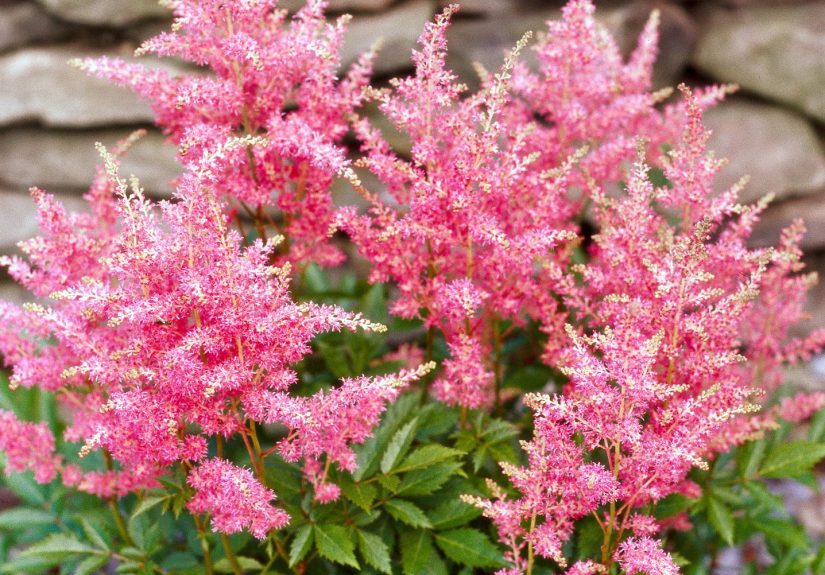
2) Astilbe (Astilbe spp.)
Feathery flower plumes (pink, red, white, lavender) plus ferny foliageastilbe is basically the “fancy haircut” of shade plants. It’s happiest in moisture-retentive soil and looks stunning along shady paths.
Best for: Part shade, moist soil • Try: Shorter varieties for borders, taller for back-of-bed drama
3) Hellebore / Lenten Rose (Helleborus spp.)
Blooms when many gardens are still in sweatpants. Hellebores are evergreen (in many climates), long-lived, and toughplus deer often leave them alone. Flowers nod in late winter to early spring in shades of white, pink, plum, and green.
Best for: Part shade to full shade • Vibe: “Elegant, but not trying too hard”
4) Siberian Bugloss (Brunnera macrophylla)
Heart-shaped leaves with a silver sheen can brighten a dim corner like someone turned on a lamp. Tiny blue flowers appear in spring (think “mini forget-me-not”). It’s a top pick for foliage impact in shade.
Best for: Part shade • Great with: Hostas, ferns, and hellebores
5) Coral Bells (Heuchera spp.)
If you want color that isn’t dependent on flowers showing up on schedule, coral bells are your plant. Leaves come in caramel, lime, purple, near-black, and silver. Many varieties tolerate shade well (especially in warmer climates where afternoon shade is a blessing).
Best for: Part shade • Tip: Avoid soggy soil; good drainage keeps crowns happy
6) Lungwort (Pulmonaria spp.)
Spotted or silvered foliage plus early spring flowers that can shift color (pink to blue) makes lungwort a shade-garden multitasker. It’s a terrific “wake up!” plant for spring.
Best for: Part shade, consistent moisture • Bonus: Pollinator-friendly early blooms
7) Bleeding Heart (Dicentra spp.)
Classic arching stems covered in heart-shaped blooms. Some types go dormant in summer, so pair them with hostas or ferns to fill the gap after flowering.
Best for: Dappled shade • Design trick: Plant behind later-emerging foliage plants
8) Barrenwort / Bishop’s Hat (Epimedium spp.)
Got dry shade? Epimedium is one of the best solutions. It forms a tidy groundcover with delicate spring flowers and tough, handsome leaves that often blush red as they emerge.
Best for: Dry shade to part shade • Strength: Quietly resilient
9) Solomon’s Seal (Polygonatum spp.)
Graceful arching stems with dangling bell-shaped flowers in springSolomon’s seal adds a soft, woodland elegance. Many types spread slowly, making them great for naturalistic shade borders.
Best for: Part shade to shade • Look for: Variegated types for extra brightness
10) Foamflower (Tiarella spp.)
Frothy spring flower spikes plus interesting foliage that often has dark centers. Foamflower makes a charming groundcover in woodland-style gardens and looks great in drifts.
Best for: Part shade, humus-rich soil • Bonus: Nice with ferns and brunnera
11) Toad Lily (Tricyrtis spp.)
When summer winds down, toad lilies are just getting warmed up. Their orchid-like spotted flowers show up late season, adding surprise color when many shade gardens are mostly foliage.
Best for: Part shade, moist soil • Tip: Place where you’ll notice the late blooms
12) Columbine (Aquilegia spp.)
Airy stems and whimsical blooms (often two-toned) make columbine look like it belongs in a storybook. Many types self-sow gently, creating a relaxed, cottage-garden feel in dappled shade.
Best for: Part shade • Wildlife perk: Often attracts hummingbirds
13) Black Cohosh / Bugbane (Actaea racemosa)
Tall, dramatic spires of fragrant white blooms plus bold foliagebugbane brings height to shade borders. It’s especially good at the back of a bed where it can tower without blocking shorter plants.
Best for: Part shade, consistently moist soil • Vibe: Woodland drama
14) Bigroot Geranium (Geranium macrorrhizum)
Not the finicky “annual geranium” you see in potsthis is a hardy geranium that forms a fragrant, tough groundcover. It tolerates shade and can handle drier soil once established.
Best for: Part shade, dry-ish shade • Bonus: Good weed suppression
15) Bugleweed (Ajuga reptans)
A fast-spreading groundcover with glossy leaves (often purple or bronzy) and spring flower spikes. It’s great for edging or filling gapsjust keep it where you want it, because it’s enthusiastic.
Best for: Part shade • Tip: Use as a living mulch around larger shade plants
16) Spotted Deadnettle (Lamium maculatum)
Silver-patterned leaves brighten shade, and little pink or white flowers add charm. Lamium is a reliable groundcover for part shade and can tolerate some dry conditions once established.
Best for: Part shade • Great for: Softening edges and shady slopes
17) Japanese Painted Fern (Athyrium niponicum)
Silvery fronds with hints of burgundy and greenthis fern is basically living garden jewelry. It thrives in shade with even moisture and looks incredible next to hostas and heuchera.
Best for: Shade to part shade • Tip: Protect from hot, dry wind
18) Lady Fern (Athyrium filix-femina)
Classic, graceful, and surprisingly easy. Lady ferns create soft texture and lush fullness, especially in moist shade. They’re excellent “background plants” that make flowering perennials pop.
Best for: Shade, moist soil • Design win: Plant in groups for a woodland feel
19) Japanese Forest Grass (Hakonechloa macra)
An ornamental grass for shade that actually looks good (yes, really). It forms flowing mounds that bring movement to still, shady corners. Gold varieties glow in low light.
Best for: Part shade • Tip: Avoid harsh afternoon sun in hot climates
20) Sedge (Carex spp.)
Sedges are grass-like perennials that handle shade beautifully. Many are semi-evergreen, making them useful for structure and “tidy texture” nearly year-round.
Best for: Part shade to shade • Bonus: Great filler between bolder plants
21) Turtlehead (Chelone spp.)
Late-summer blooms shaped like little snapdragon-ish “turtle mouths” (and now you can’t unsee it). Turtlehead likes moisture and is excellent for shady rain gardens or damp spots.
Best for: Part shade, moist soil • Bonus: Late-season pollinator value
22) Leopard Plant (Ligularia dentata)
Big leaves, bold presence, and bright yellow flowers. Ligularia is fantastic in moist shade where other plants look washed out. If your soil dries out, though, it may droop dramaticallylike it’s auditioning for a soap opera.
Best for: Part shade, consistently moist soil • Tip: Mulch well to keep roots cool
23) Bergenia (Bergenia cordifolia)
Thick, glossy “pig squeak” leaves (yes, that’s a real nickname) and cheerful spring blooms. Bergenia is tough, dependable, and handles shade better than many broadleaf evergreens.
Best for: Part shade • Bonus: Evergreen foliage in many regions
24) Wild Ginger (Asarum canadense)
A beautiful, low groundcover with heart-shaped leaves that spreads slowly to form a shady green carpet. It’s excellent under shrubs and between taller perennials where you want a natural woodland look.
Best for: Shade, rich soil • Tip: Give it timeslow and steady wins the groundcover race
Simple Shade-Garden Planting Combos (That Look Like You Hired a Designer)
Combo A: “Brighten the Dark Corner”
- Brunnera + Japanese painted fern + gold hosta
- Add: Lamium at the edge for a silver “glow” effect
Combo B: “Moist Shade Magic”
- Astilbe + ligularia + lady fern
- Add: Turtlehead for late-season blooms
Combo C: “Dry Shade Survival Kit”
- Epimedium + bigroot geranium + sedge
- Add: Bergenia for evergreen structure
Common Shade-Perennial Problems (and Easy Fixes)
Slugs chewing hostas?
Water in the morning, reduce hiding spots (thick debris right at the crown), and consider slug baits or barriers. Also: accept that slugs believe your hostas are a salad bar.
Leggy plants reaching for light?
Move them to brighter shade (dappled light), prune back surrounding shrubs to increase filtered sun, or swap in foliage-forward plants that don’t rely on heavy bloom.
Dry shade under trees?
Start with tough picks (epimedium, bigroot geranium, some sedges), improve soil with compost, and mulch to conserve moisture. Water deeply but less often to encourage deeper roots.
Conclusion: Shade Can Be the Prettiest Part of Your Yard
A great shade garden isn’t about forcing sun-lovers to “make do.” It’s about choosing plants that truly shine in low lightlayering textures, mixing foliage colors, and sprinkling in blooms that show up when you least expect them. With these 24 beautiful perennials for shade, you can build a garden that looks intentional, lush, andbest of alllow maintenance.
Real-Garden Experiences (Because Shade Gardens Teach You Things)
Here’s the honest truth: my first shade garden plan was basically “hostas everywhere, done.” And it worked… sort of. It looked green. Very green. Like a leafy ocean. But after one full season, I realized shade gardening is less about filling space and more about creating contrastleaf shapes, heights, and little moments of color that keep the area interesting even when flowers aren’t blooming.
The biggest lesson came from a north-facing side yard that I assumed would stay damp because it barely saw the sun. Wrong. The soil was bone-dry by midsummer thanks to tree roots that treated my garden bed like a private buffet. That’s when I learned the difference between “shade” and “dry shade,” which is basically shade gardening on hard mode. The plants that saved me were the quiet workhorses: epimedium, bigroot geranium, and sedges. They didn’t complain. They didn’t faint dramatically. They just… grew. I added compost, mulched like I meant it, and watered deeply the first year. After that, the bed became surprisingly self-sufficient.
Then there was the year I discovered that bleeding hearts can be both magical and mischievous. In spring, they were the stararching stems covered in heart blooms, like a Valentine’s card came to life. In summer, they vanished. No warning. Just gone. At first I panicked, sure I had murdered them with neglect. Turns out some varieties go dormant after blooming. The fix was simple: I planted hostas and ferns nearby so when the bleeding hearts took their summer vacation, the bed still looked full and intentional. Now I think of them as seasonal guest stars. Show up, steal the scene, exit stage left.
Hostas taught me another shade-garden truth: if something is easy to grow, something else will want to eat it. Slugs treated my best hosta like an all-you-can-eat brunch. I tried every trickhand-picking at night (humbling), copper tape (fancy), and adjusting watering so the soil wasn’t wet overnight (helpful). What made the biggest difference was pairing hostas with plants slugs don’t love as muchhellebores, ferns, and heucheraso even if a hosta got a little “lace-edged,” the bed still looked great. Also, I stopped expecting perfection. A few holes in leaves don’t ruin a shade garden; they just prove it’s a real one.
The most satisfying upgrade I ever made was adding plants that bloom at odd times. Shade gardens can feel like “all foliage, all the time,” which is lovelybut a surprise bloom is next-level. Toad lilies showing up at the end of summer felt like a reward for being patient. Lungwort blooming early felt like the garden’s way of saying, “We survived winterhere’s confetti.” Turtlehead became my late-season closer, especially in a damp corner where other plants looked bored.
And finally: the “designer” look isn’t a secret plantit’s repetition and layering. When I started planting in drifts (three brunnera together, five sedges together), everything looked calmer and more planned. Add a tall element at the back (bugbane or taller ferns), a mounded middle (hosta, heuchera), and a groundcover at the edge (lamium, wild ginger), and suddenly your shady corner looks like it belongs in a magazine… even if you planted it in old sneakers with a shovel you can’t find half the time.